
SUBTRACTION
HOUSE
ITUPEVA - SP, BRAZIL
Project specifications
Site area - 3.100m²
Building area - 485m²
Project beginning - 2018
Construction completion - 2020
Building area - 485m²
Project beginning - 2018
Construction completion - 2020
Team
Authors - Fernando Forte, Lourenço Gimenes, Rodrigo Marcondes Ferraz
Managers - Sonia Gouveia
Contributors - Cintia Reis, Daniela Zavagli, Desyree Niedo, Felipe Fernandes, François Caillat, Juliana Cadó, Mariana Lazero, Rafael Saito, Victor Lucena
Interns - Guilherme Braga, Mariana Sarto
Photographer - Fran Parente
Constructor - Z2 Mão de Obra
Constructor - Z2 Mão de Obra
Landscape designer - Kalil Ferre
Lighting designer - Castilha Iluminação
Interiors - Giselle Macedo & Patricia Covolo
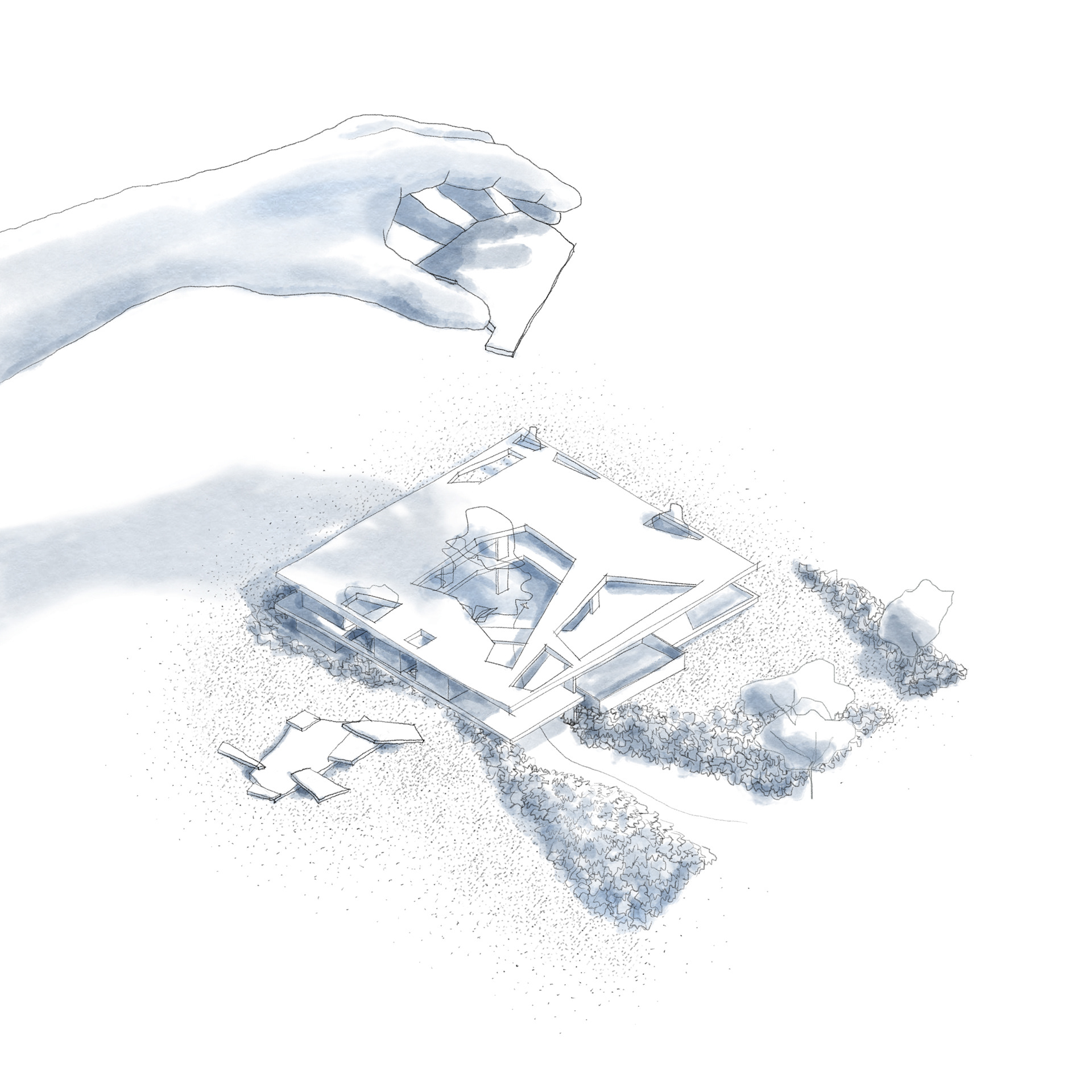
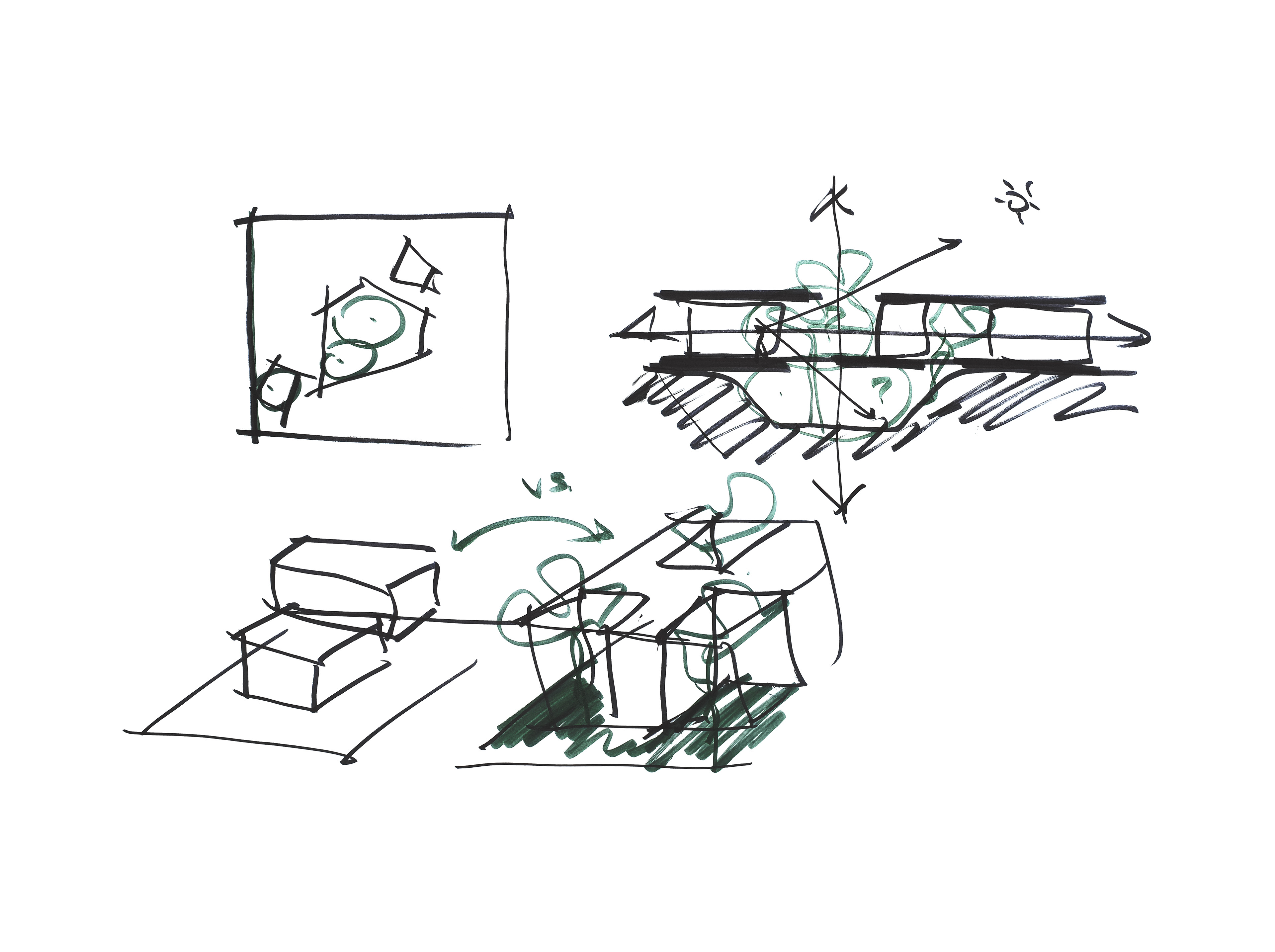
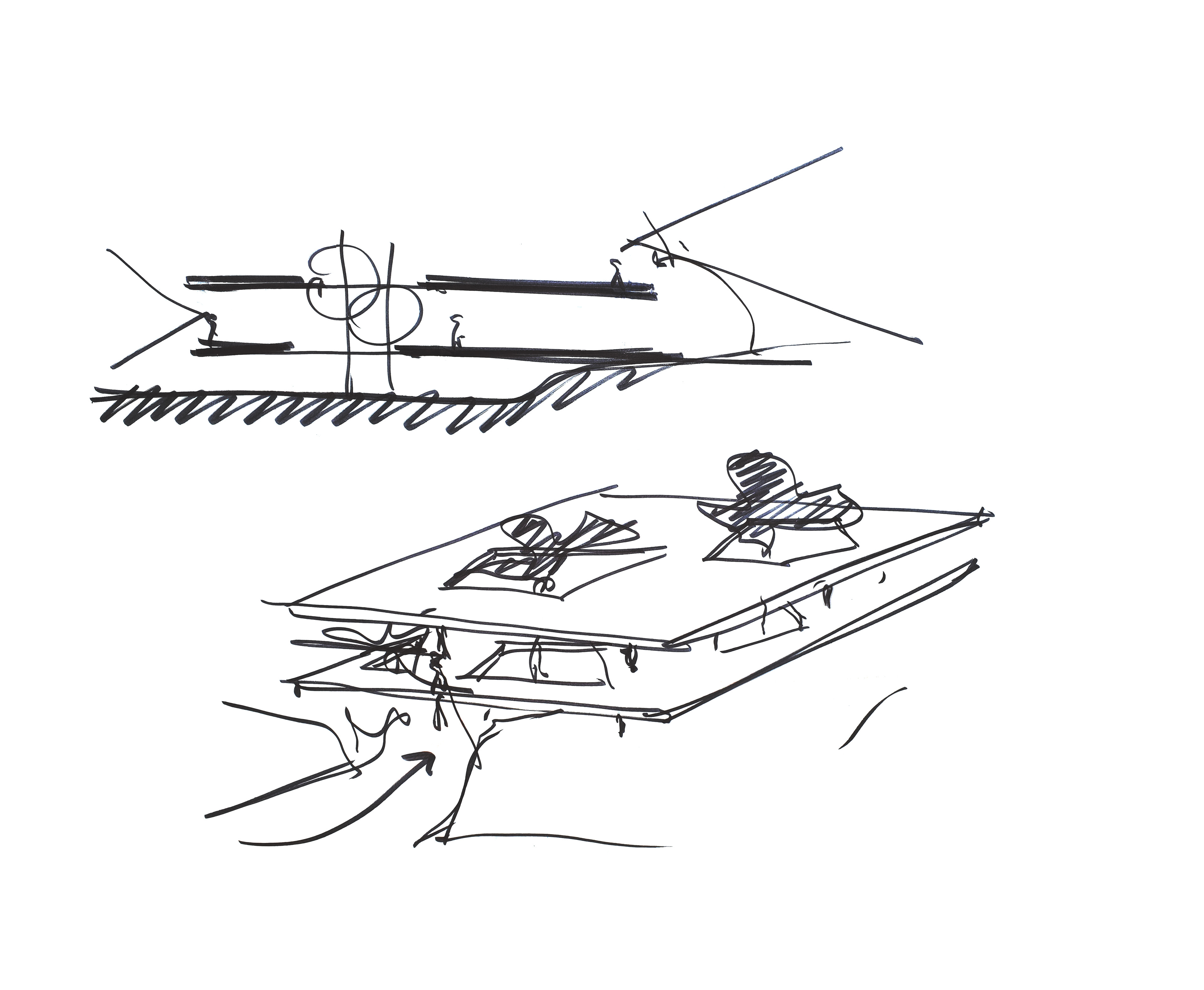
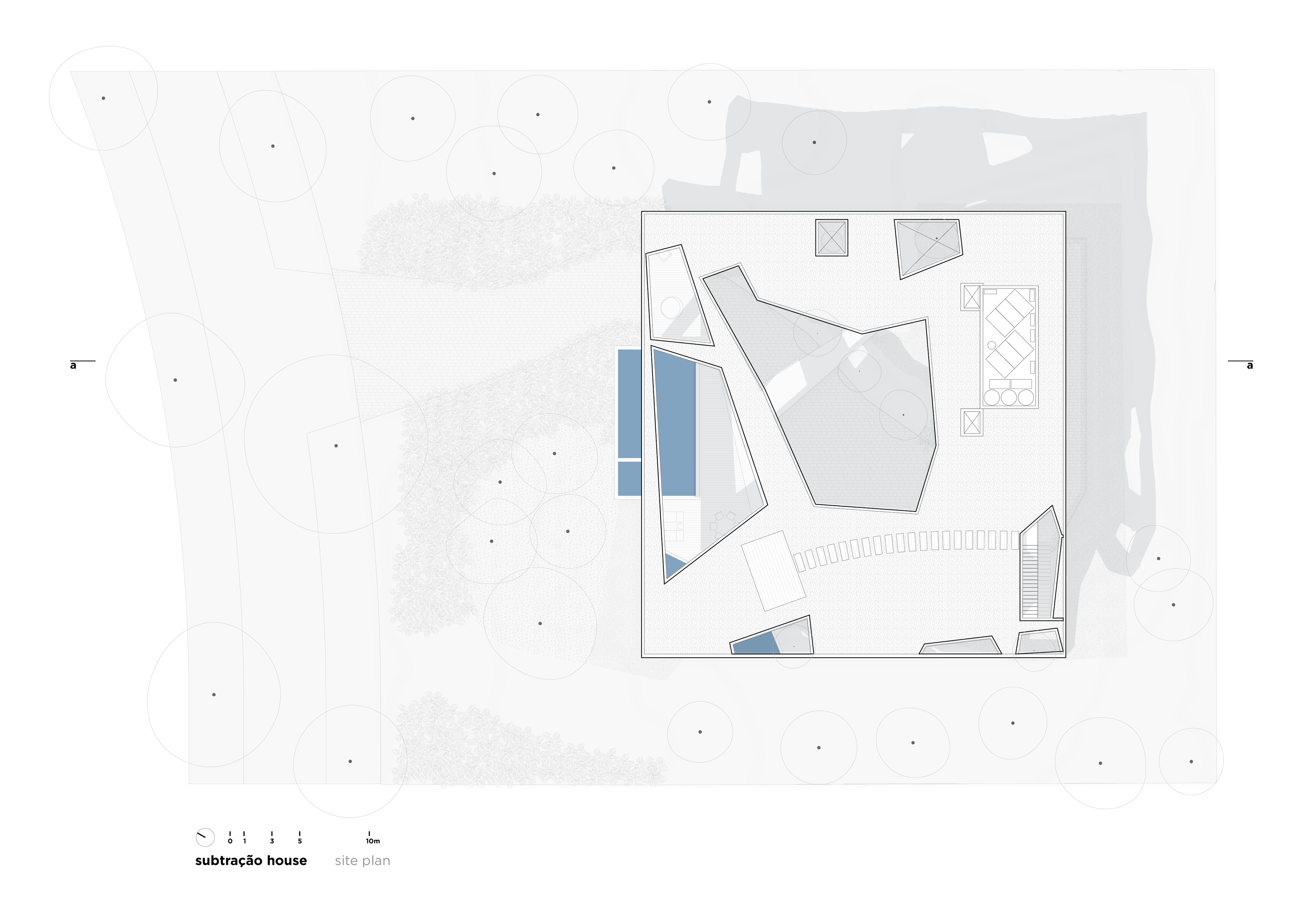
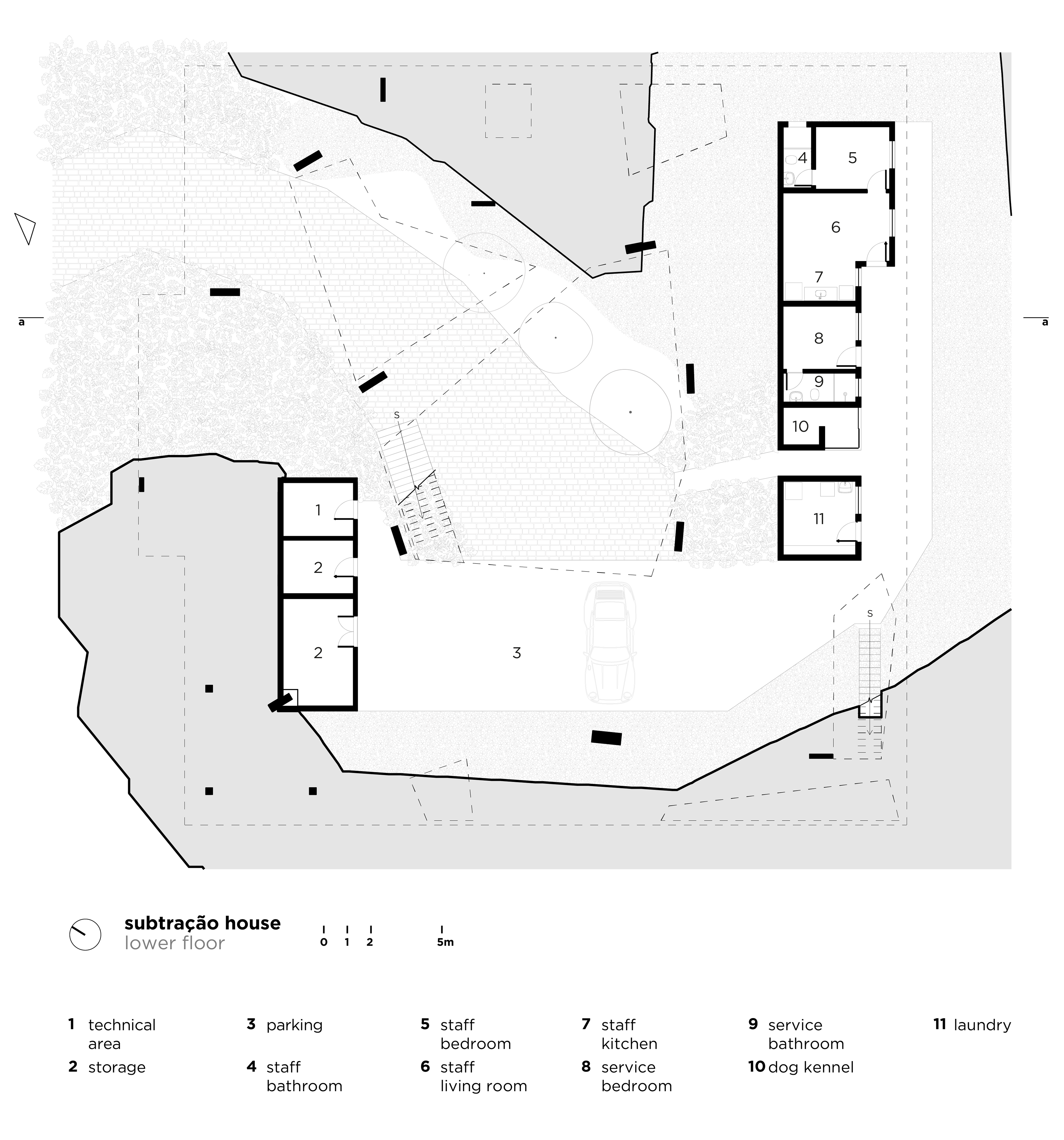
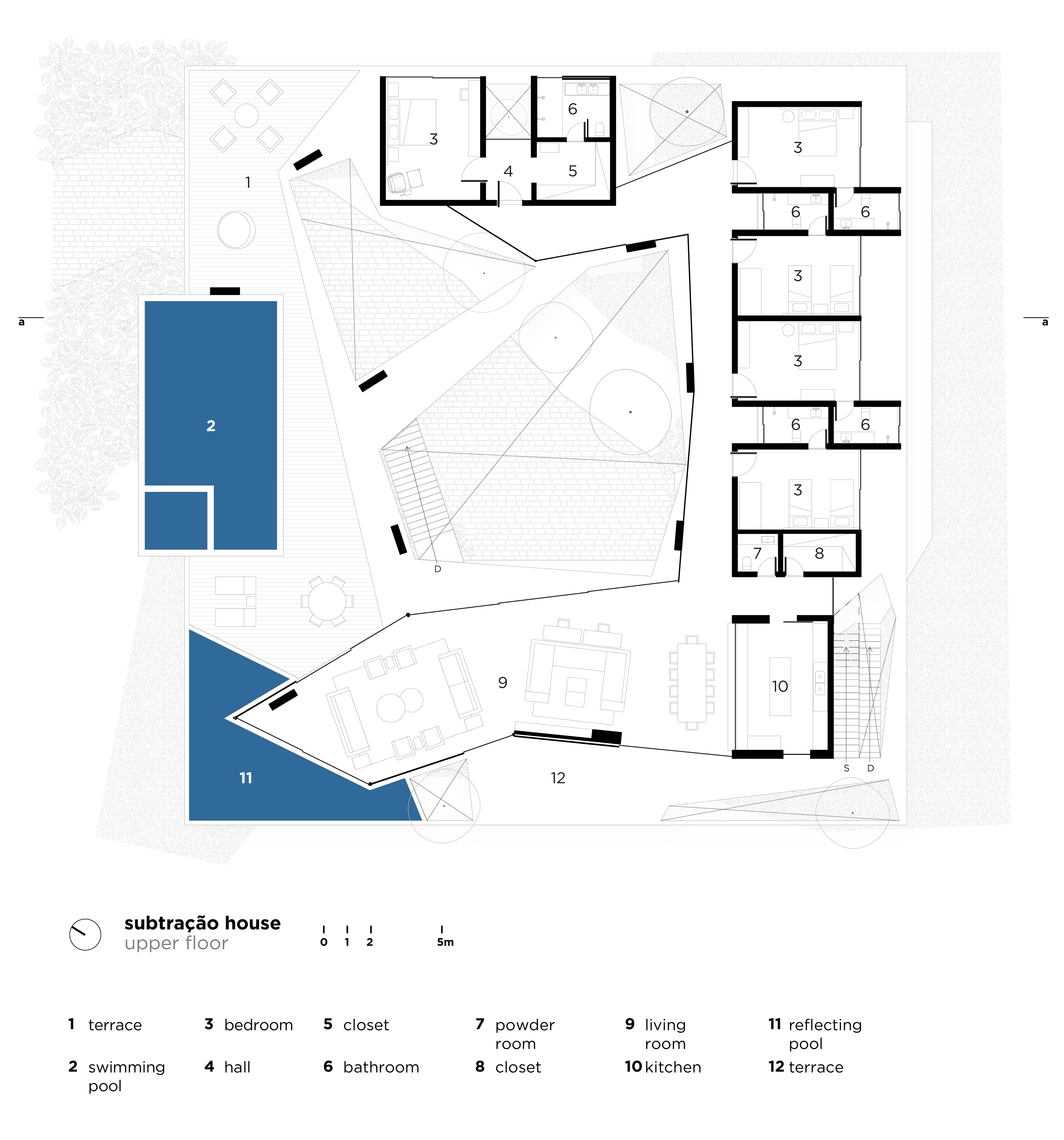
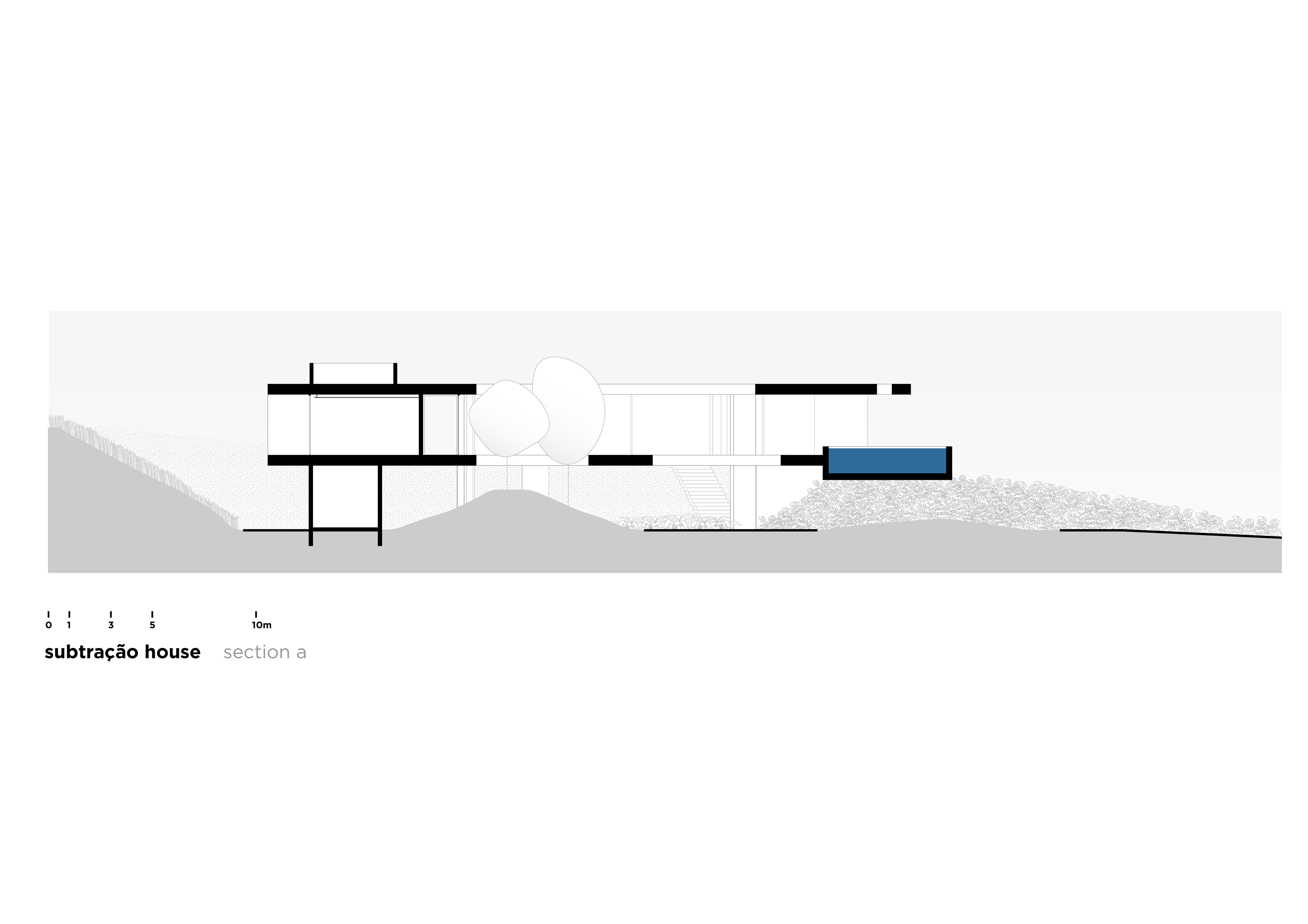
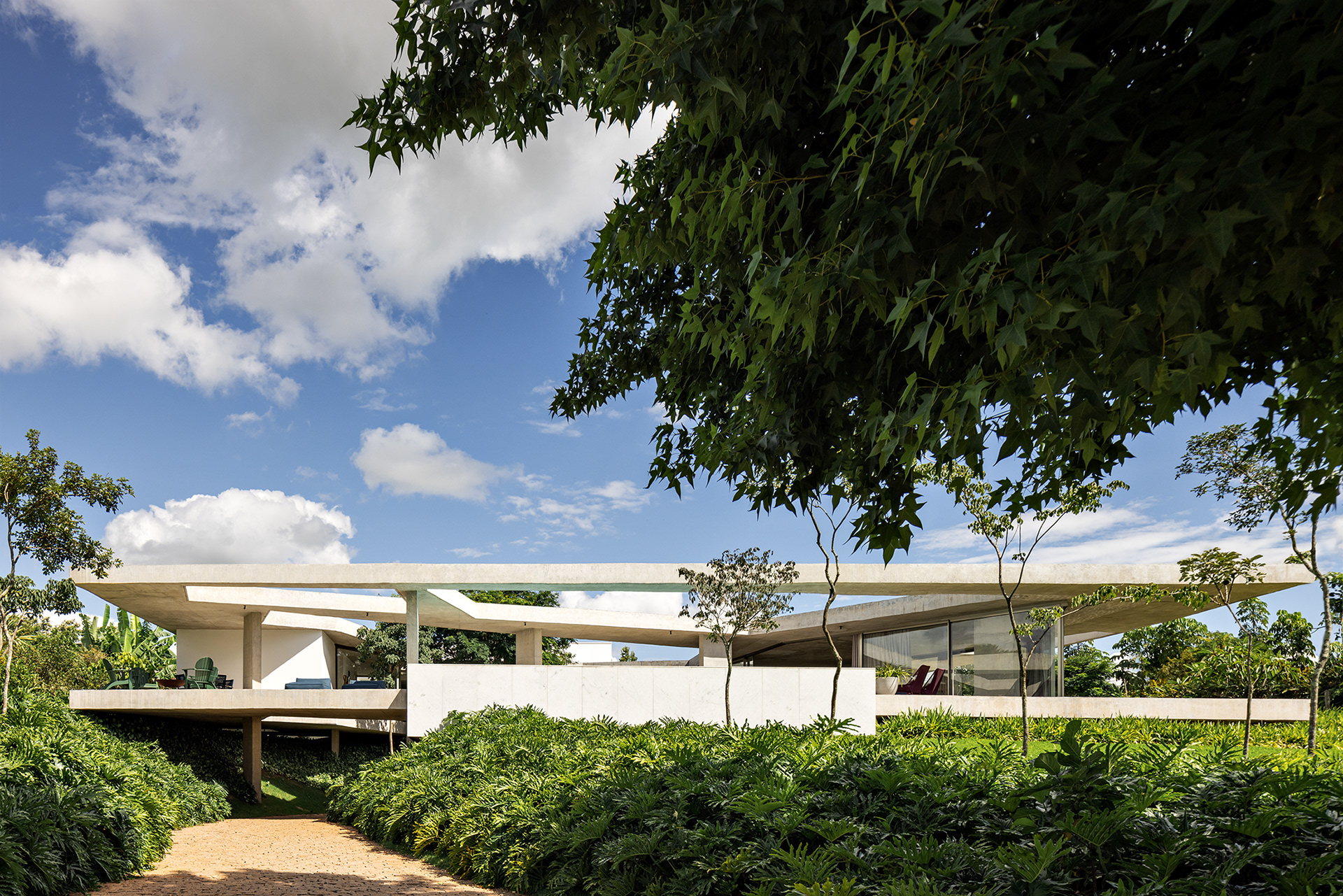
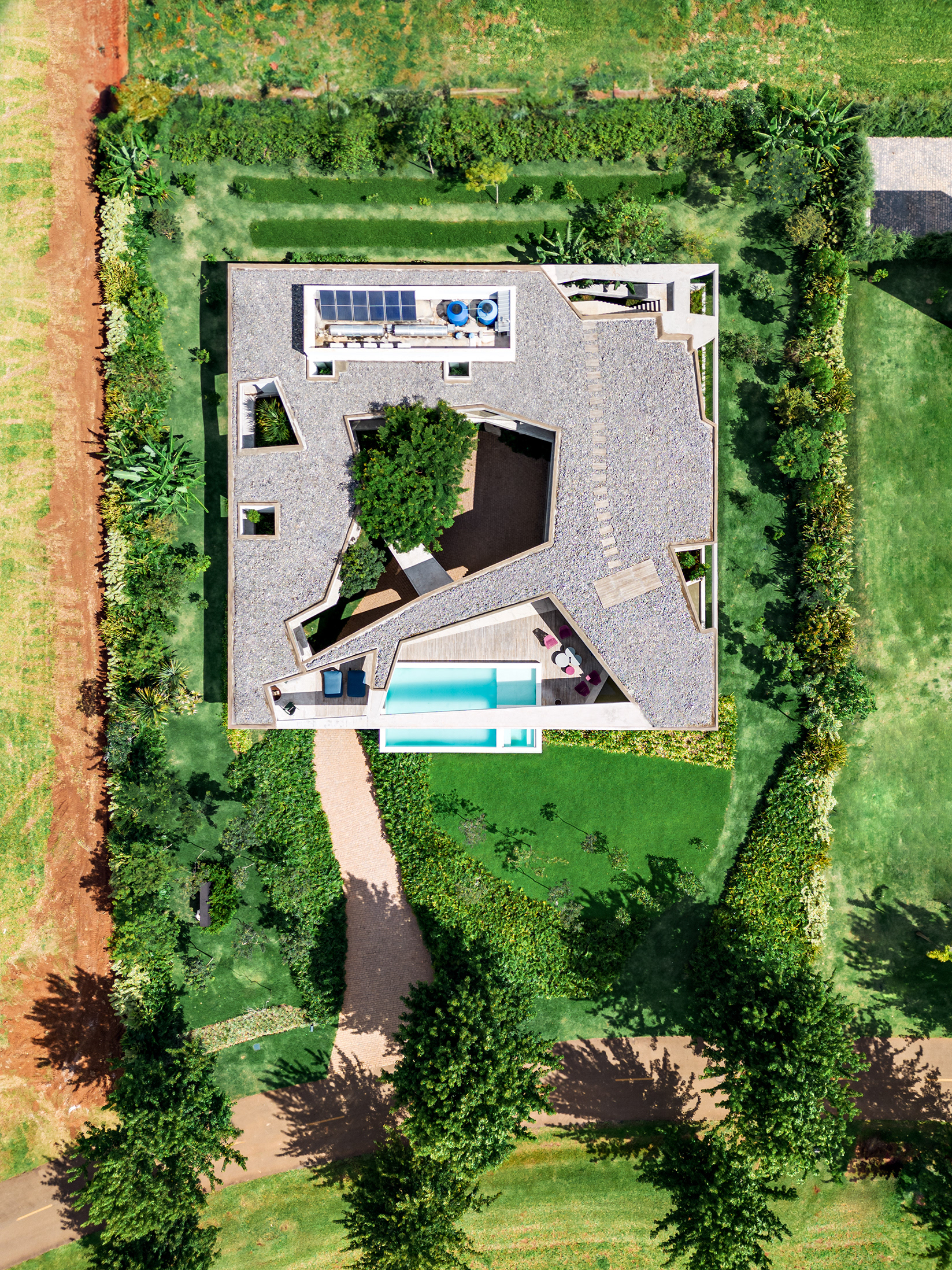
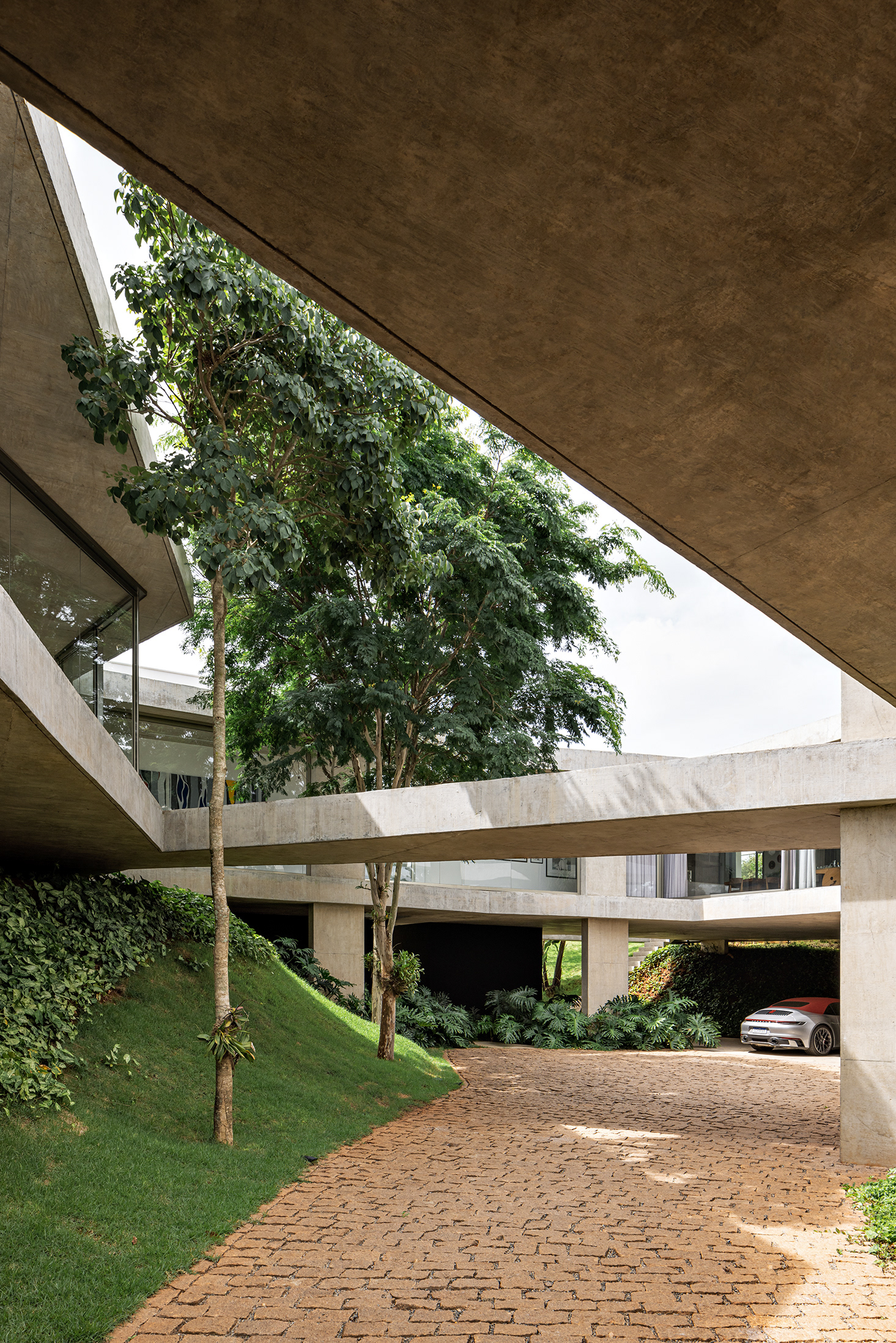
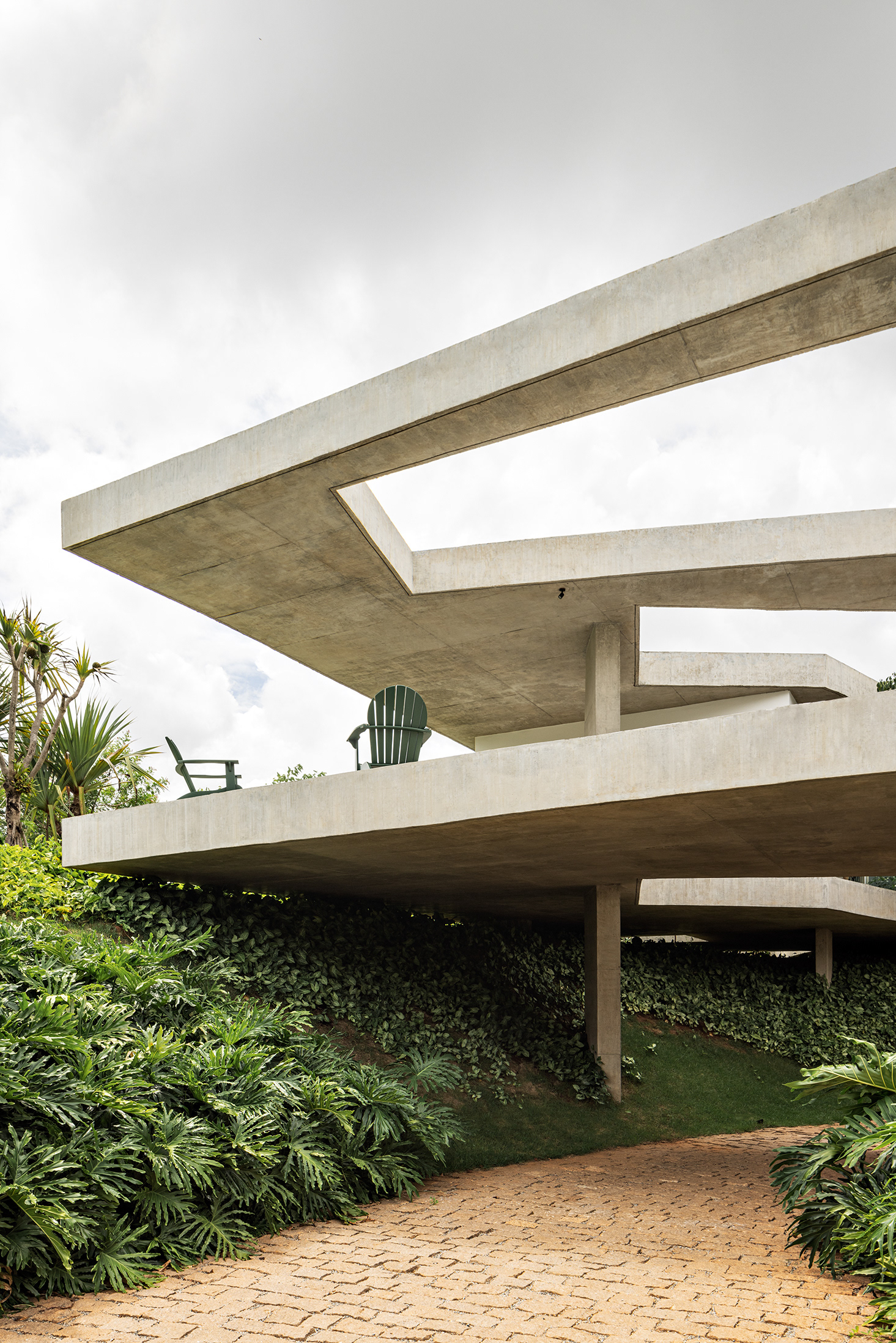
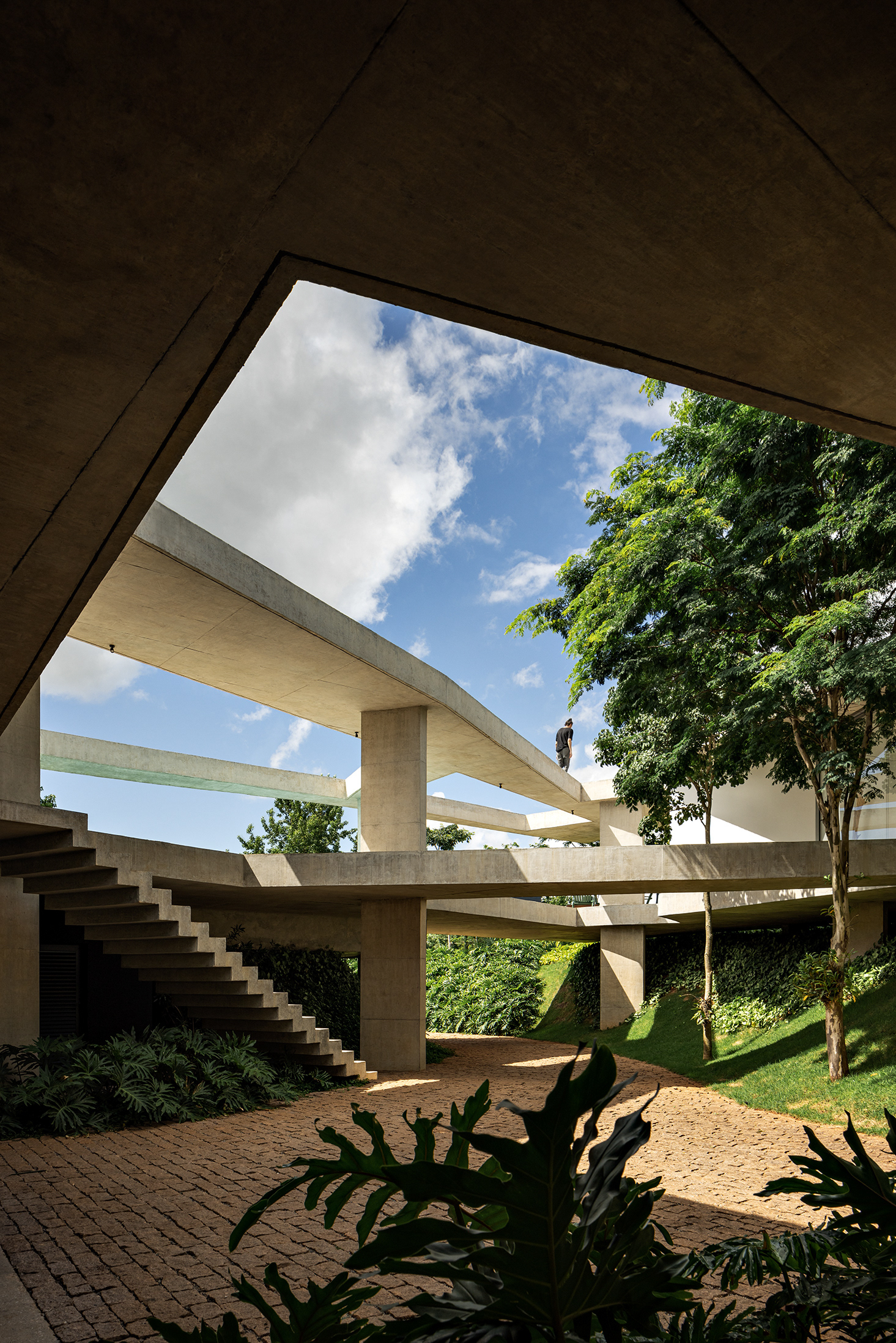
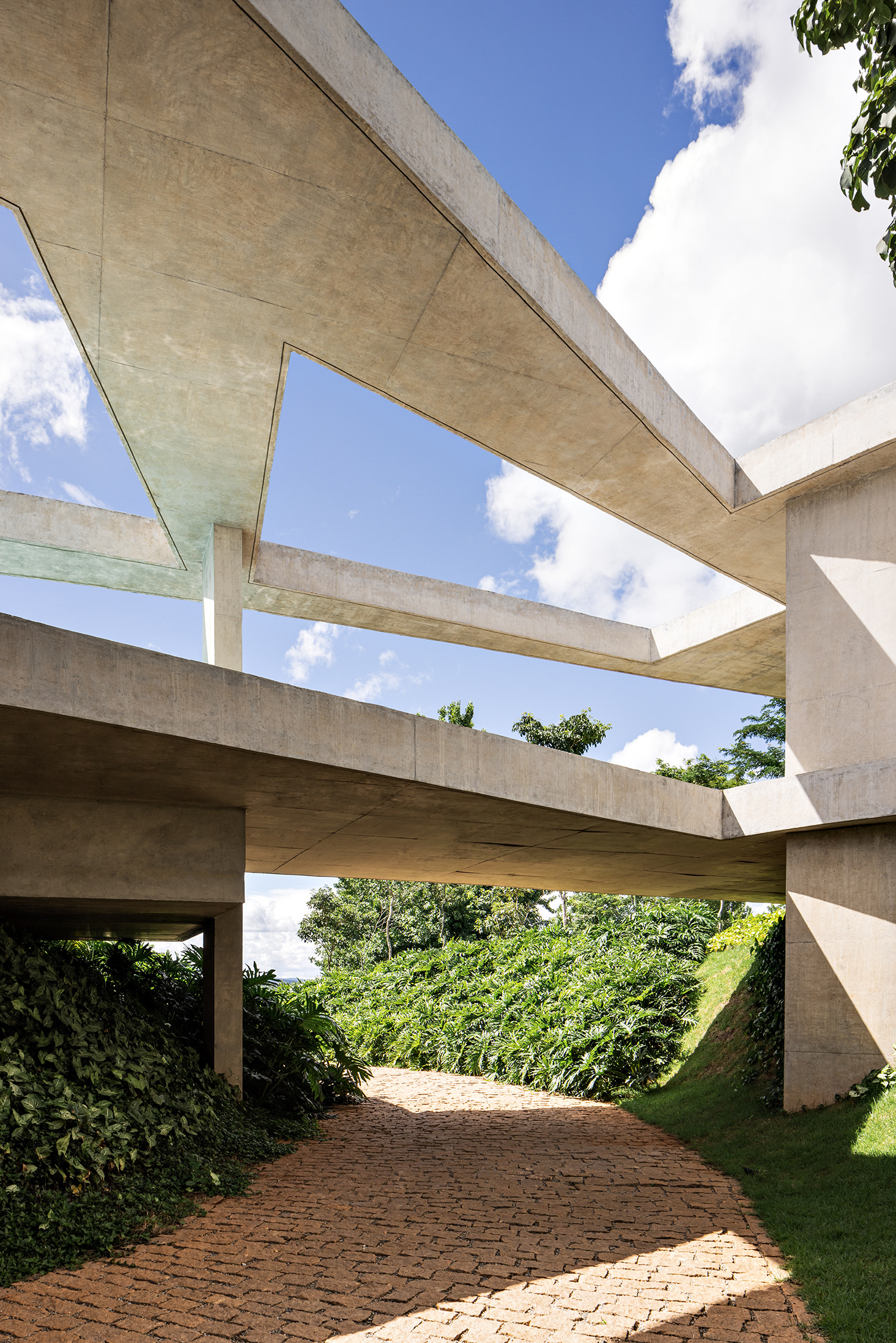
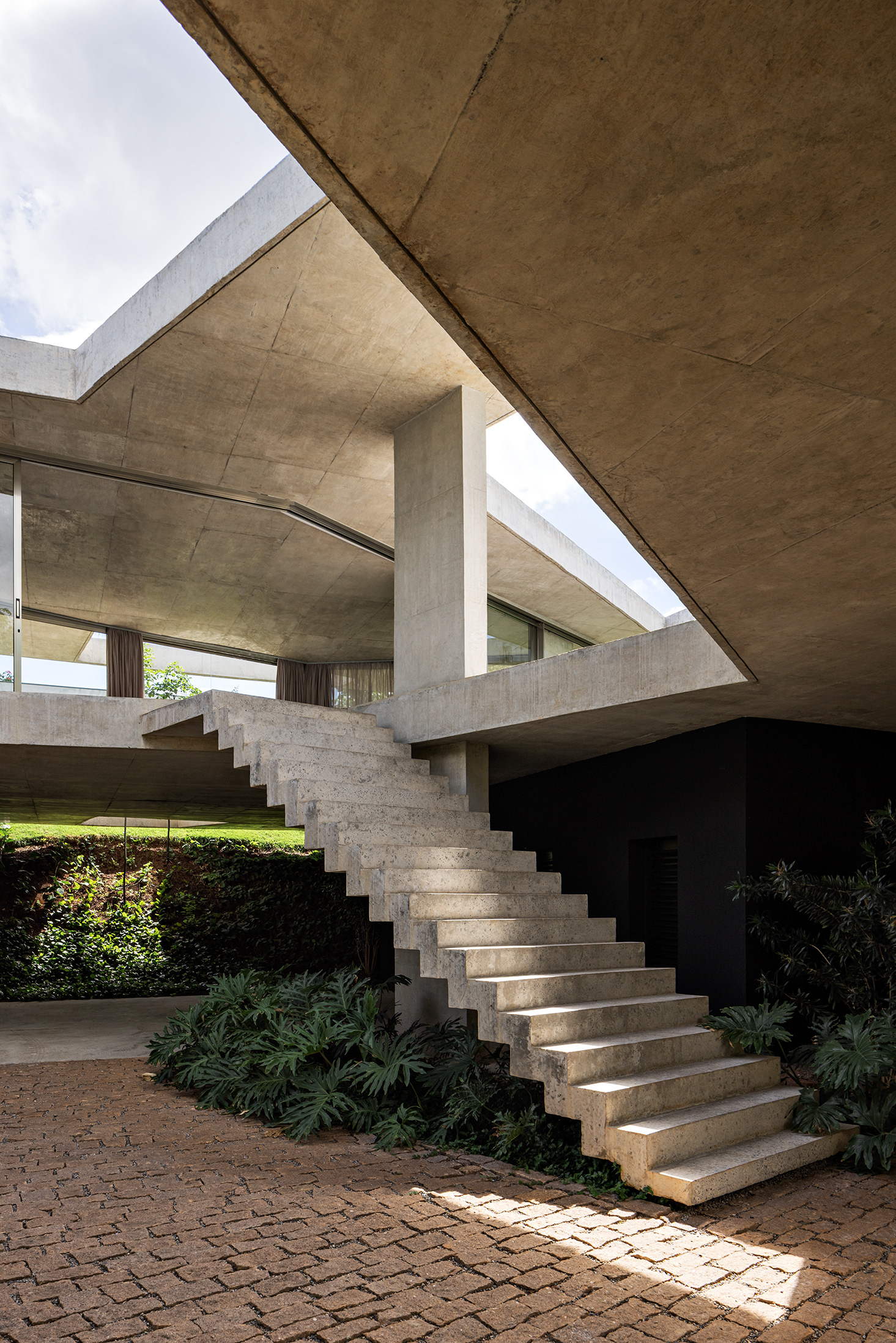
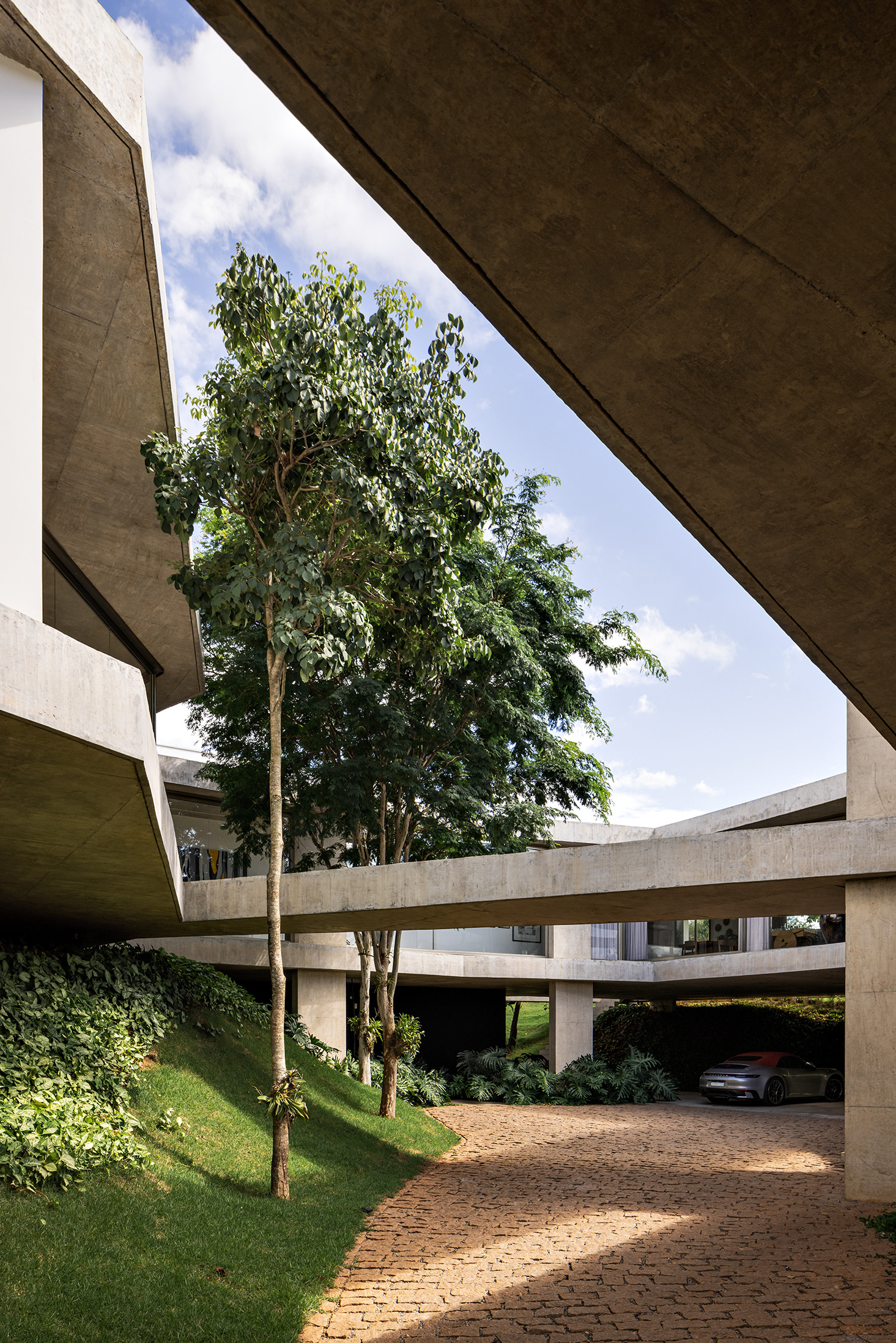
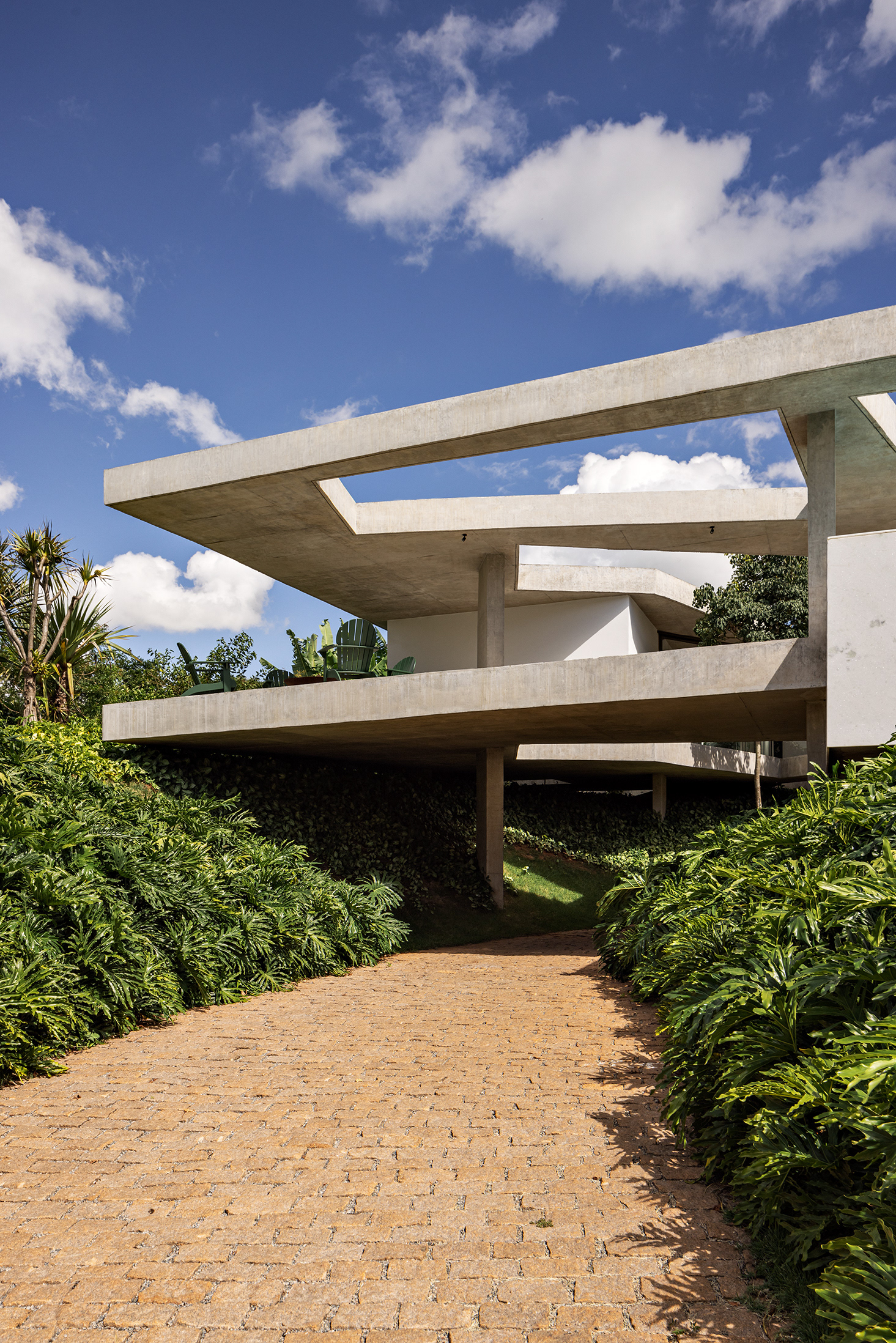
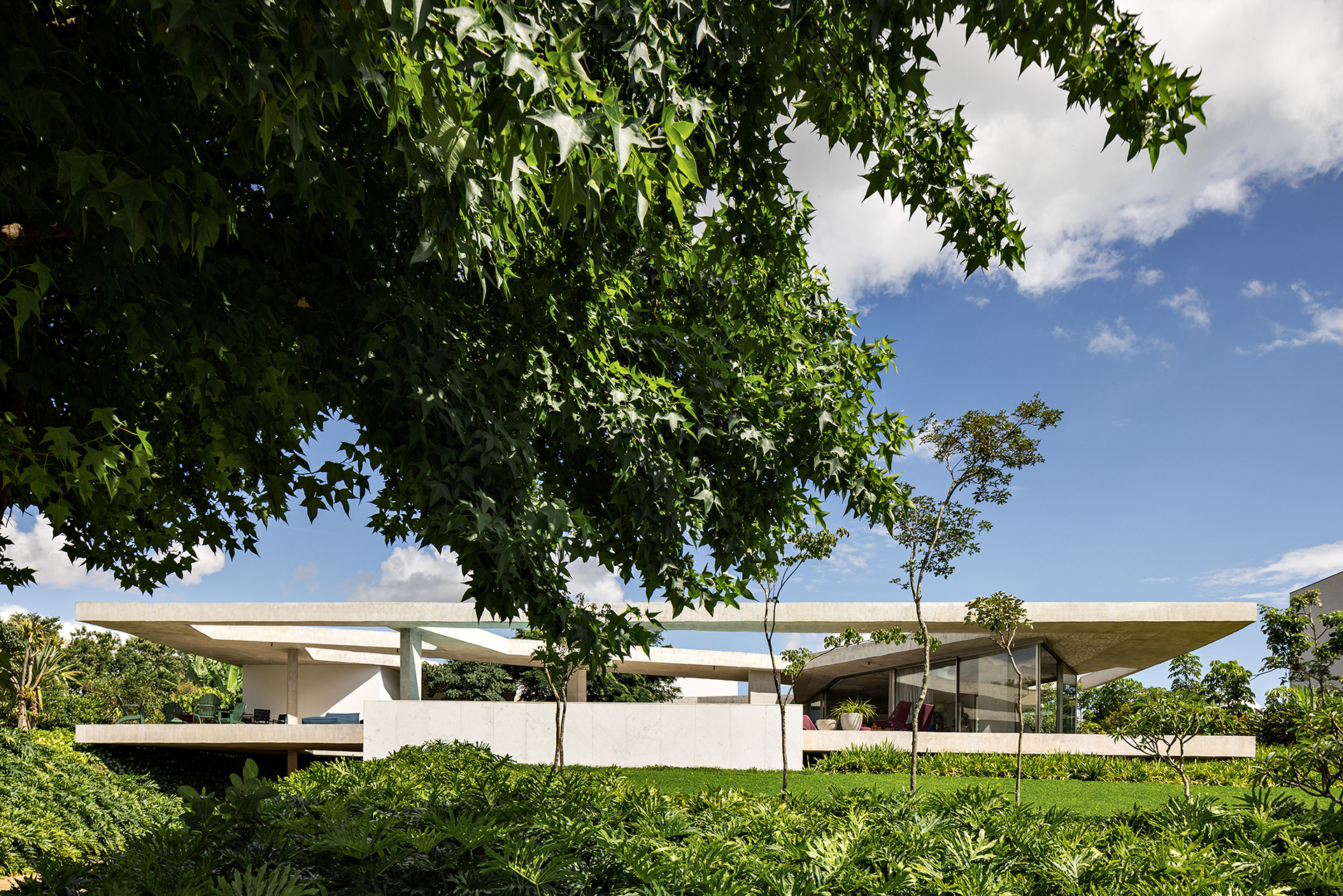
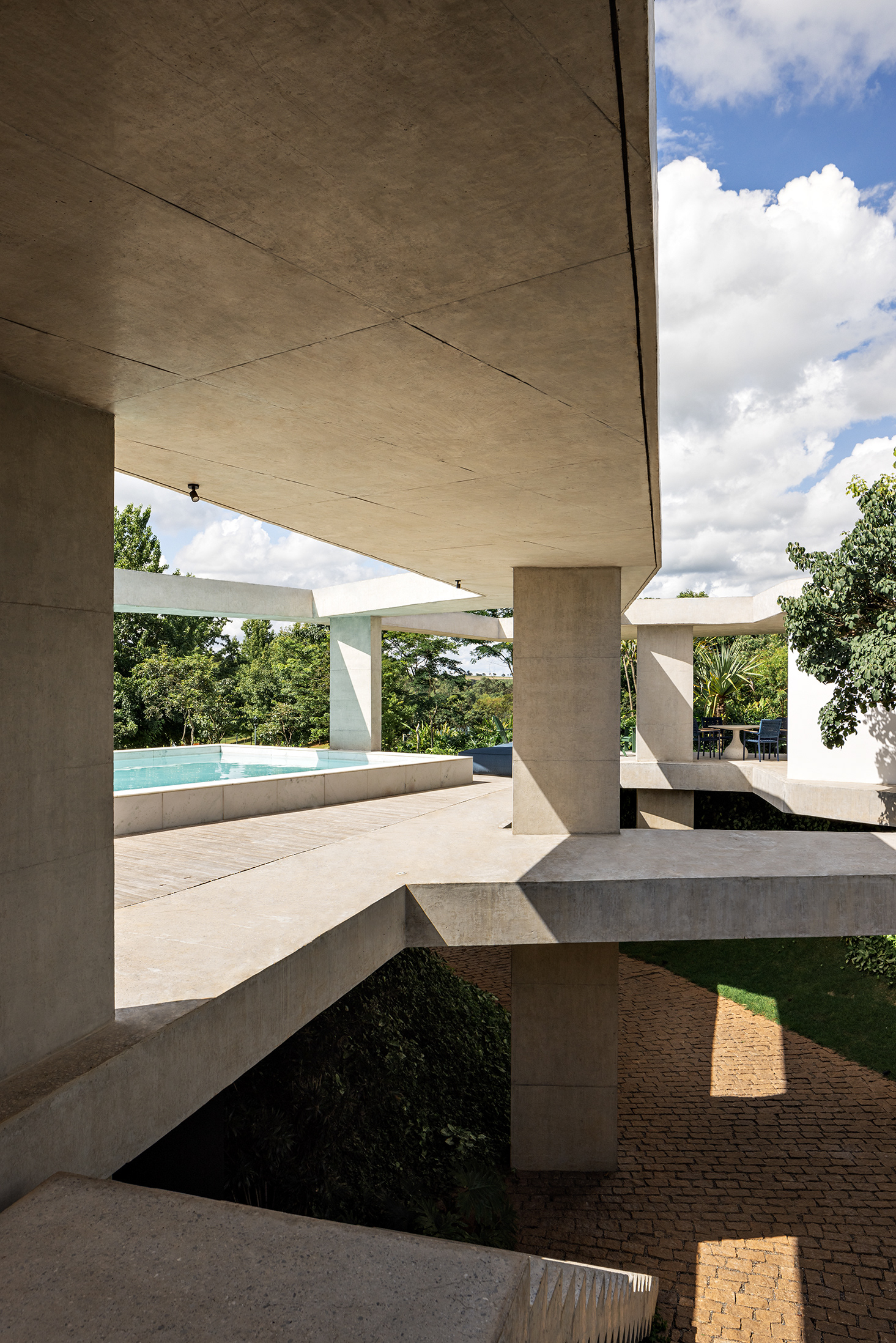
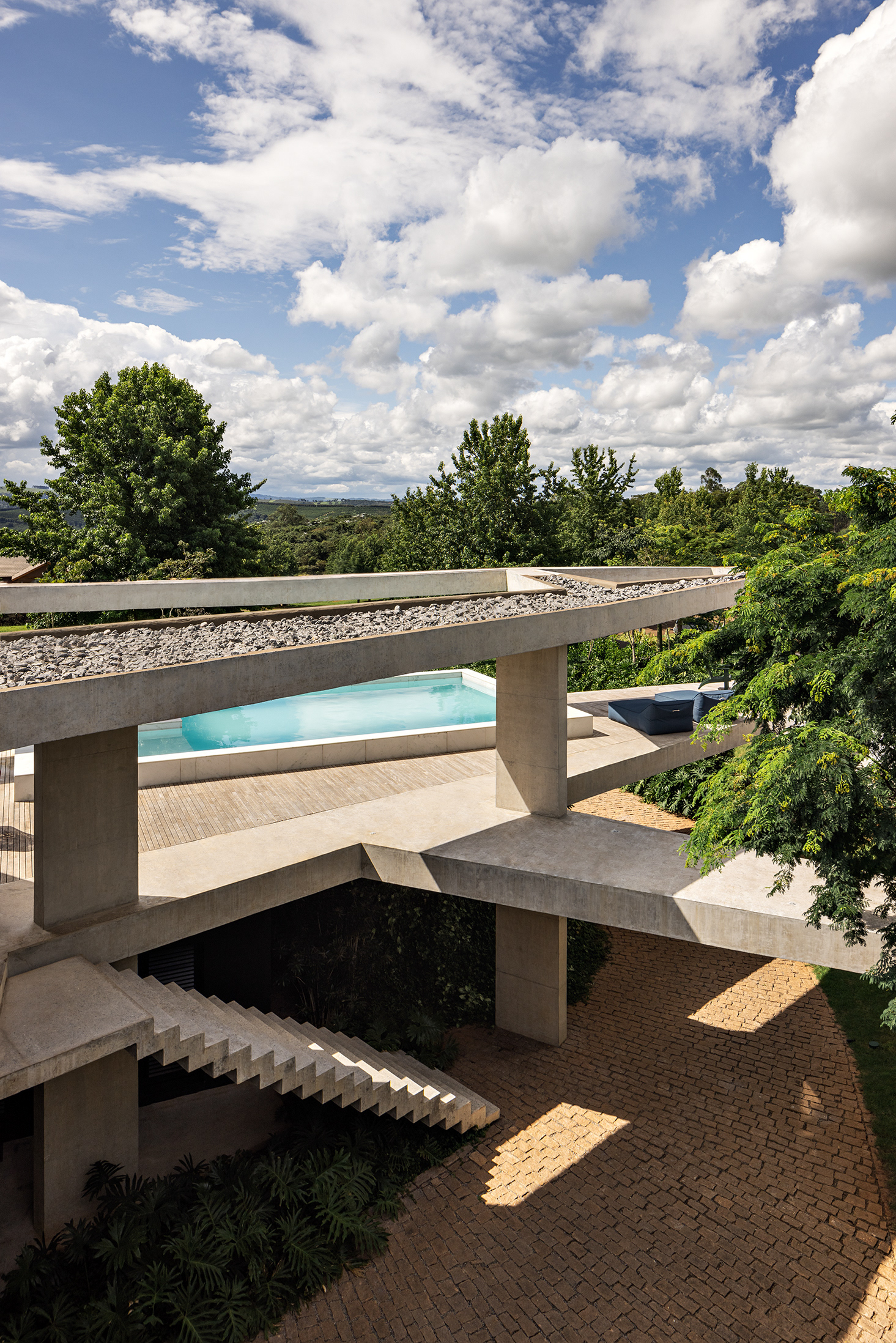
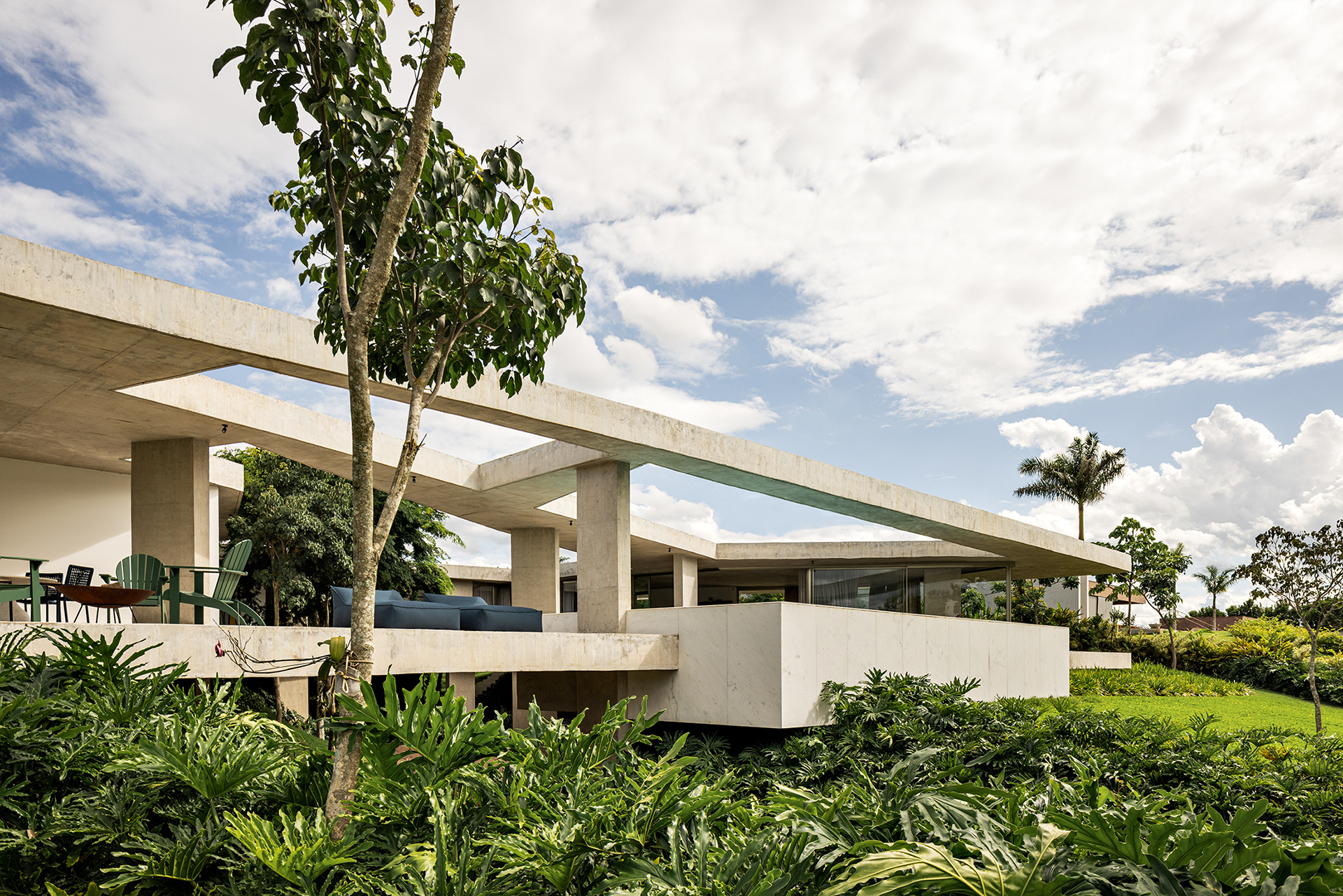
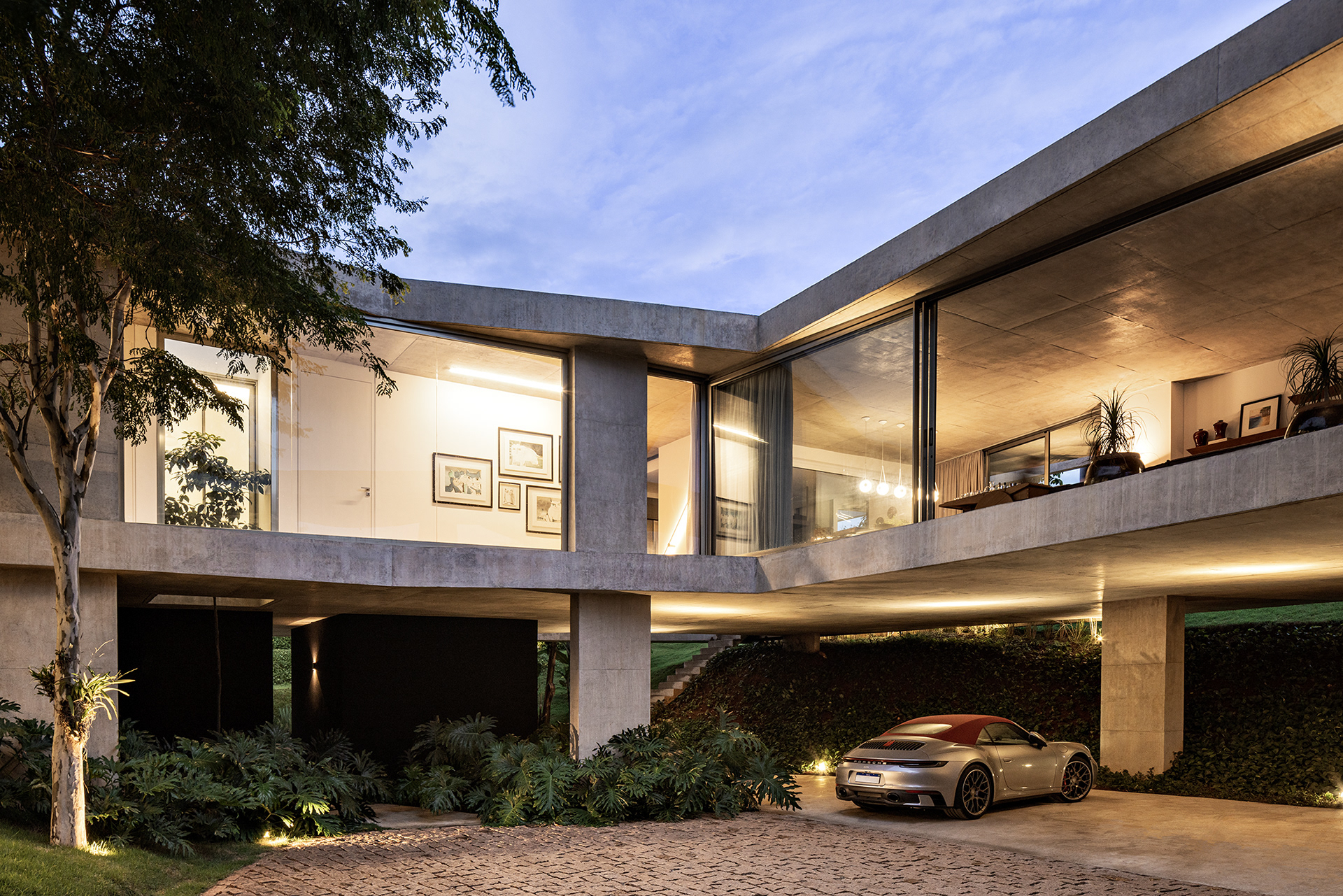
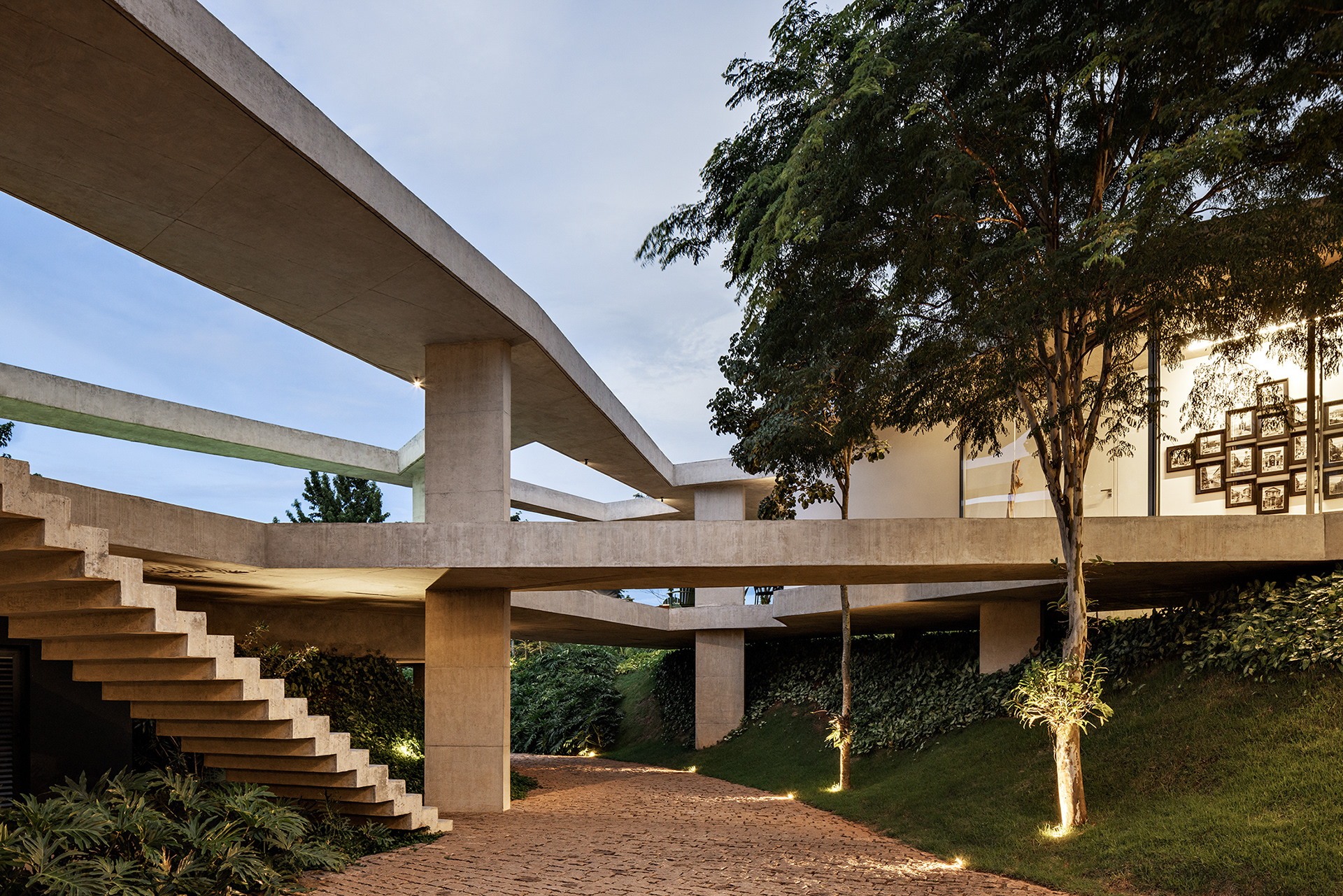
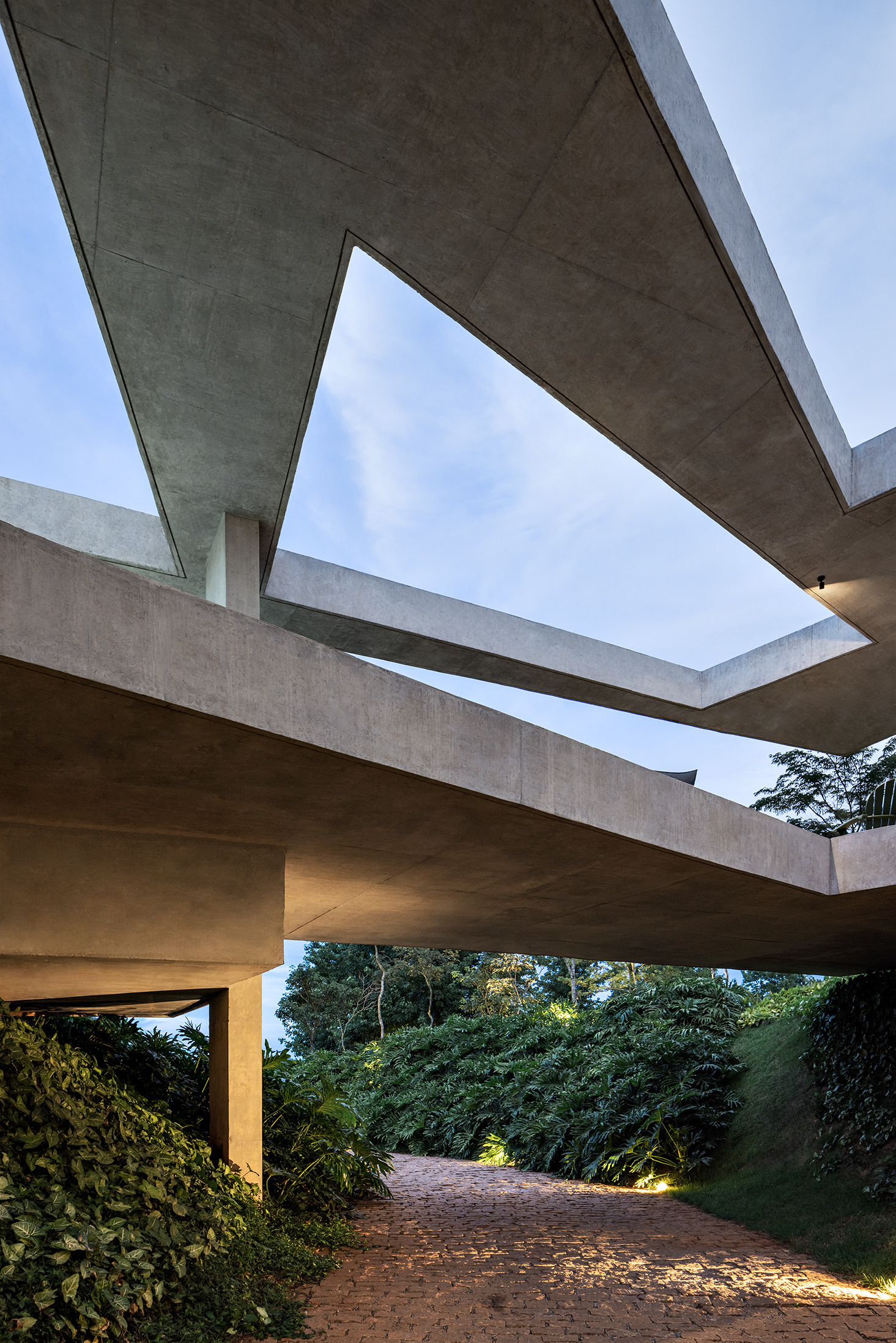
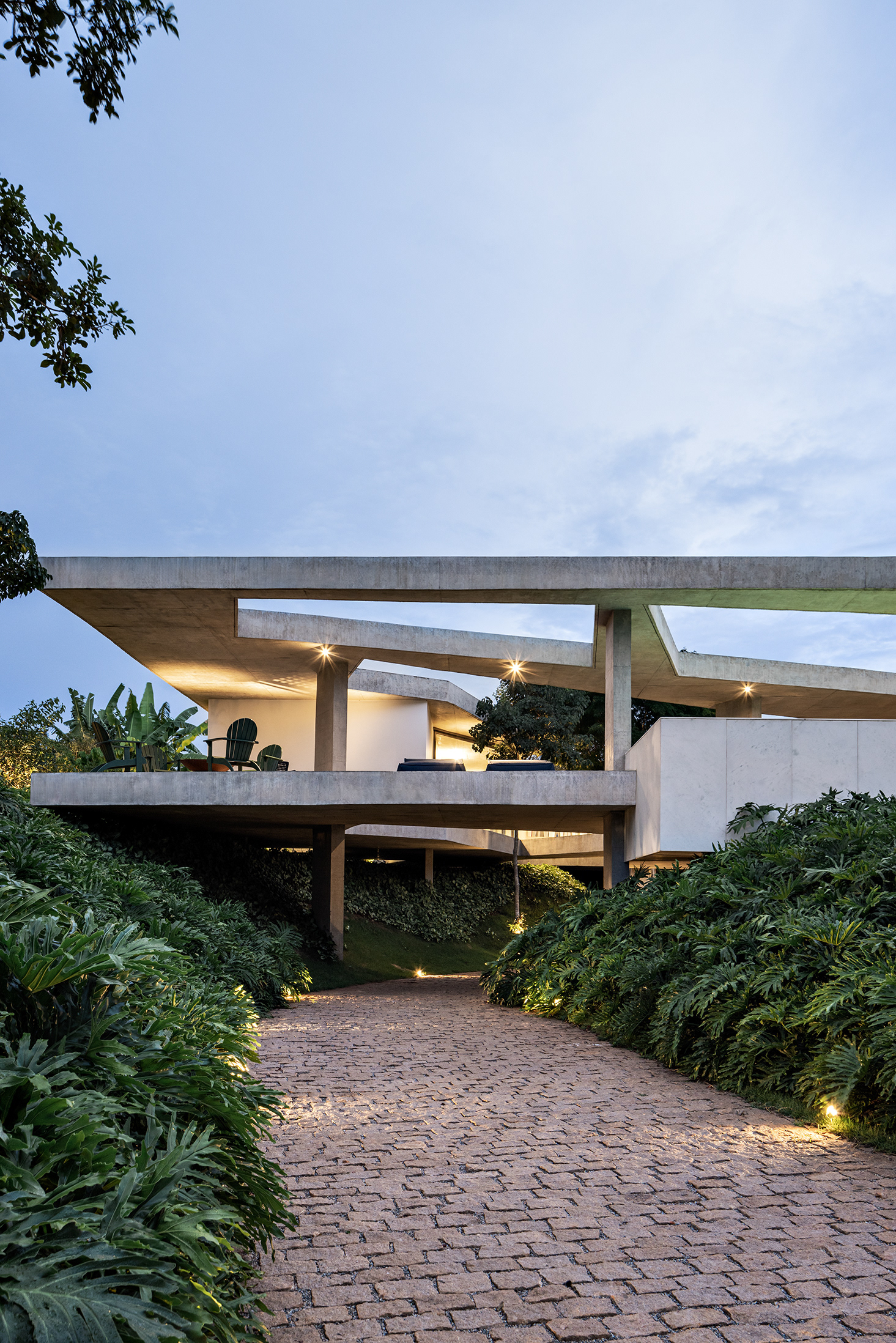
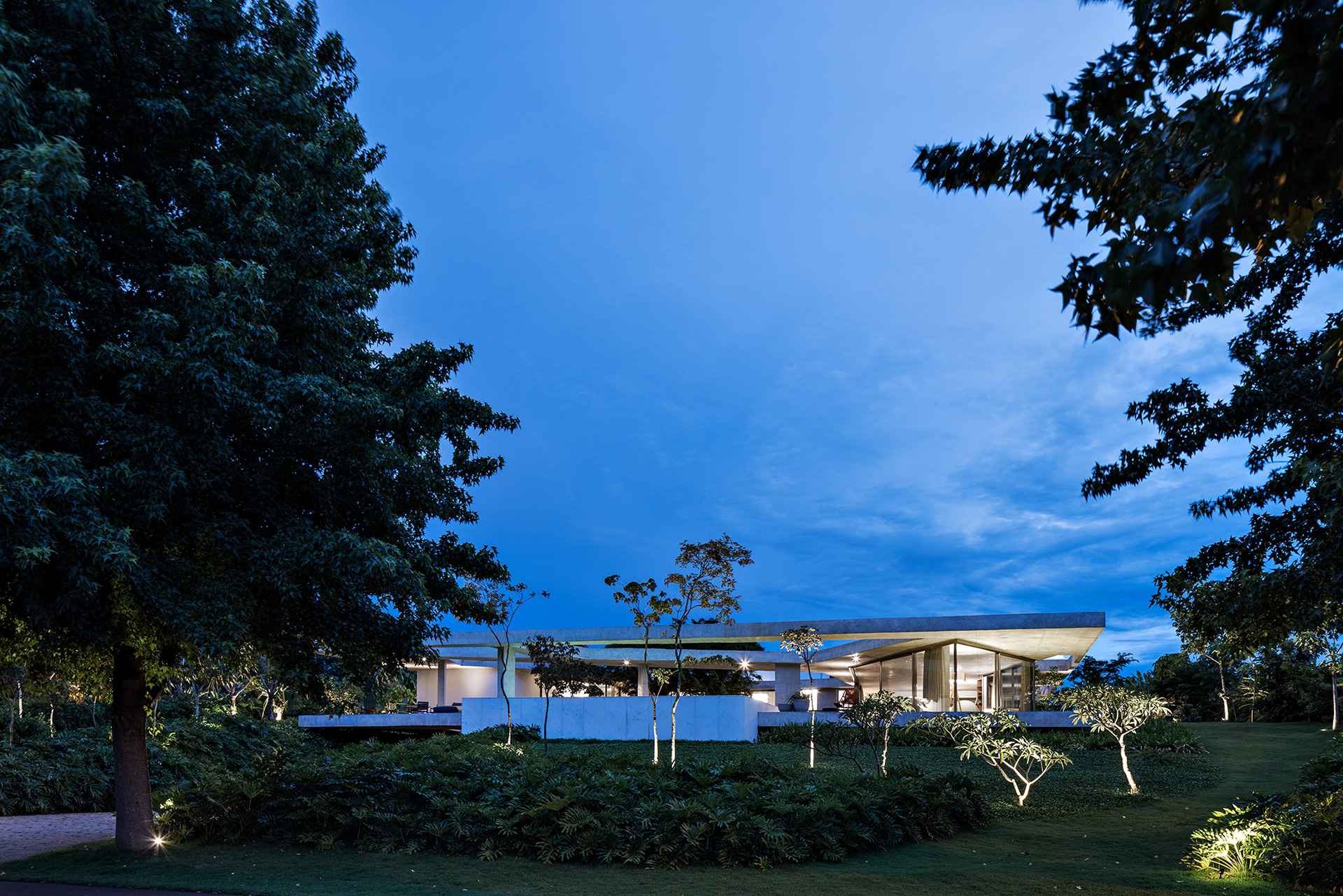
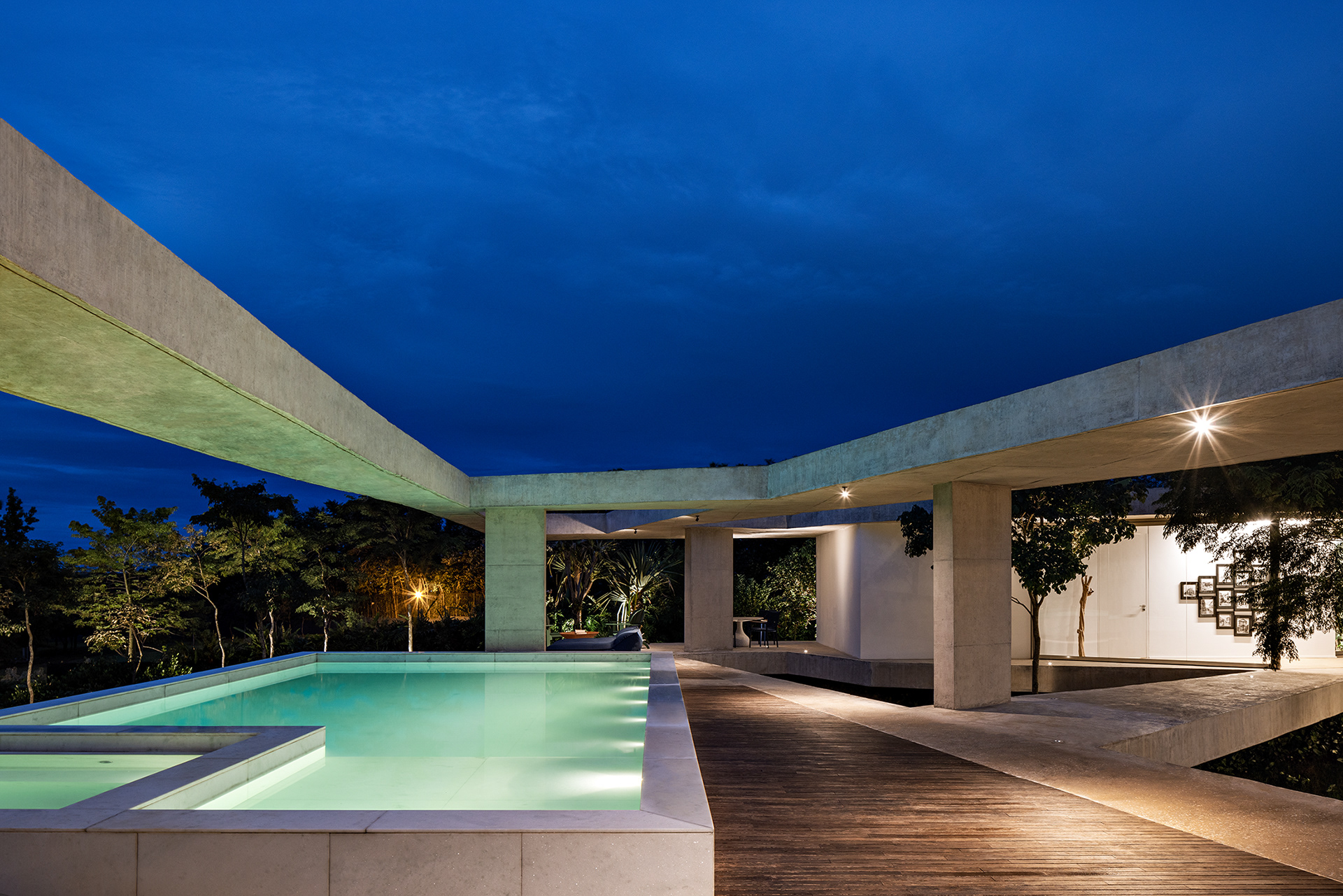
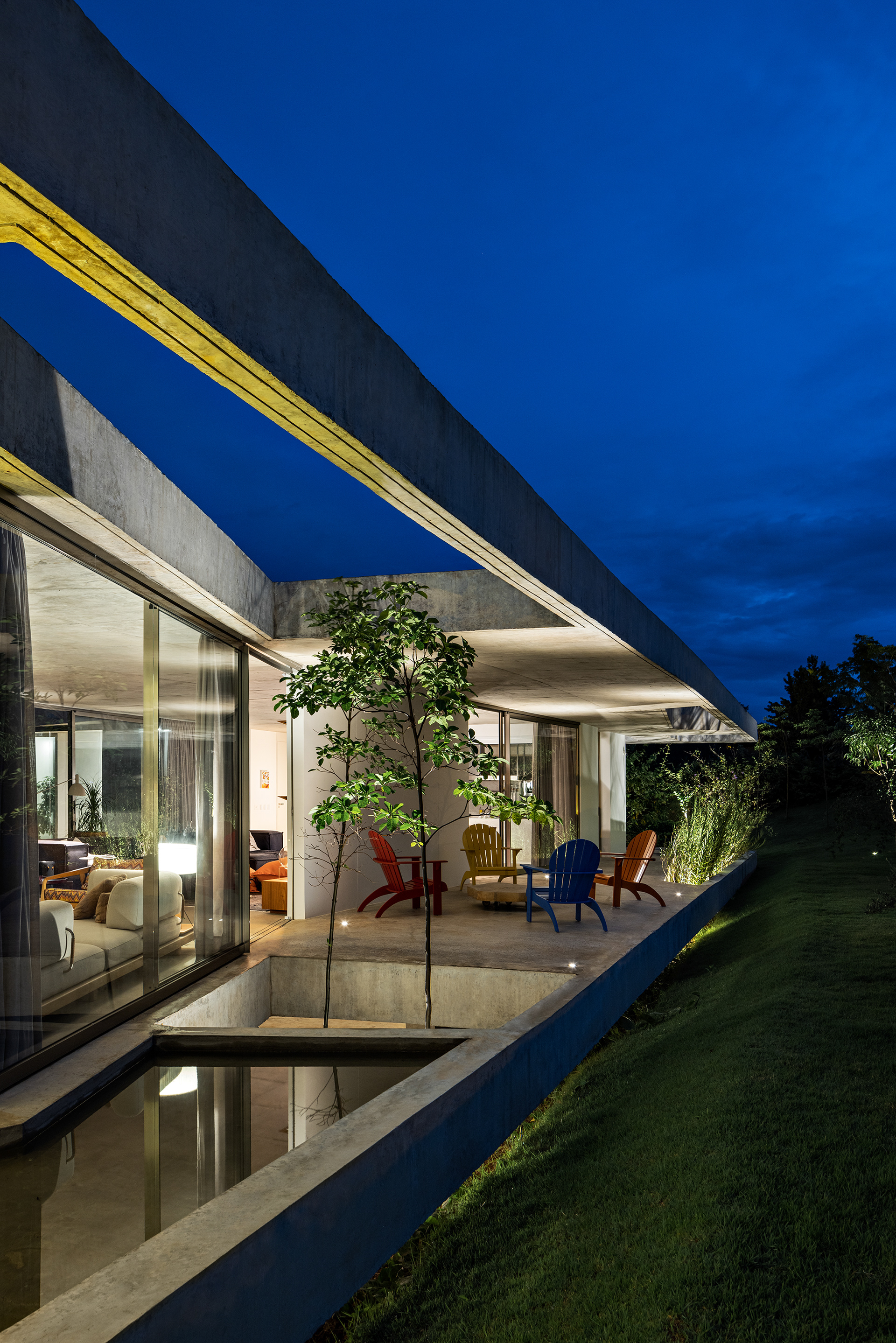
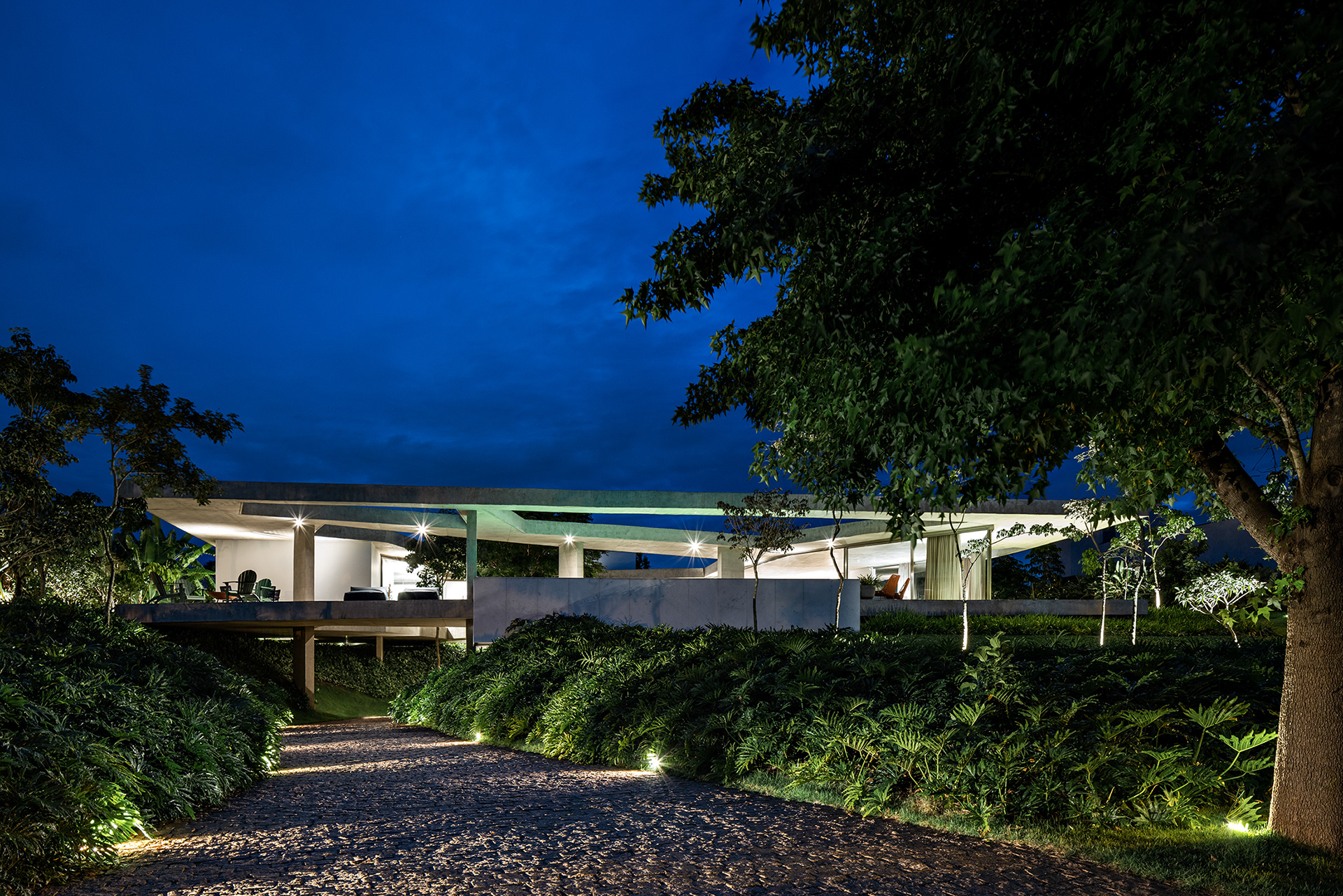
Located in Quinta da Baroneza, a high-end residential community in Bragança Paulista — a hill station 90 kilometers from the city of São Paulo — this house was designed for a couple and their teenage son. It sits on a square lot with a gentle slope and generous views. As the future construction of neighboring houses could compromise much of the scenery, the architects chose to excavate the central strip of the site. This strategy created a basement with a sunlit courtyard, garage, and garden at street level, while elevating the house above the ground. “As the street slopes downward, the frontal view was preserved,” explains the architect, one of the project’s authors.
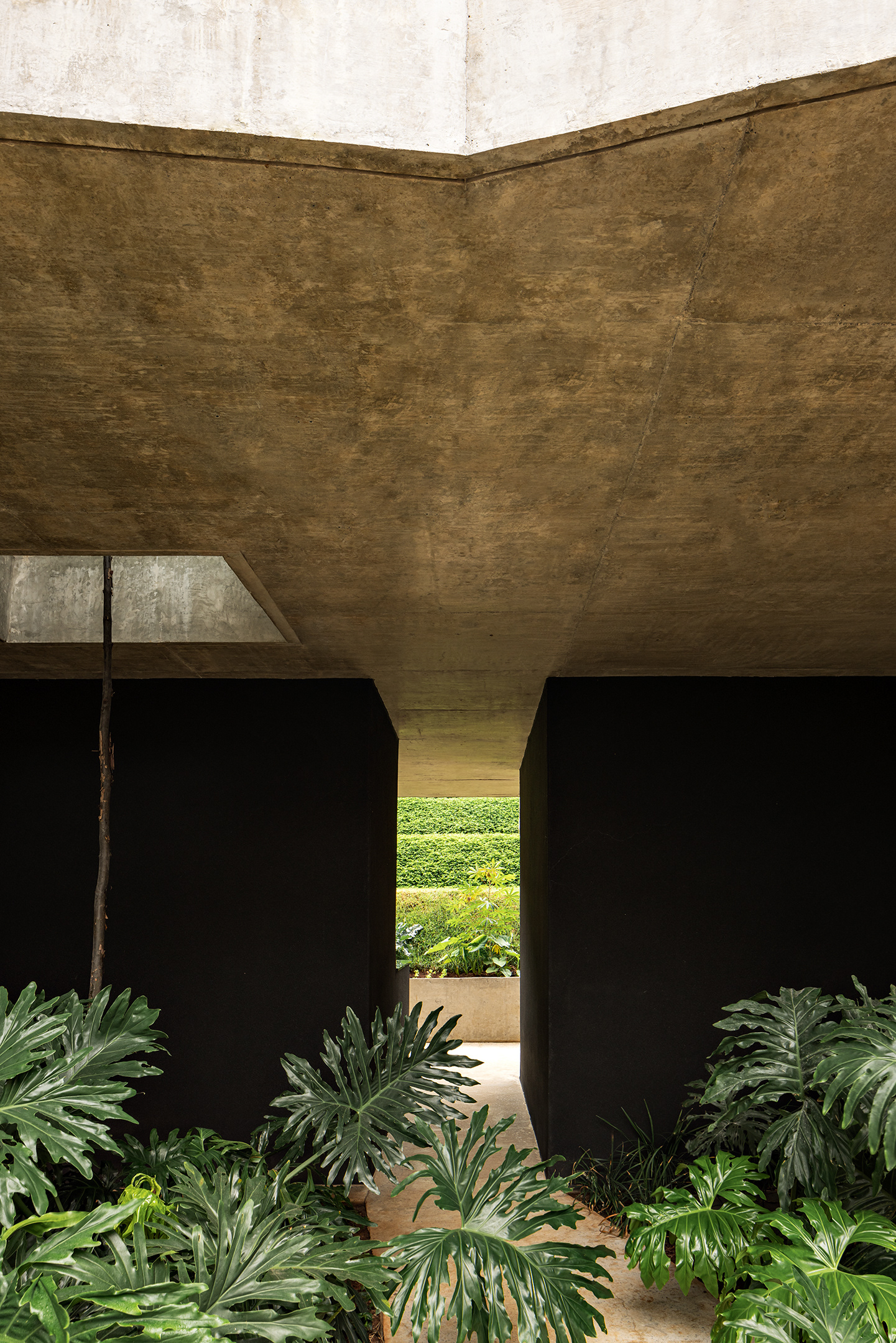
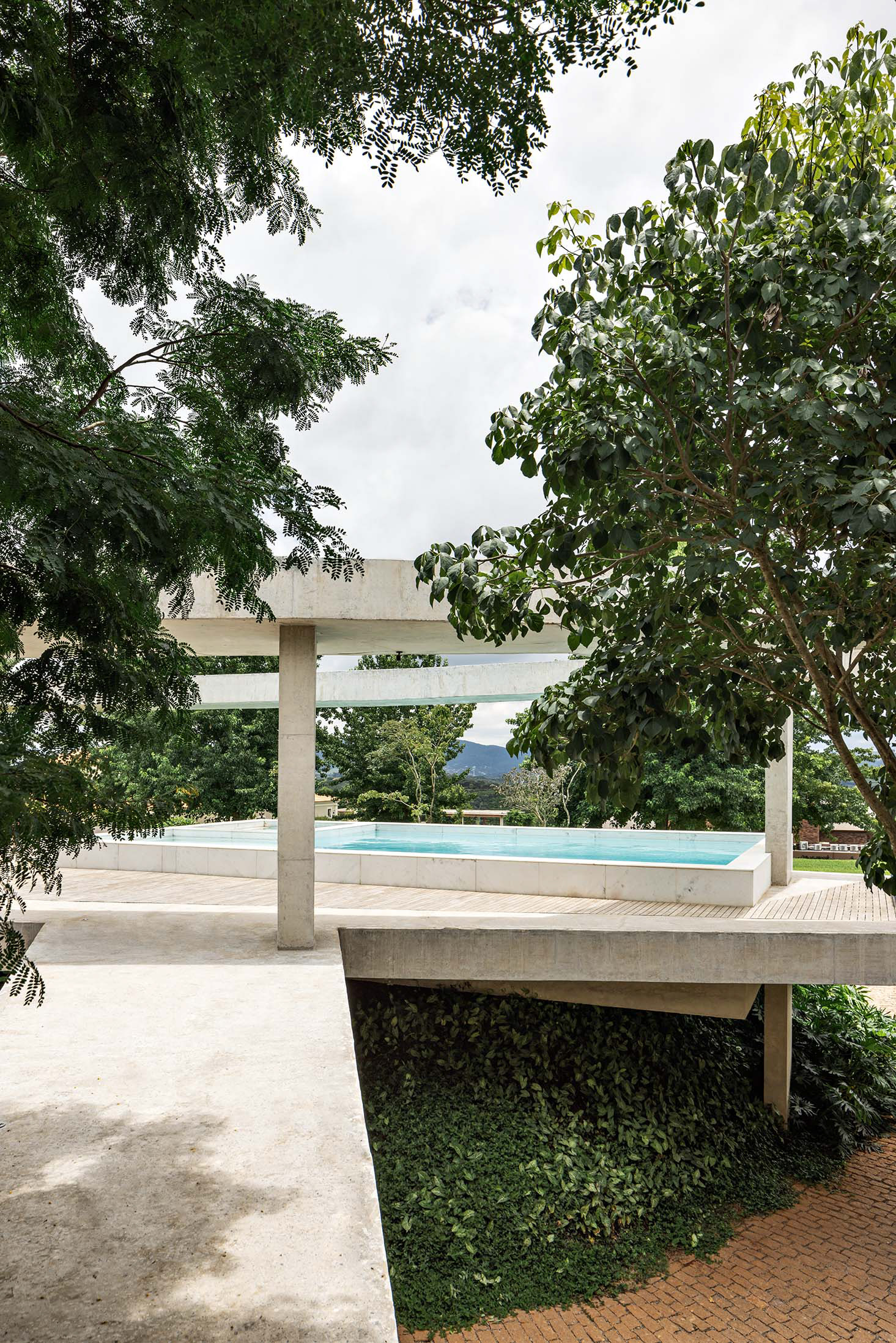
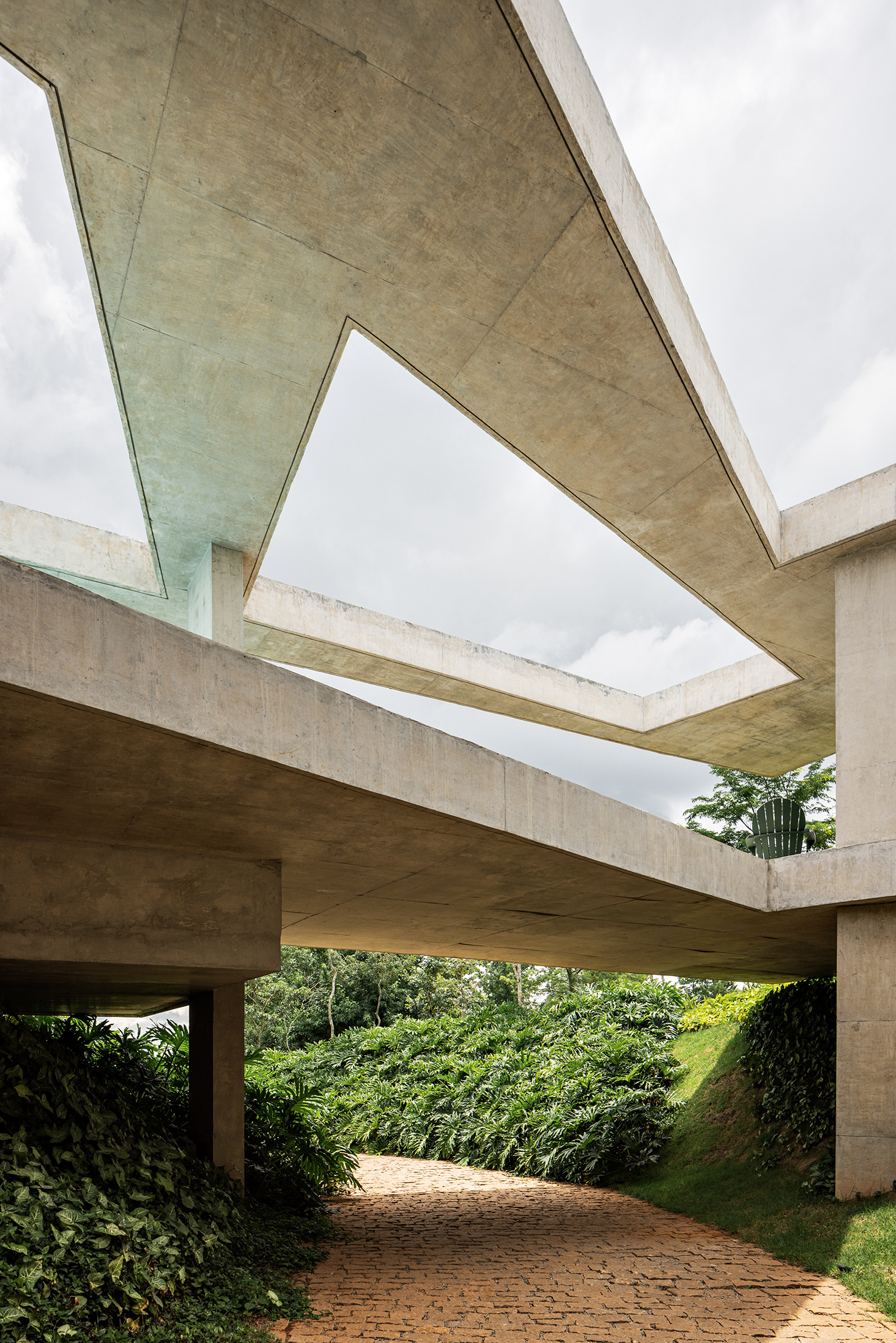
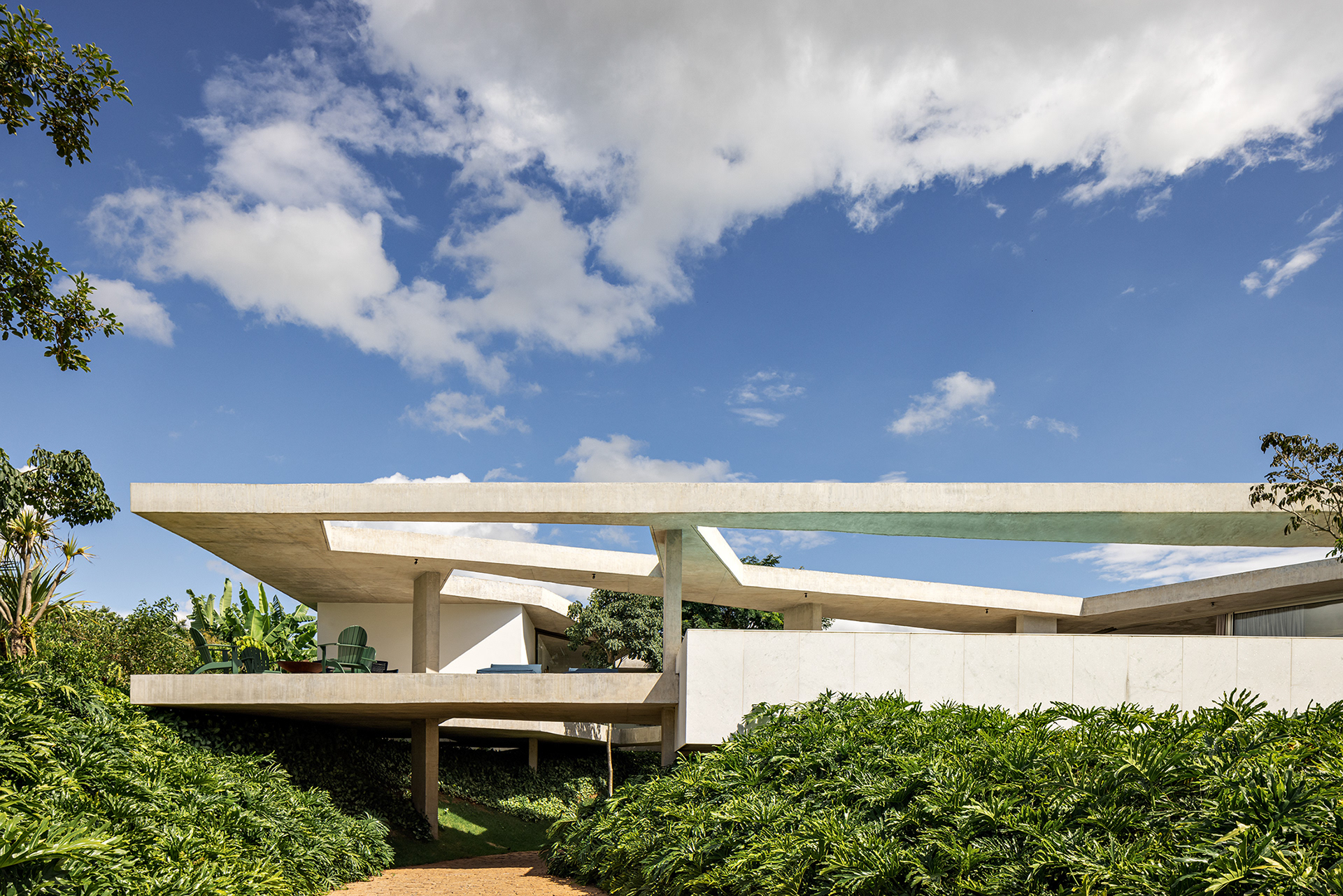
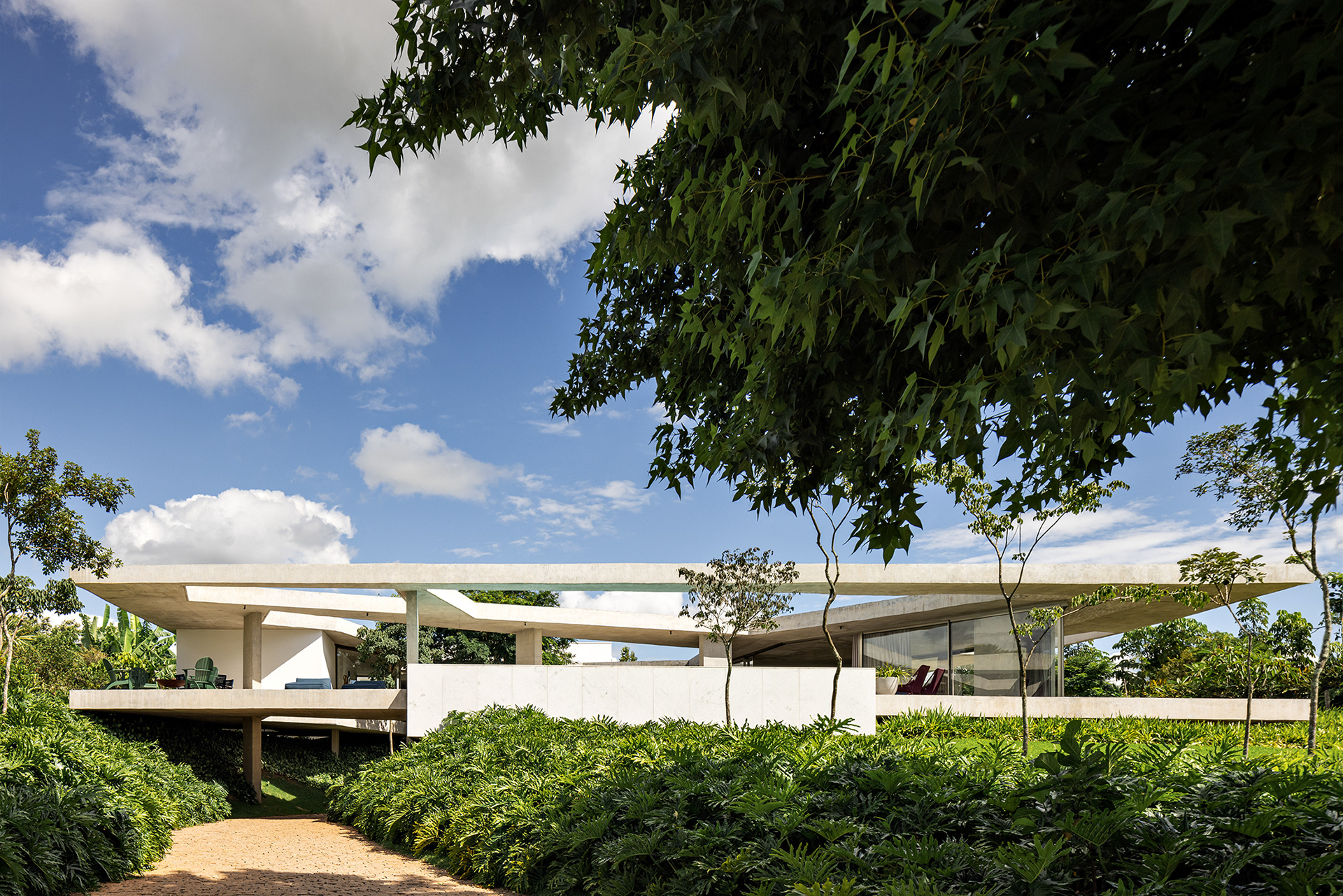
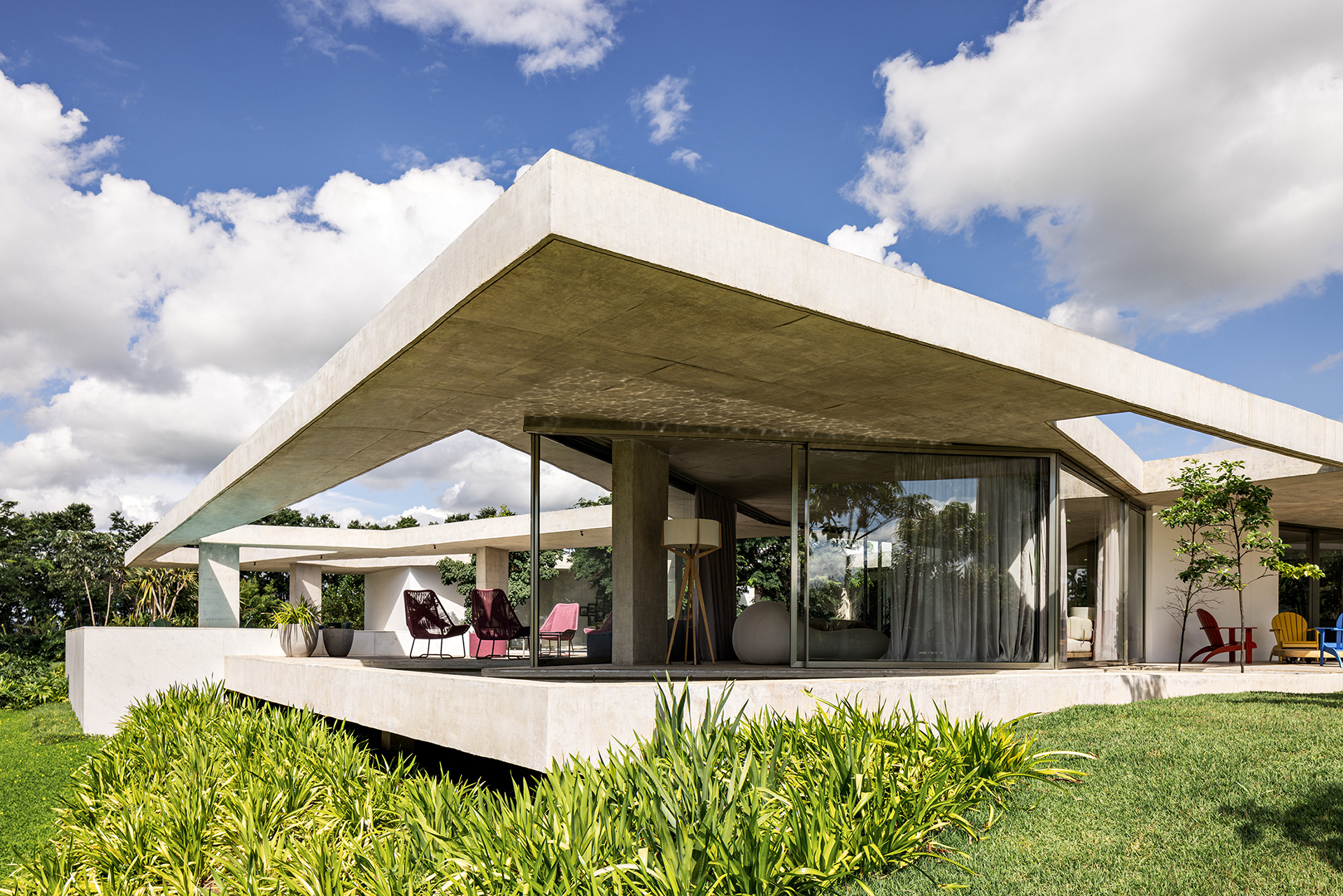
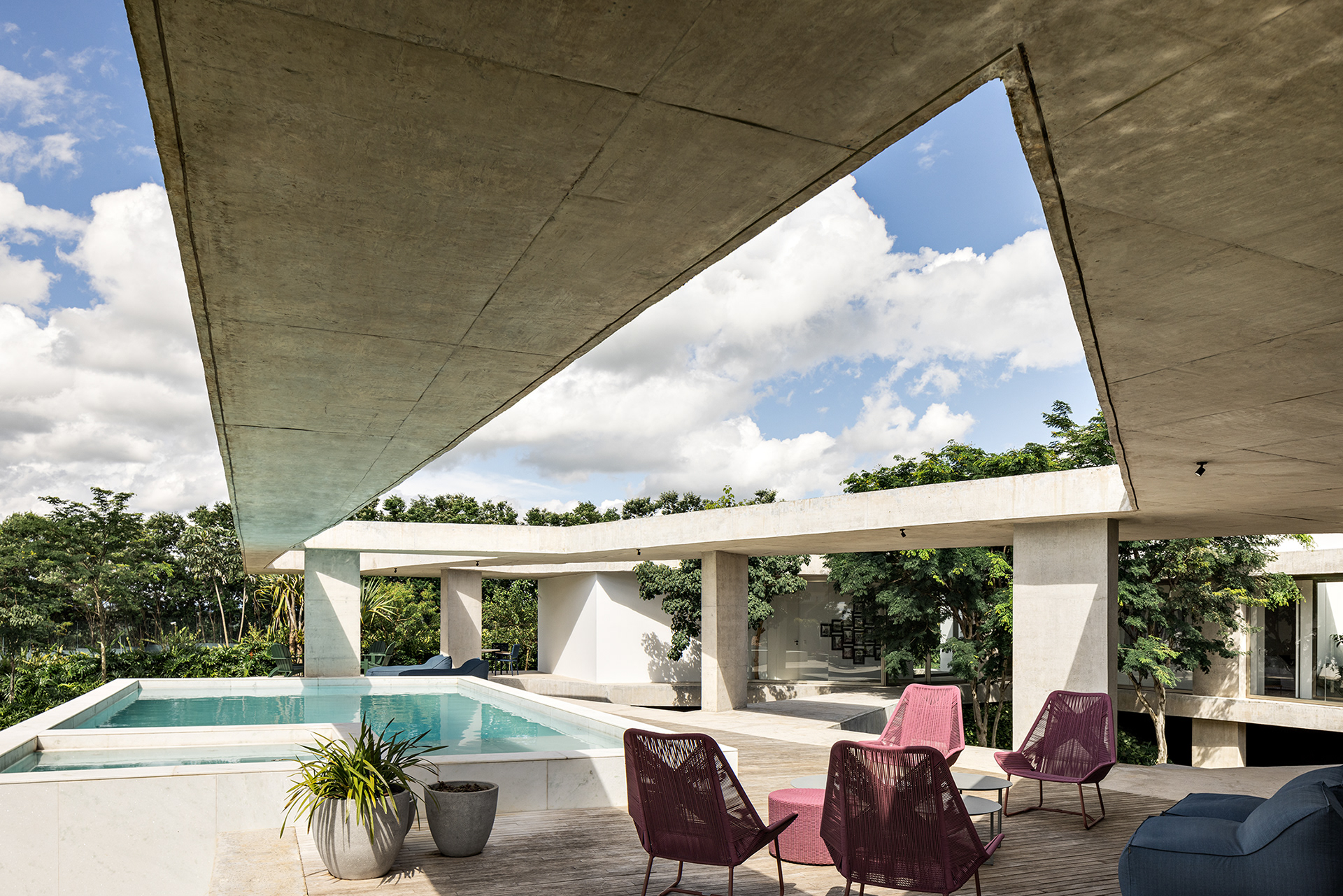
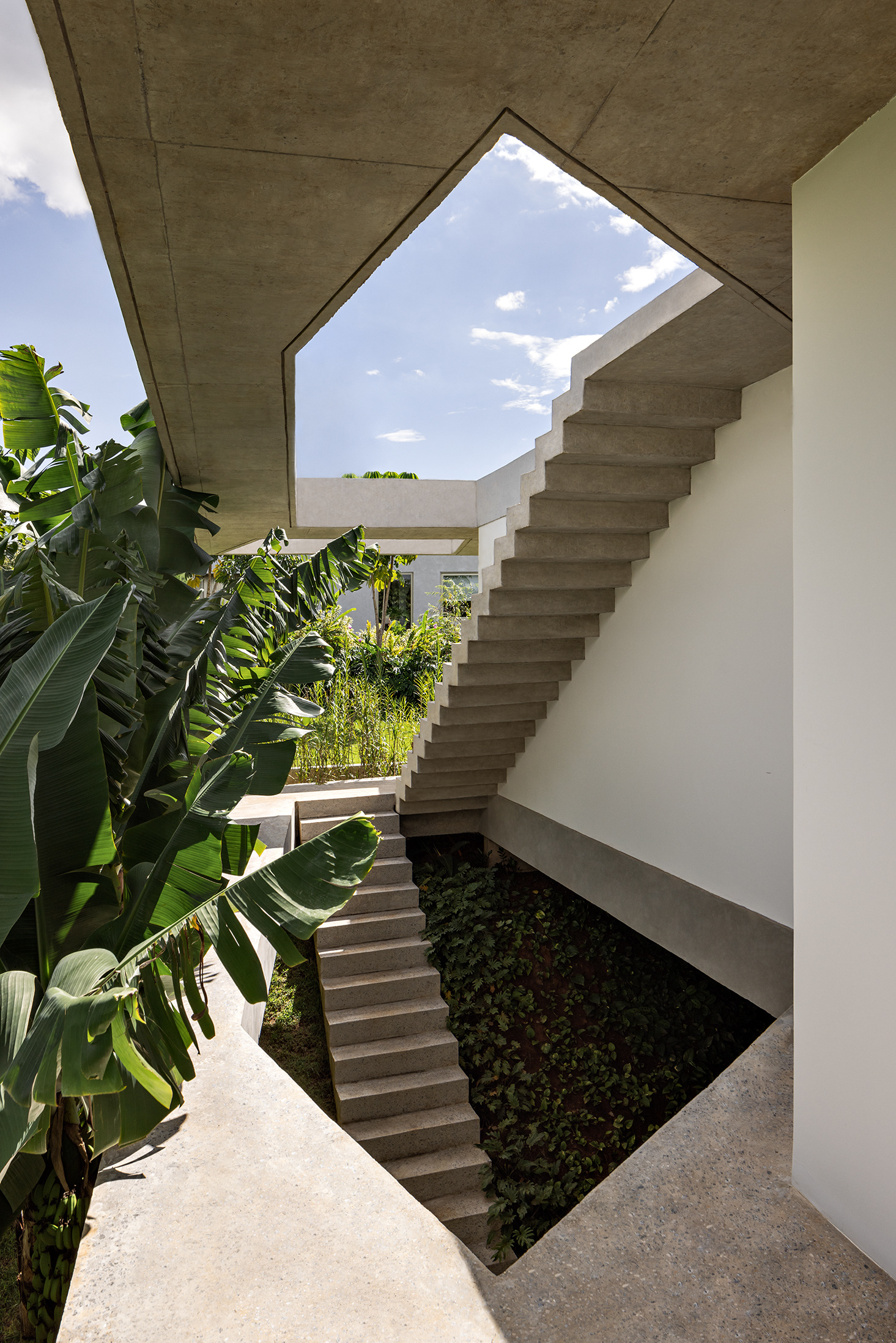
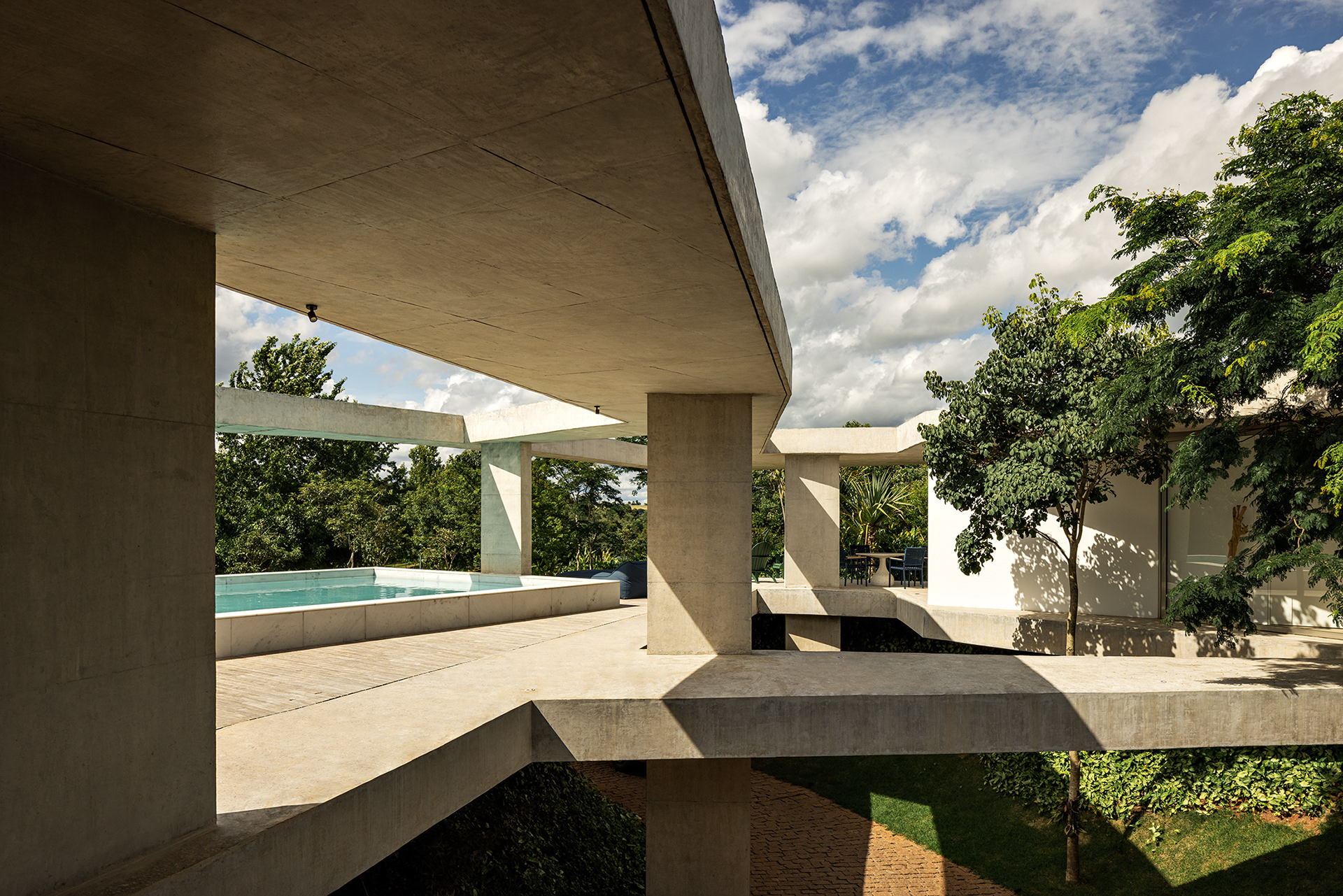
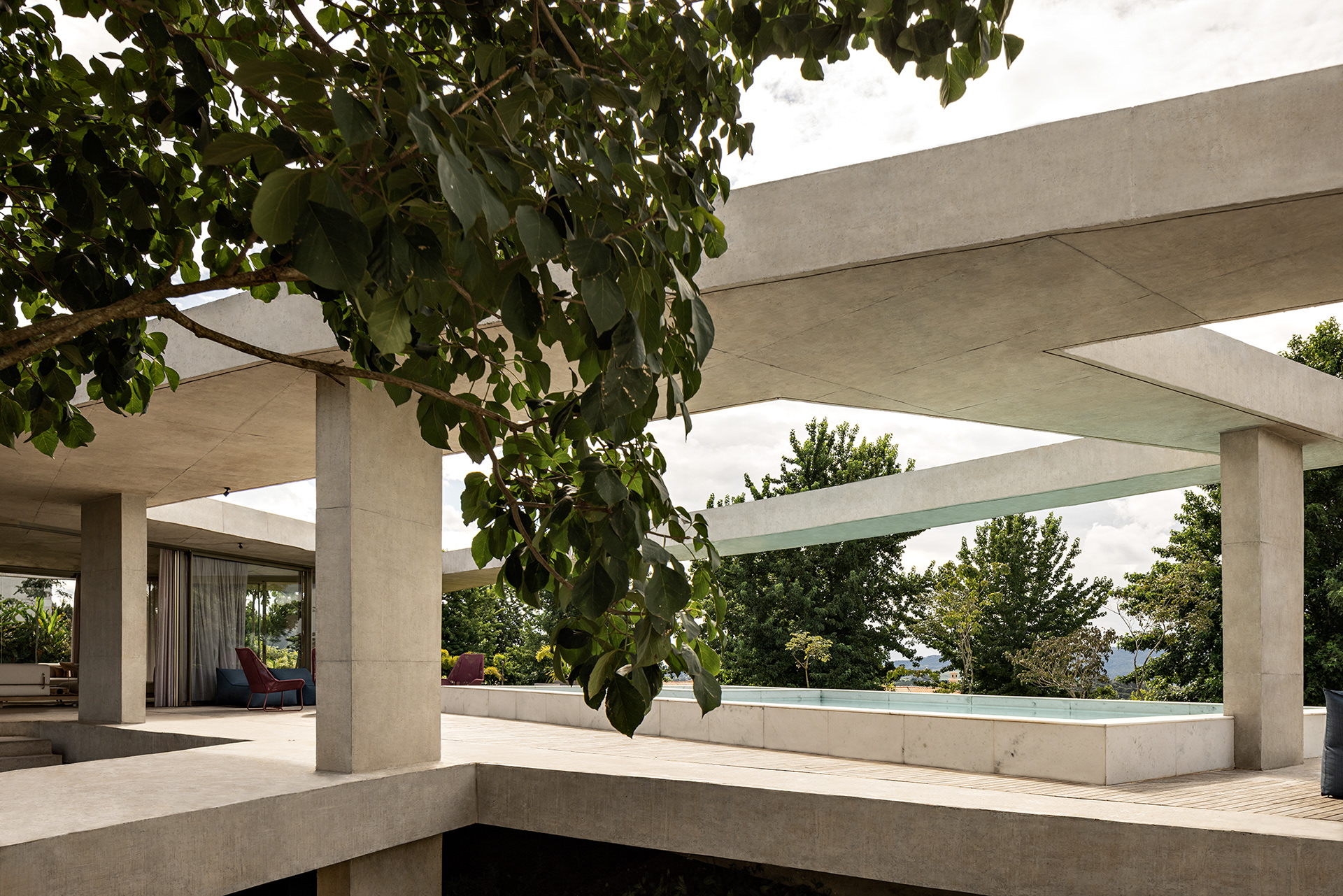
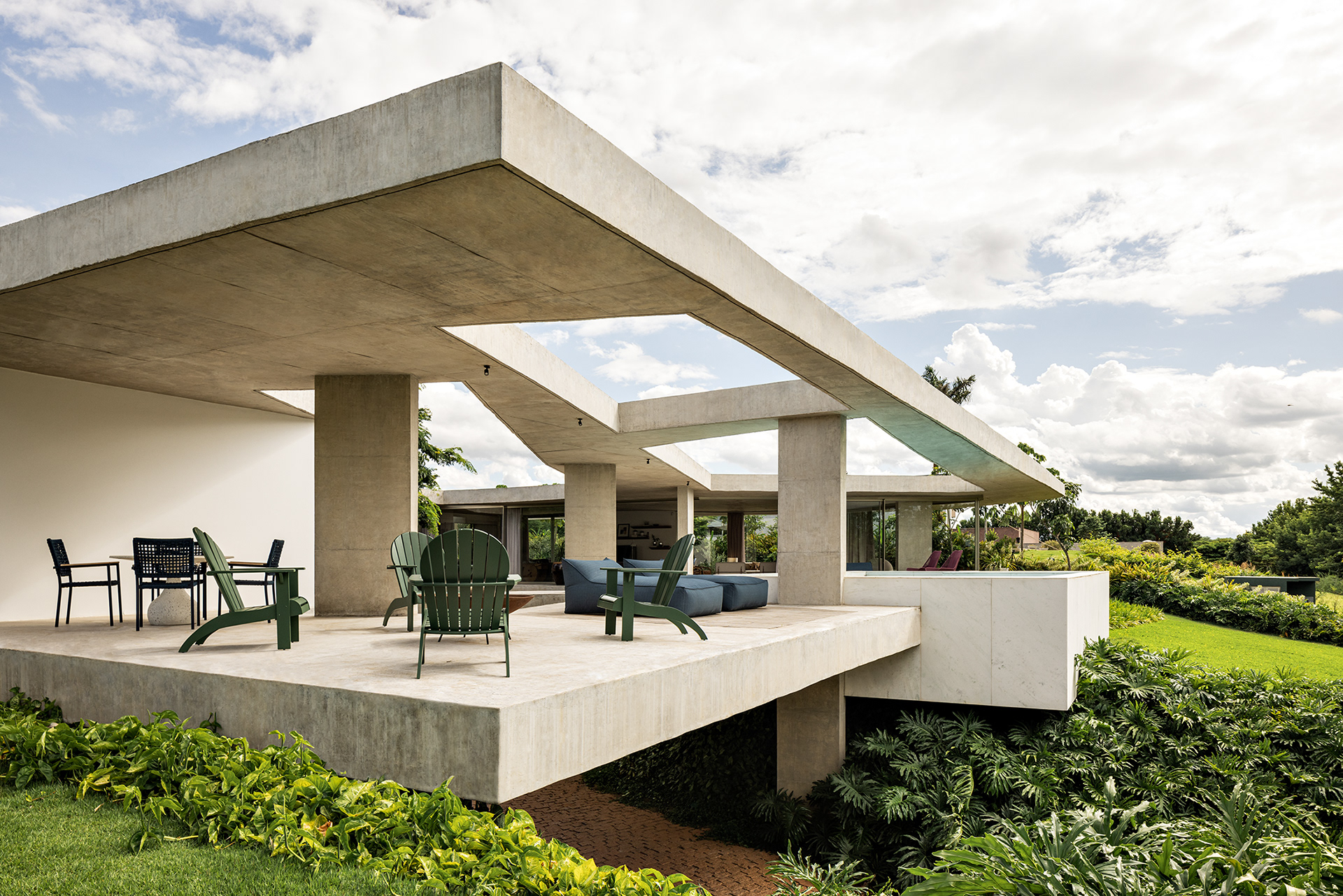
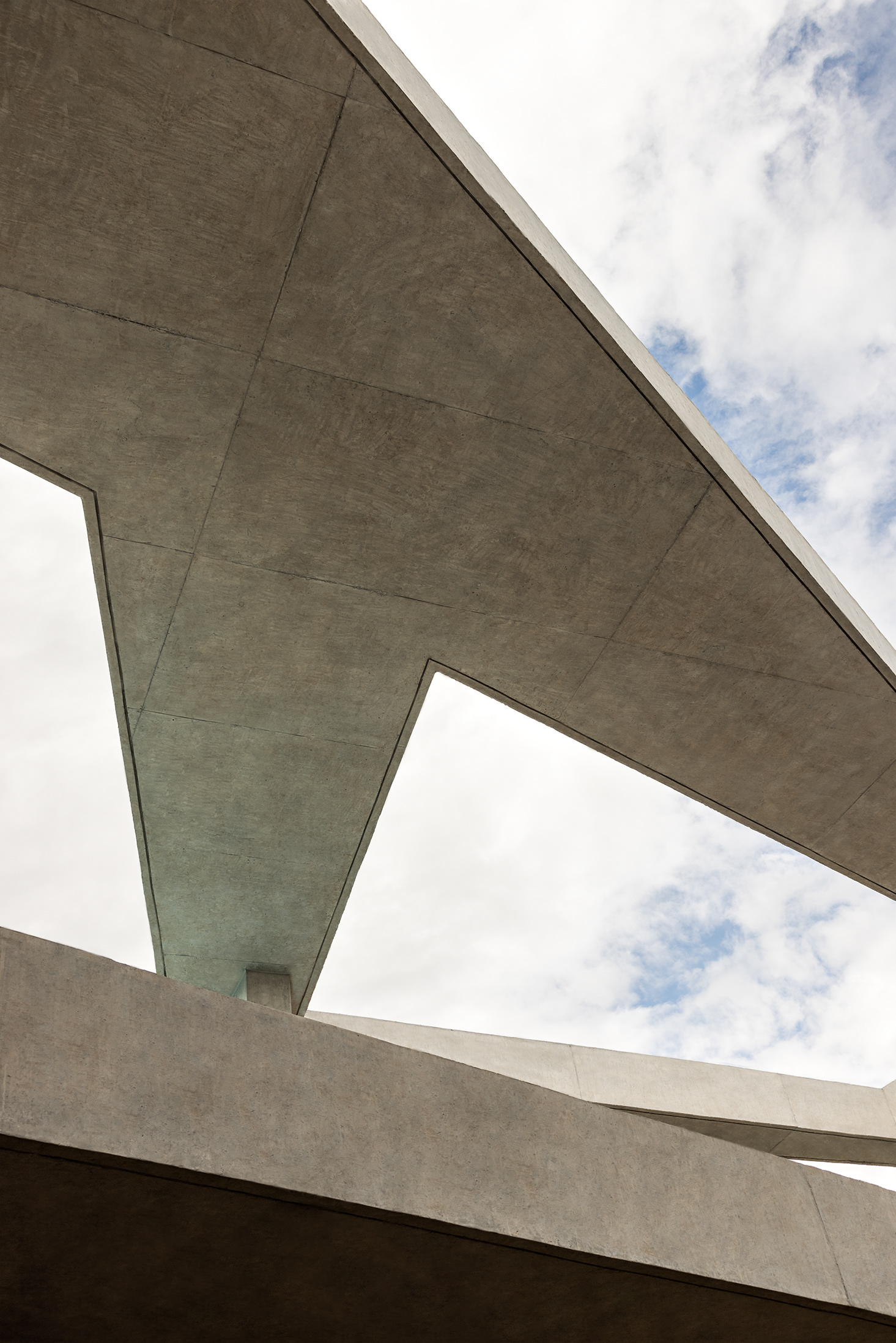
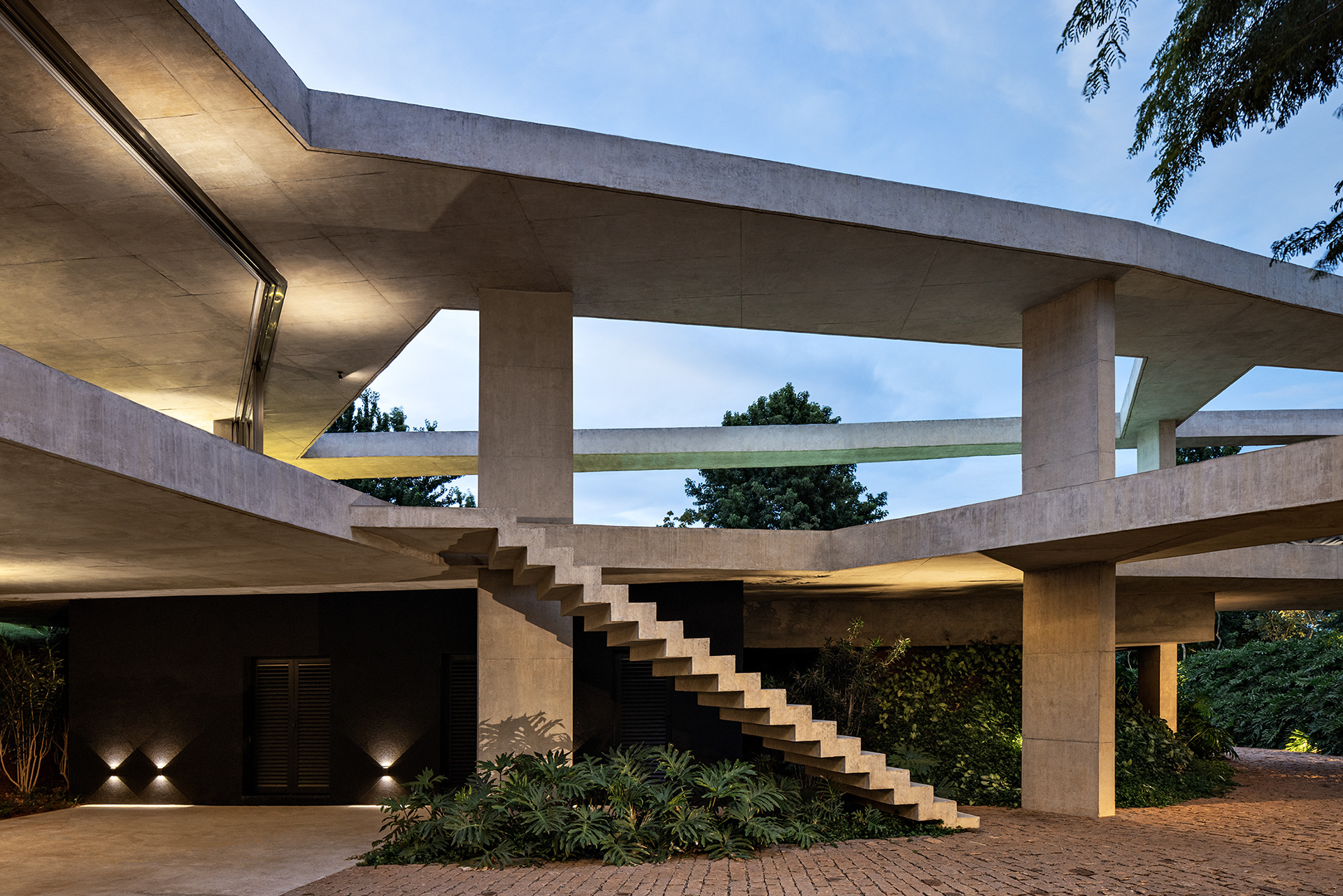
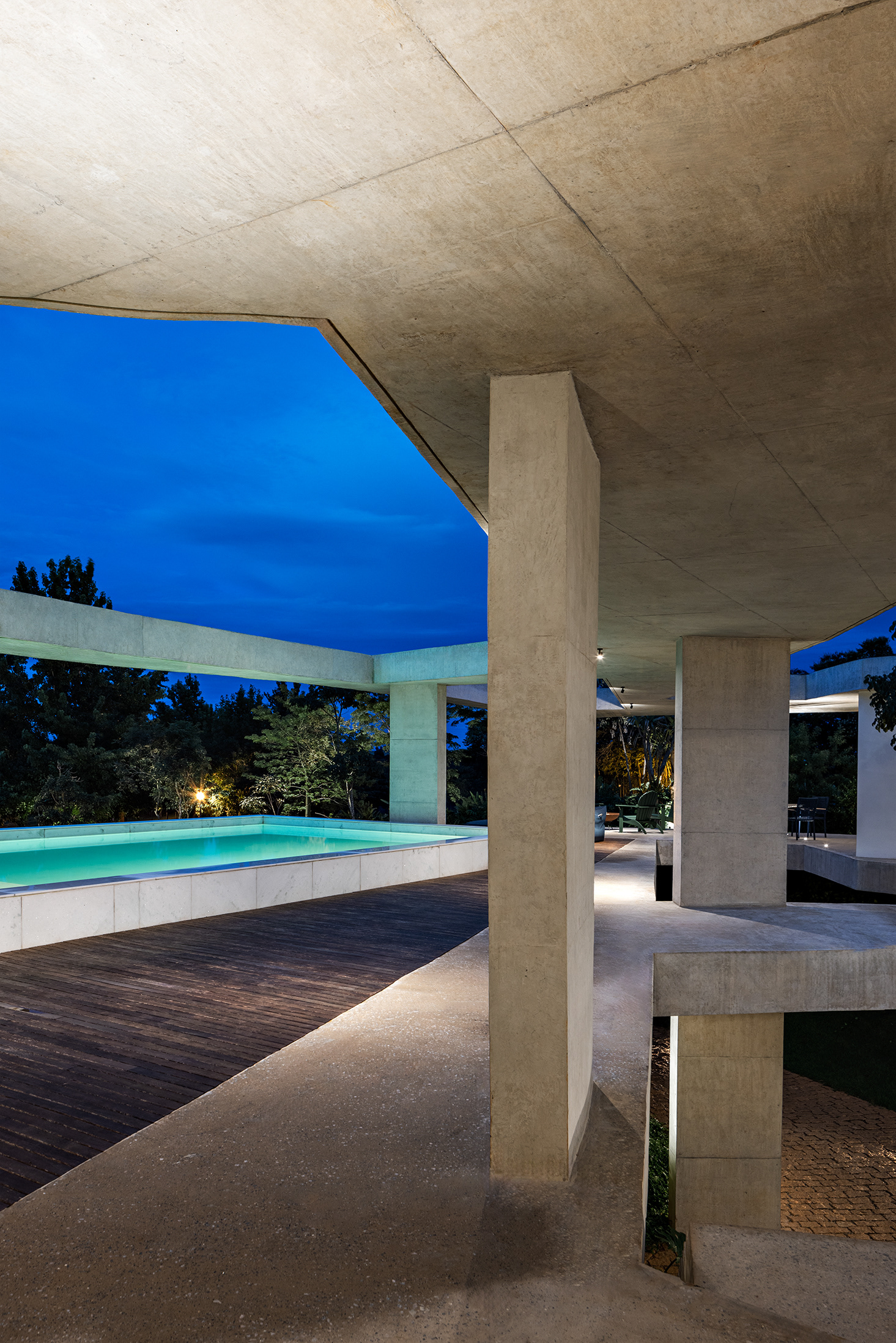
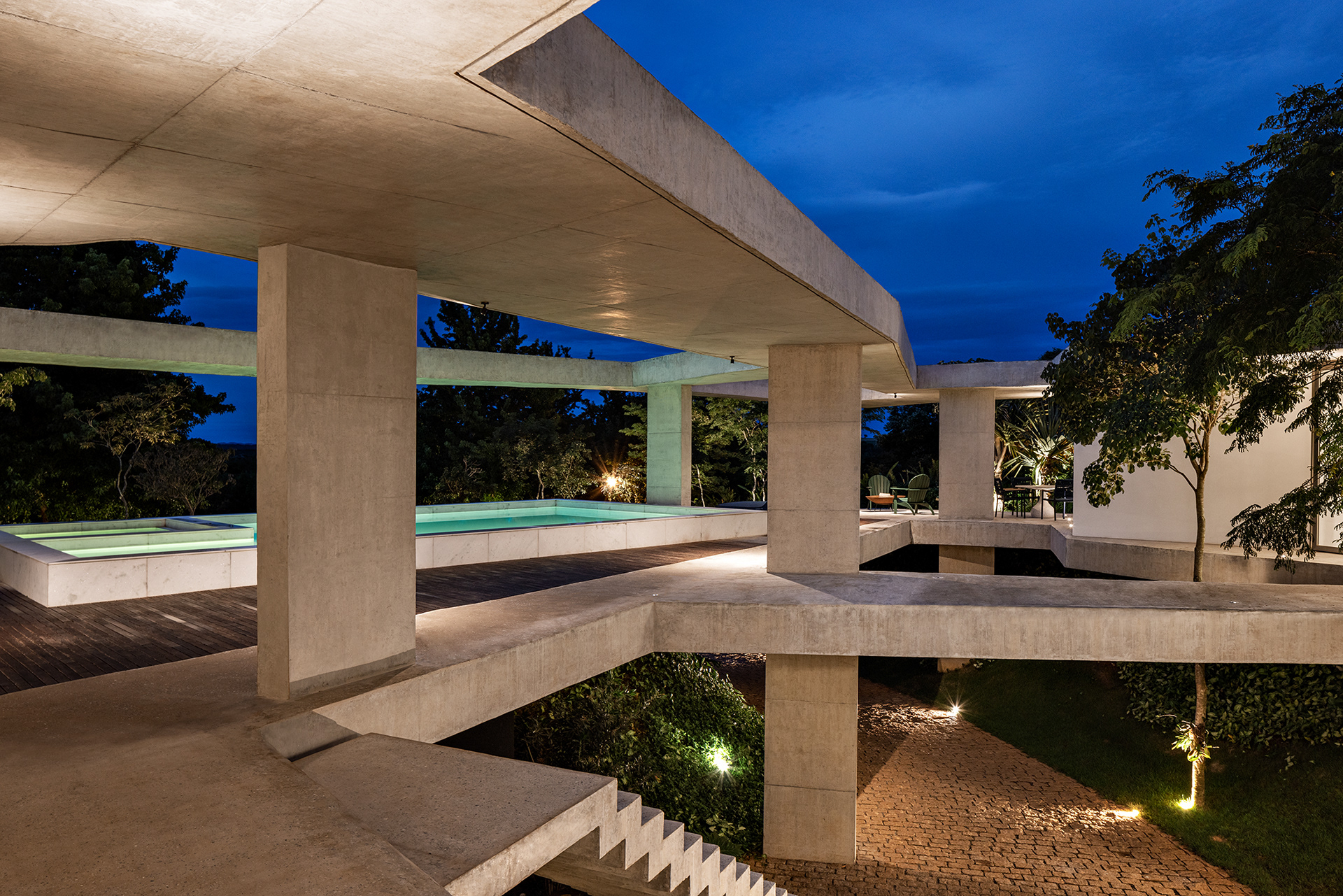
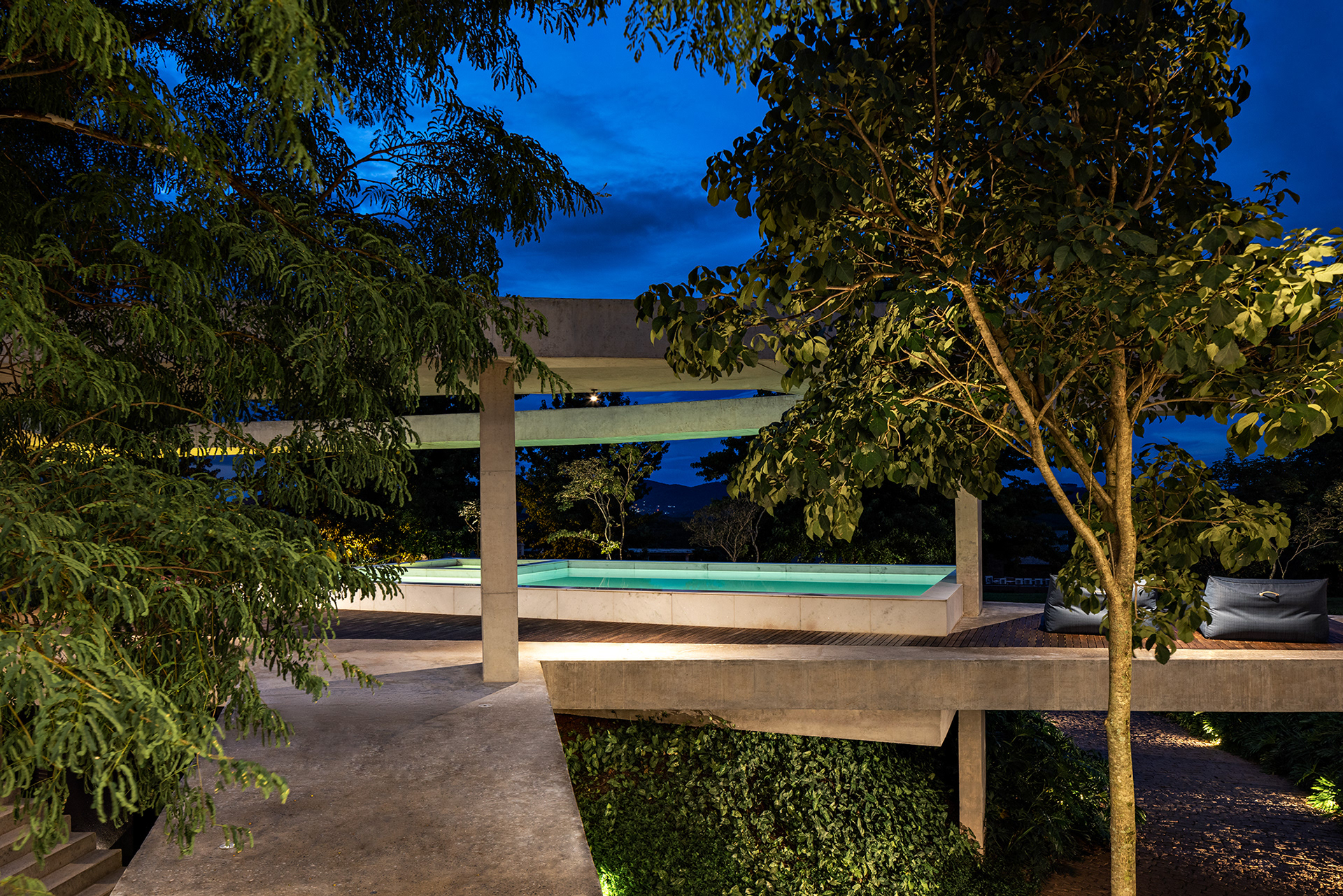
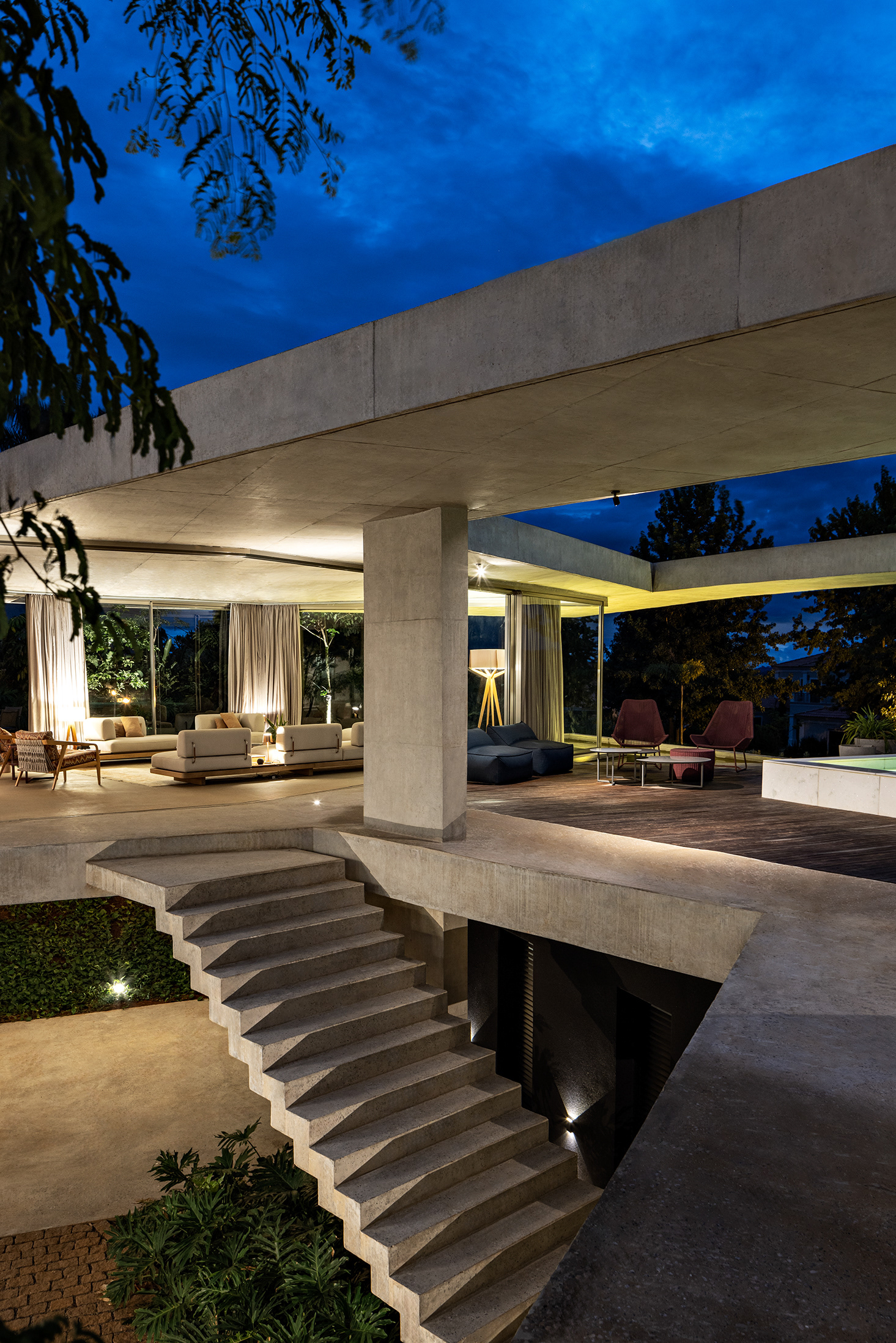
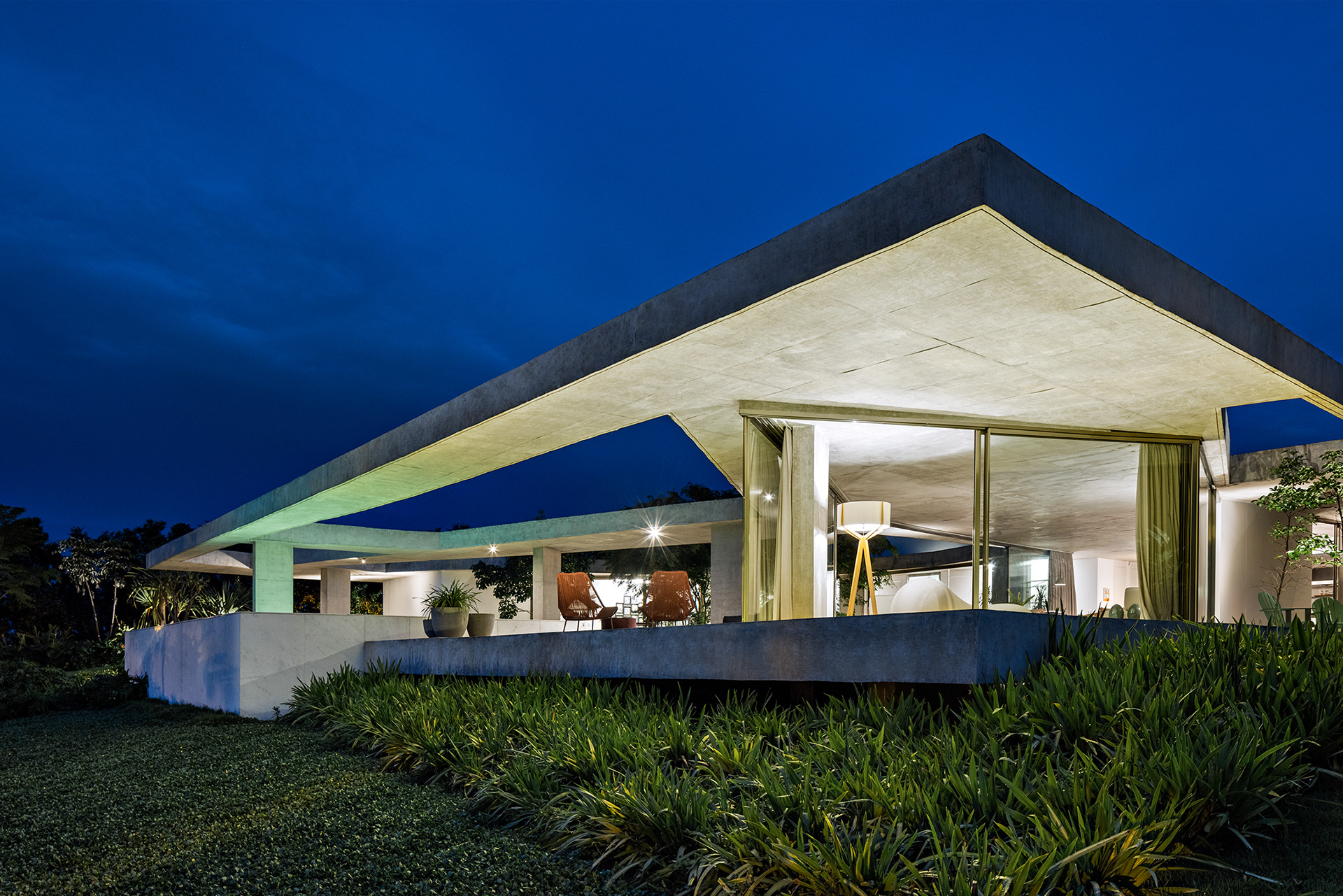
The floor slab and the roof slab form two exposed concrete planes that, running parallel, define the space in which the program is distributed. Most of the rooms are integrated with outdoor terraces, except for the bedrooms and bathrooms, whose openings face outward and appear as small white boxes inserted between the slabs. The pronounced horizontality of the design, however, is counterbalanced by voids carved into the horizontal planes, offset from one another and associated with the staircases. Through these voids, multiple views are established, allowing visual connections between people in the living room, the pool, and the garage garden, as well as with the vegetation — trees at the lower level are growing and gradually occupying part of these openings. “The challenge is to make a conventional program take on a non-ordinary appearance,” defines the architect.
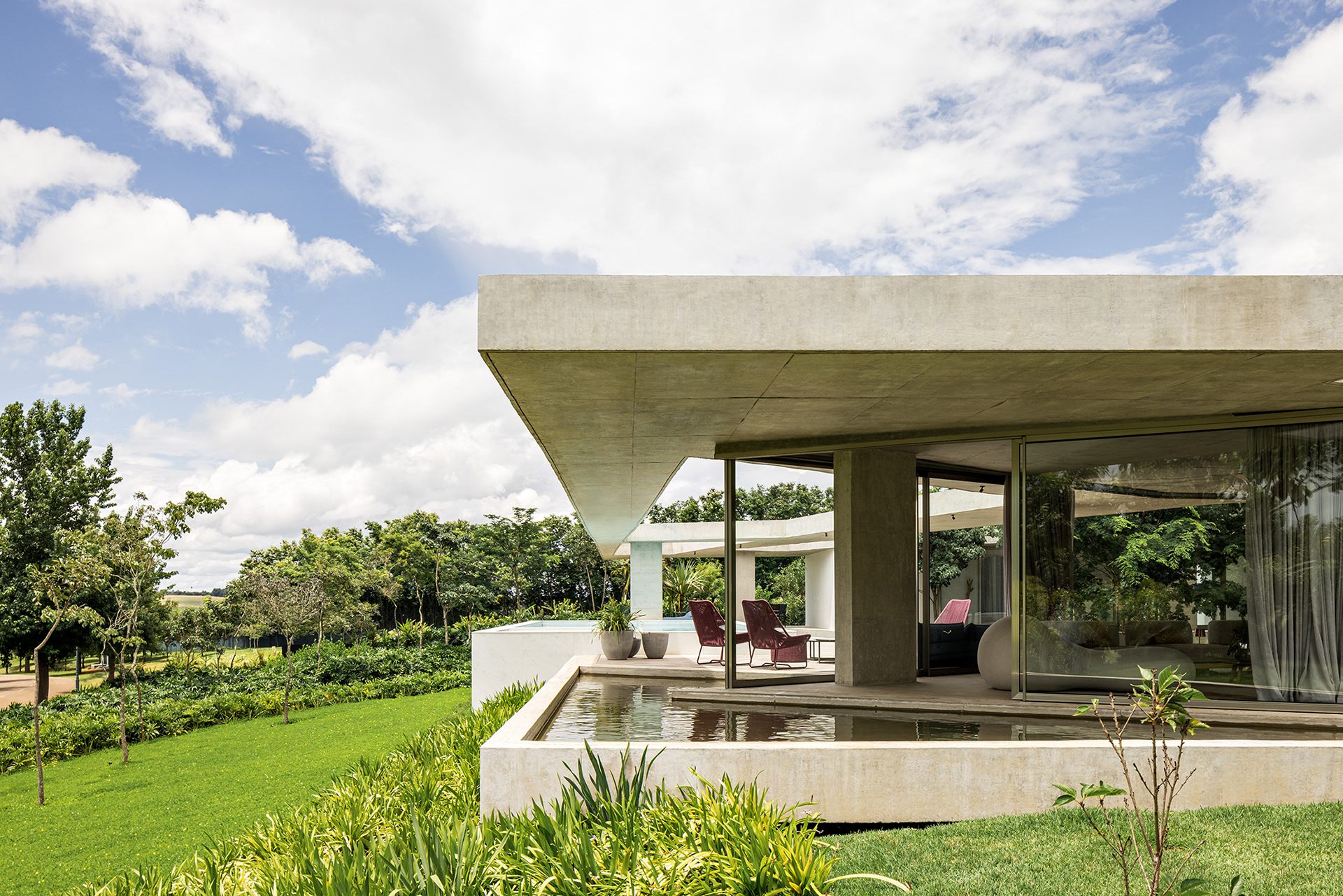
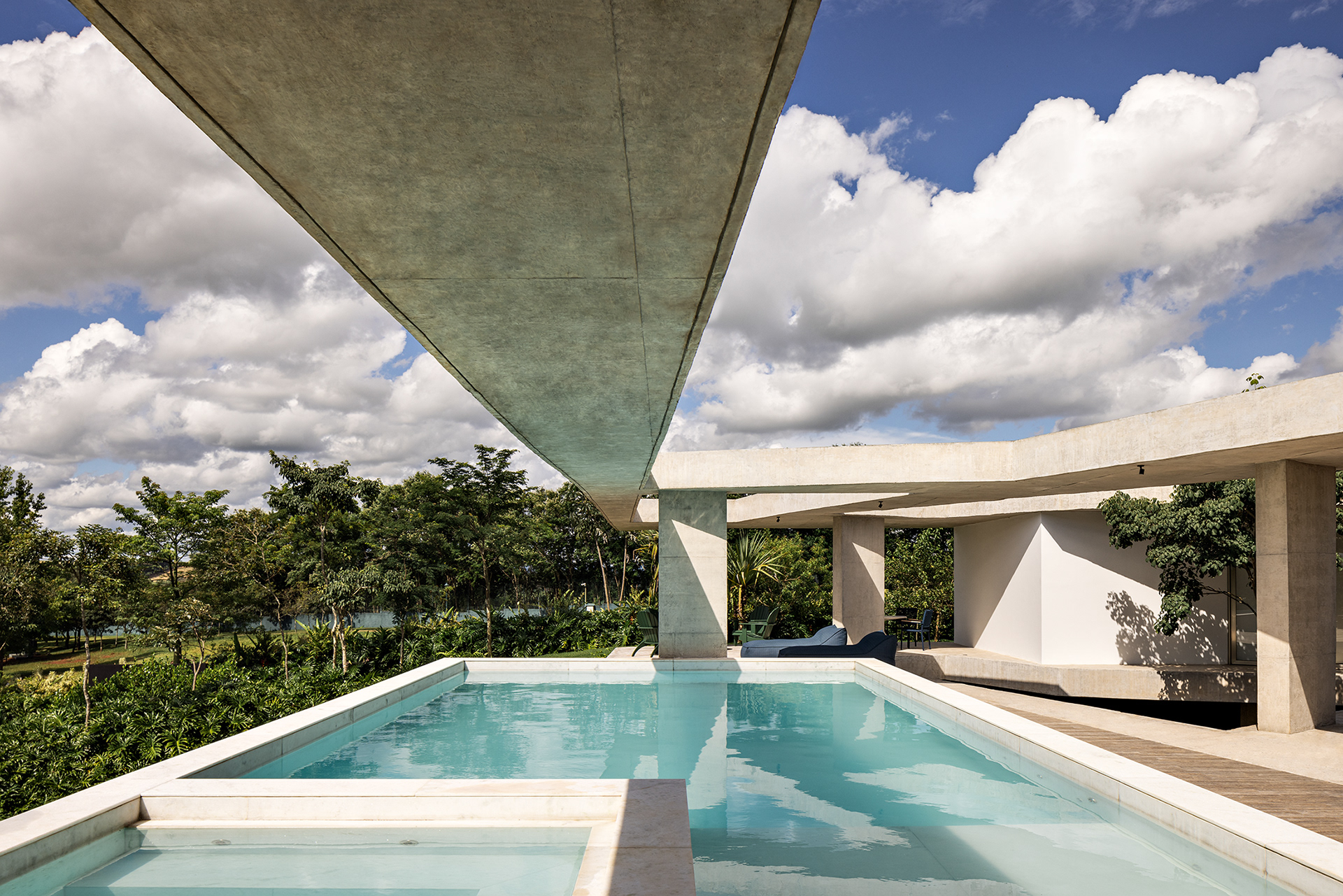
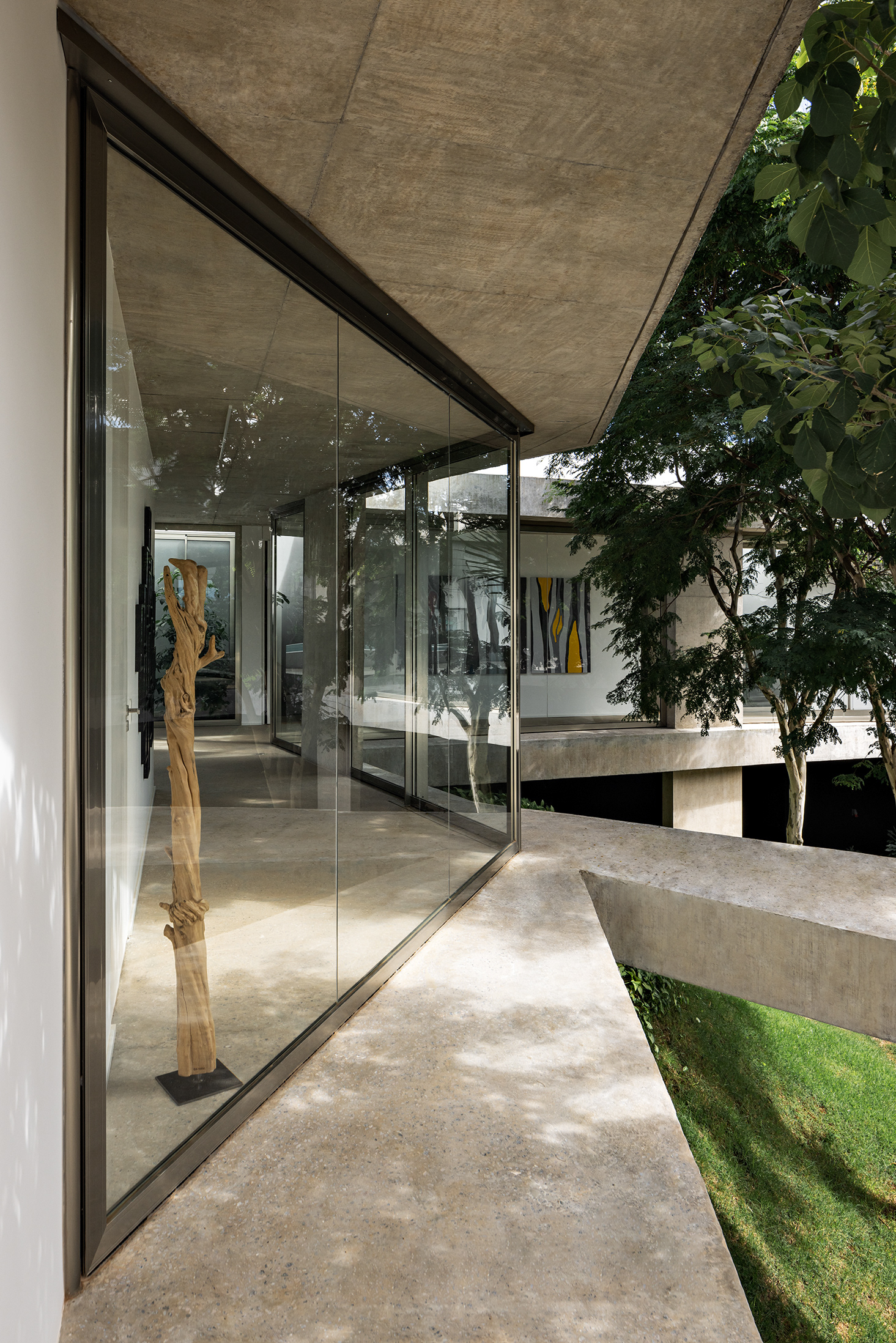
These openings also register the passage of time and changes in weather. “The time that can be seen passing through the shadows cast by the slab voids — which shift according to the hour of the day, creating the geometry that defines the project — and the wind that flows freely are fundamental components of the architecture,” states one of the authors. The living room connects to the terrace through large glass sliding doors that, when fully retracted, render the boundary between inside and outside almost imperceptible. “Architecture serves as a support for ventilation, and the house has no clear boundaries between interior and exterior, which is always a major concern in our projects,” recalls the architect.
Built in cast-in-place reinforced concrete, the residence follows a conventional program, including living areas, four suites, and a powder room on the upper floor; the lower level houses the laundry room and the caretaker’s quarters. Its internal area is small in relation to the external spaces, and the swimming pool — whose light reflections soften the predominance of exposed concrete — is also conceived as a volume inserted into the first slab, oriented toward the best view. The result is a synthetic, streamlined house, despite its large footprint, a quality reinforced by polished concrete flooring and white-painted masonry walls.
For the architect, landscaping cannot be considered a complementary stage. “The house will only truly be complete when the landscaping has grown. It is one of the main elements of the architecture, as it helps structure the interior spaces and build the exterior spaces together with time and wind.”
By Nanci Corbioli, for Projeto Magazine.