
PULLMAN
IBIRAPUERA
SÃO PAULO - SP, BRAZIL
Project specifications
Project beginning - 2024
Construction completion - 2025
Construction completion - 2025
Team
Authors - Fernando Forte, Lourenço Gimenes, Rodrigo Marcondes Ferraz
Managers - Gabriel Faria
Coordinators - Máriam Chaaban
Contributors - Daniel Moraes, Flávia Prado, Mariana Sarto
Photographer - Victor Lucena
Landscape designer - Douglas Brandão
Lighting designer - Castilha
.
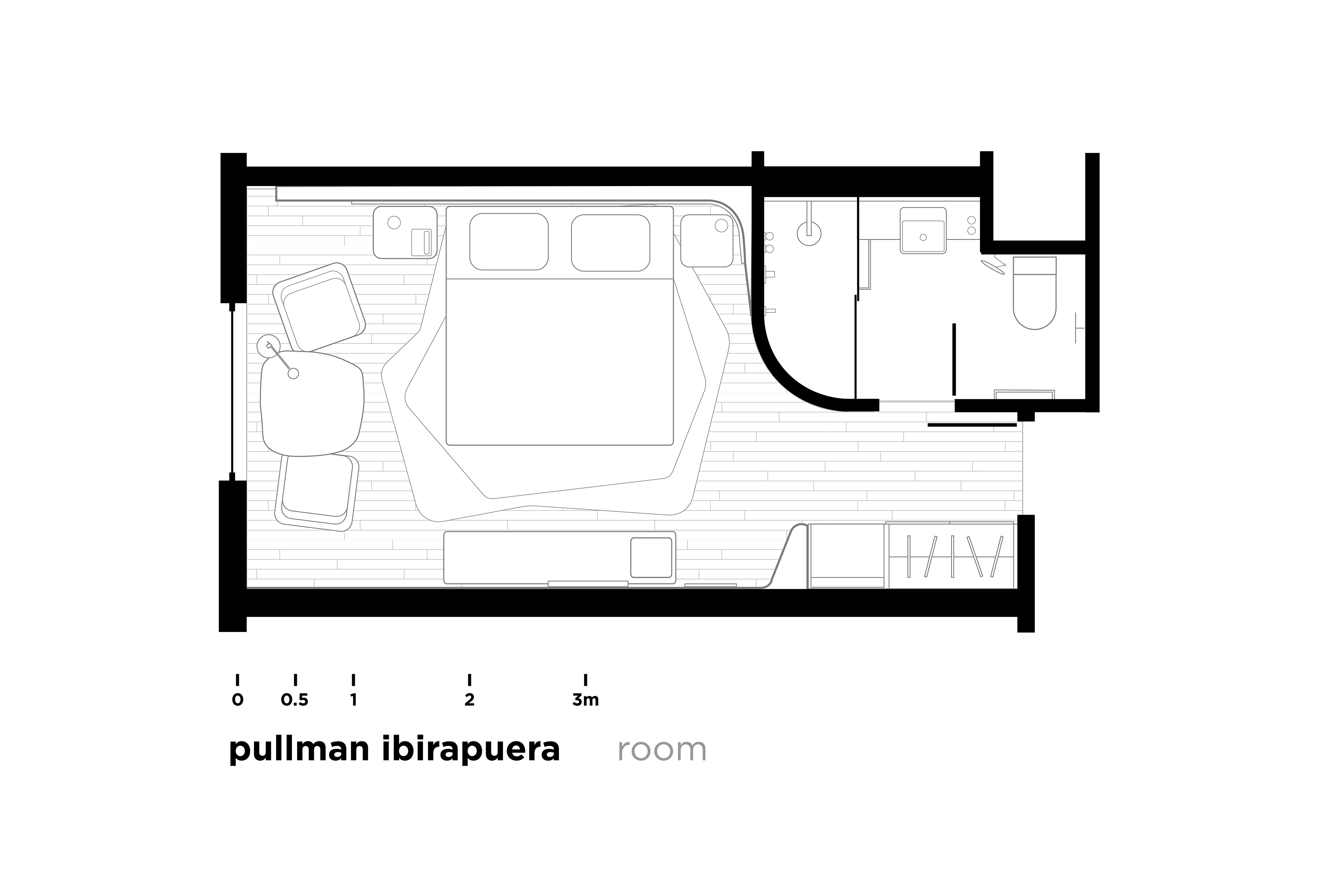
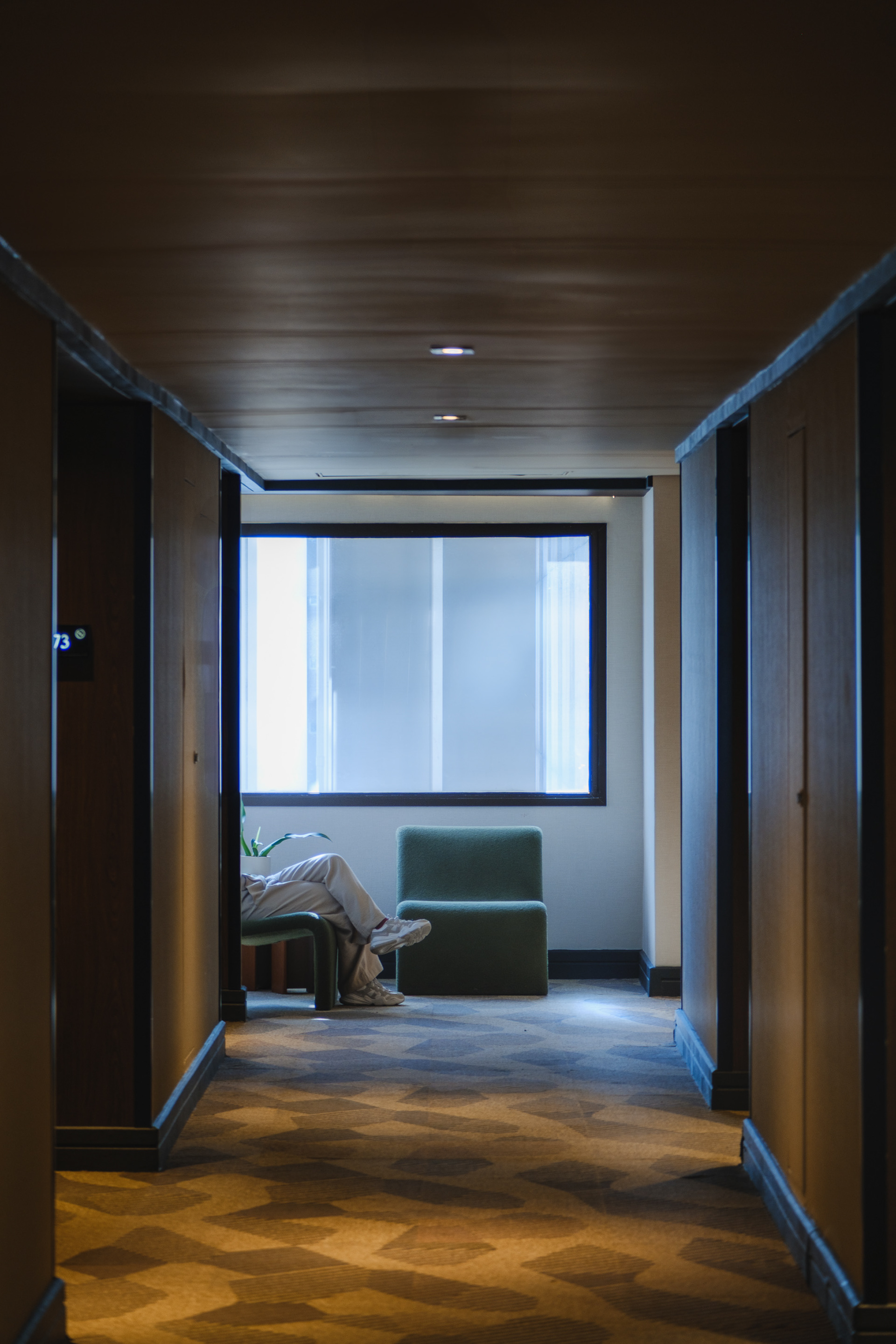
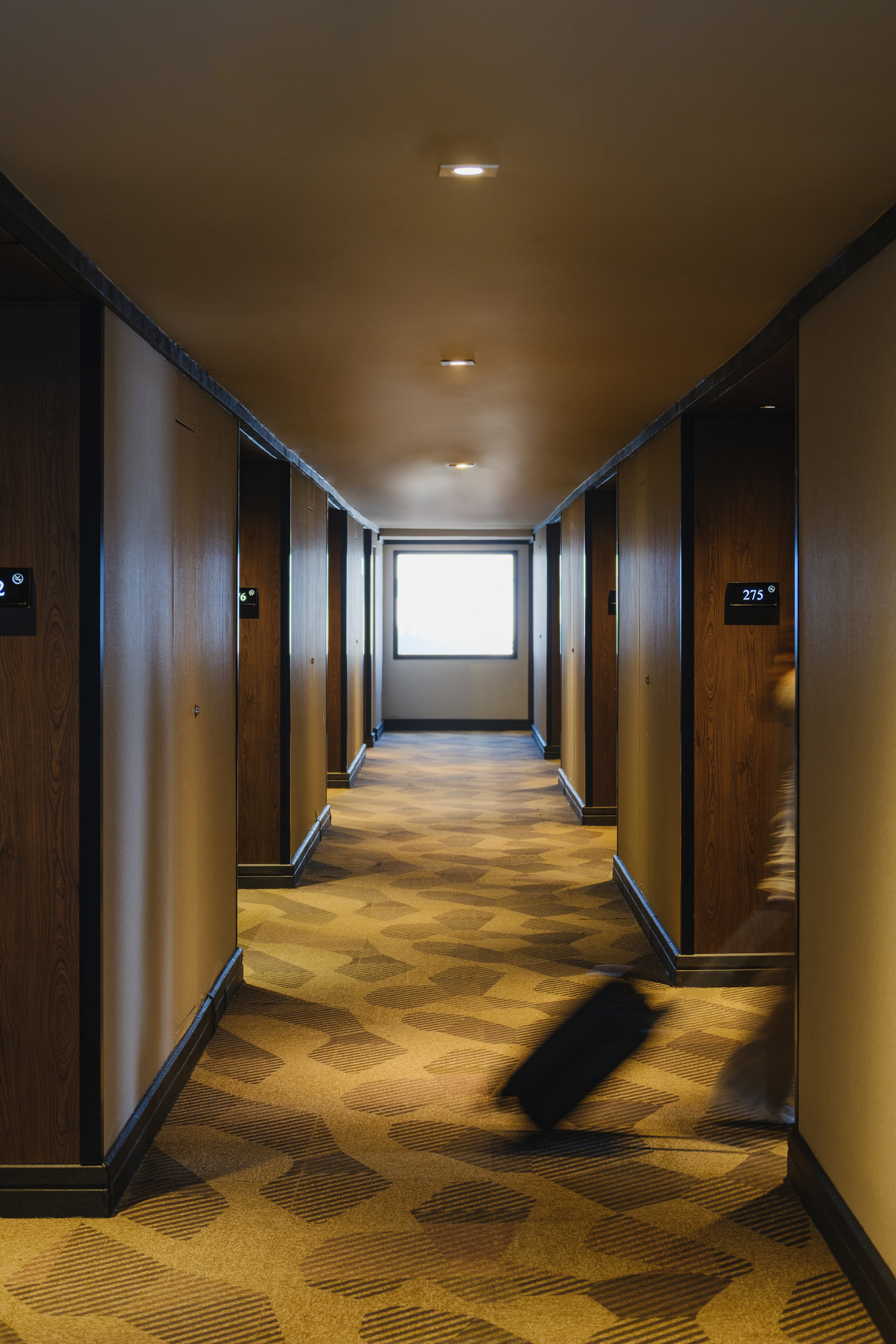
The renovation project for the Pullman Ibirapuera focused on redesigning the hotel’s rooms, corridors, and restaurant. The proposal followed the new global guidelines of the Pullman brand, which promote a more natural, organic, and welcoming aesthetic, in contrast to the brand’s previous, more vibrant concepts.
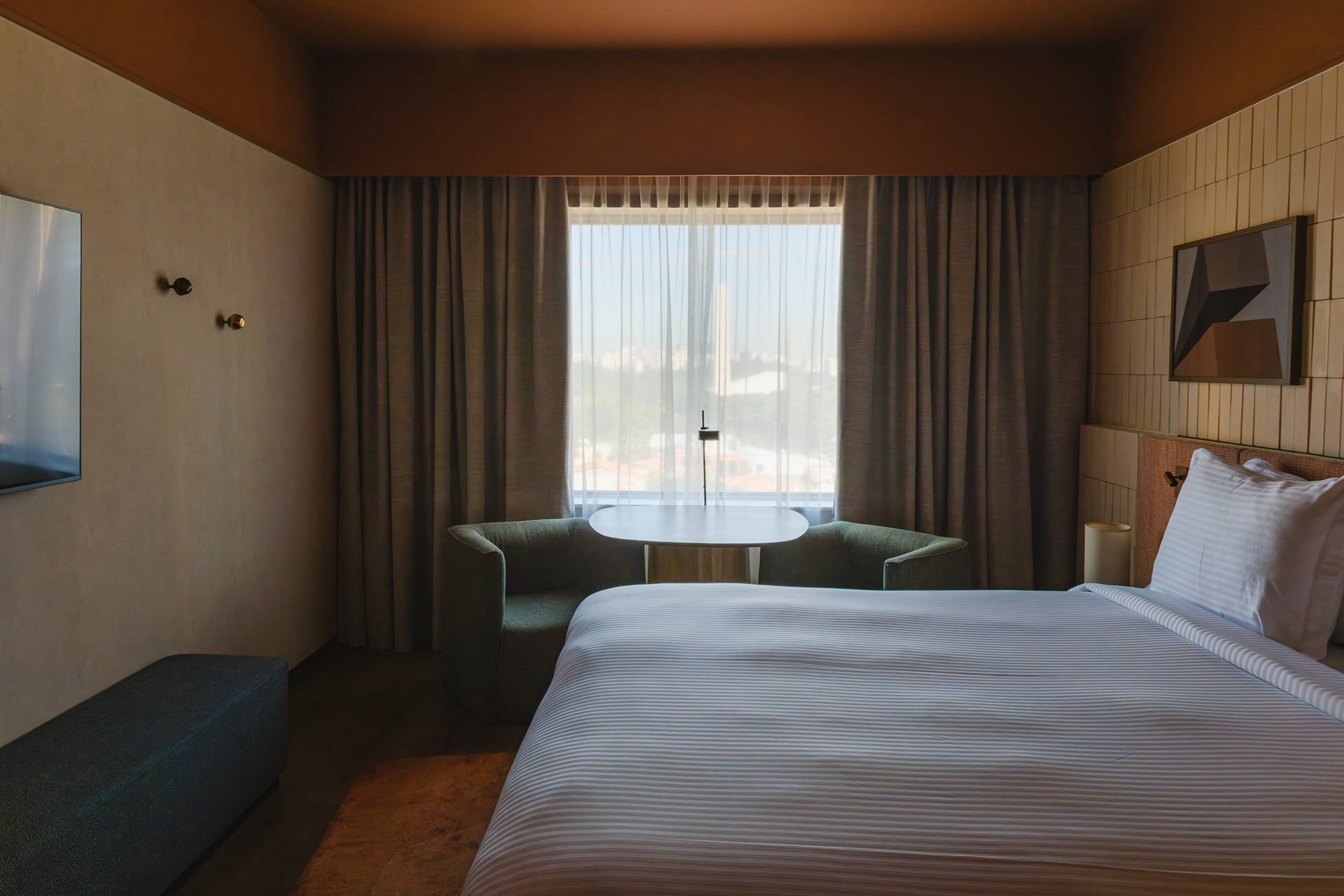
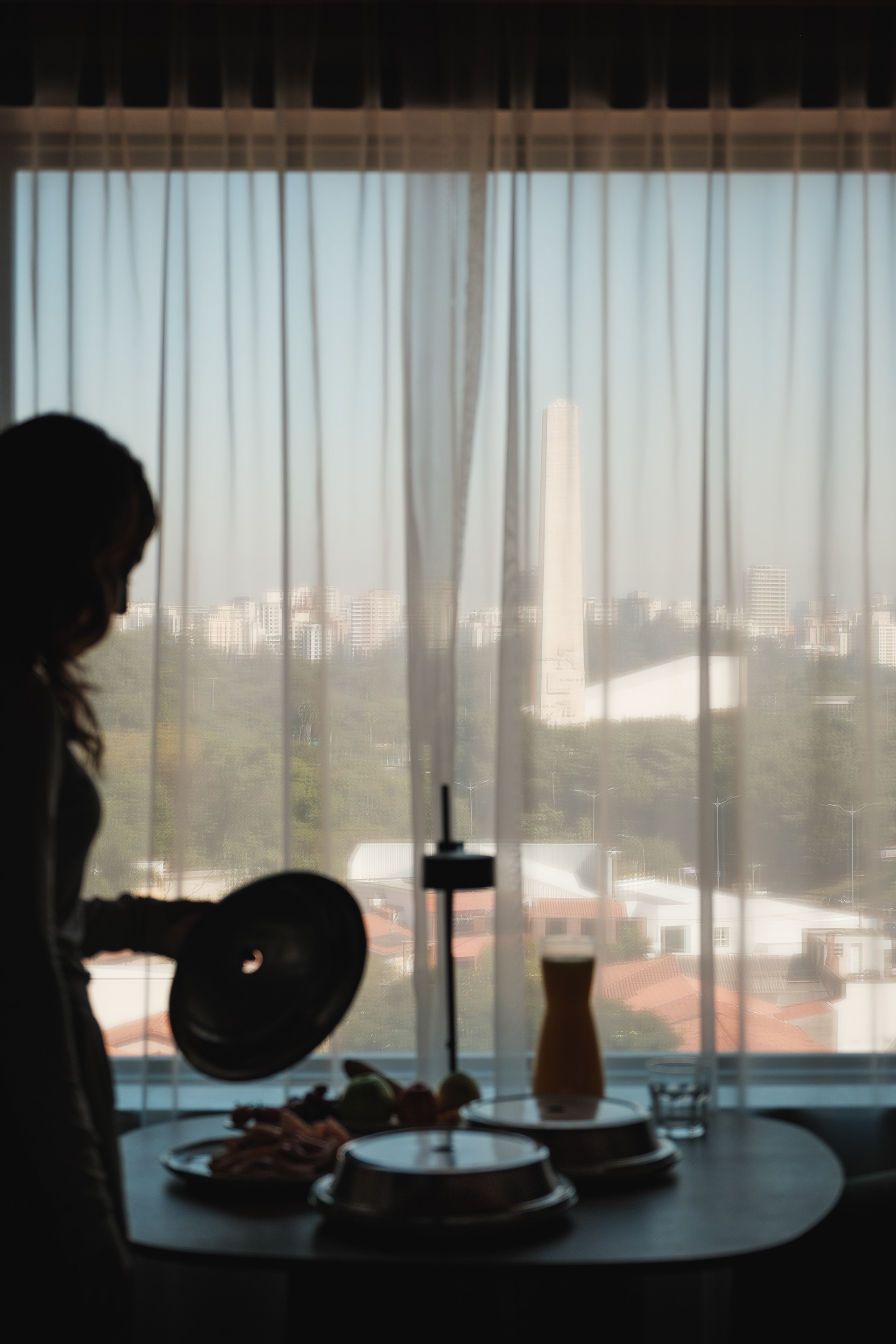
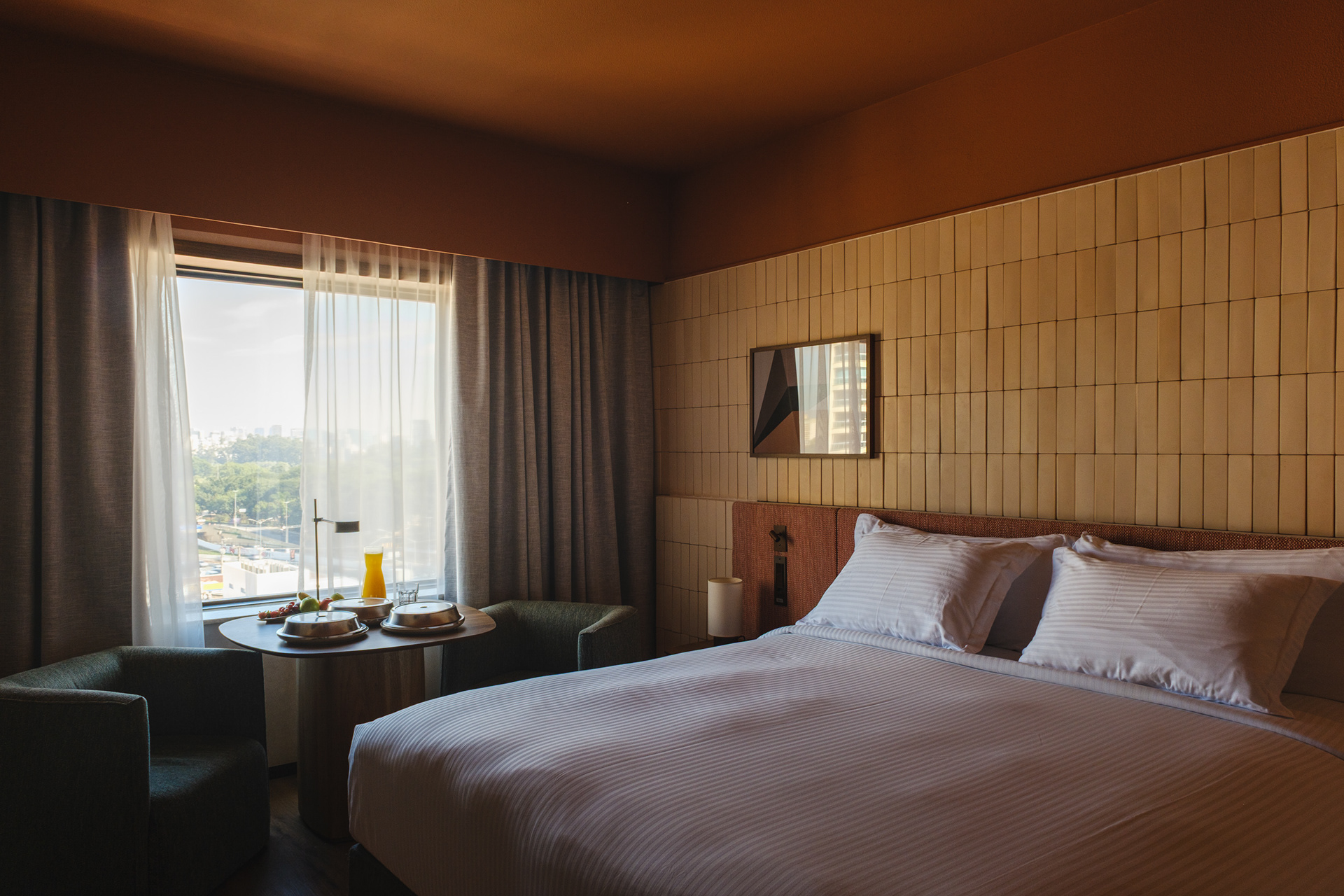
The intervention in the rooms consisted of refurbishing existing units. Considering the reduced area of the spaces, the challenge was to integrate several functions — sleeping, working, eating, watching TV — within a compact yet functional and comfortable layout.
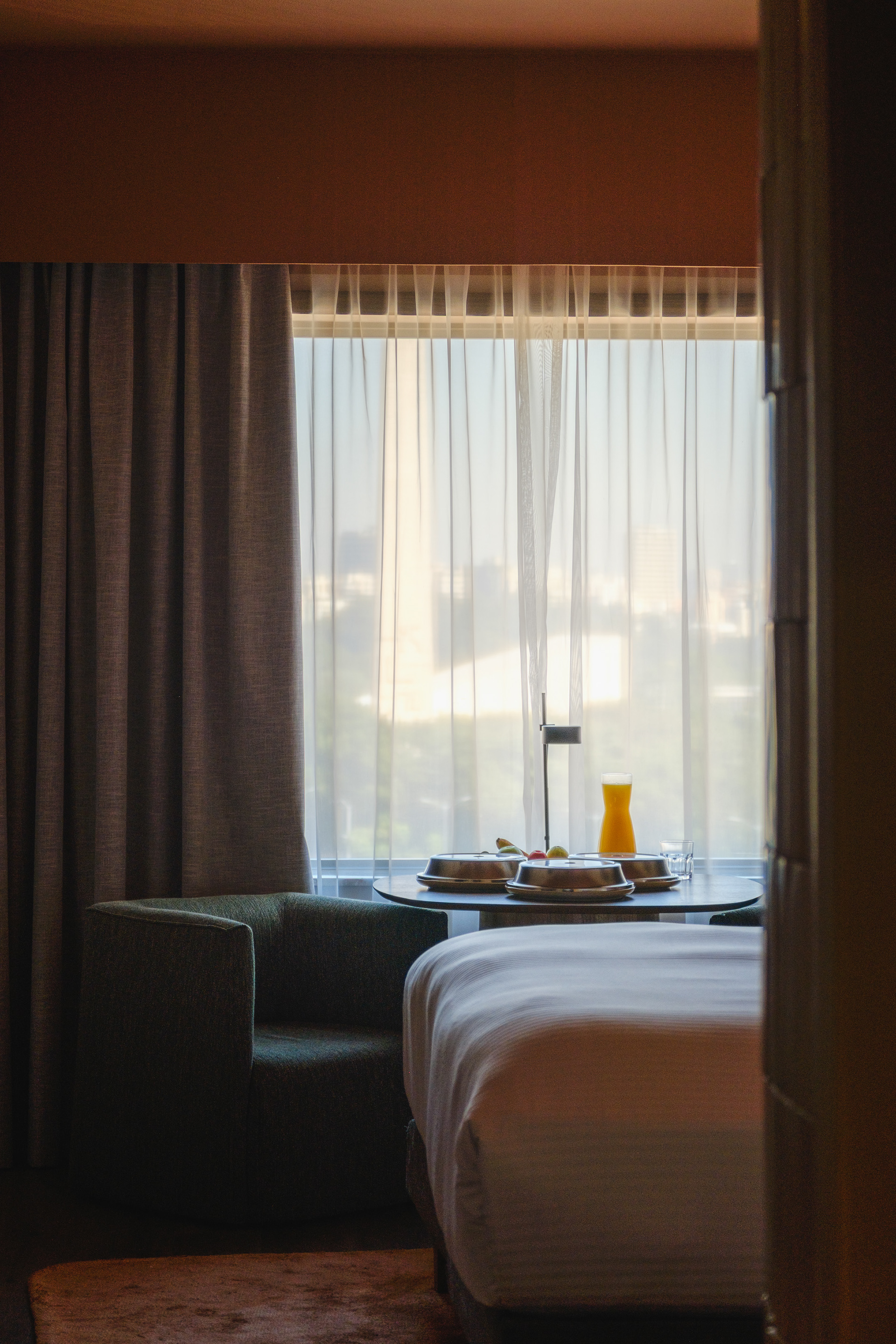
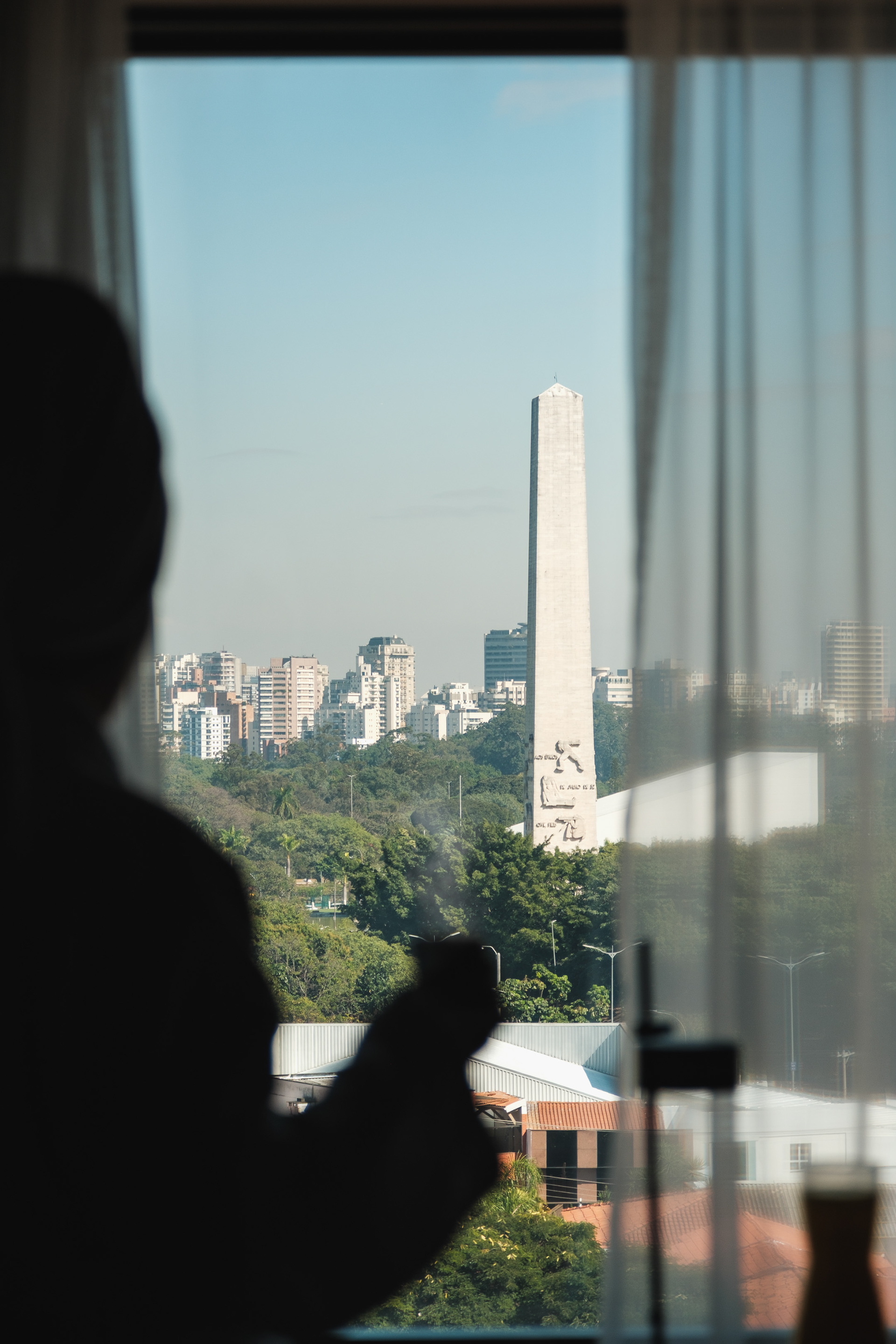
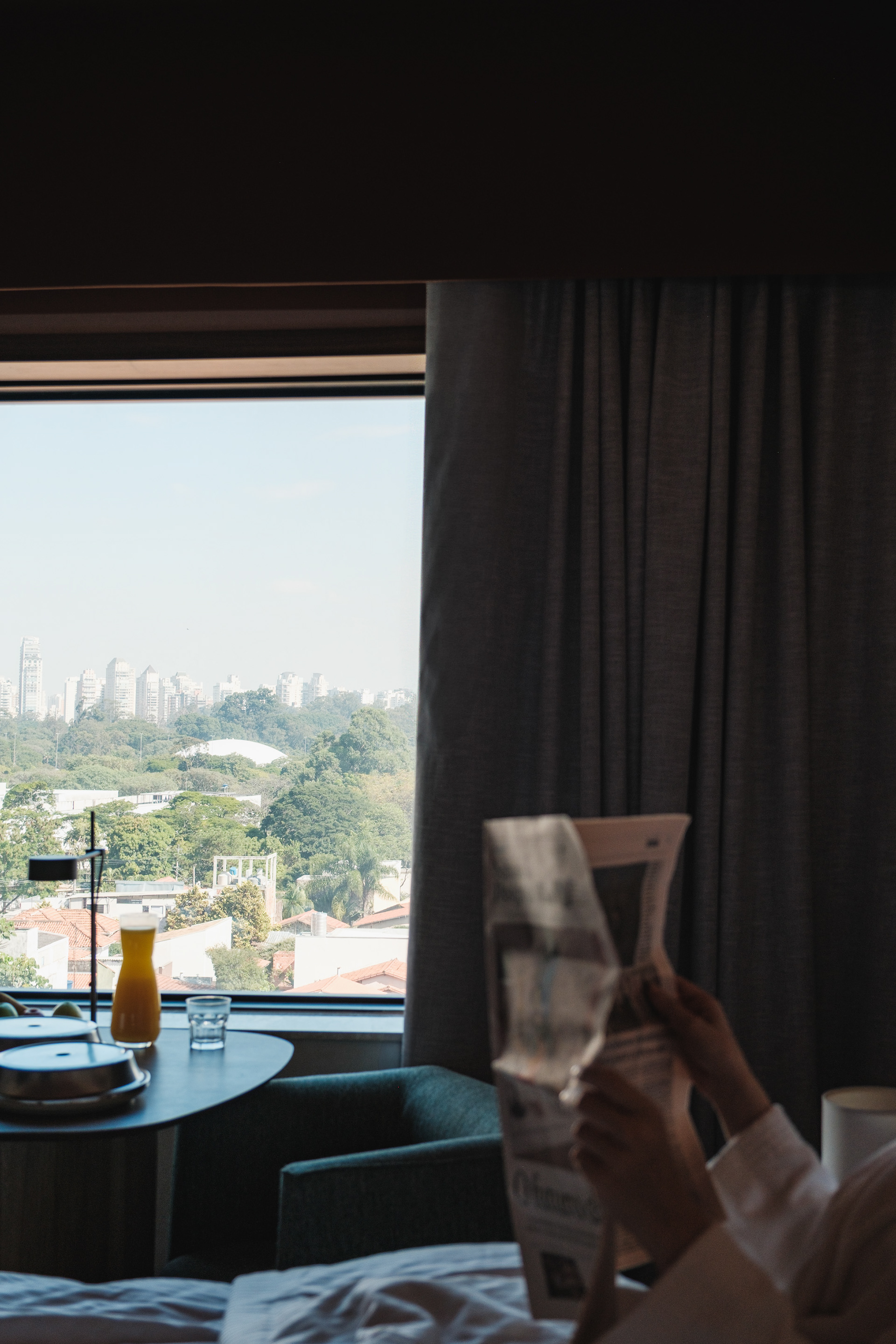
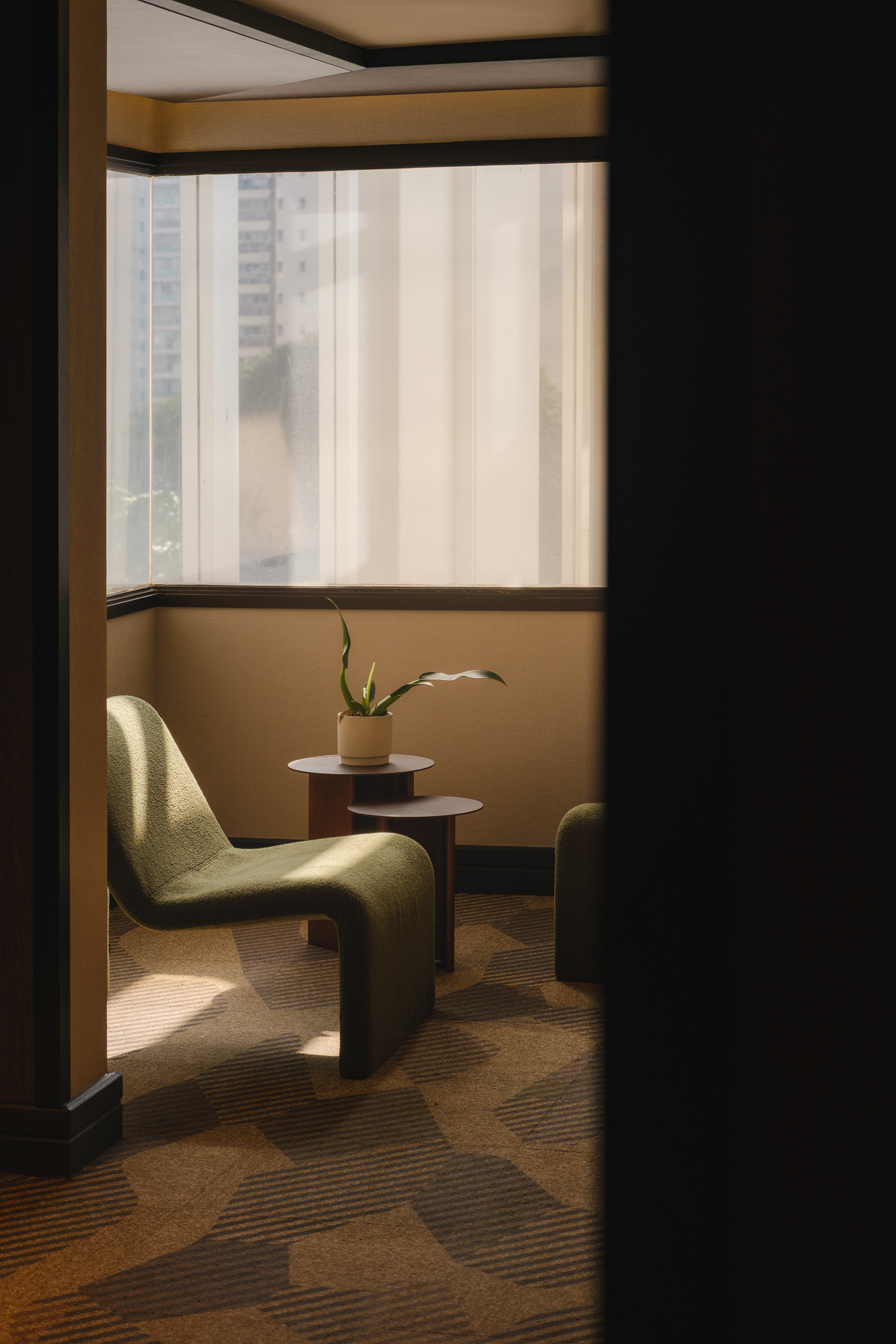
To achieve this, furniture with organic and multifunctional design was adopted. Lower-than-standard tables and armchairs were used, allowing for varied uses without compromising ergonomics. Positioning the lower furniture next to the window enables visual permeability, reinforcing the sense of spaciousness in the room.
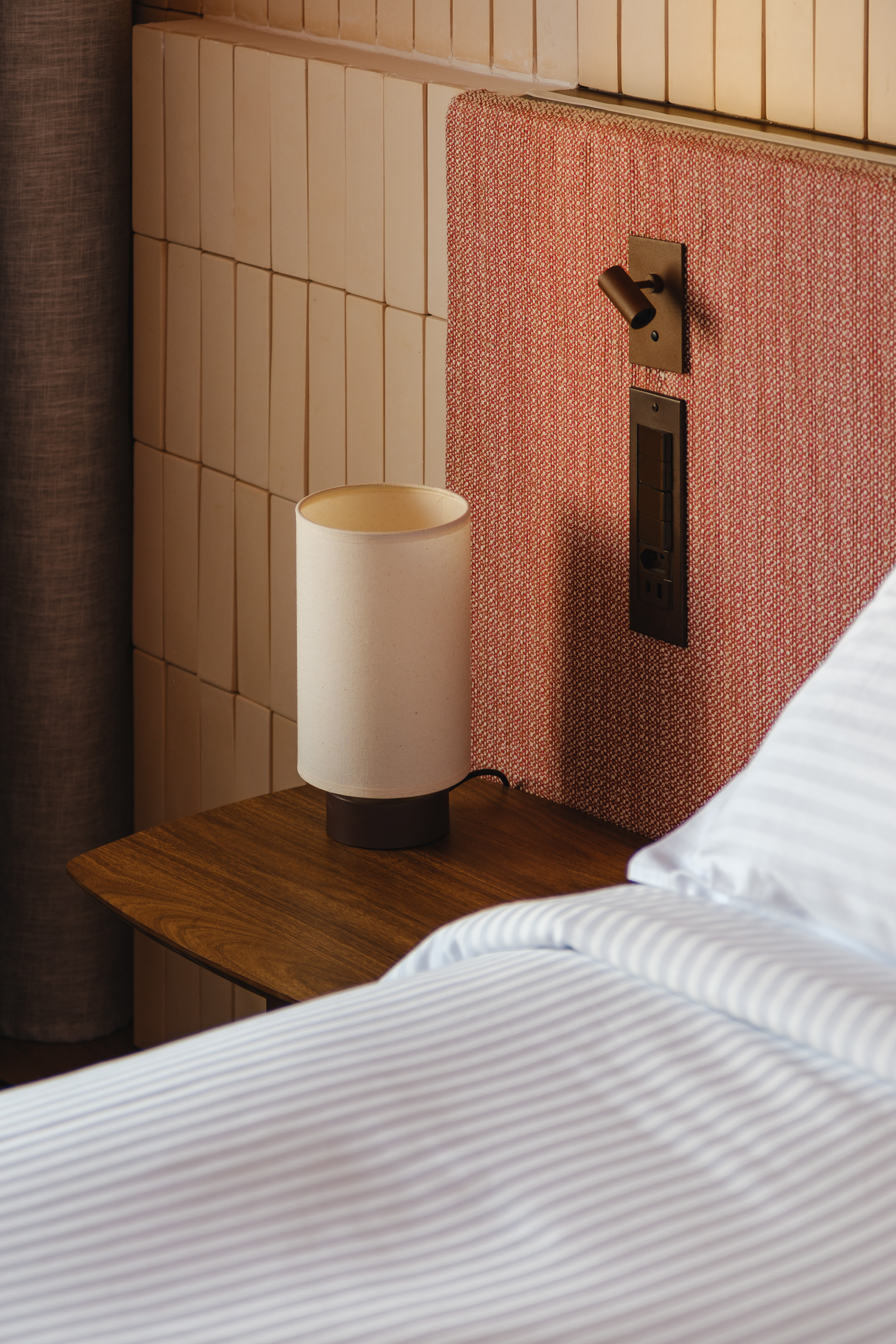
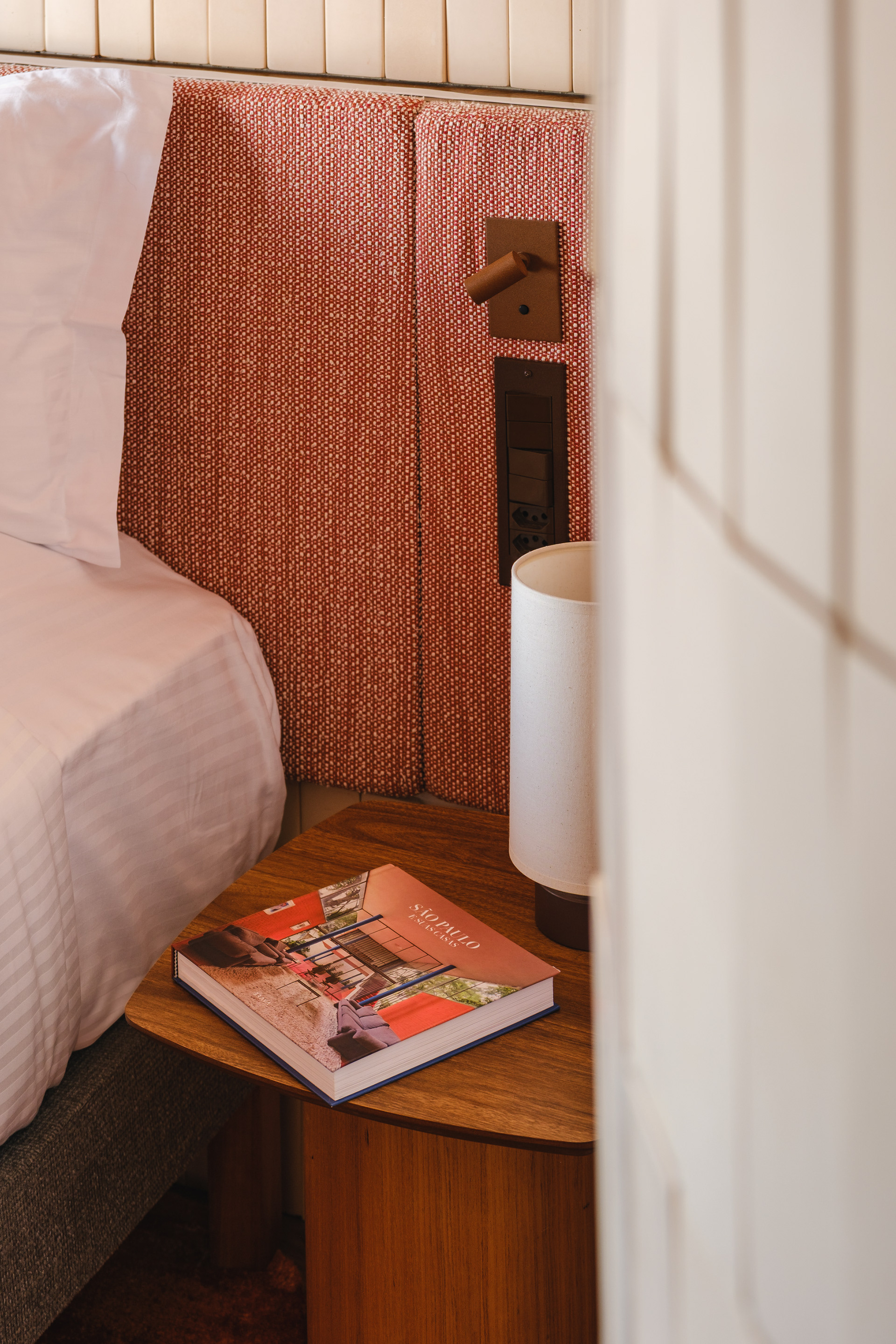
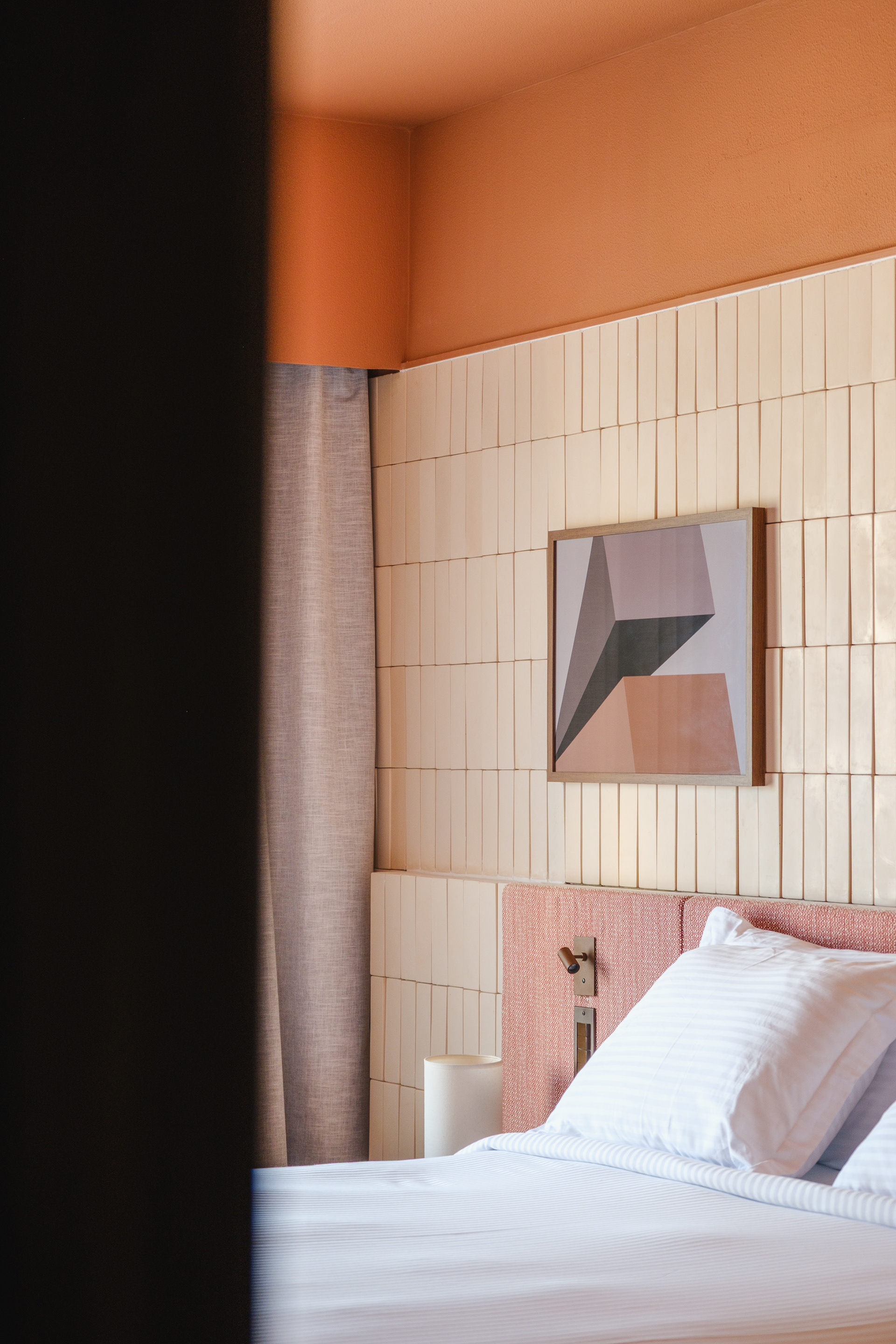
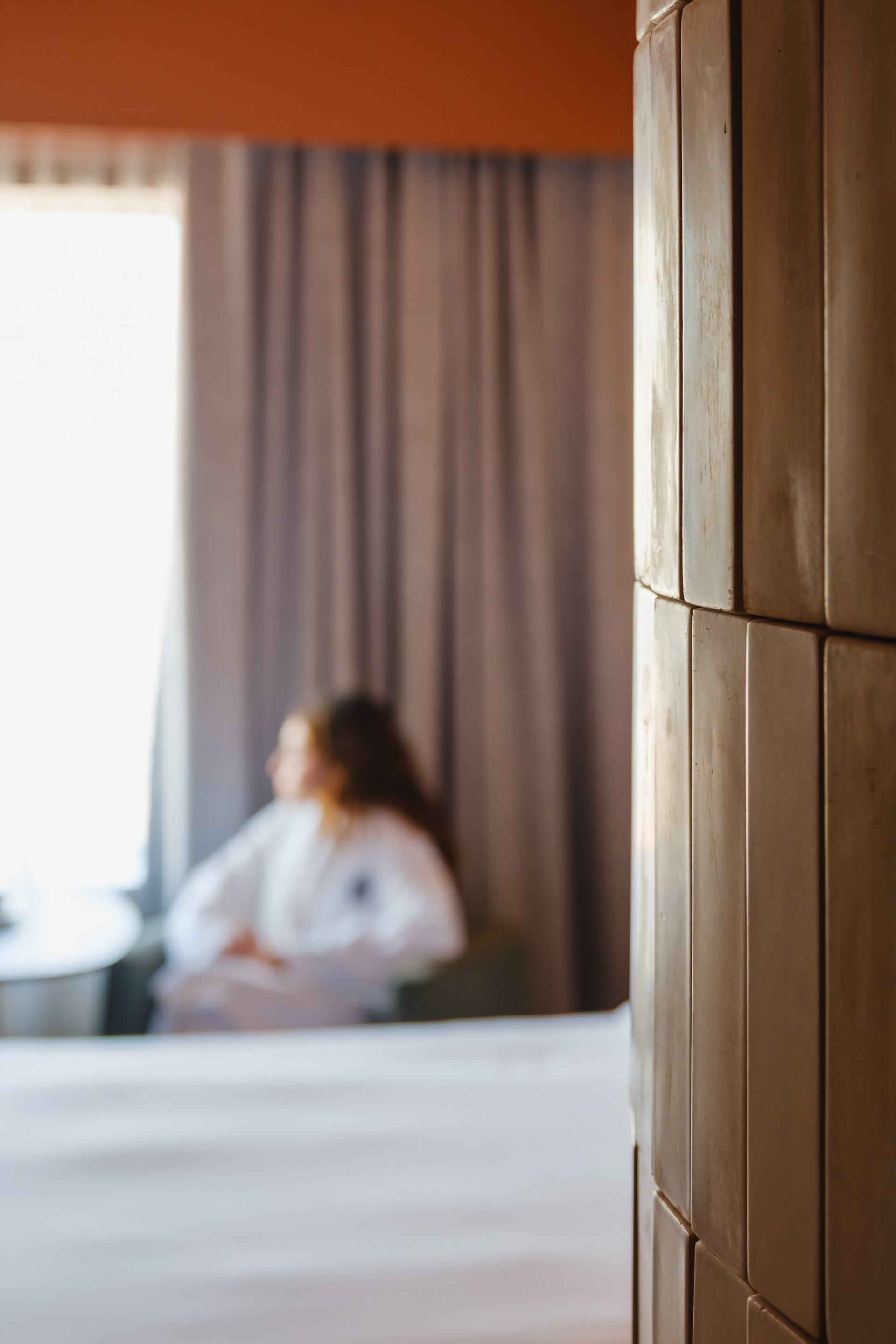
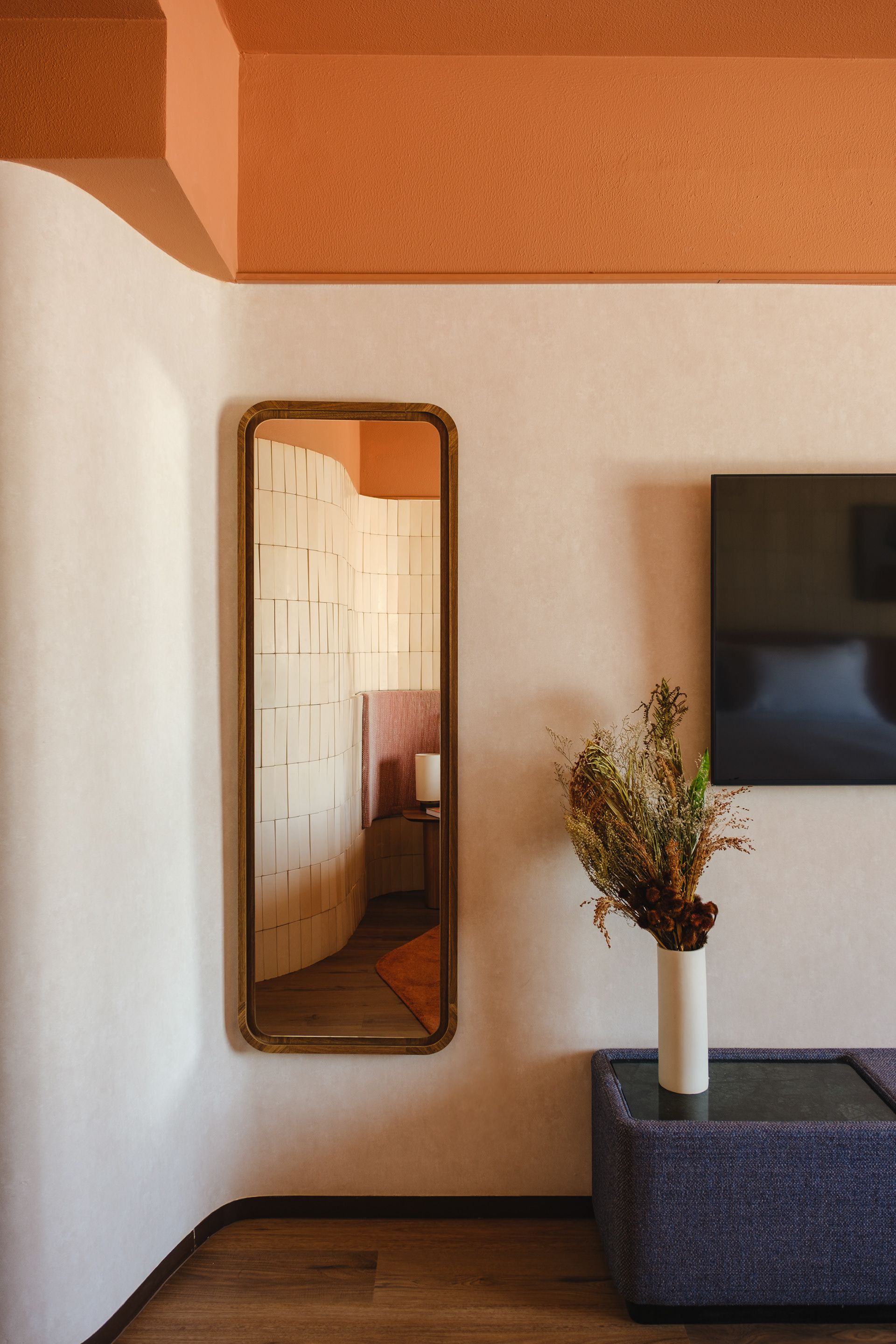
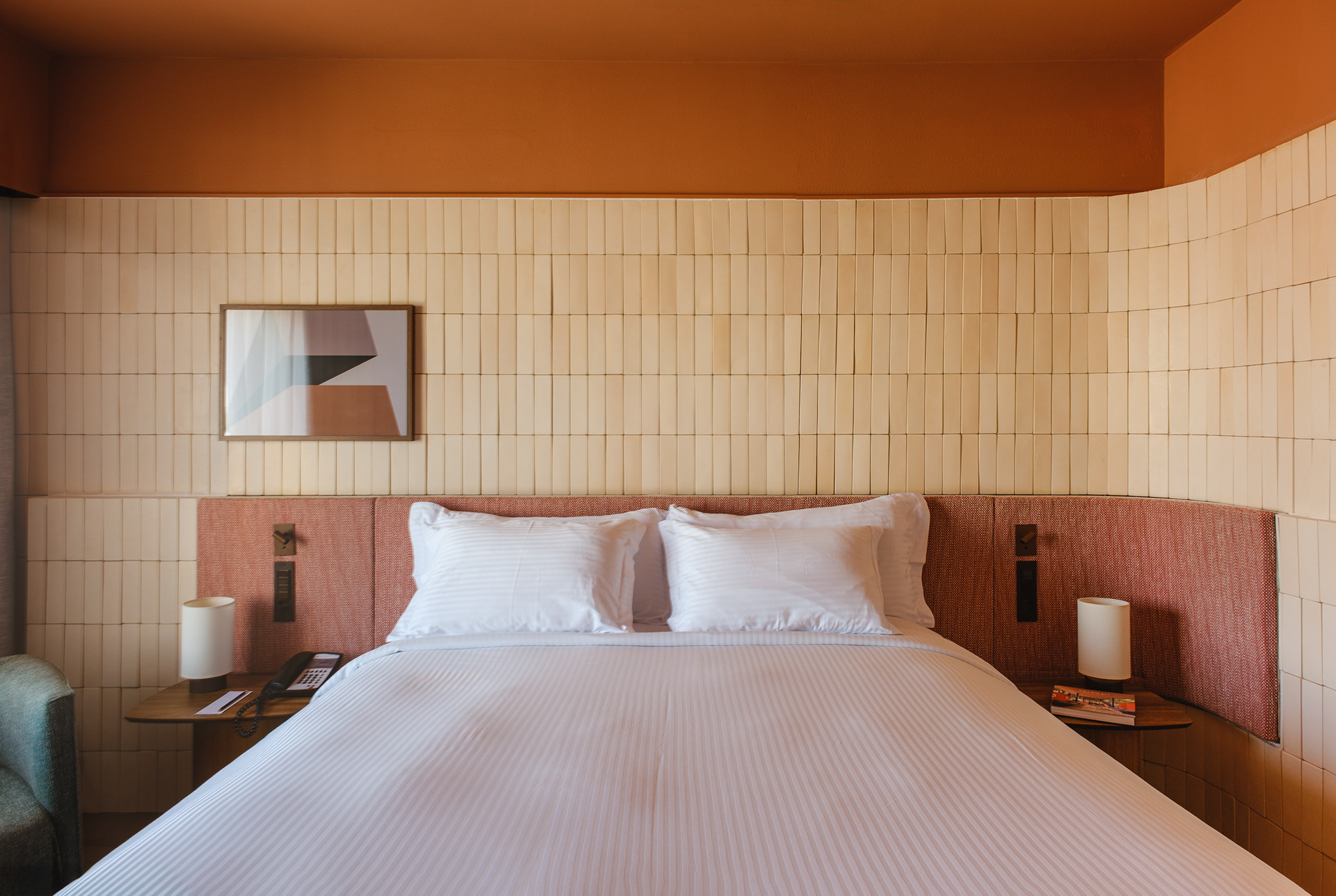
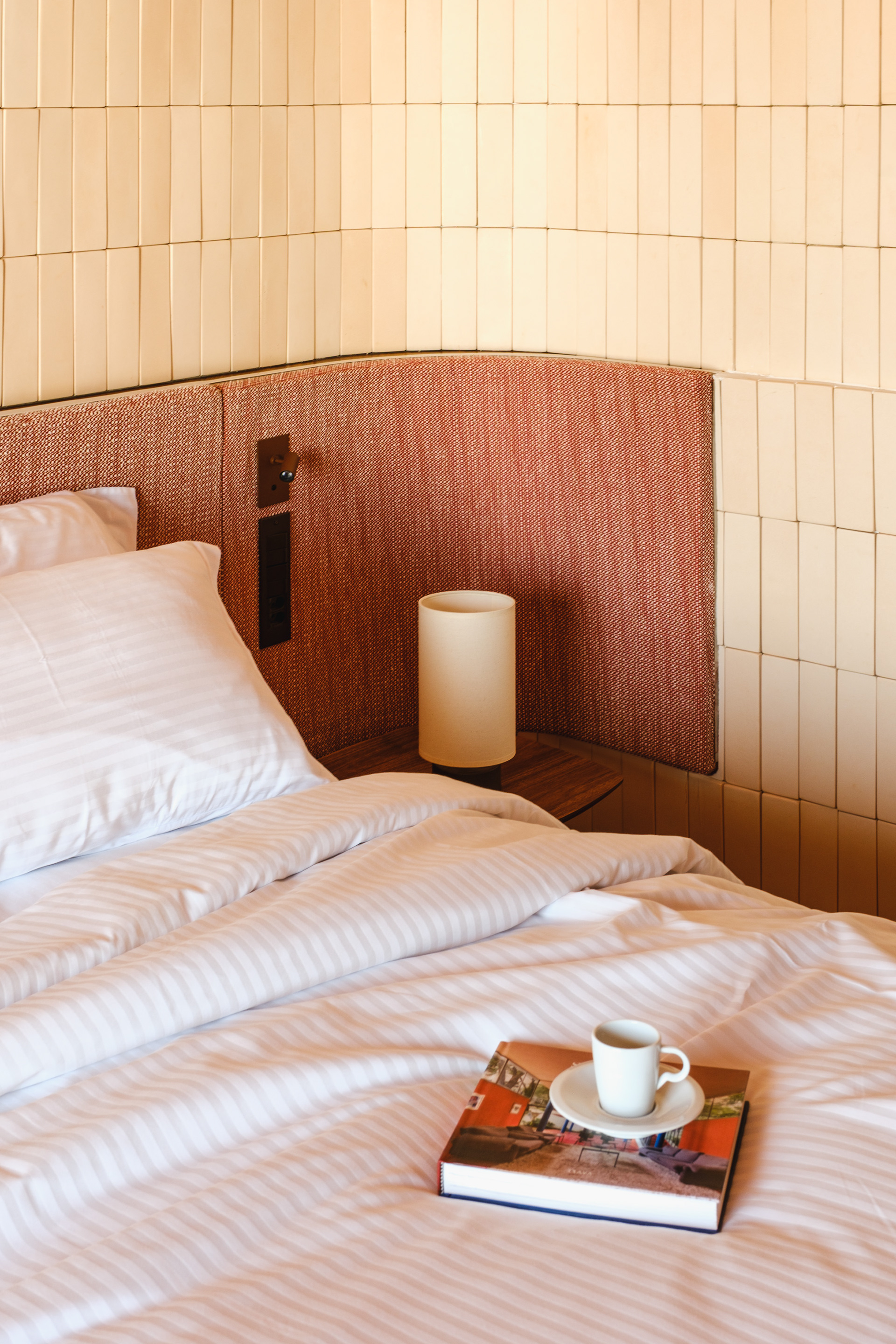
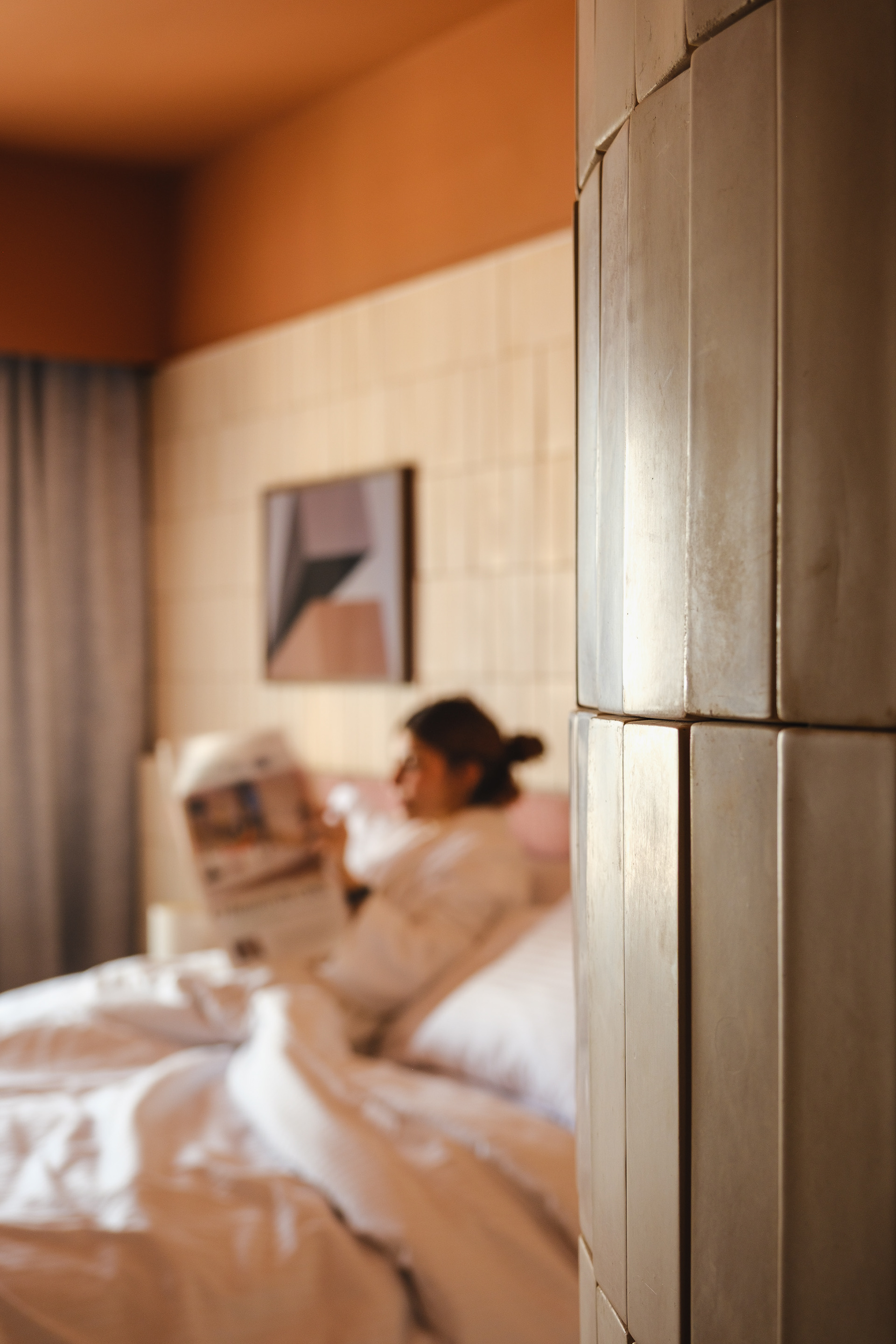
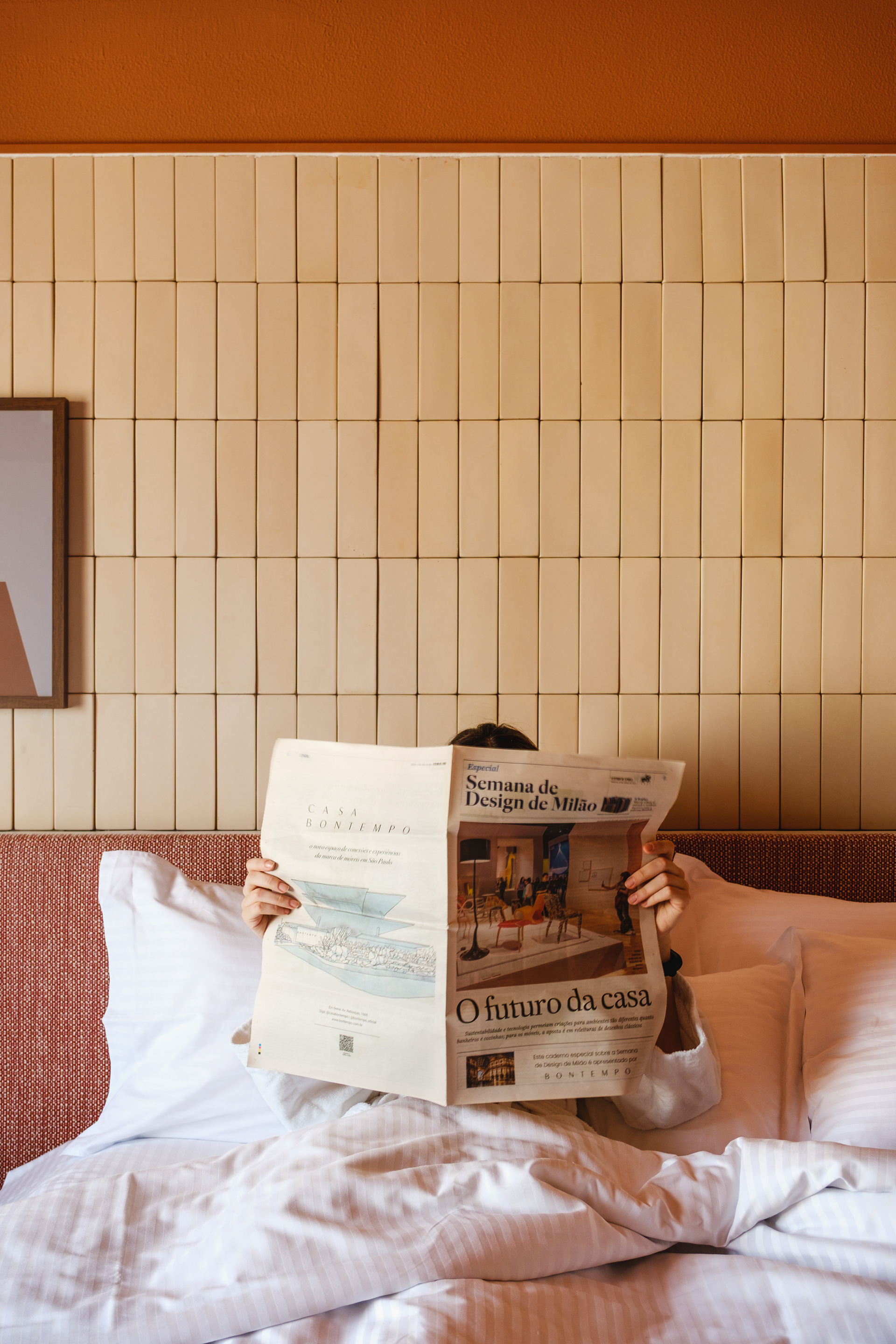
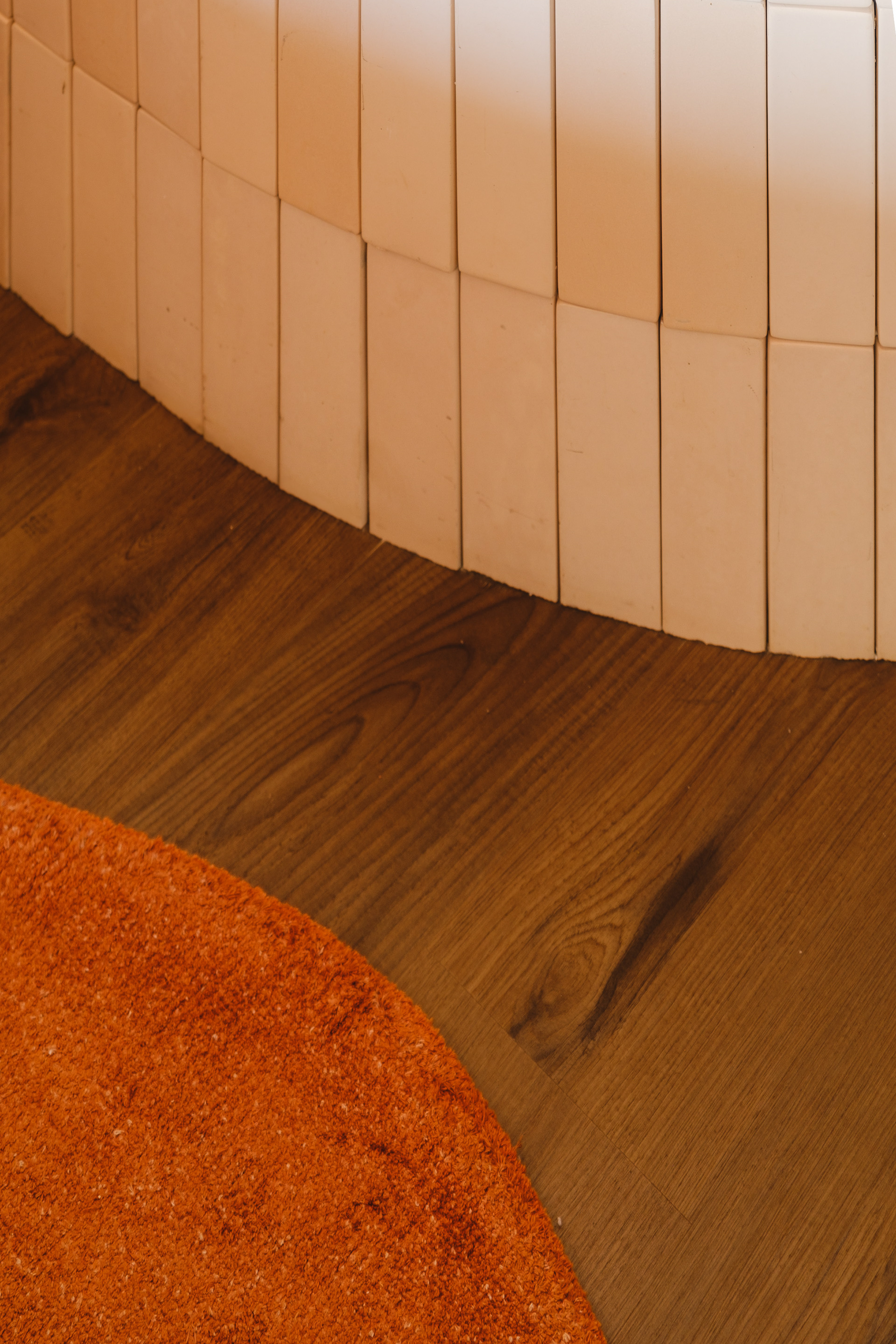
The main wall of the room was clad with ceramic pieces in natural tones, forming a curved panel with indirect lighting. The fabric headboard detaches slightly from this curved surface, creating a light composition. The flooring is wood-look vinyl, and the rug, with an organic two-tone design, complements the environment, enhancing the fluidity of the forms and the sense of coziness.
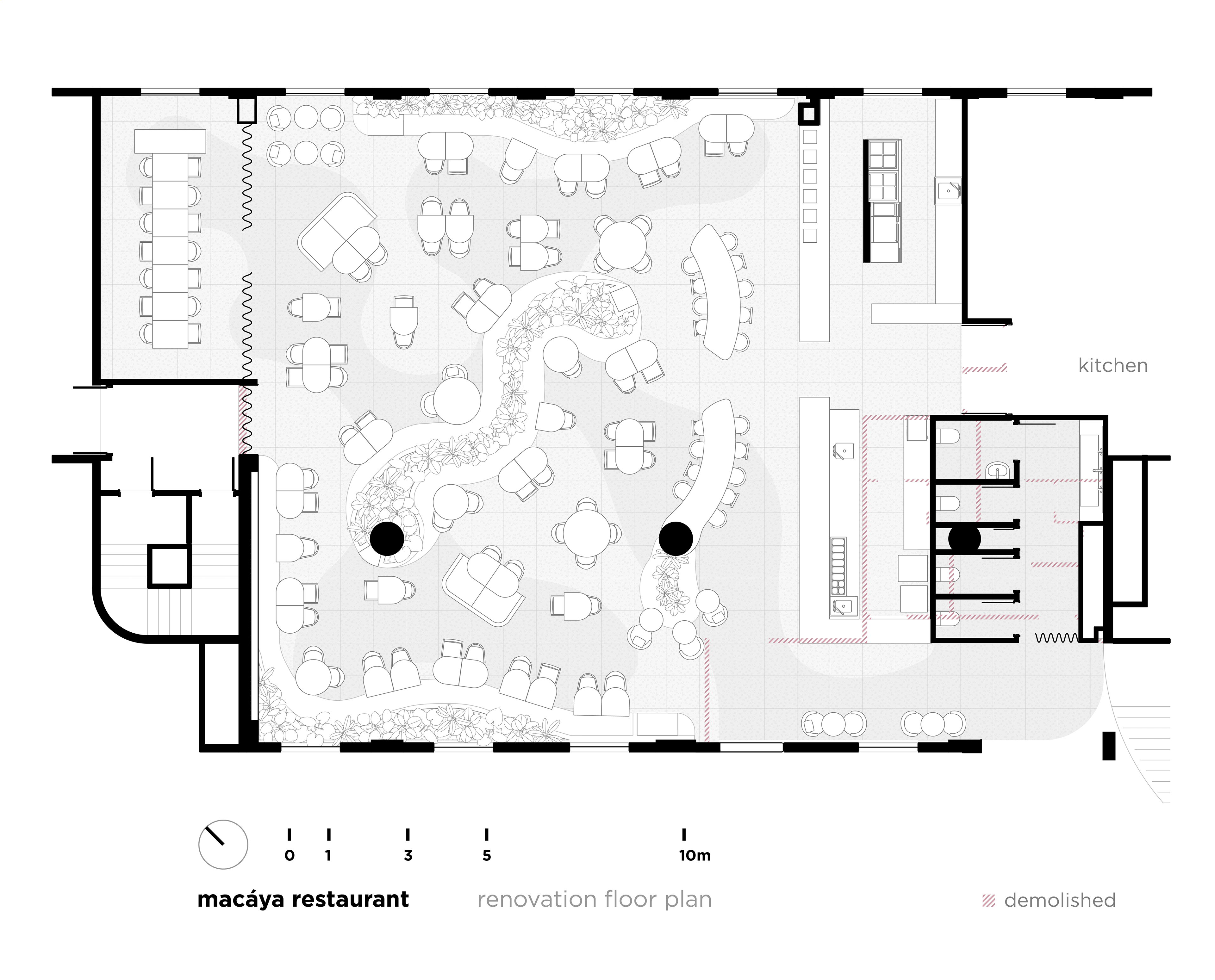
The restaurant underwent a complete renovation to expand its functionality, becoming an all-day venue serving breakfast, lunch, dinner, and events. It was necessary to increase seating capacity while maintaining proportion in relation to the number of rooms in the hotel.
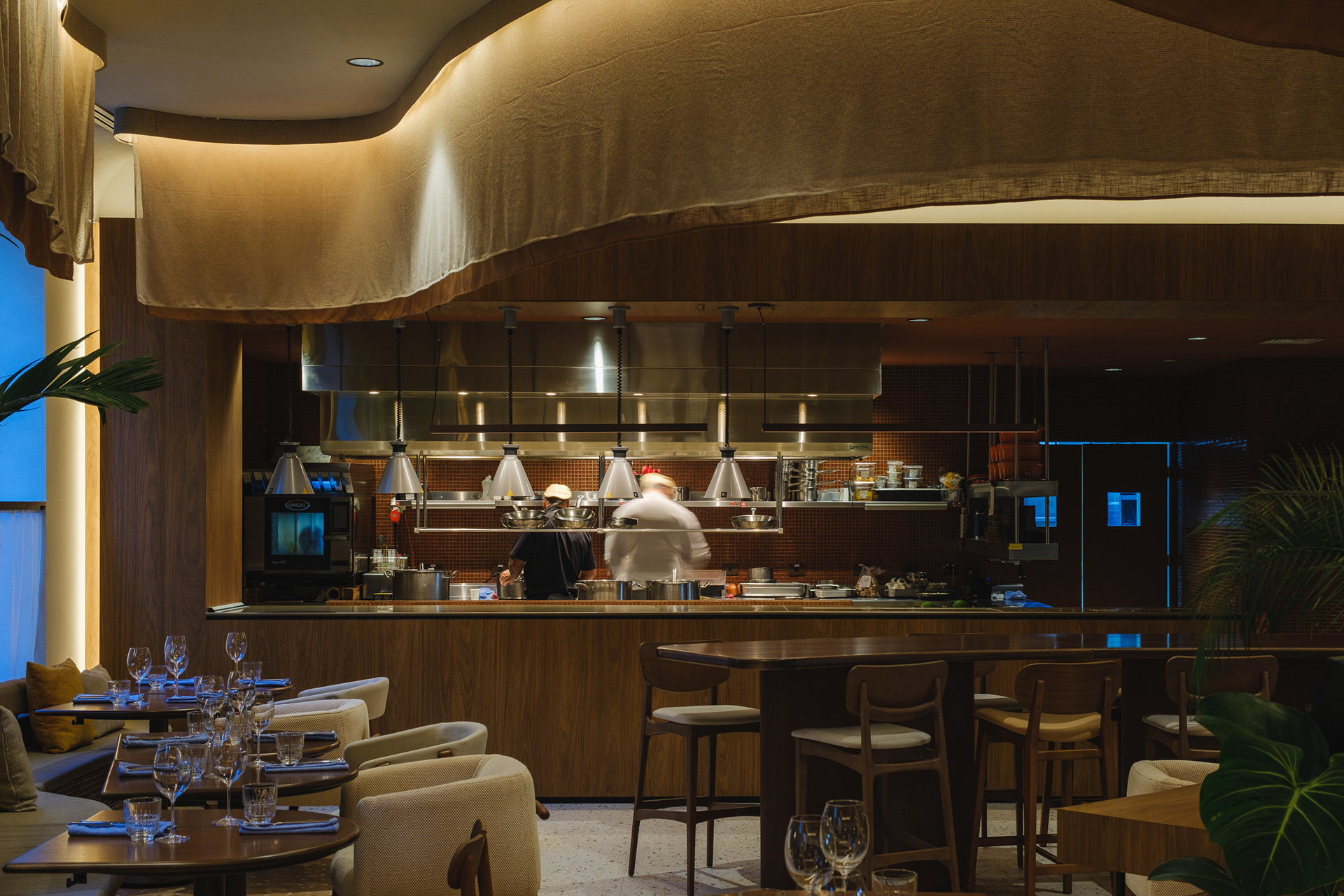
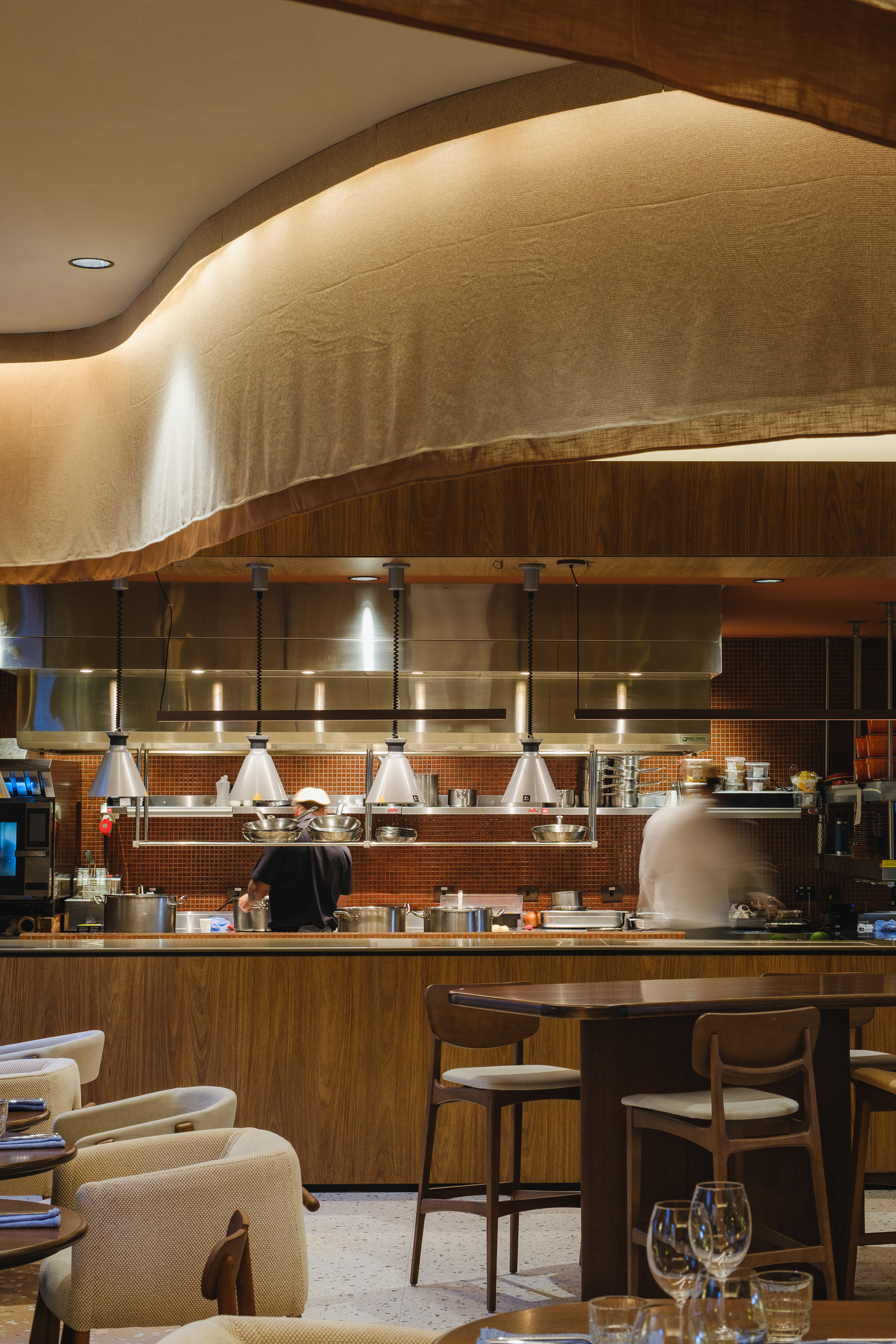
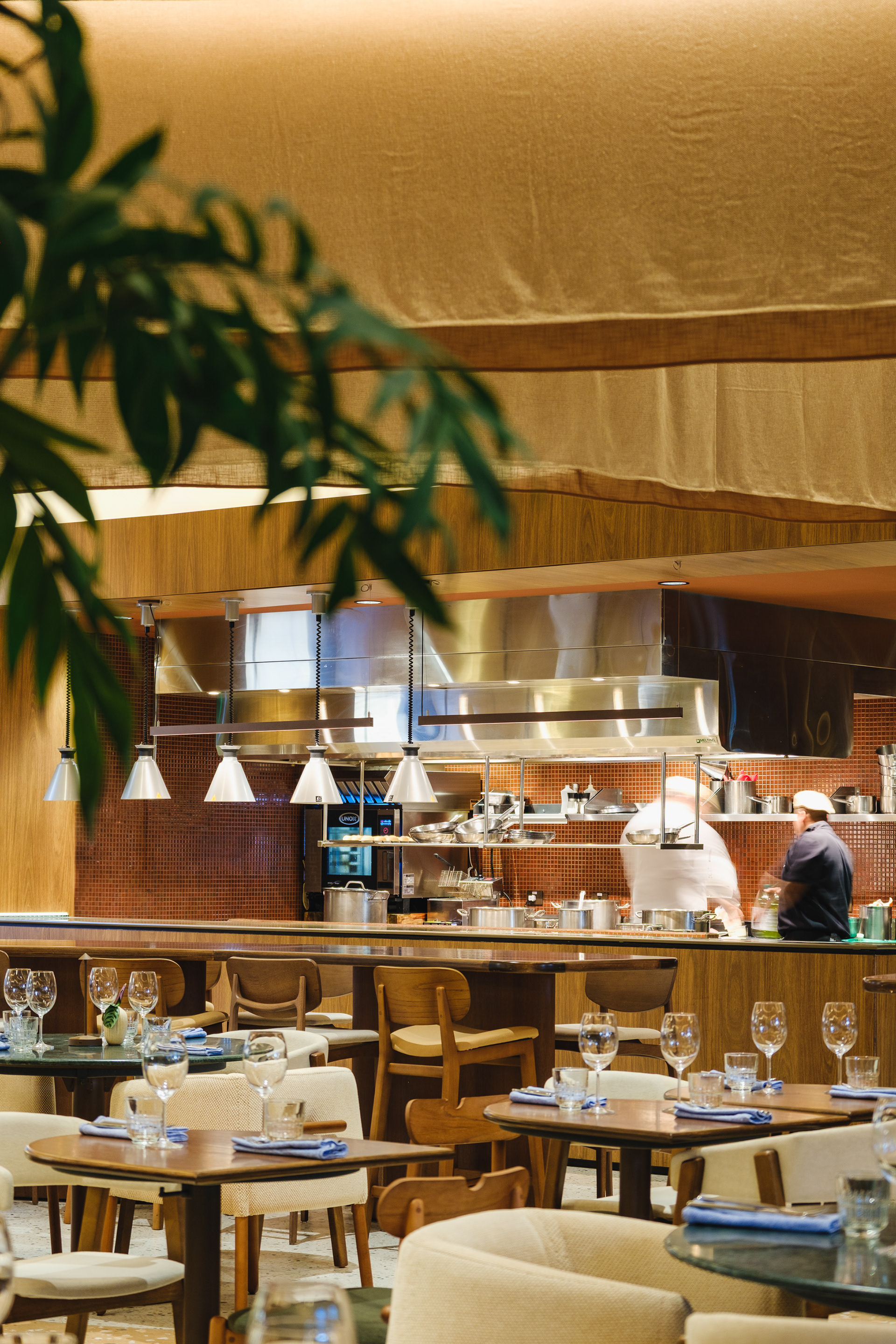
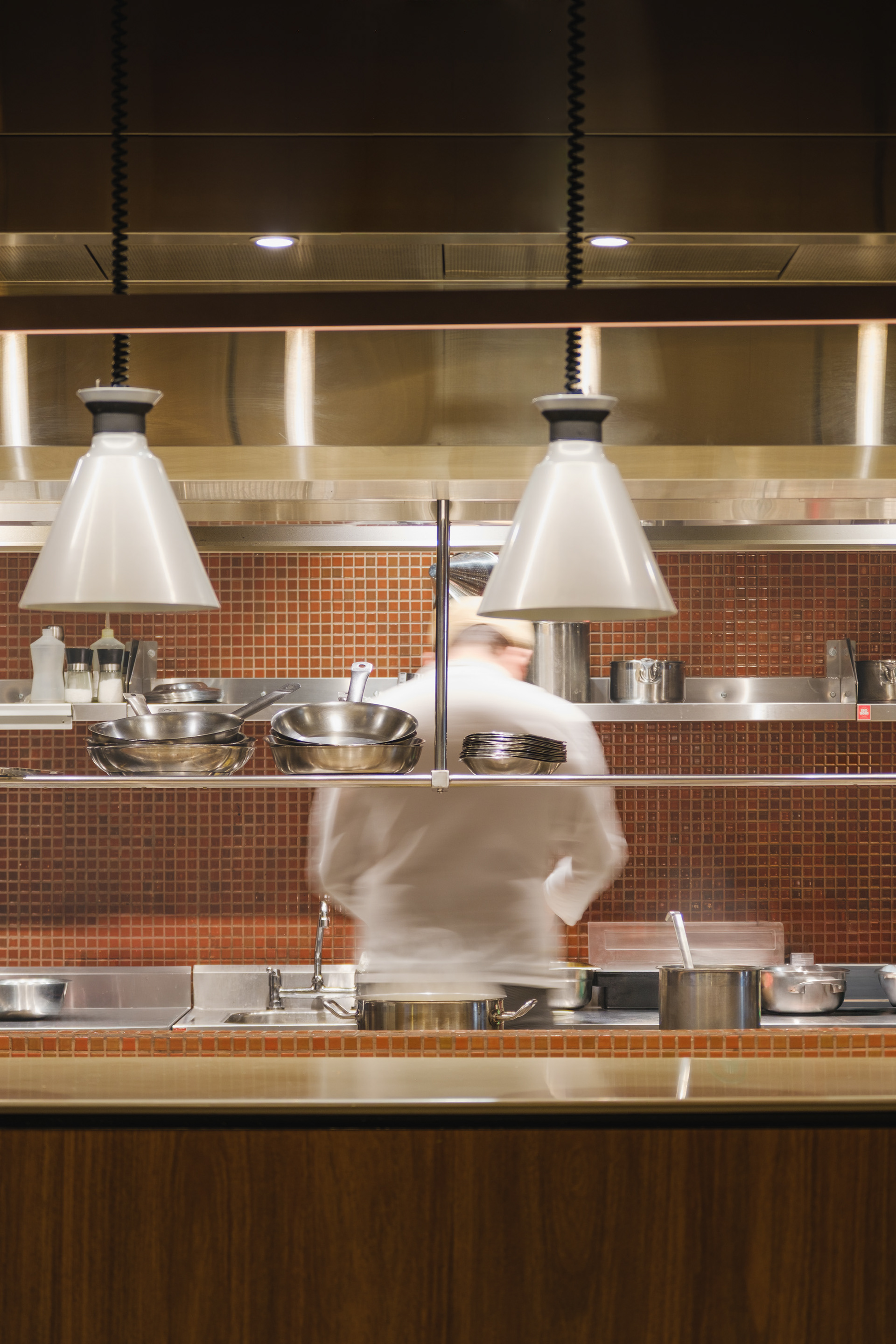
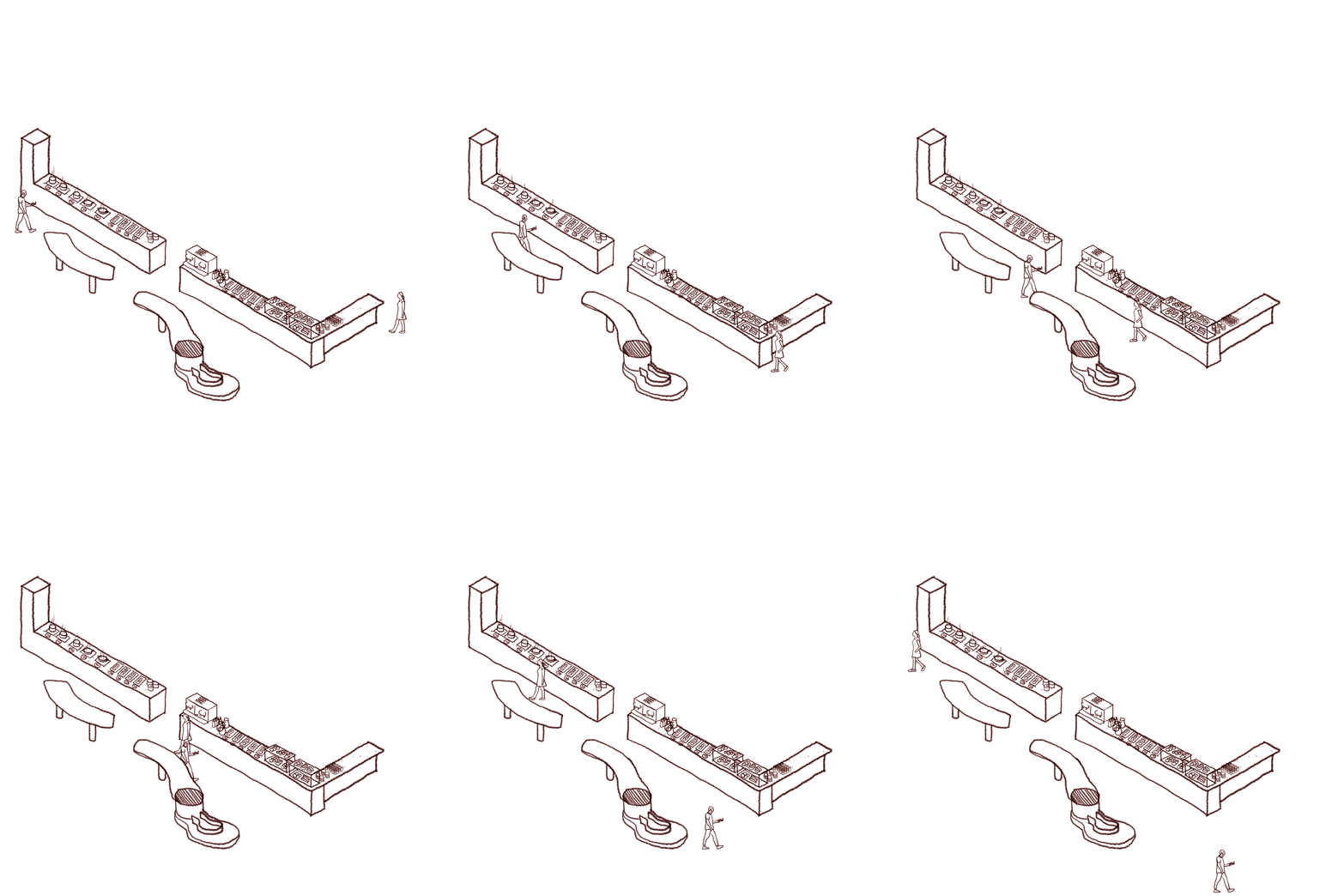
One of the key elements introduced was the show kitchen, allowing guests to watch food preparation at different times of the day. The morning buffet area transforms into an open kitchen during the rest of the day.
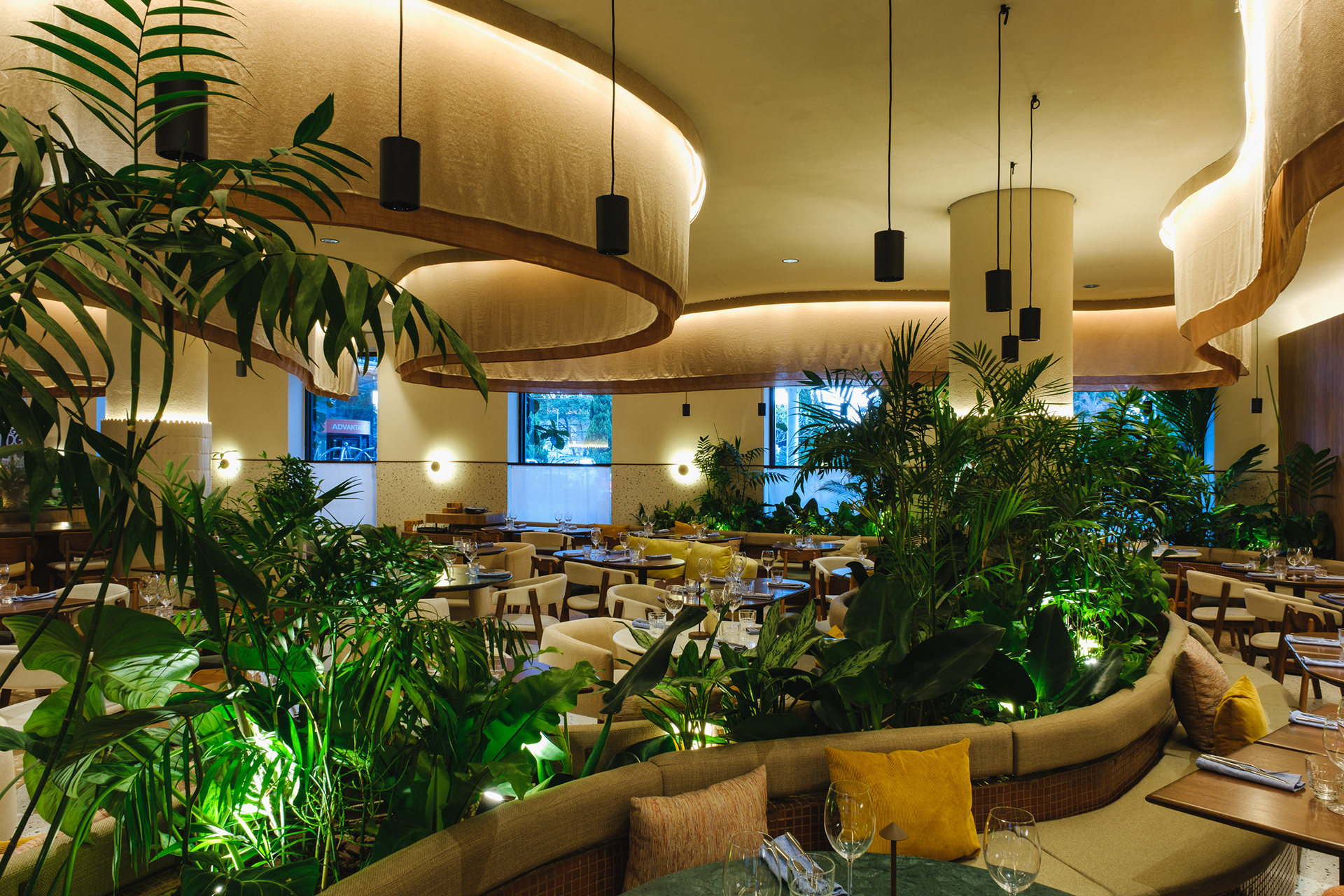
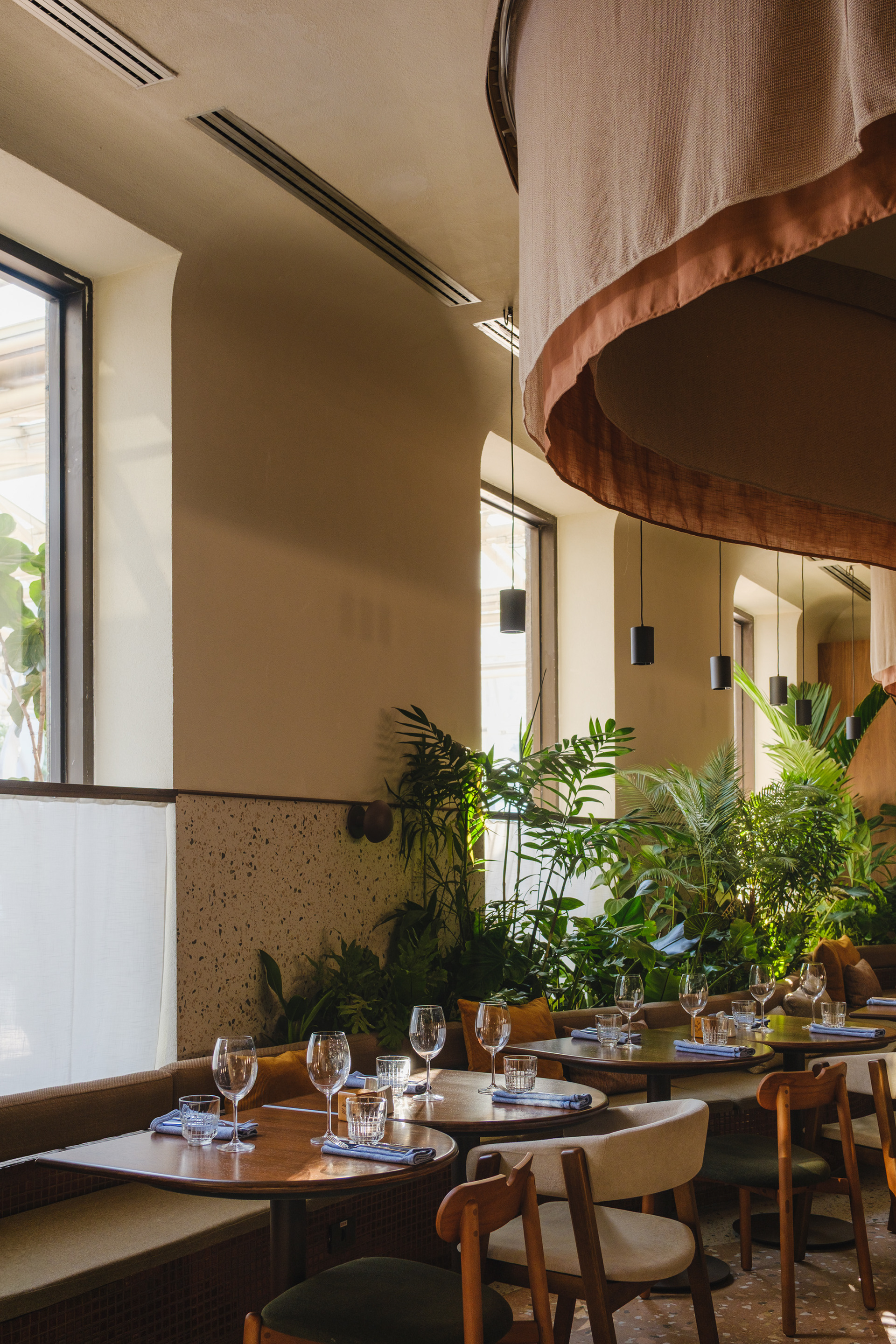
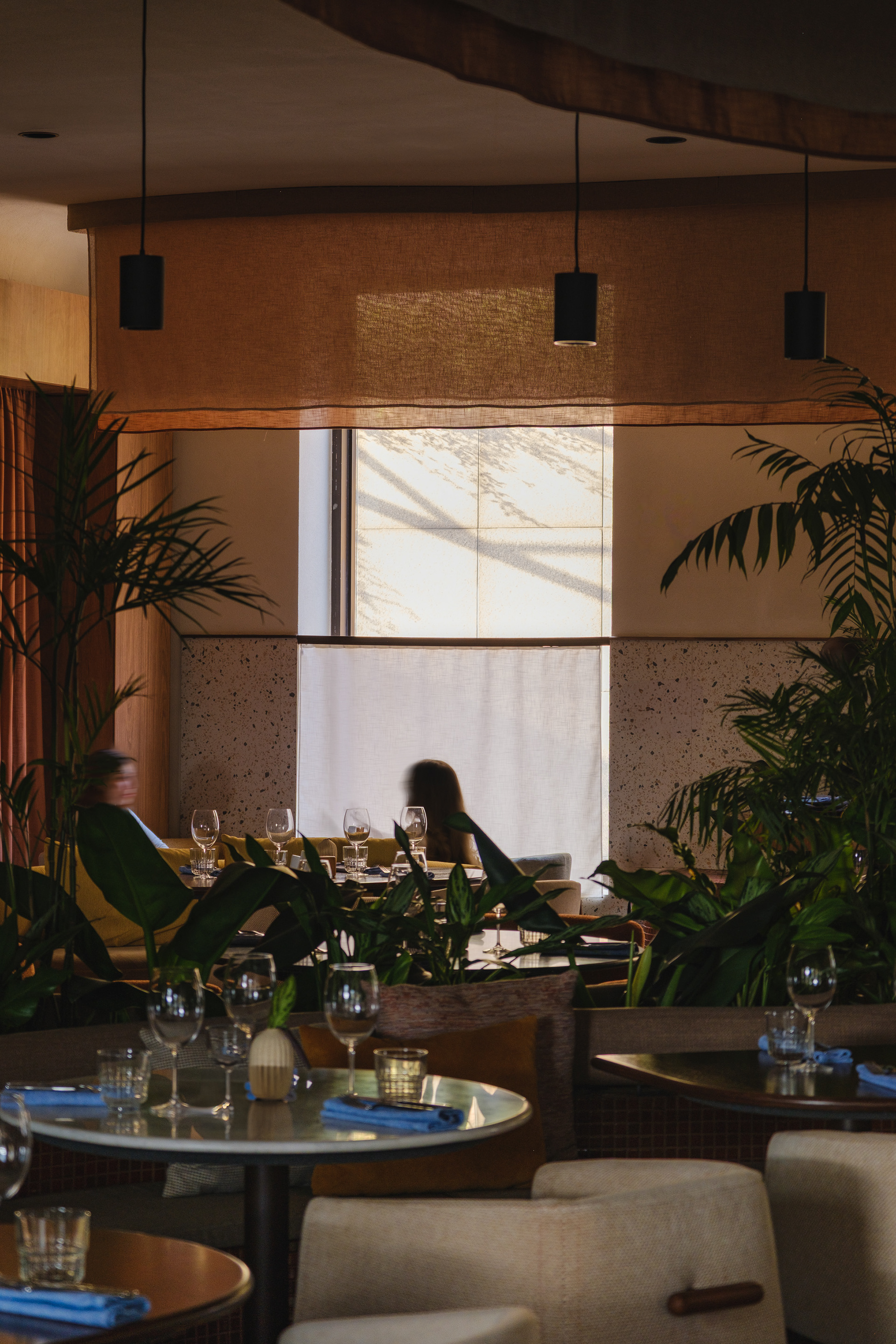
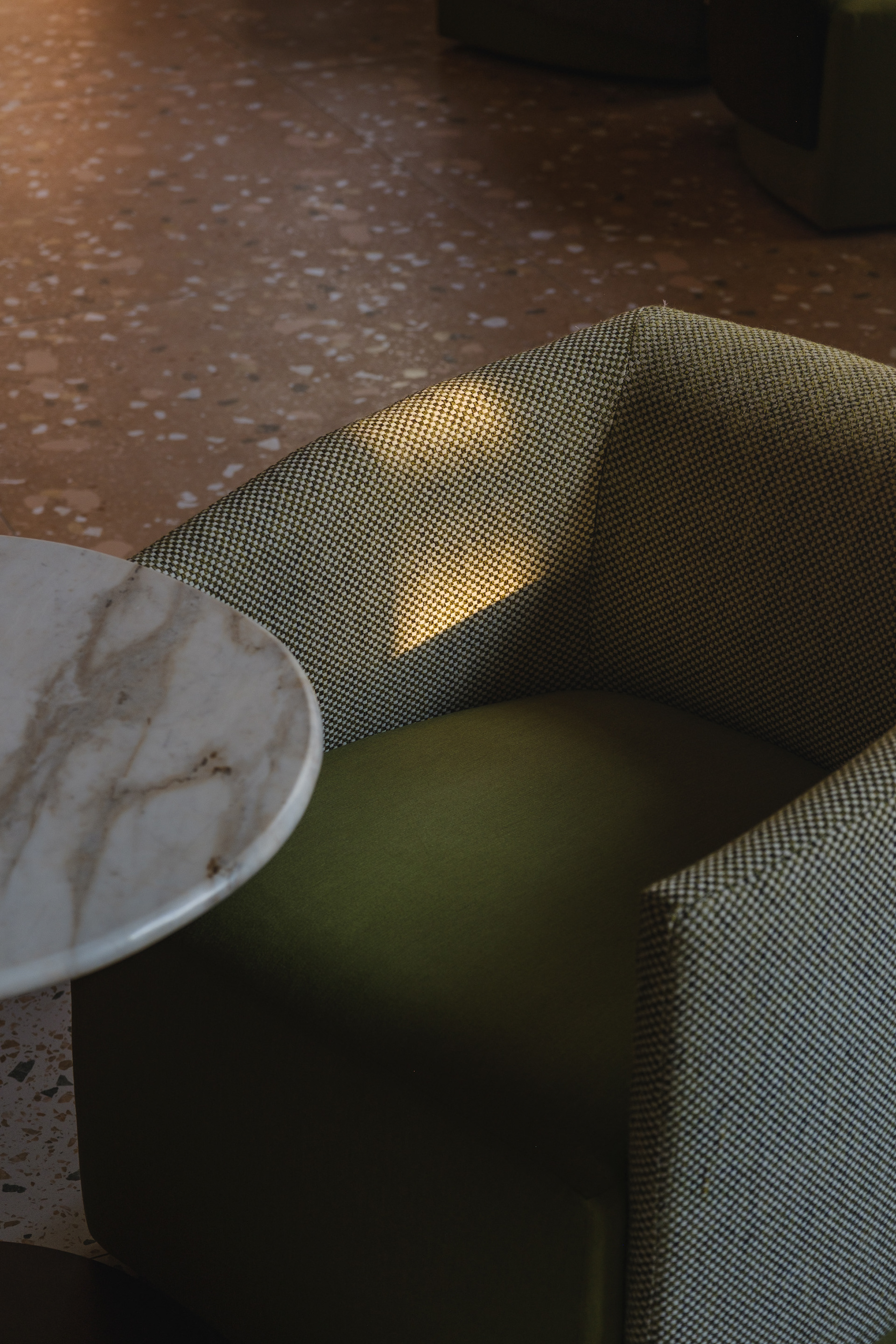
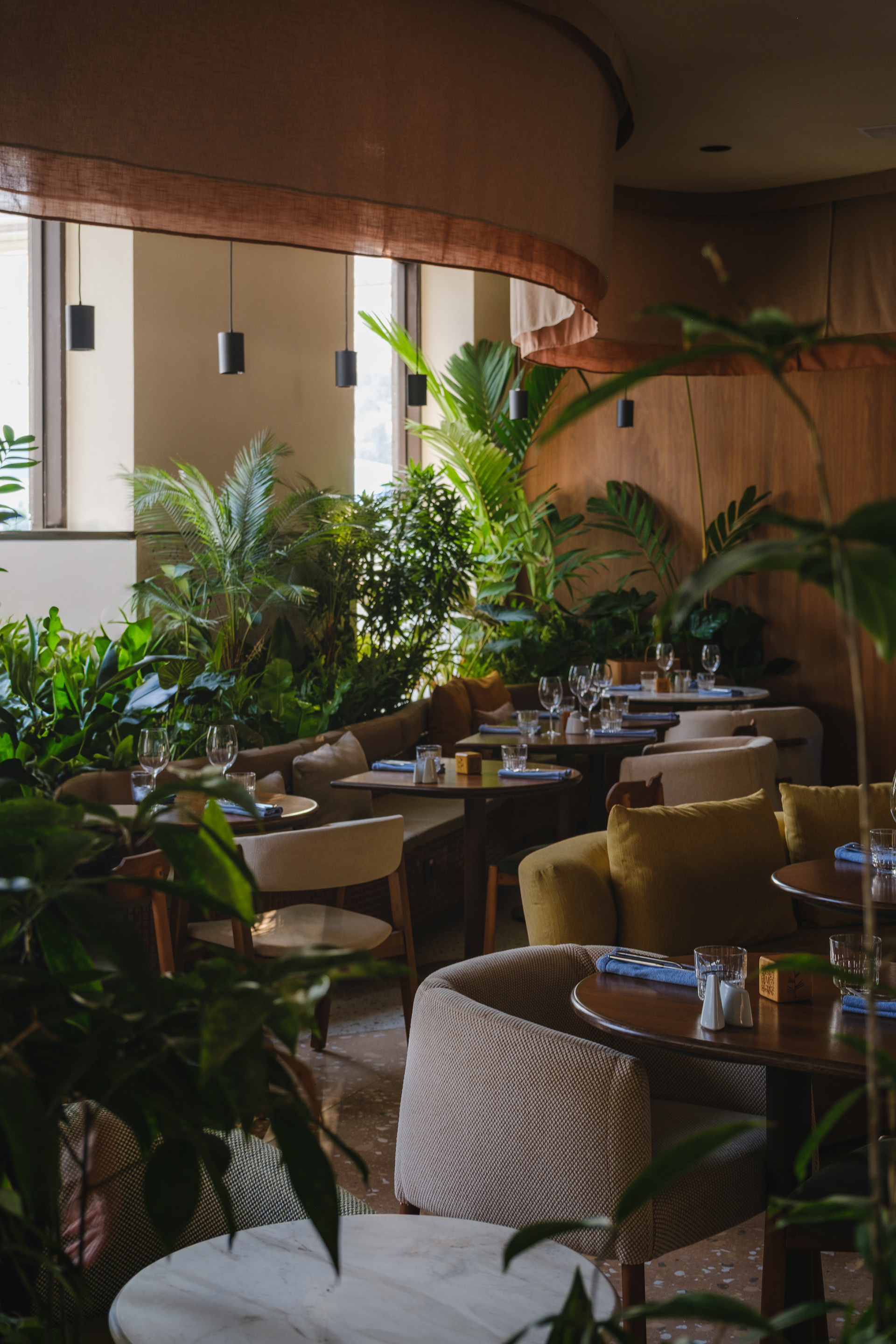
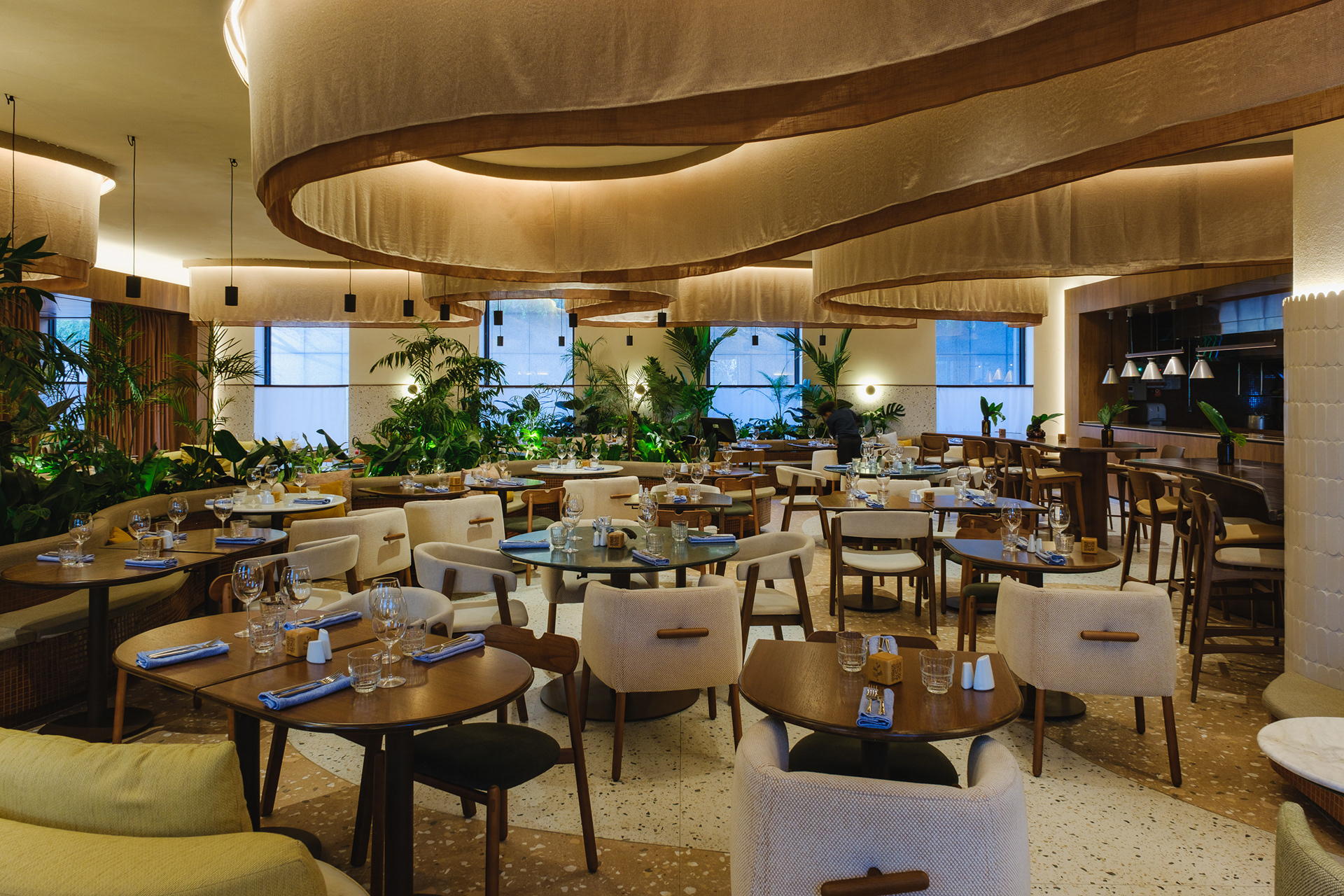
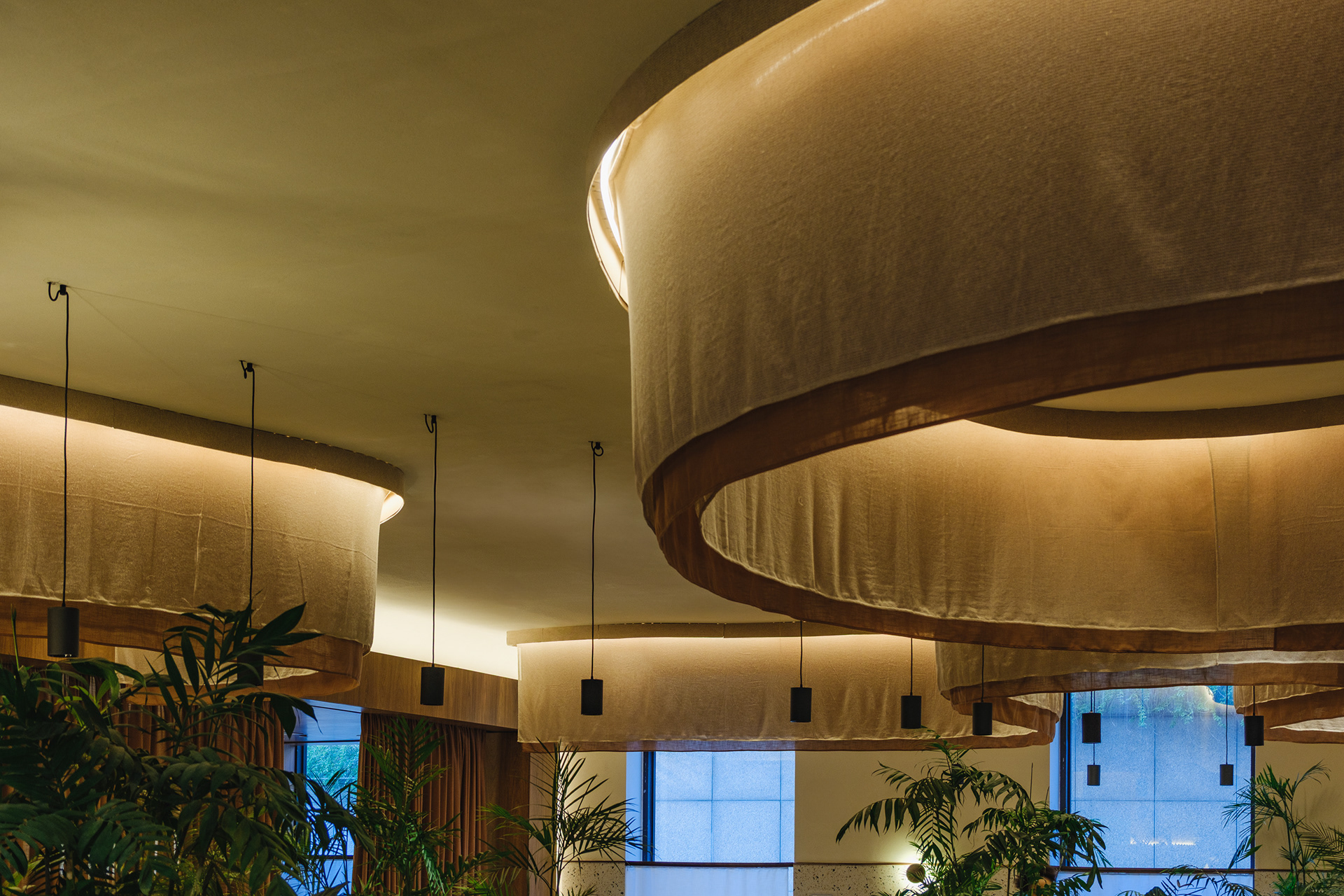
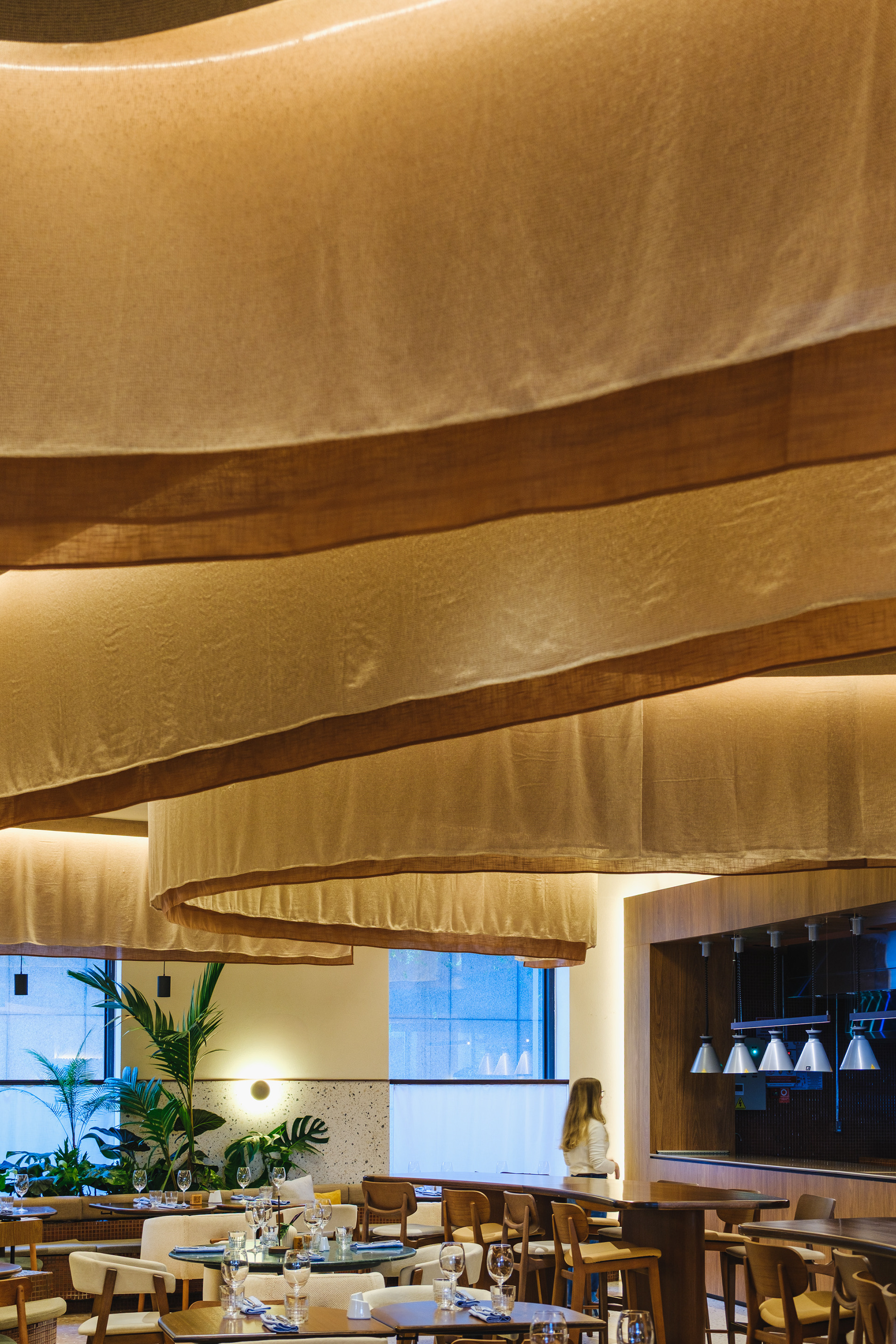
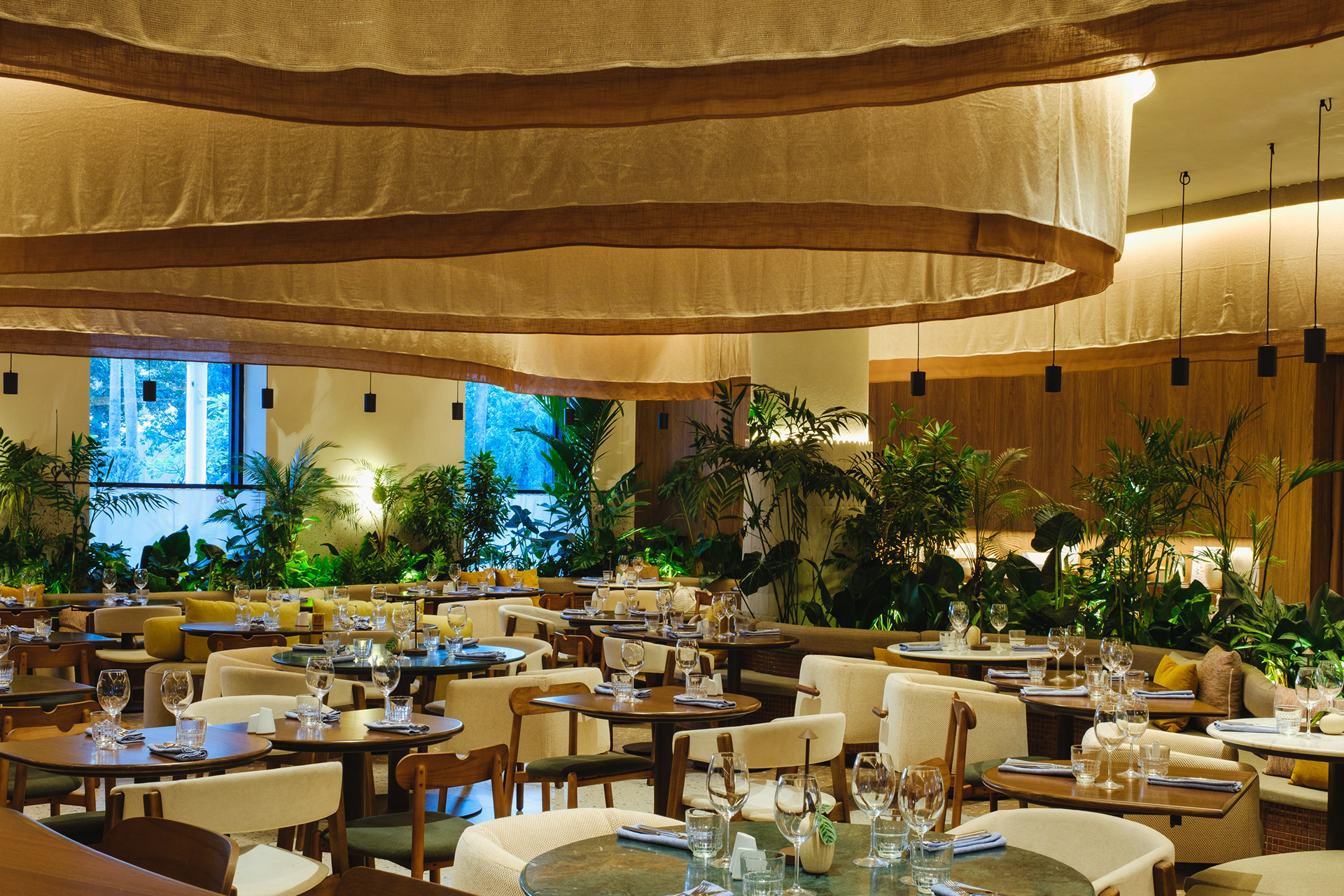
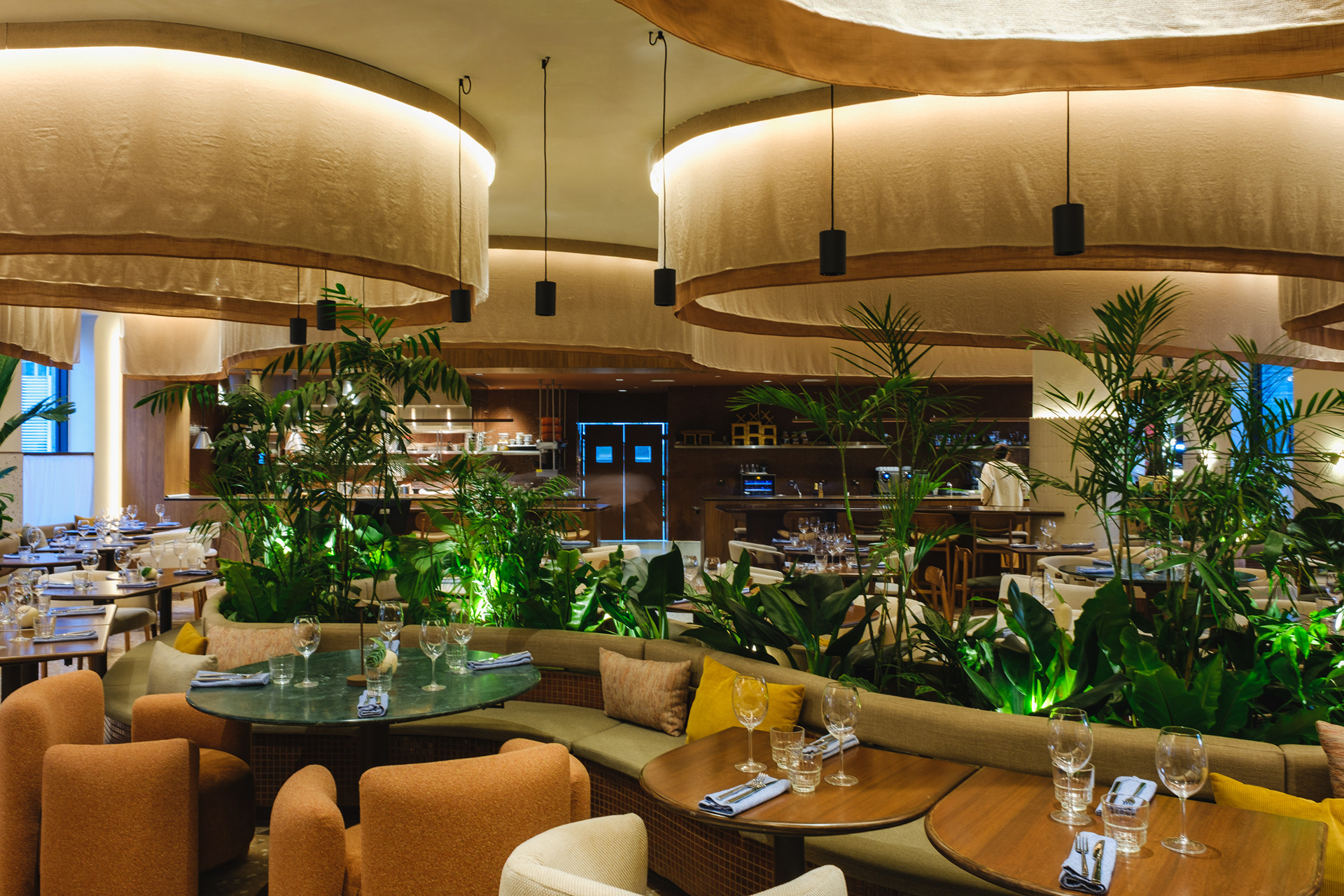
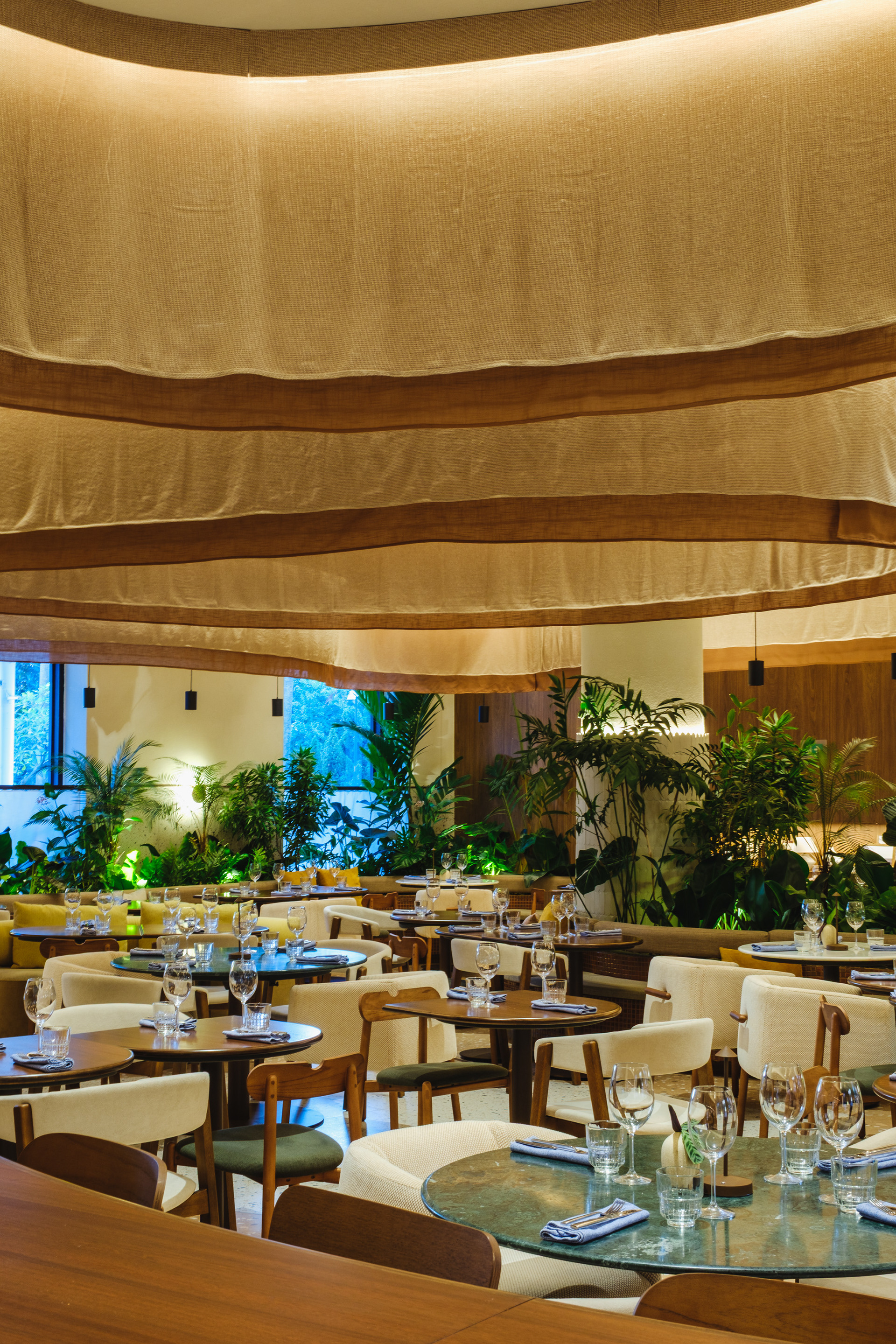
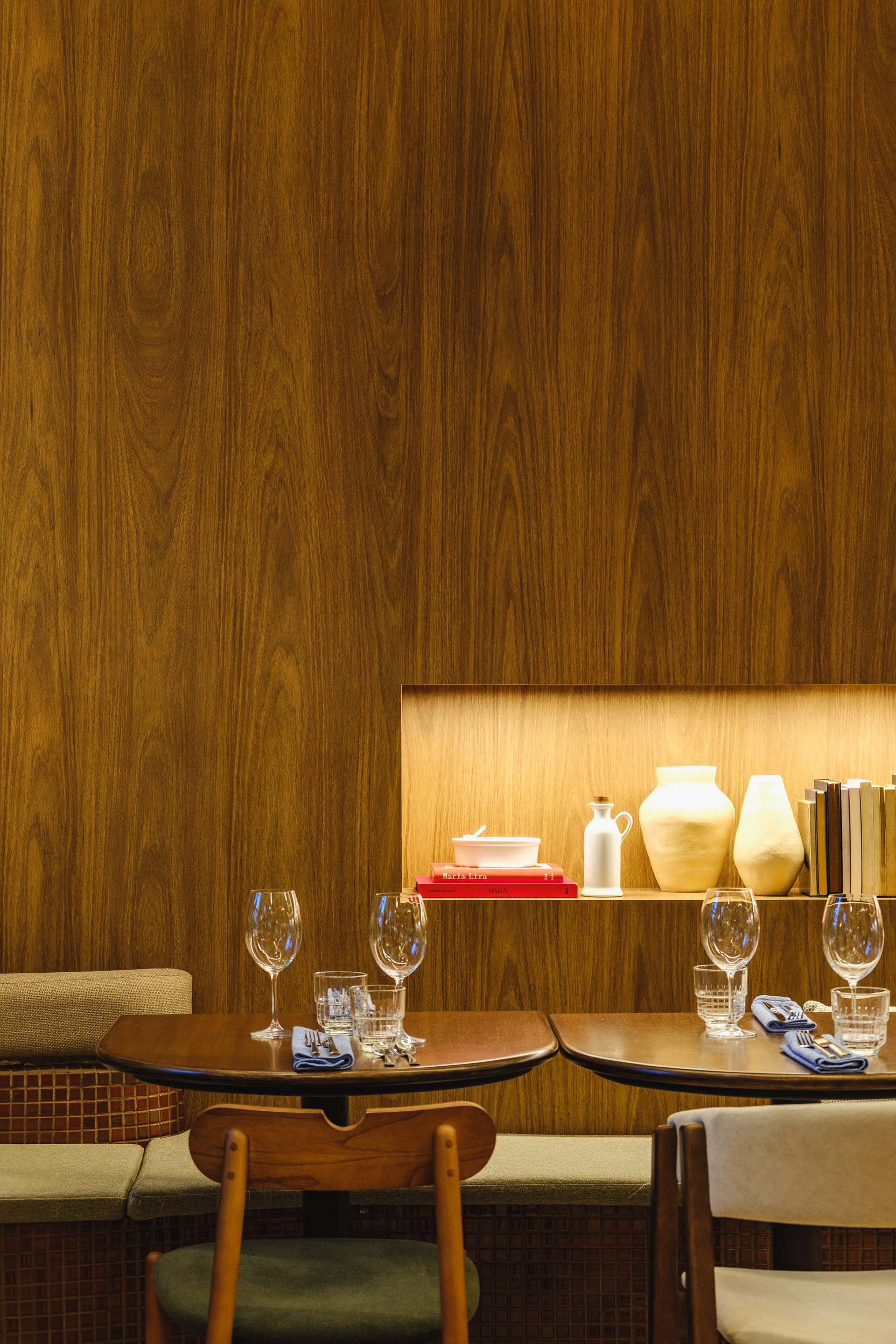
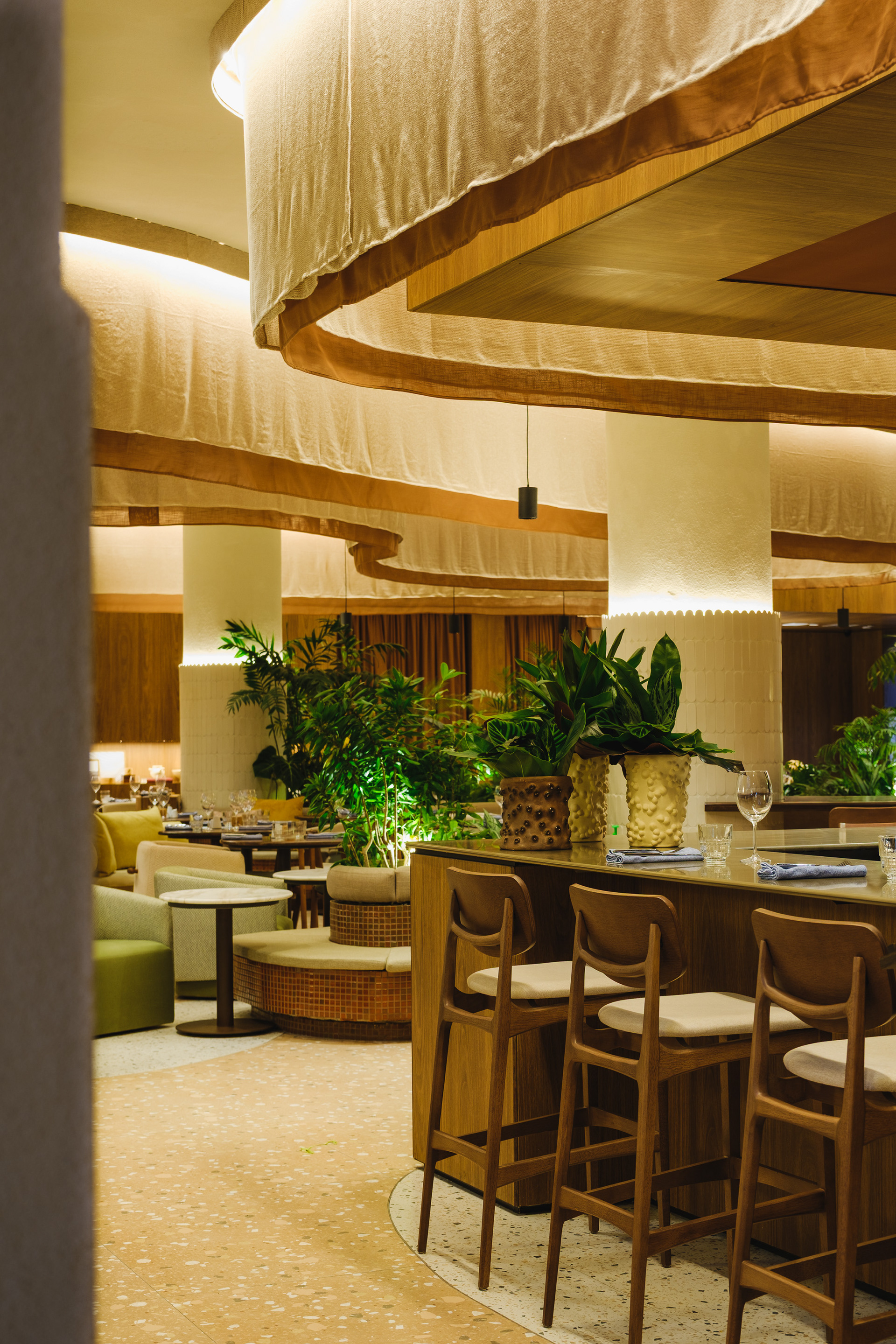
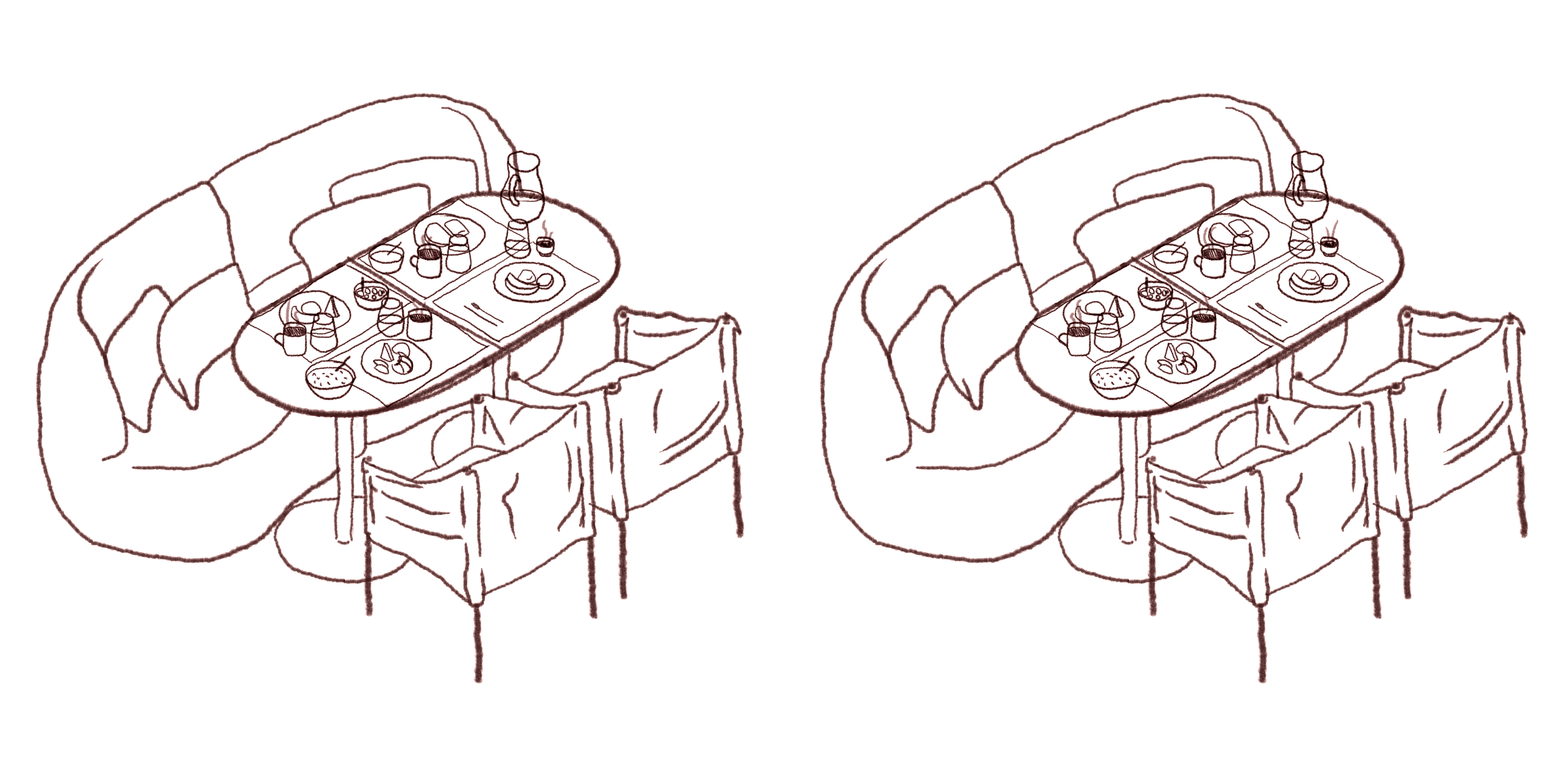
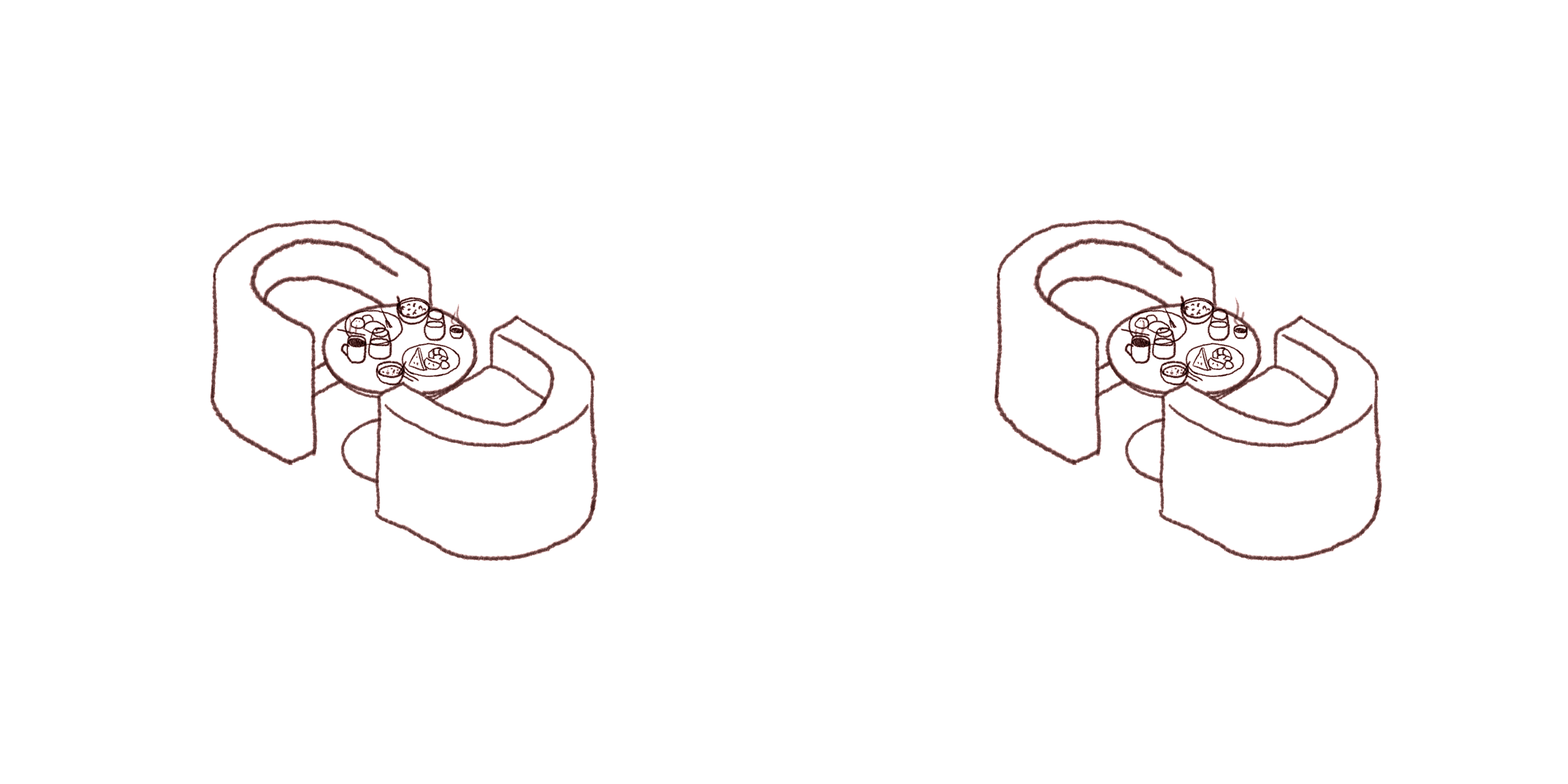
The ambiance sought to replicate the same design language used in the rooms: curved forms, organic furniture, and natural materials. Continuous curved sofas run across the entire dining hall, visually breaking the space into smaller, more intimate, and welcoming areas. This strategy ensures the environment works well both during peak hours and when occupancy is low, always maintaining a cozy atmosphere.
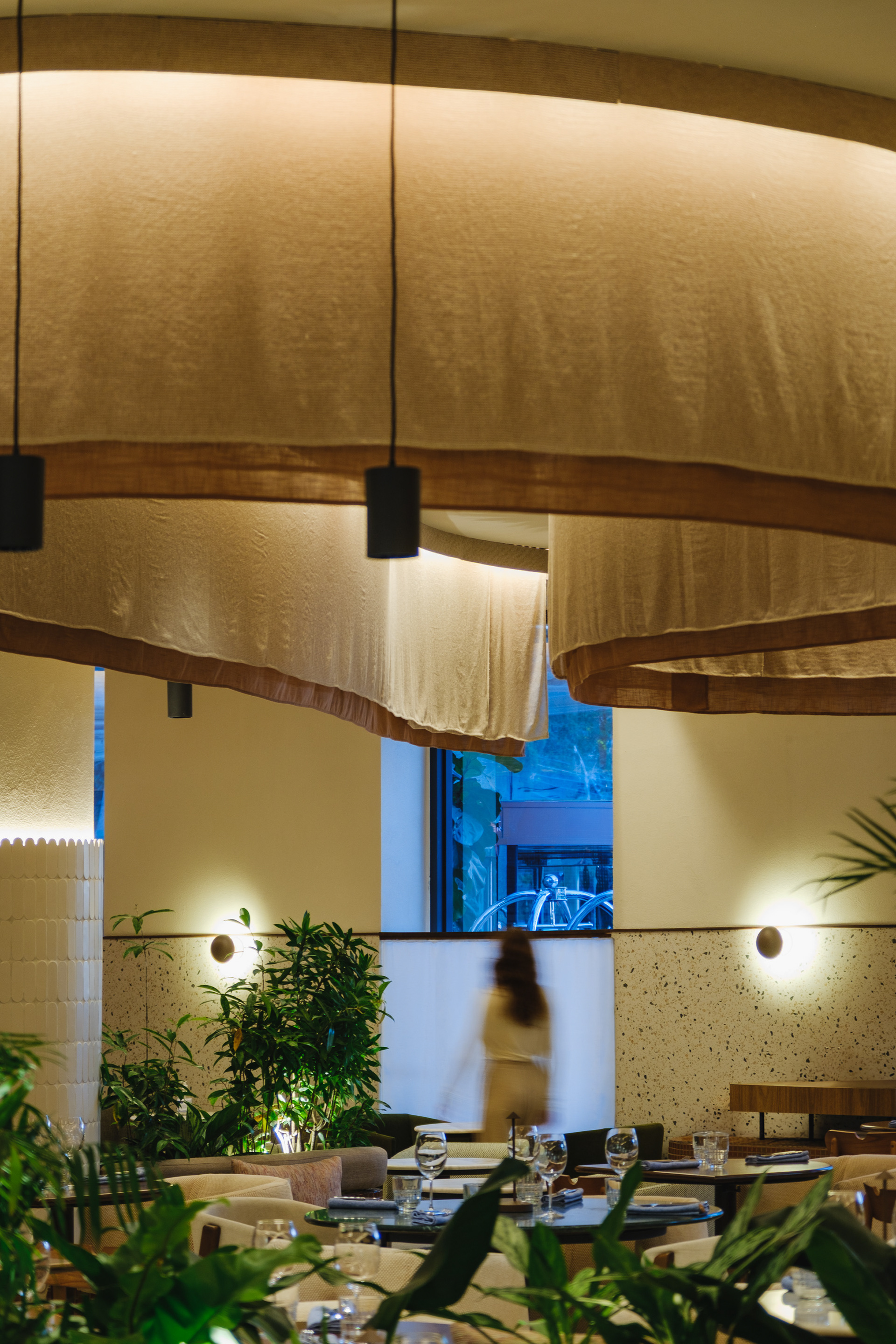
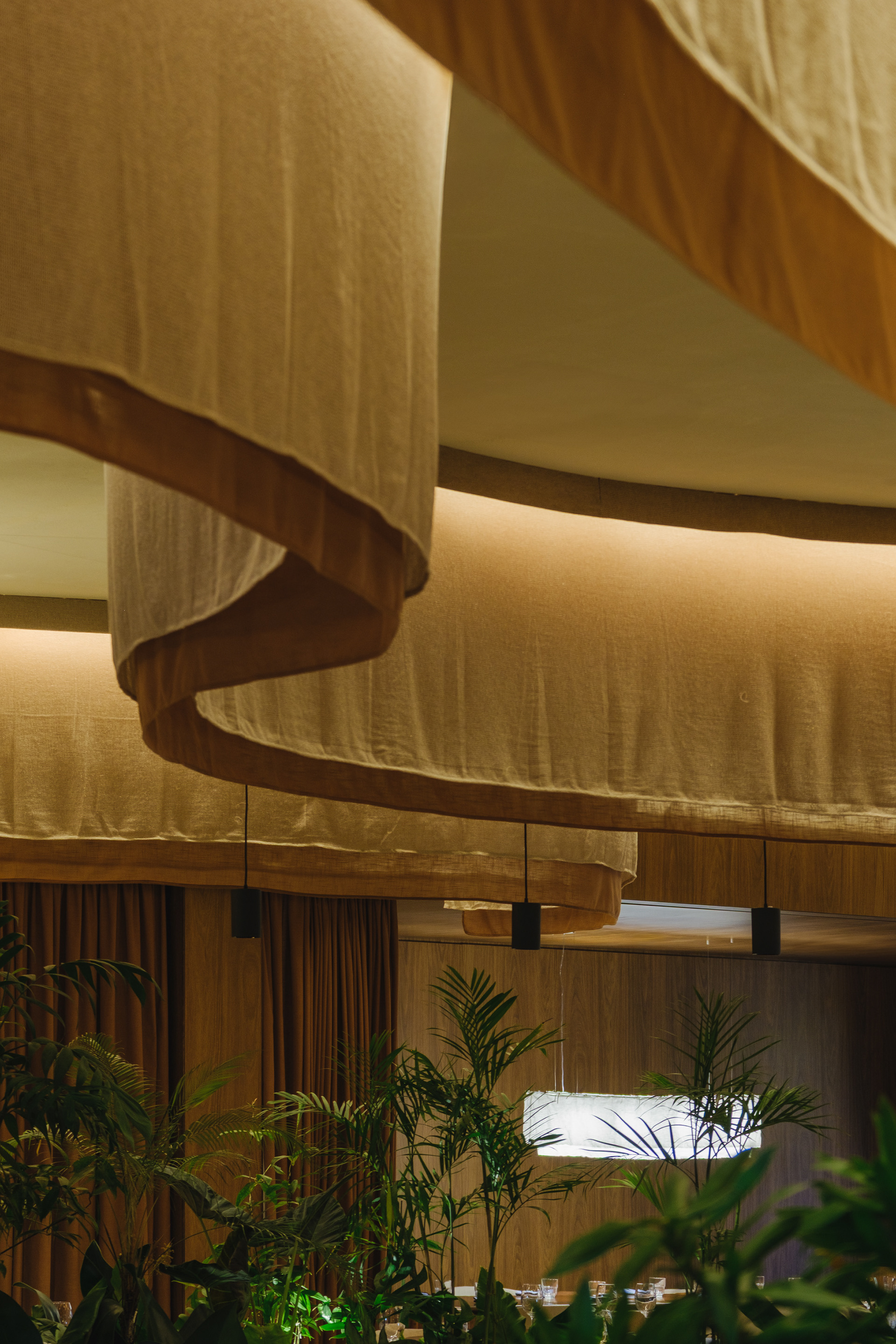
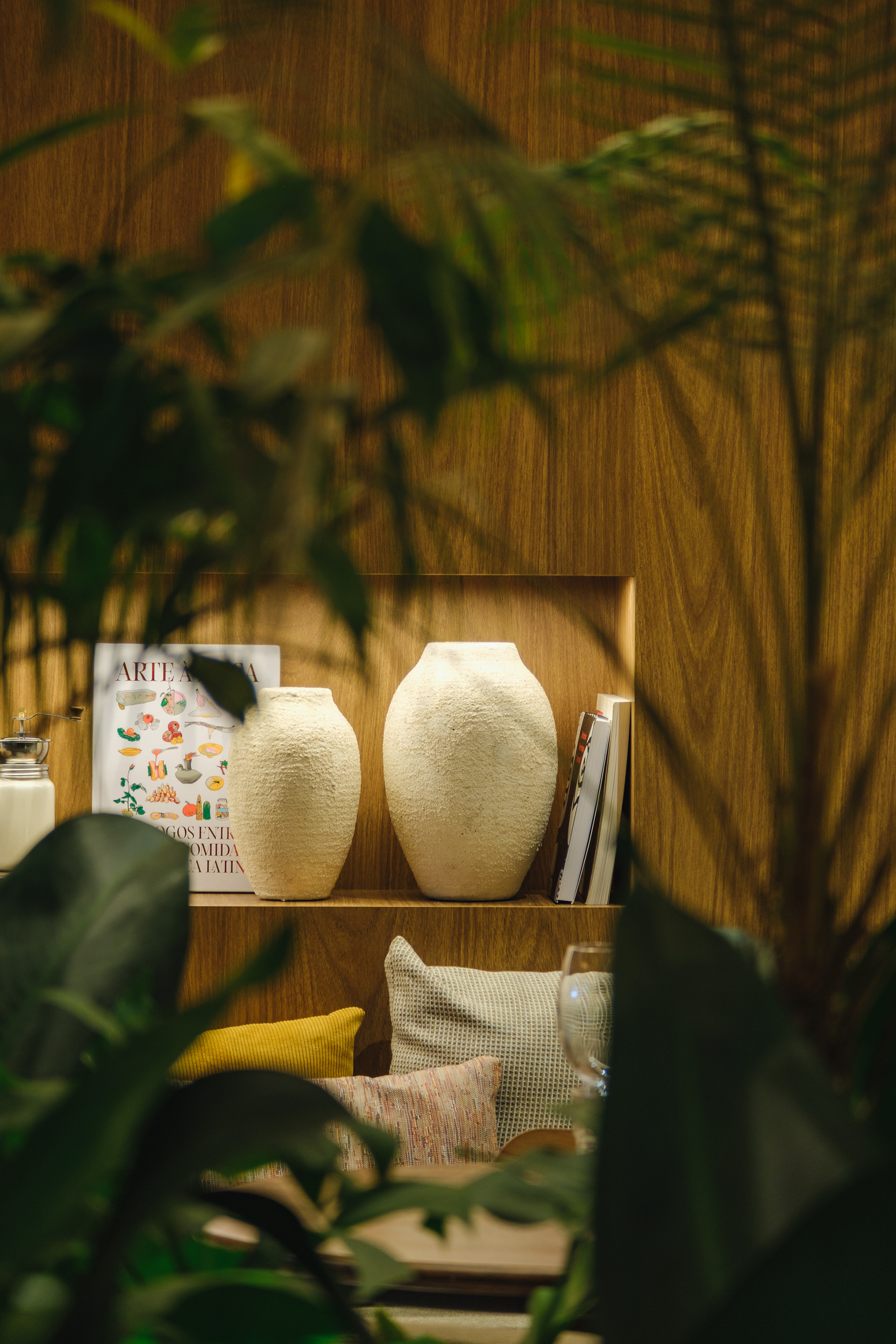
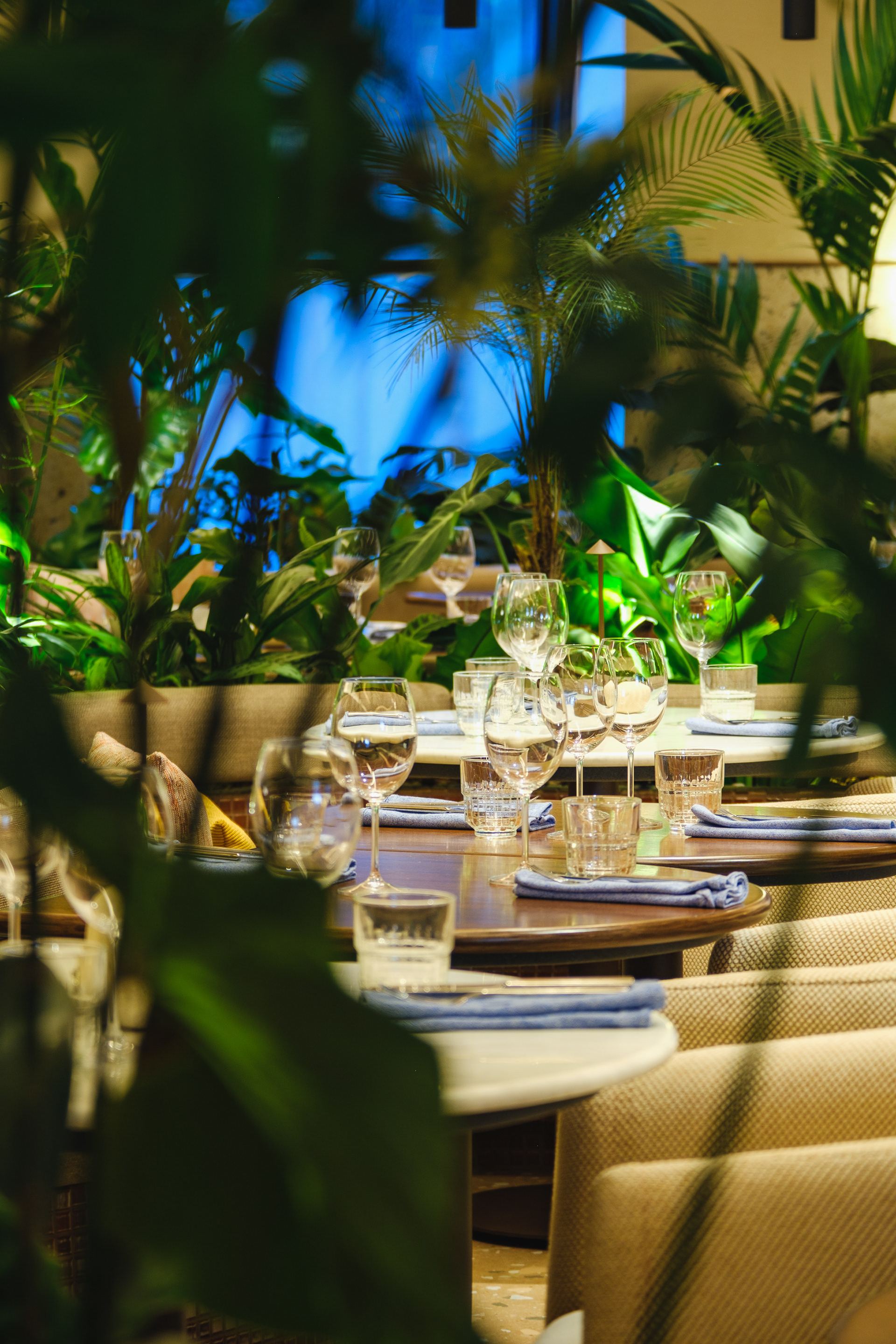
Vegetation is abundant throughout the restaurant, with a dedicated irrigation and lighting system to ensure proper maintenance of the greenery even in a space with limited natural light.
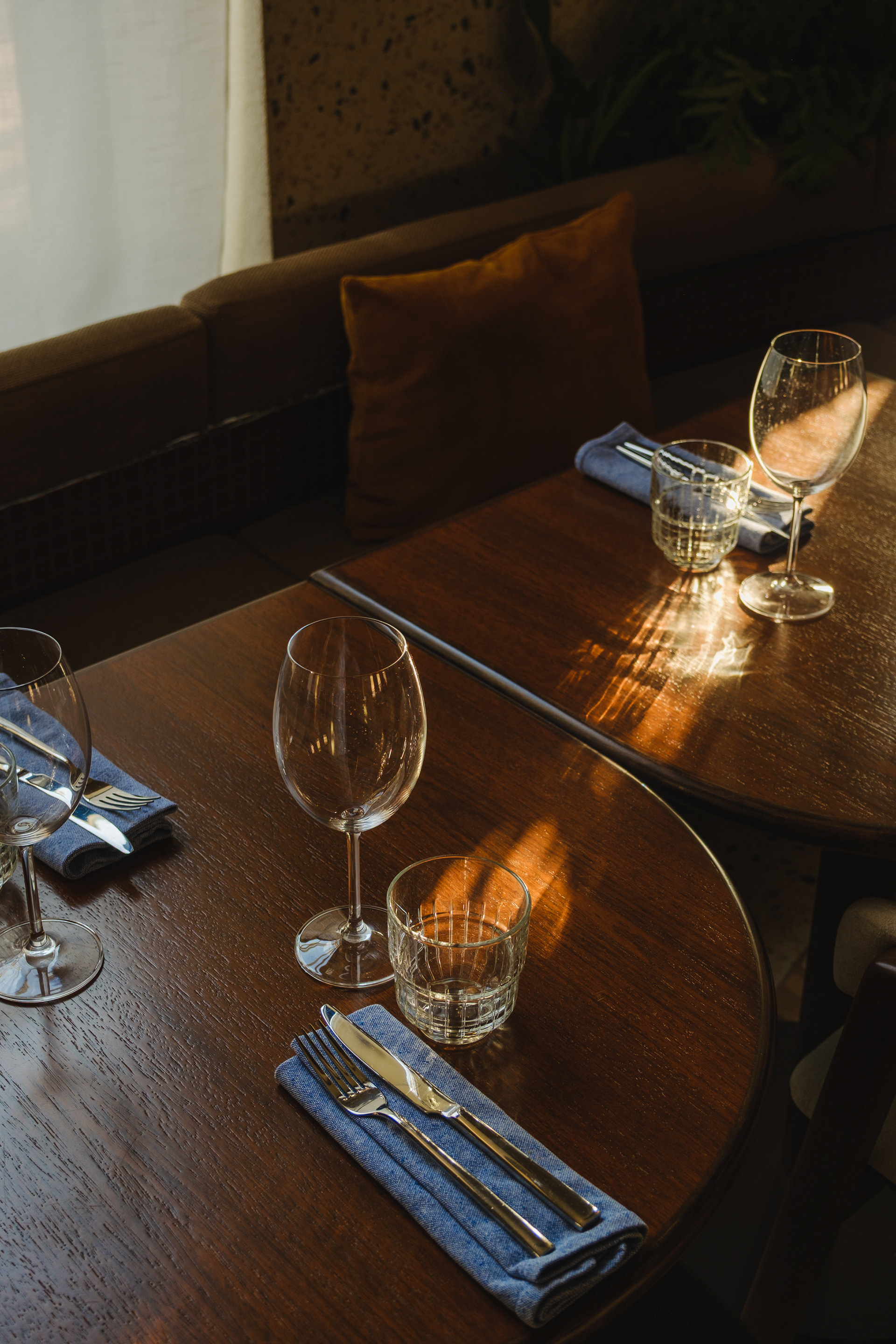
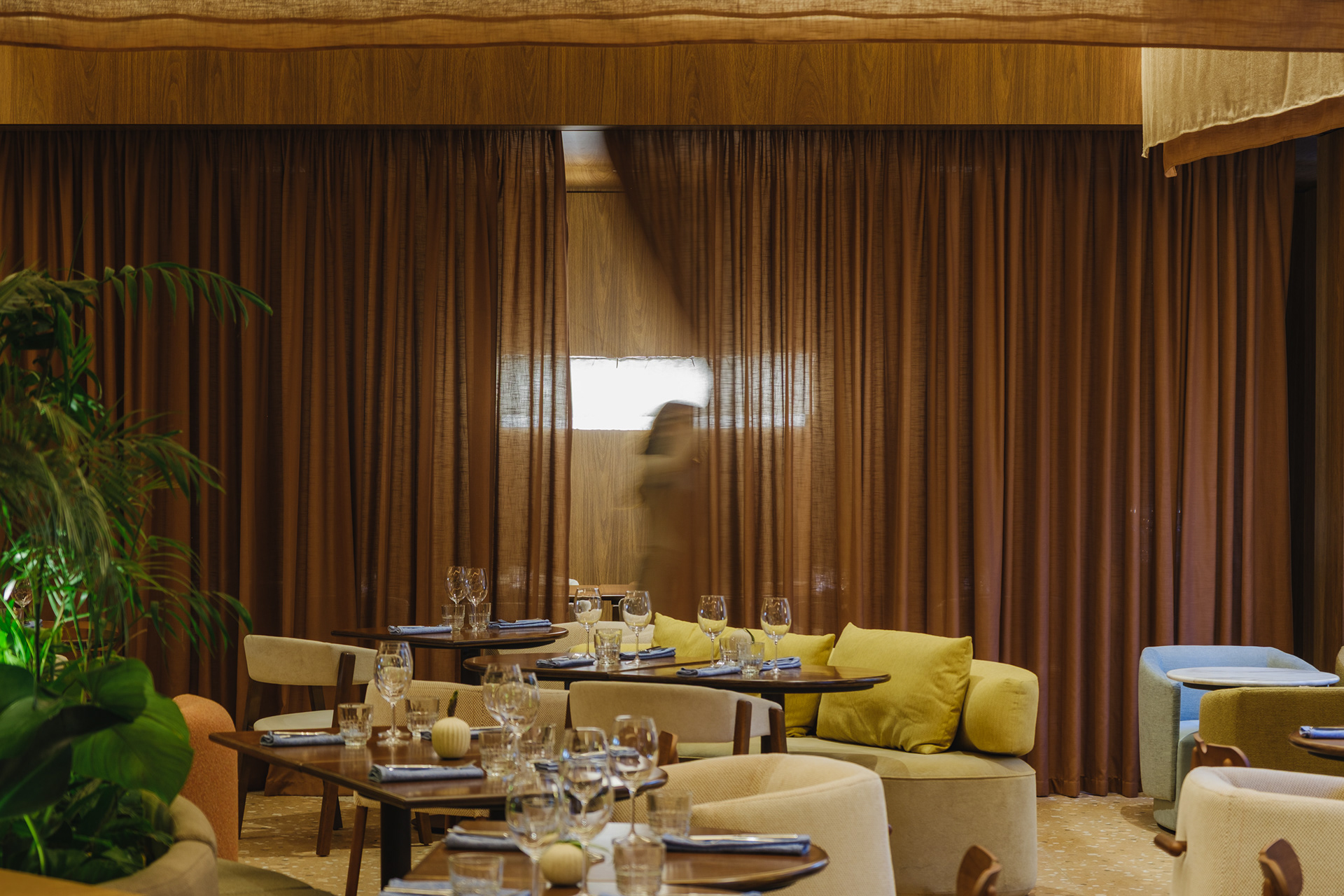
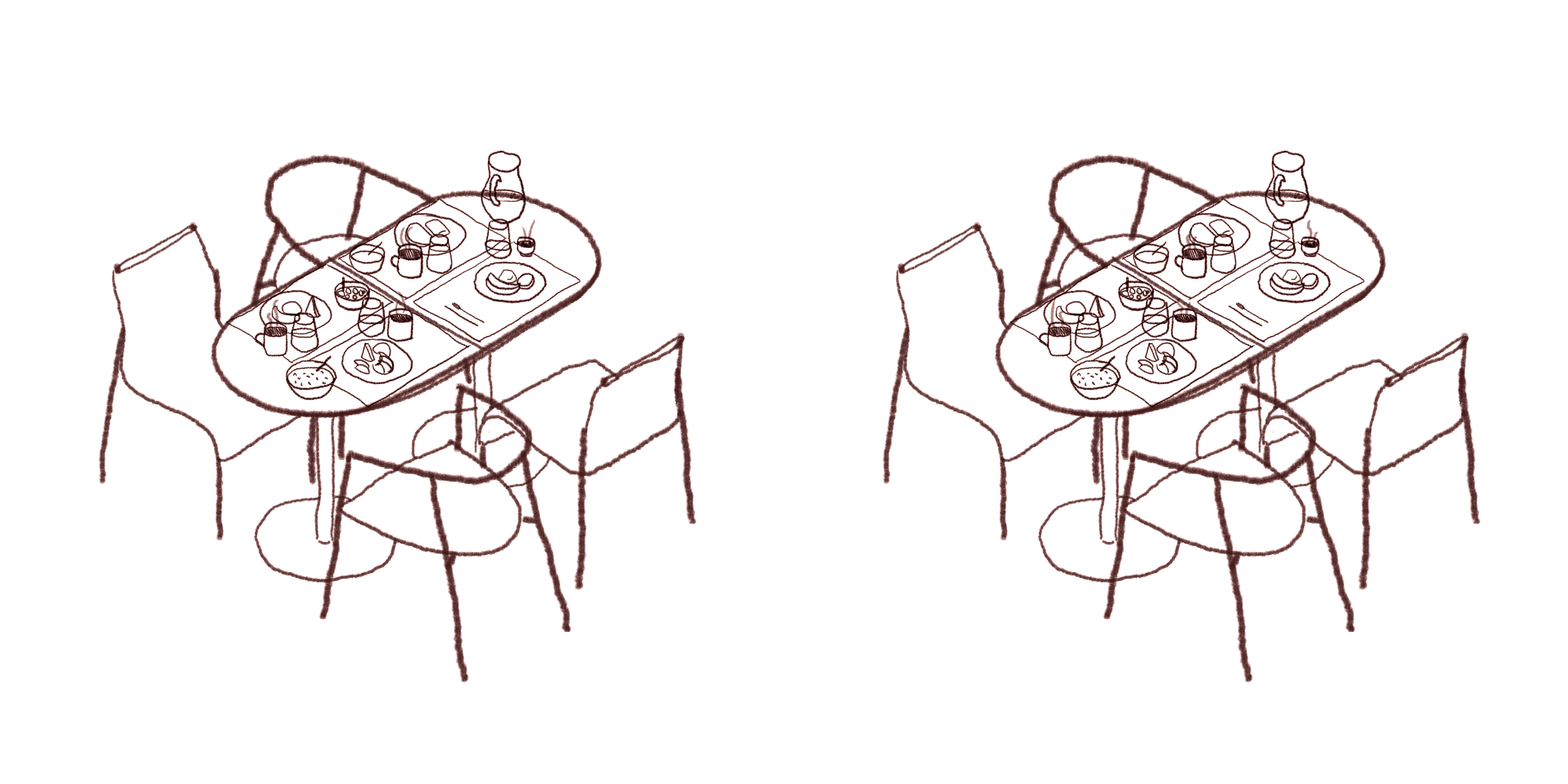
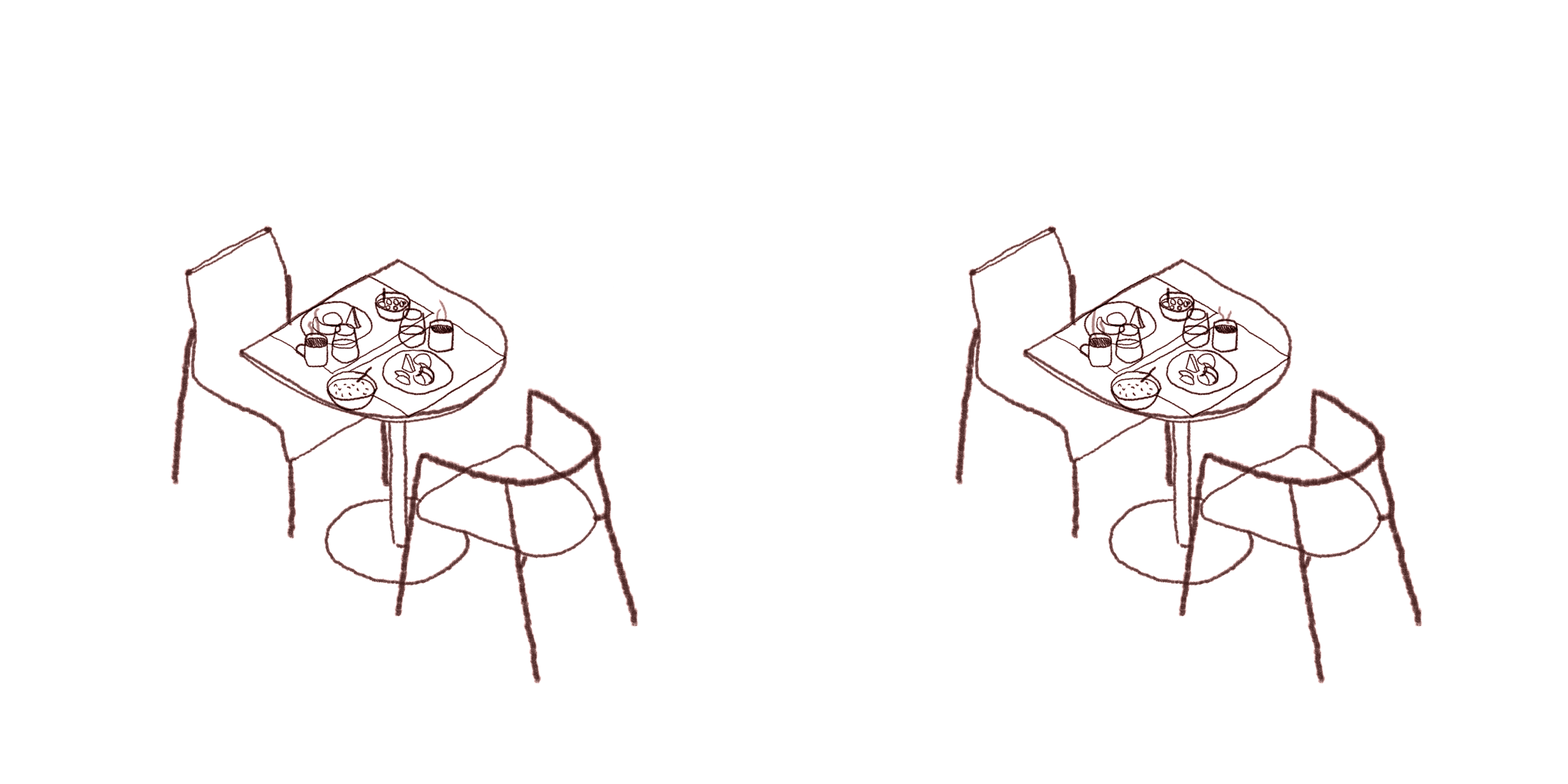
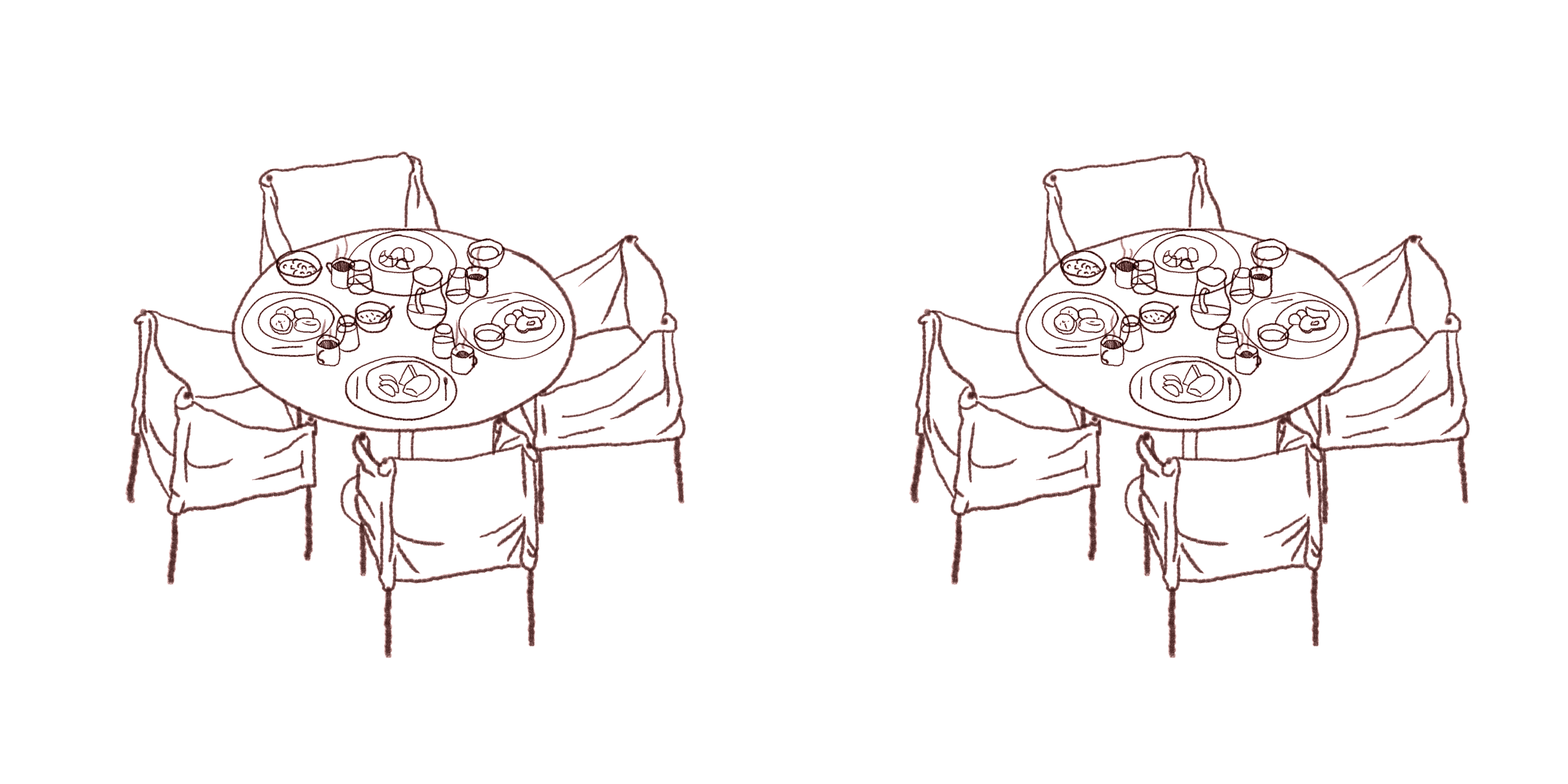
Different seating types were included: two-seater sofas, continuous sofas, armchairs in various sizes and heights, stools at high tables, and modular tables designed specifically for the space, which can be rearranged to accommodate groups of different sizes.
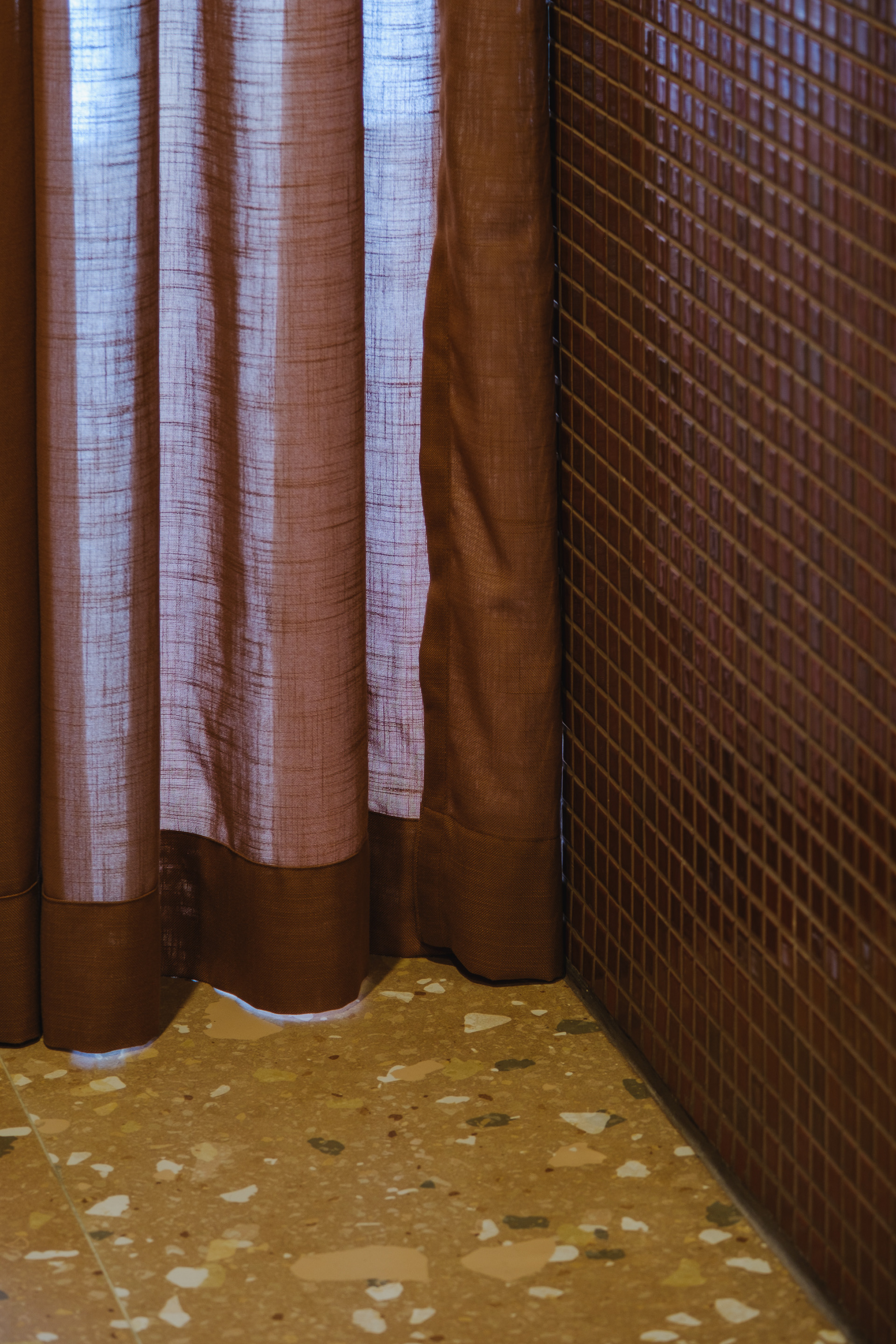
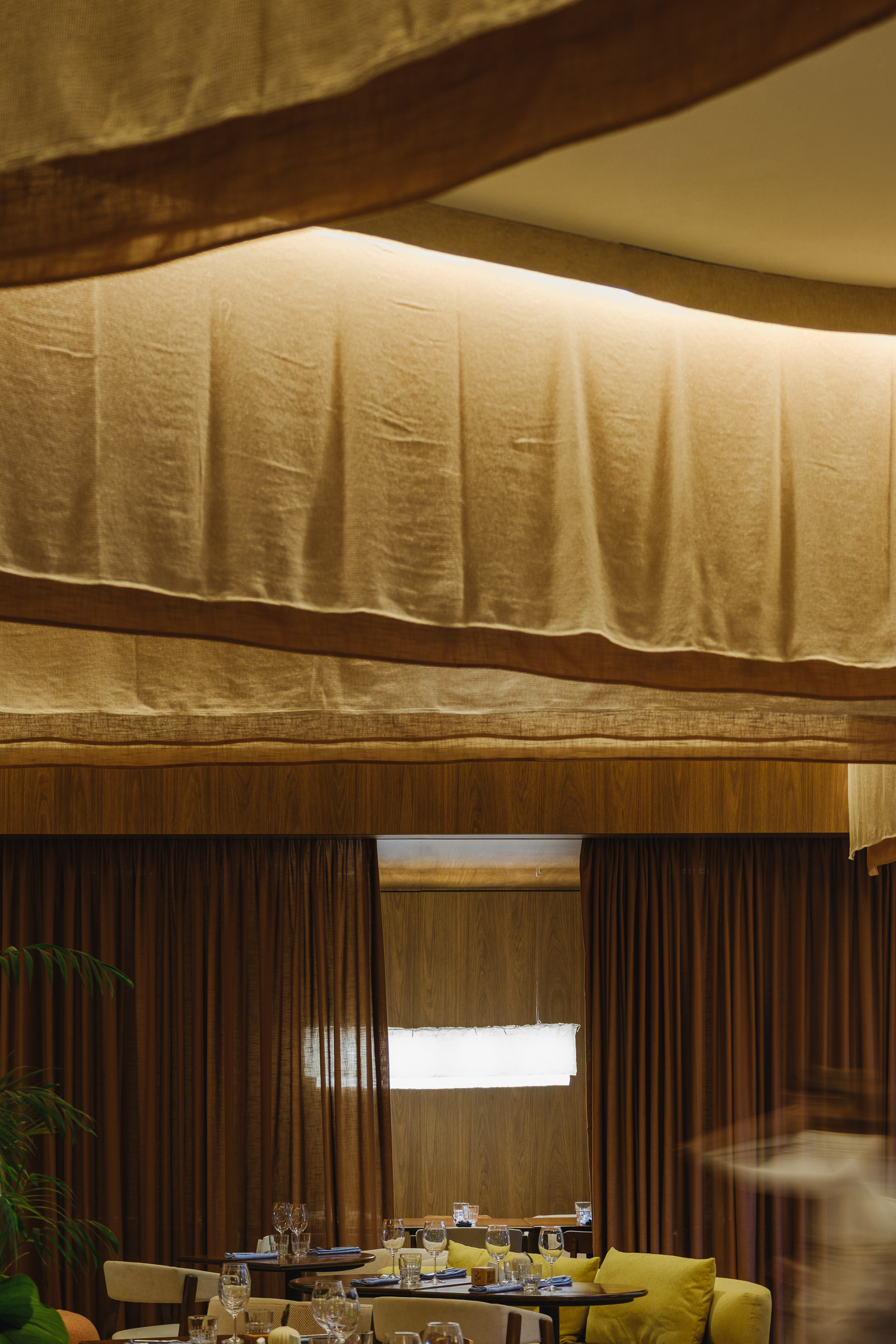
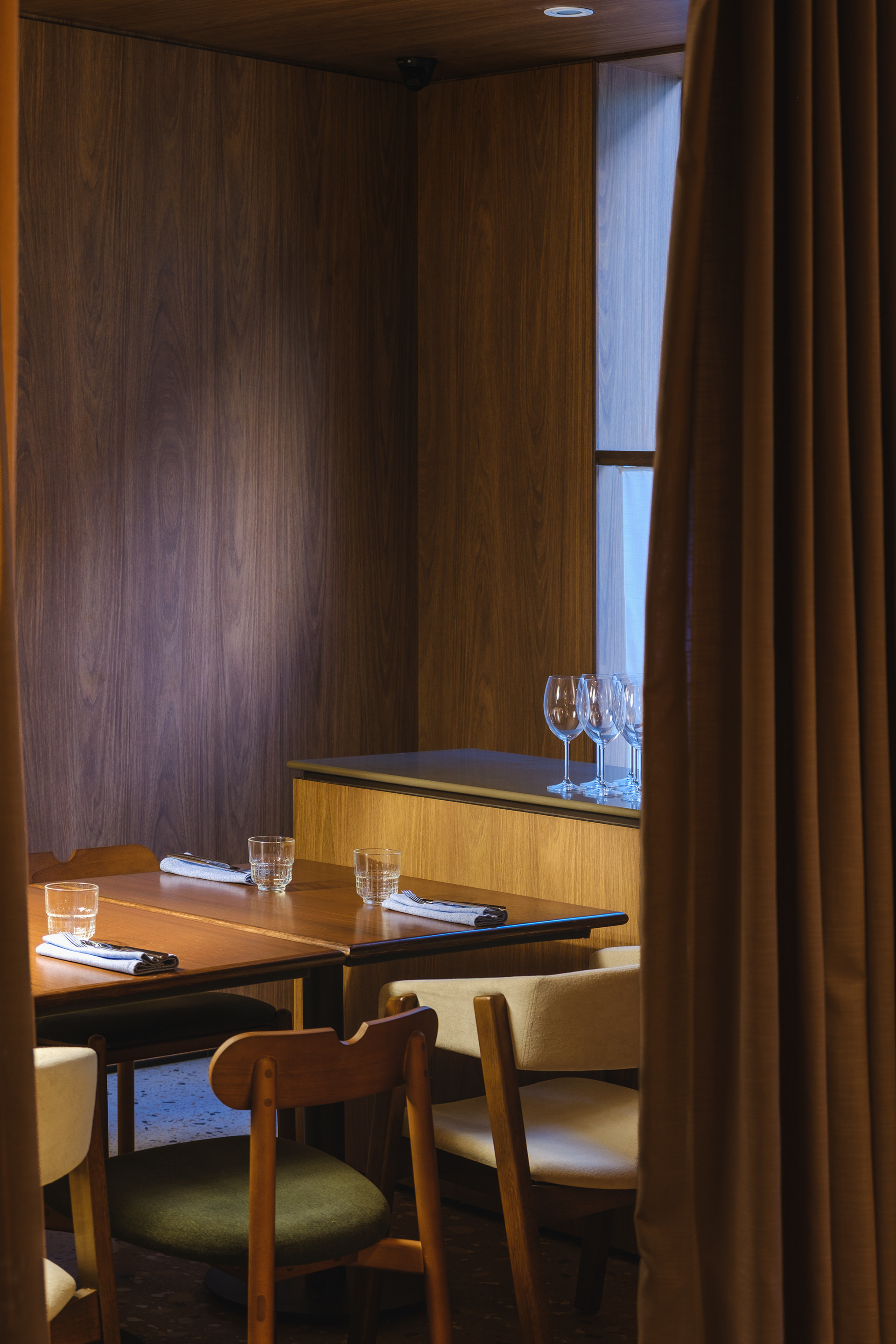
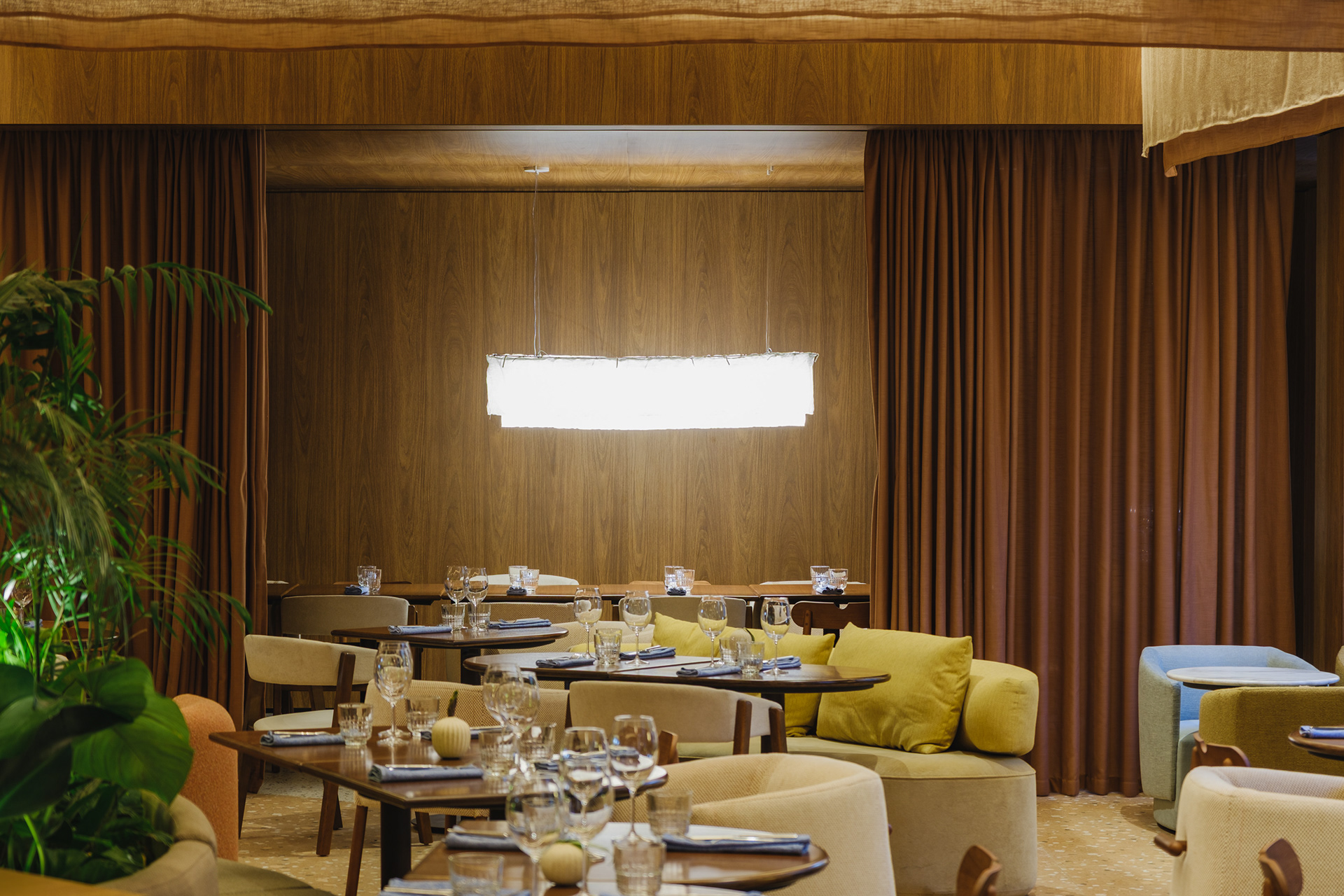
A private dining room was also created, separated from the main dining area by curtains, allowing it to function either independently or integrated with the rest of the space as needed.
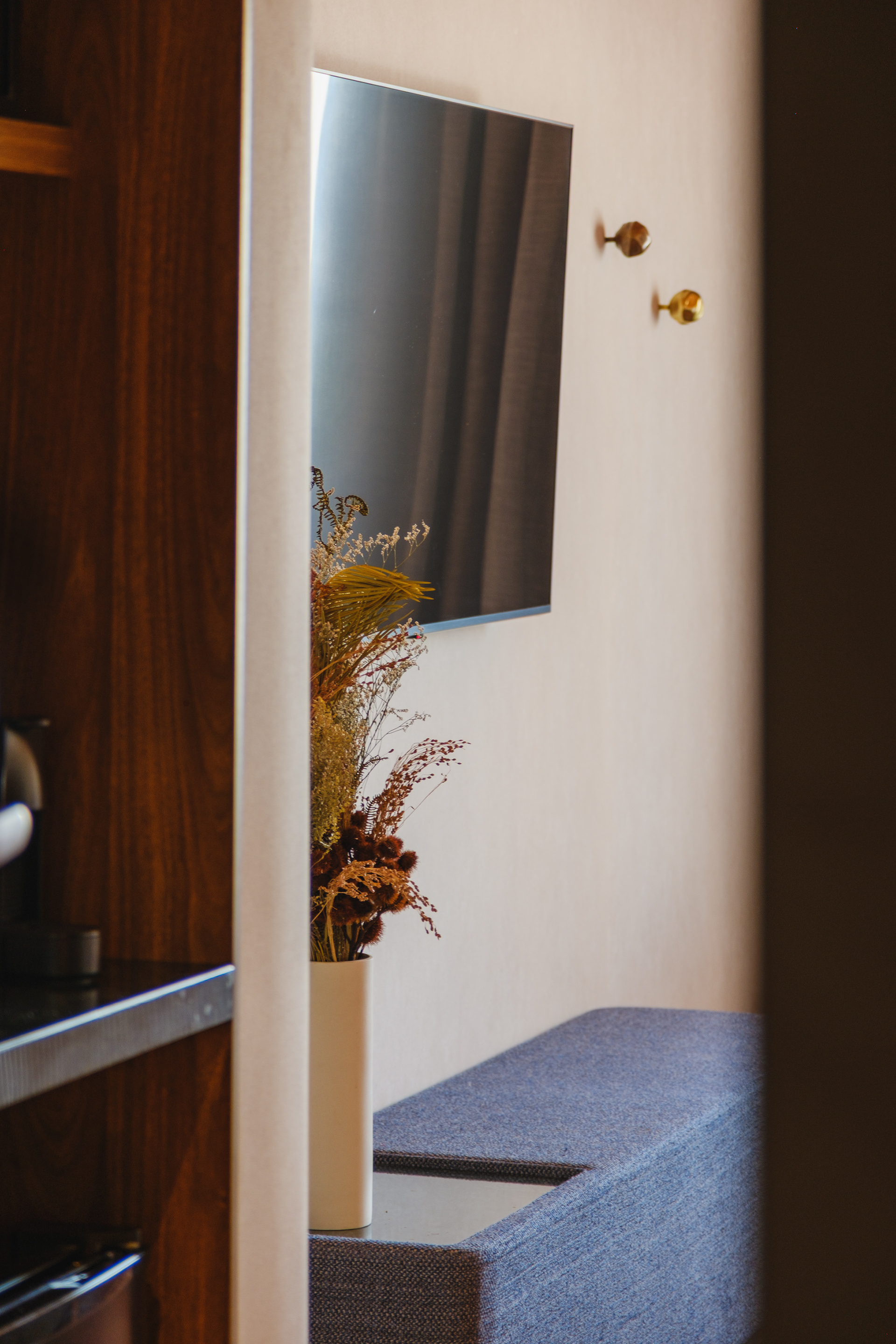
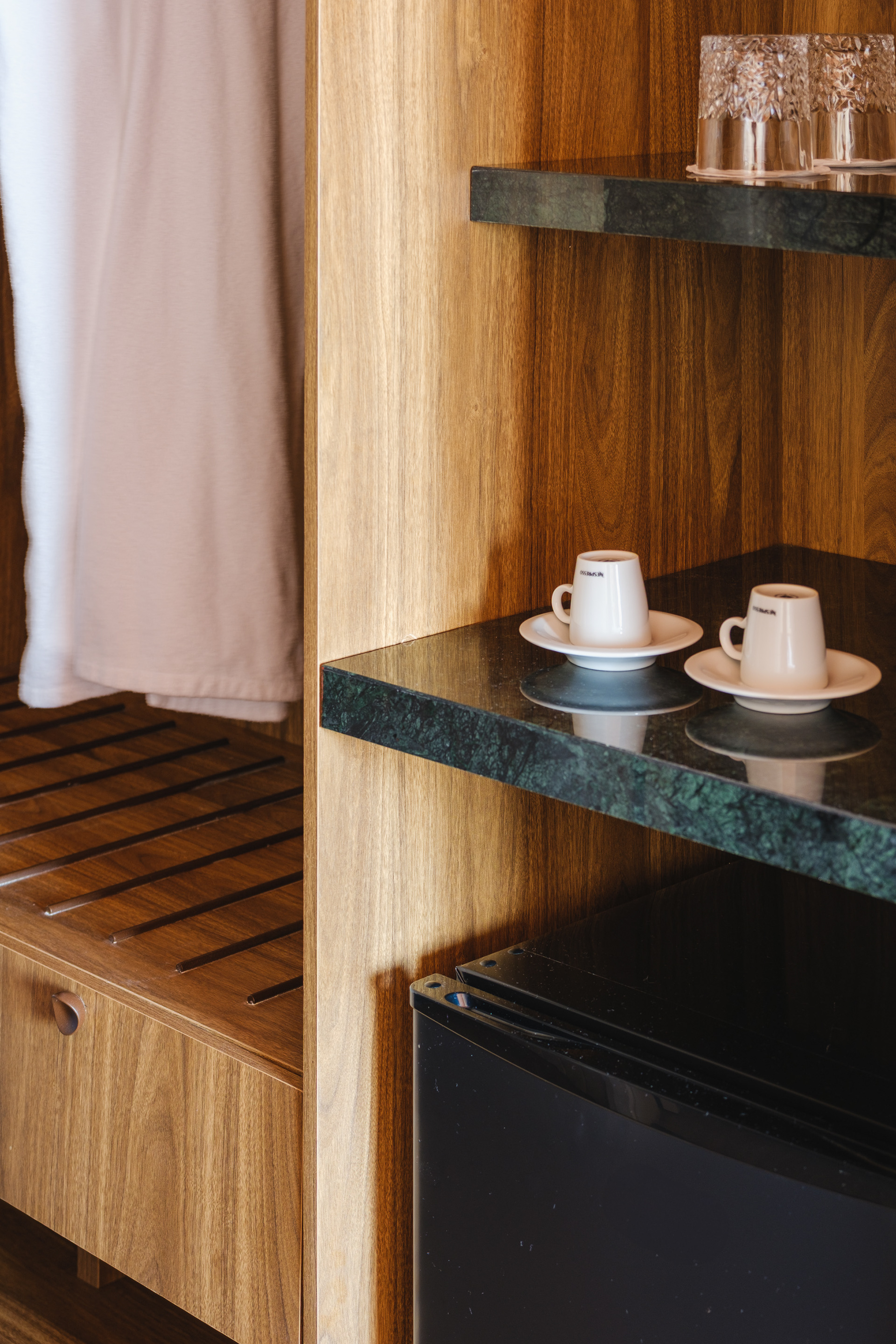
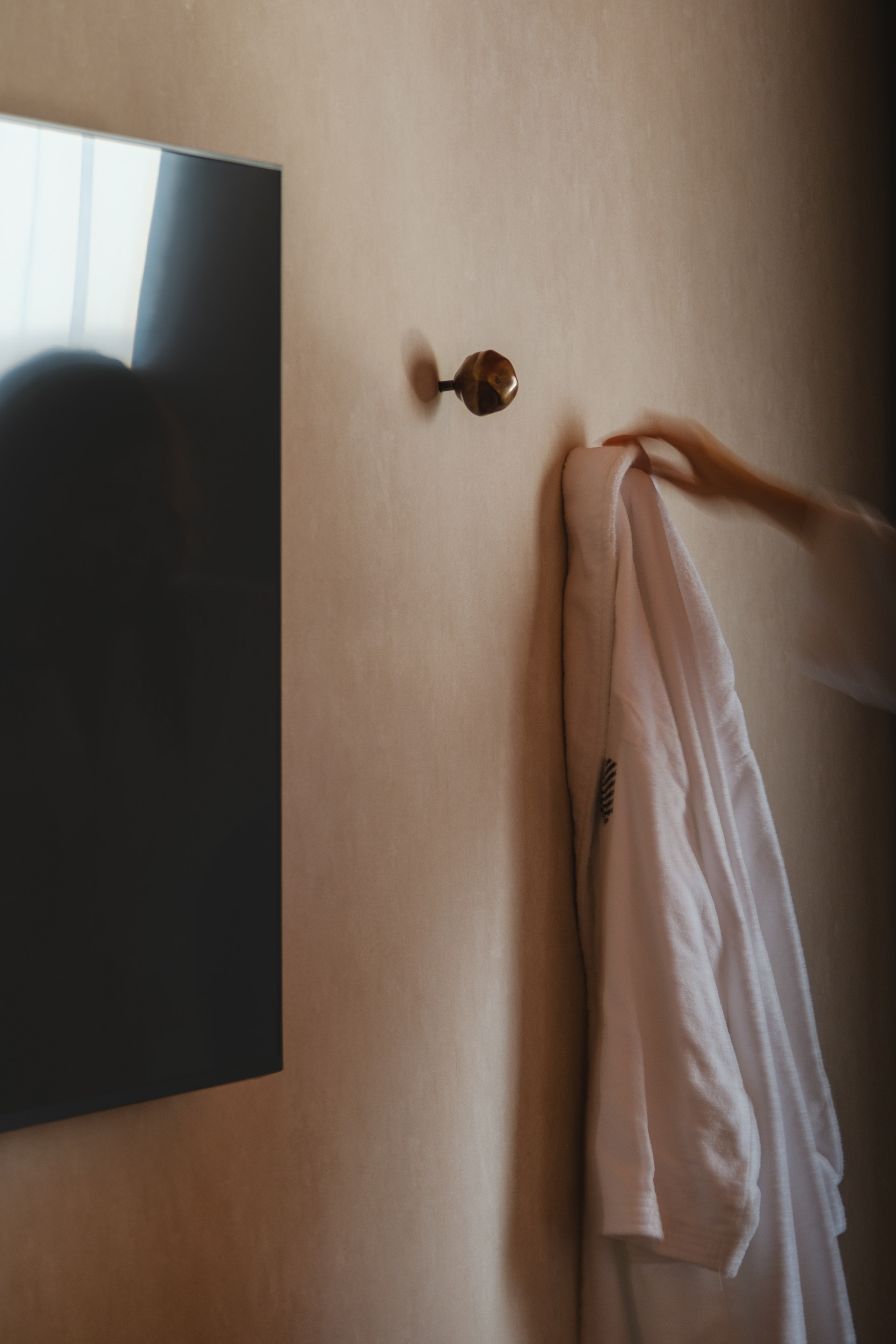
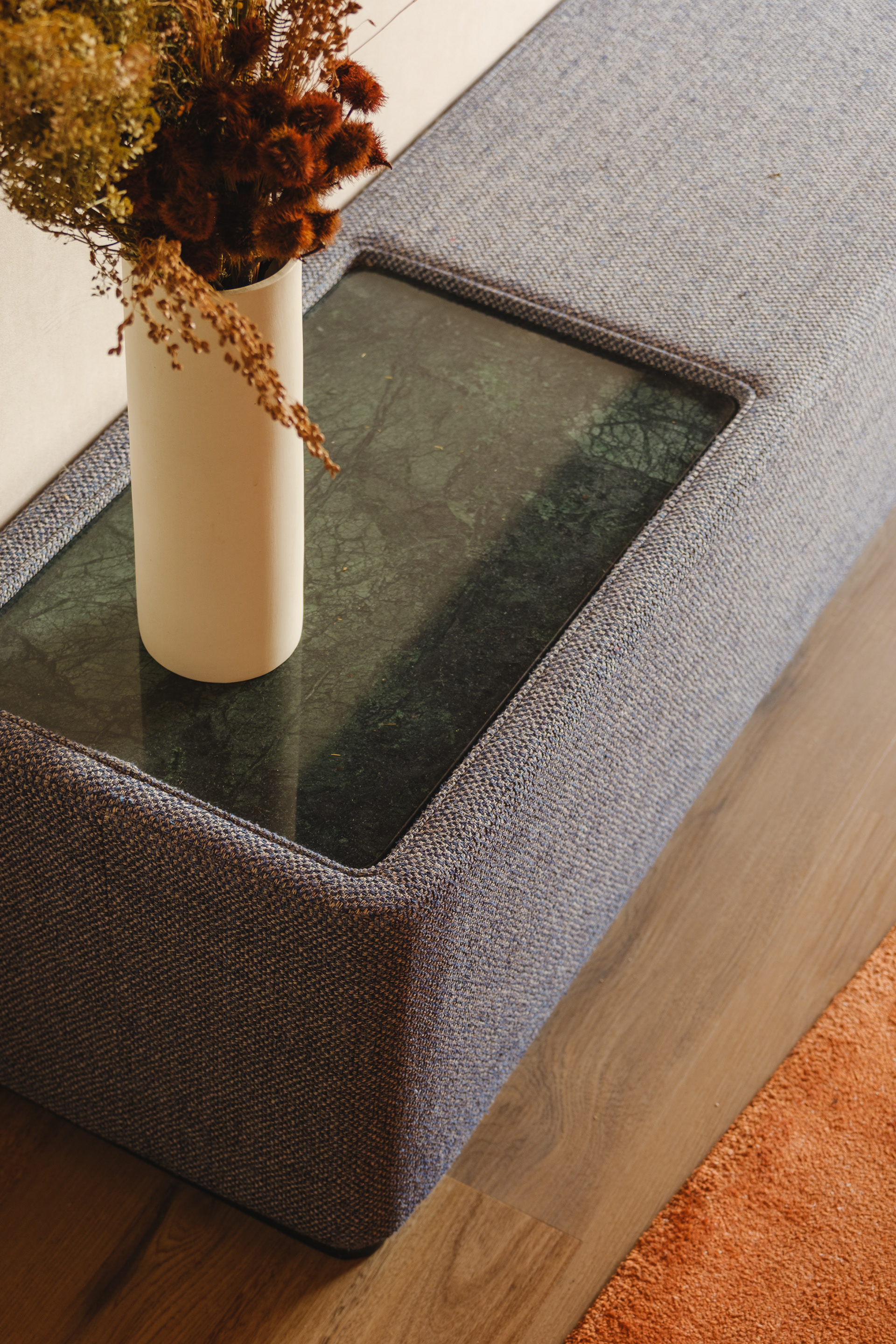
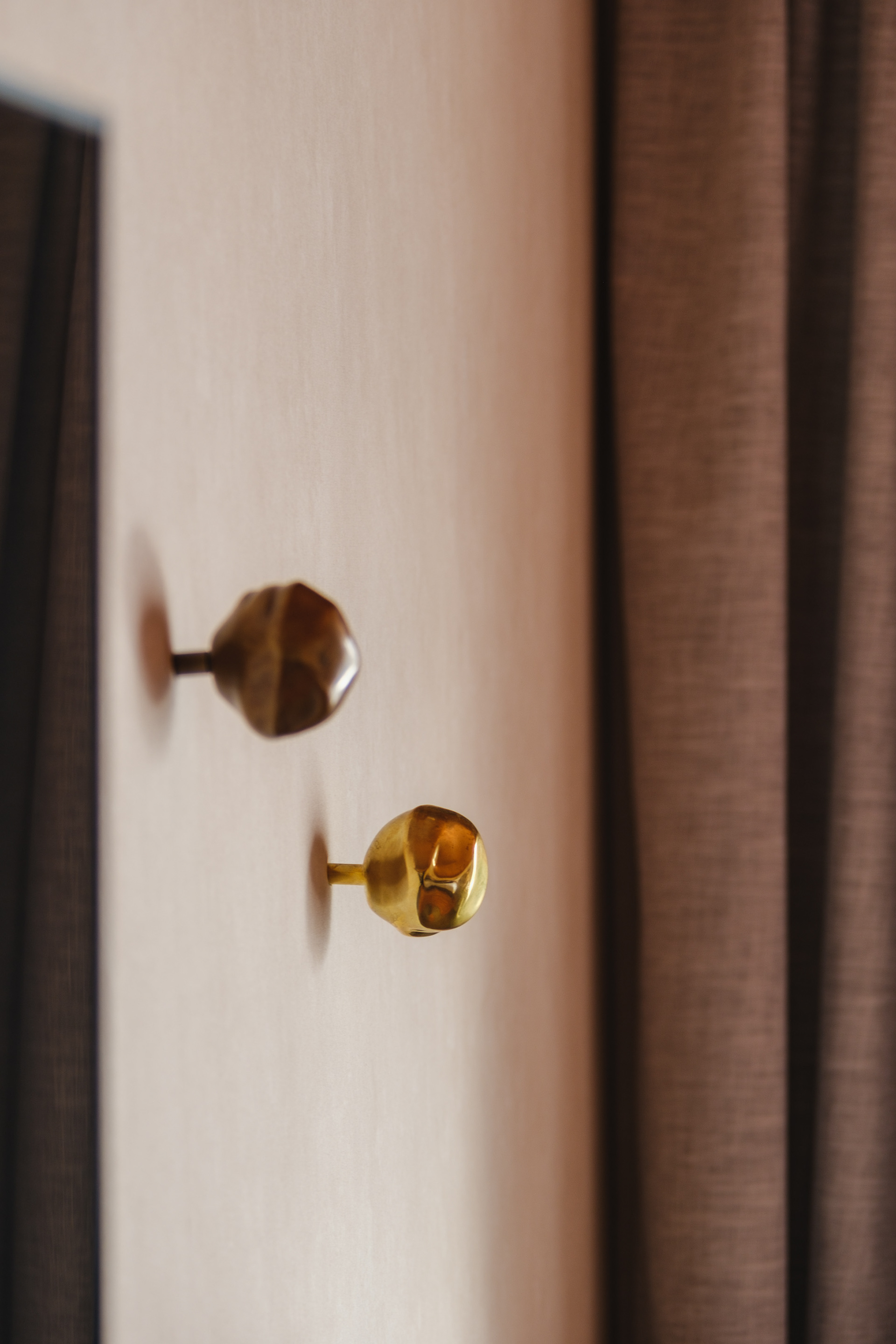
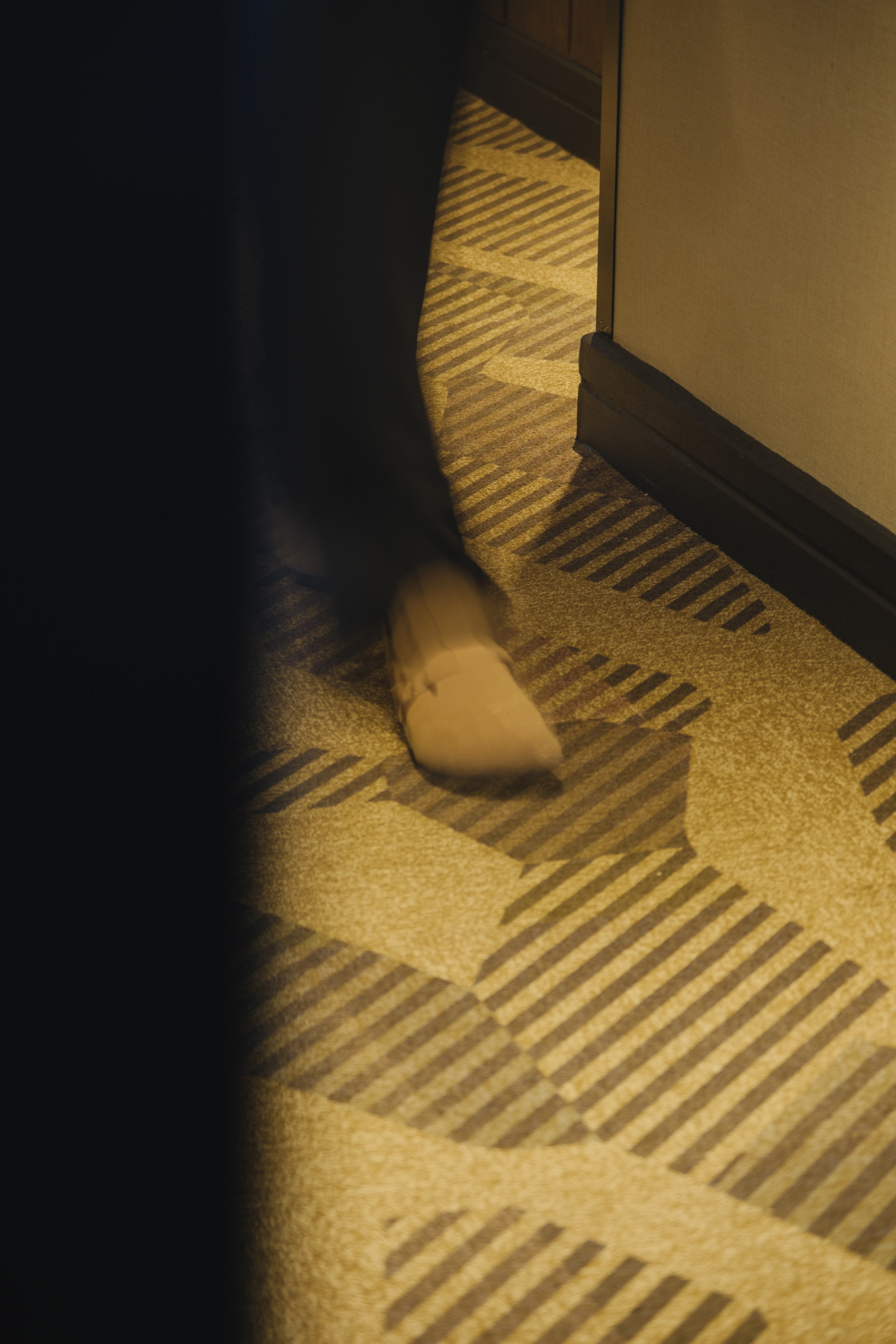
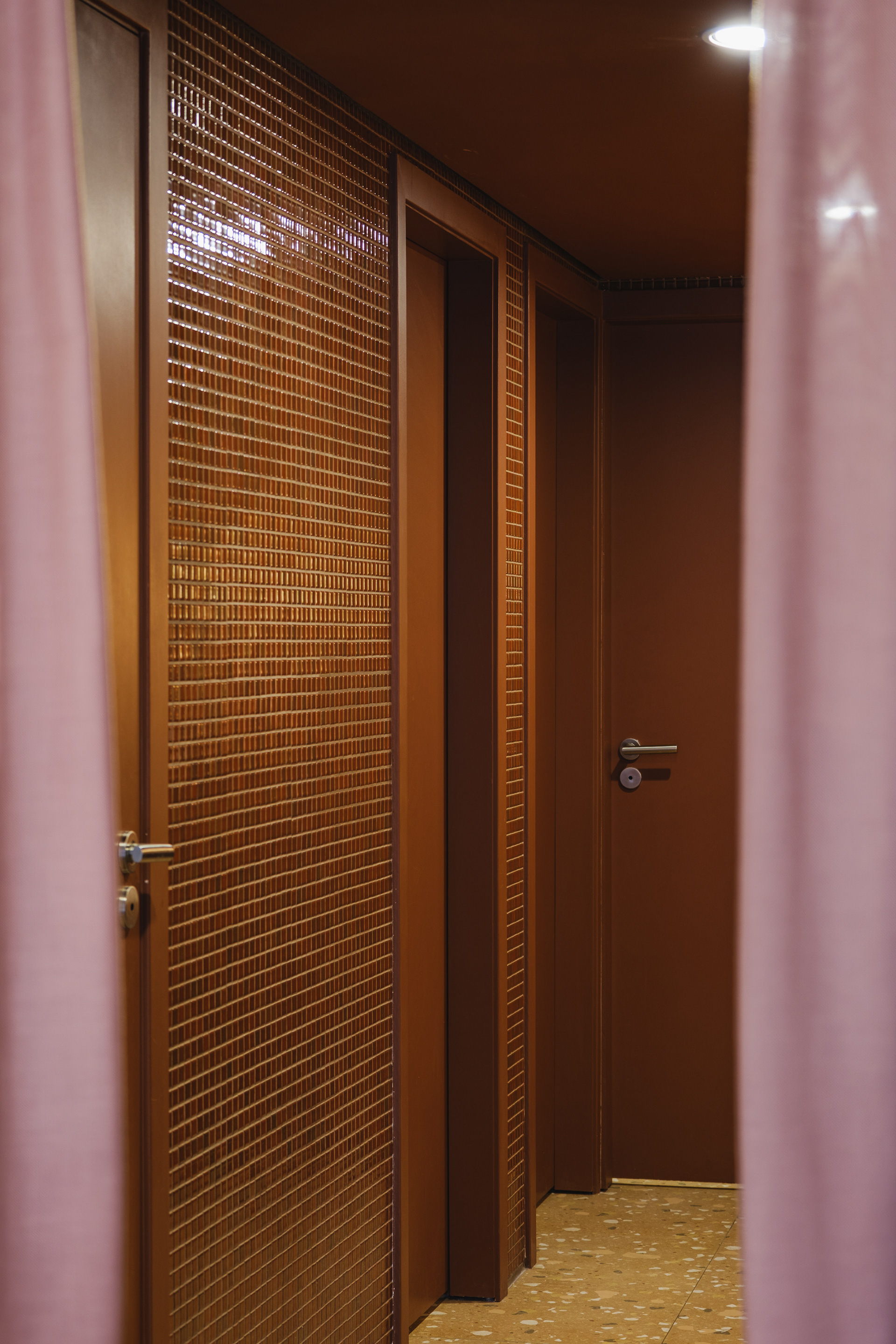
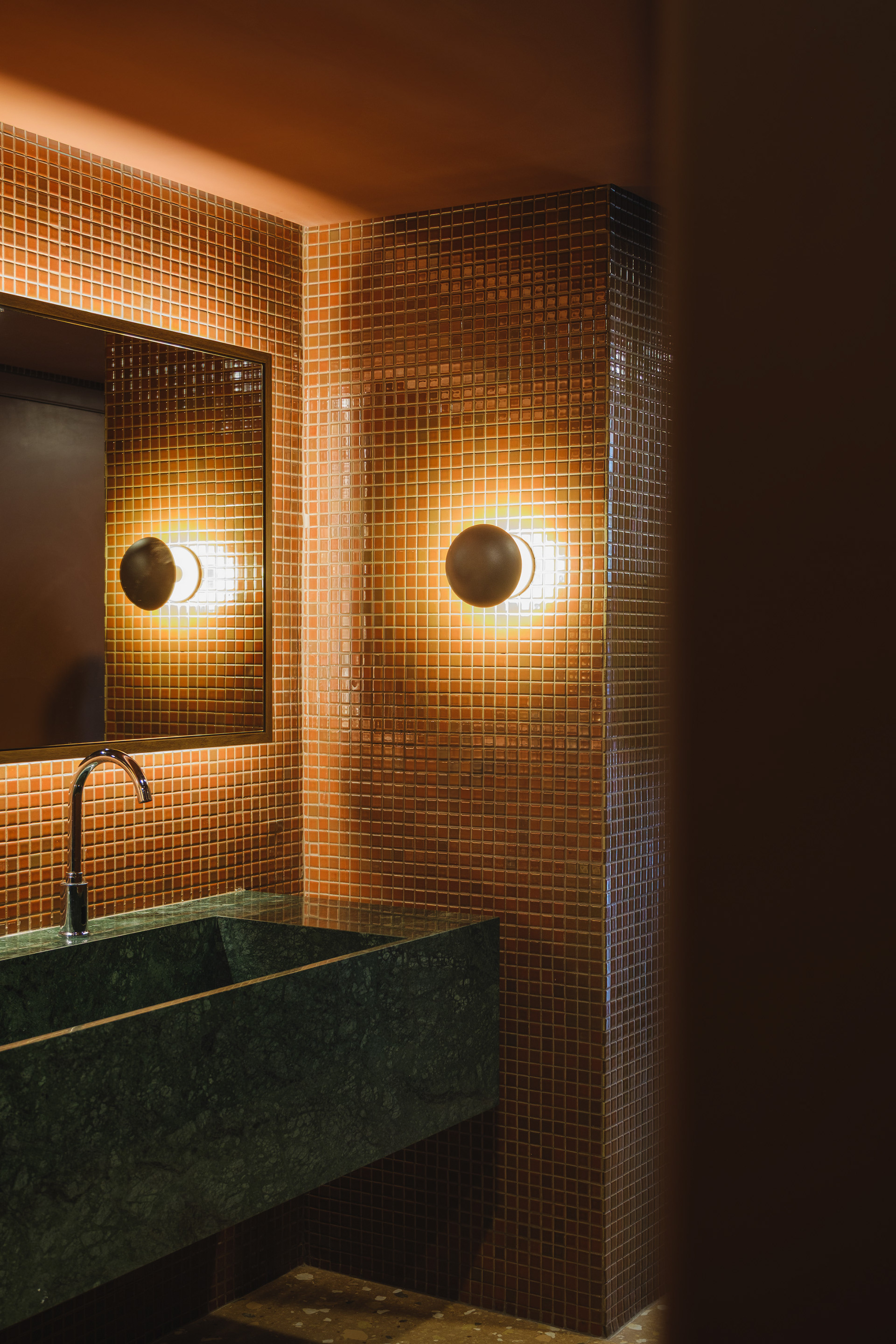
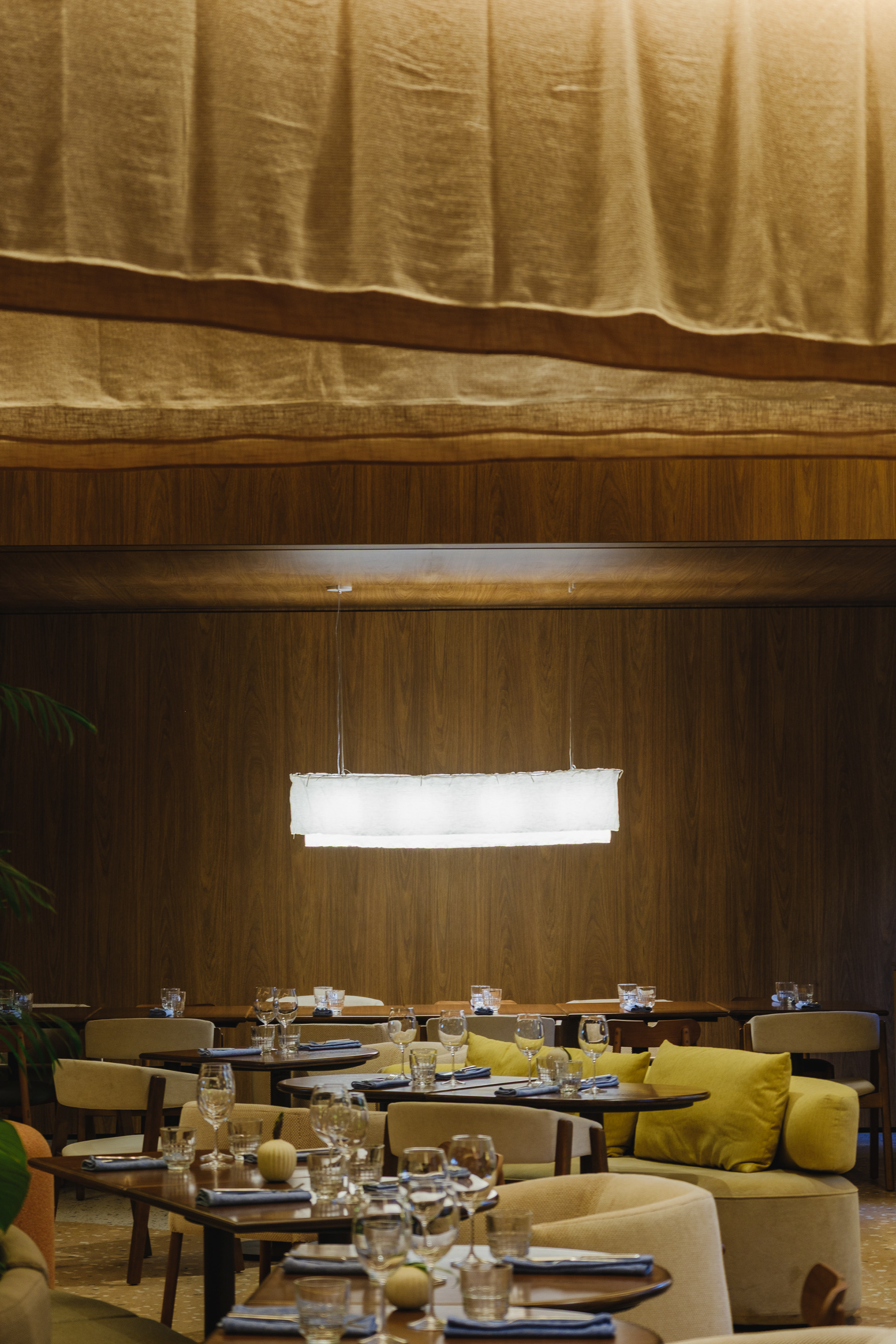
In both the rooms and the restaurant, the material palette was designed to reinforce the brand’s current identity: earthy tones, ceramic finishes, natural wood, and cozy fabrics. The predominant use of rounded forms contributes to the ergonomics and humanization of the spaces, creating environments that feel more welcoming and relaxing.
The intervention in the rooms consisted of refurbishing existing units. Considering the reduced area of the spaces, the challenge was to integrate several functions — sleeping, working, eating, watching TV — within a compact yet functional and comfortable layout.
To achieve this, furniture with organic and multifunctional design was adopted. Lower-than-standard tables and armchairs were used, allowing for varied uses without compromising ergonomics. Positioning the lower furniture next to the window enables visual permeability, reinforcing the sense of spaciousness in the room.
The main wall of the room was clad with ceramic pieces in natural tones, forming a curved panel with indirect lighting. The fabric headboard detaches slightly from this curved surface, creating a light composition. The flooring is wood-look vinyl, and the rug, with an organic two-tone design, complements the environment, enhancing the fluidity of the forms and the sense of coziness.
The restaurant underwent a complete renovation to expand its functionality, becoming an all-day venue serving breakfast, lunch, dinner, and events. It was necessary to increase seating capacity while maintaining proportion in relation to the number of rooms in the hotel.
One of the key elements introduced was the show kitchen, allowing guests to watch food preparation at different times of the day. The morning buffet area transforms into an open kitchen during the rest of the day.
The ambiance sought to replicate the same design language used in the rooms: curved forms, organic furniture, and natural materials. Continuous curved sofas run across the entire dining hall, visually breaking the space into smaller, more intimate, and welcoming areas. This strategy ensures the environment works well both during peak hours and when occupancy is low, always maintaining a cozy atmosphere.
Vegetation is abundant throughout the restaurant, with a dedicated irrigation and lighting system to ensure proper maintenance of the greenery even in a space with limited natural light.
Different seating types were included: two-seater sofas, continuous sofas, armchairs in various sizes and heights, stools at high tables, and modular tables designed specifically for the space, which can be rearranged to accommodate groups of different sizes.
A private dining room was also created, separated from the main dining area by curtains, allowing it to function either independently or integrated with the rest of the space as needed.
In both the rooms and the restaurant, the material palette was designed to reinforce the brand’s current identity: earthy tones, ceramic finishes, natural wood, and cozy fabrics. The predominant use of rounded forms contributes to the ergonomics and humanization of the spaces, creating environments that feel more welcoming and relaxing.