
LAUTO
São Paulo - Sp, BRAZIL
Project specifications
Site area - 1.375m²
Building area - 12.600m²
Project beginning - 2021
Construction completion - 2025
Building area - 12.600m²
Project beginning - 2021
Construction completion - 2025
Authors - Fernando Forte, Lourenço Gimenes, Rodrigo Marcondes Ferraz
Managers - Daniel Paranhos
Coordinators - Thiago Brito
Contributors - Carolina Ferraz, François Caillat, Guilherme Canadeu, Junior Soares, Leonardo Scherer, Paula Bencke, Talita Broering
Interns - Caio Caccaos, Izabela Salgado
Photographer - Victor Lucena
Real State developer and constructor - Tarjab
Landscape designer - Martha Gaviao Arquitetura Paisagística
Lighting designer - Castilha
Interiores - Tarjab
.
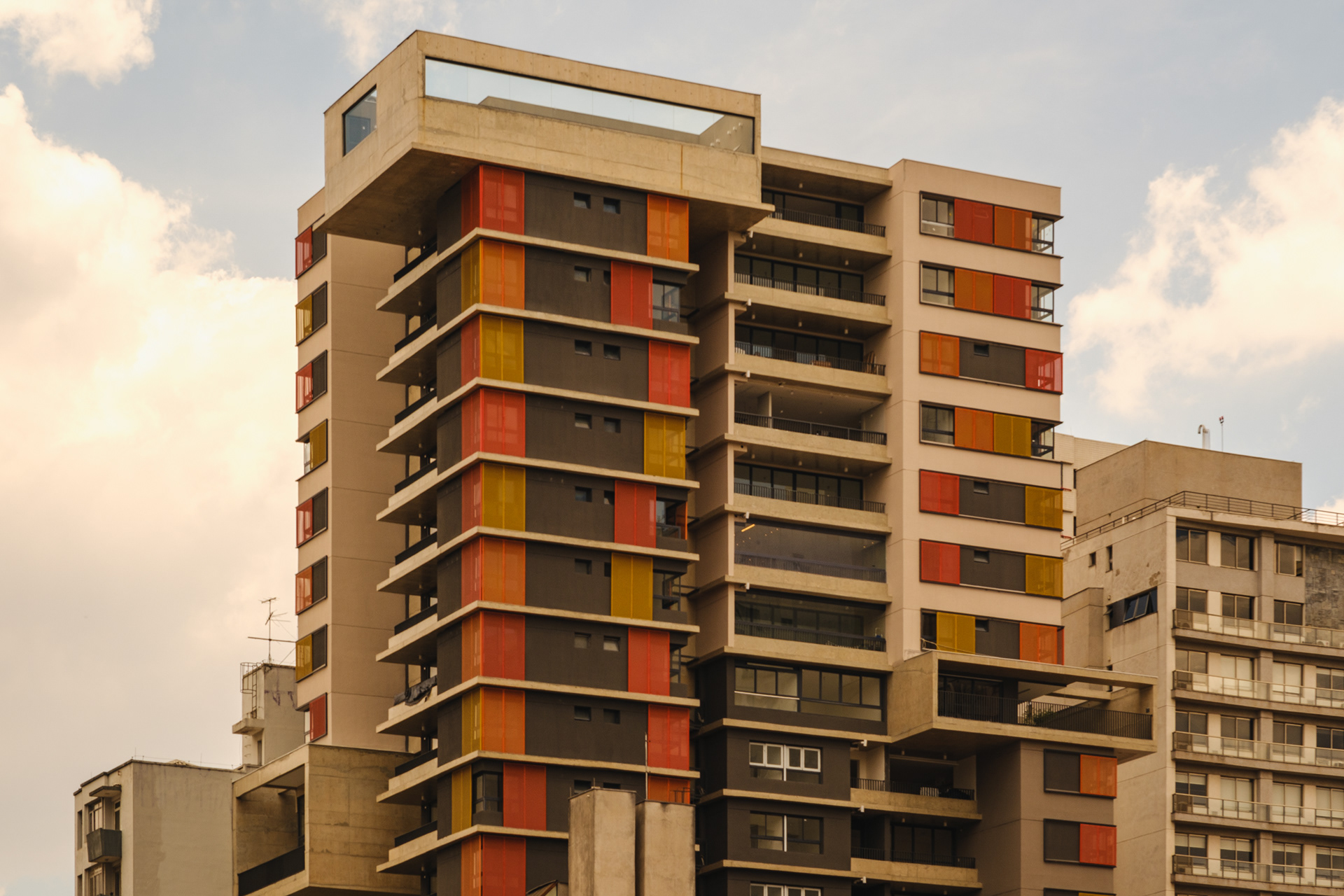
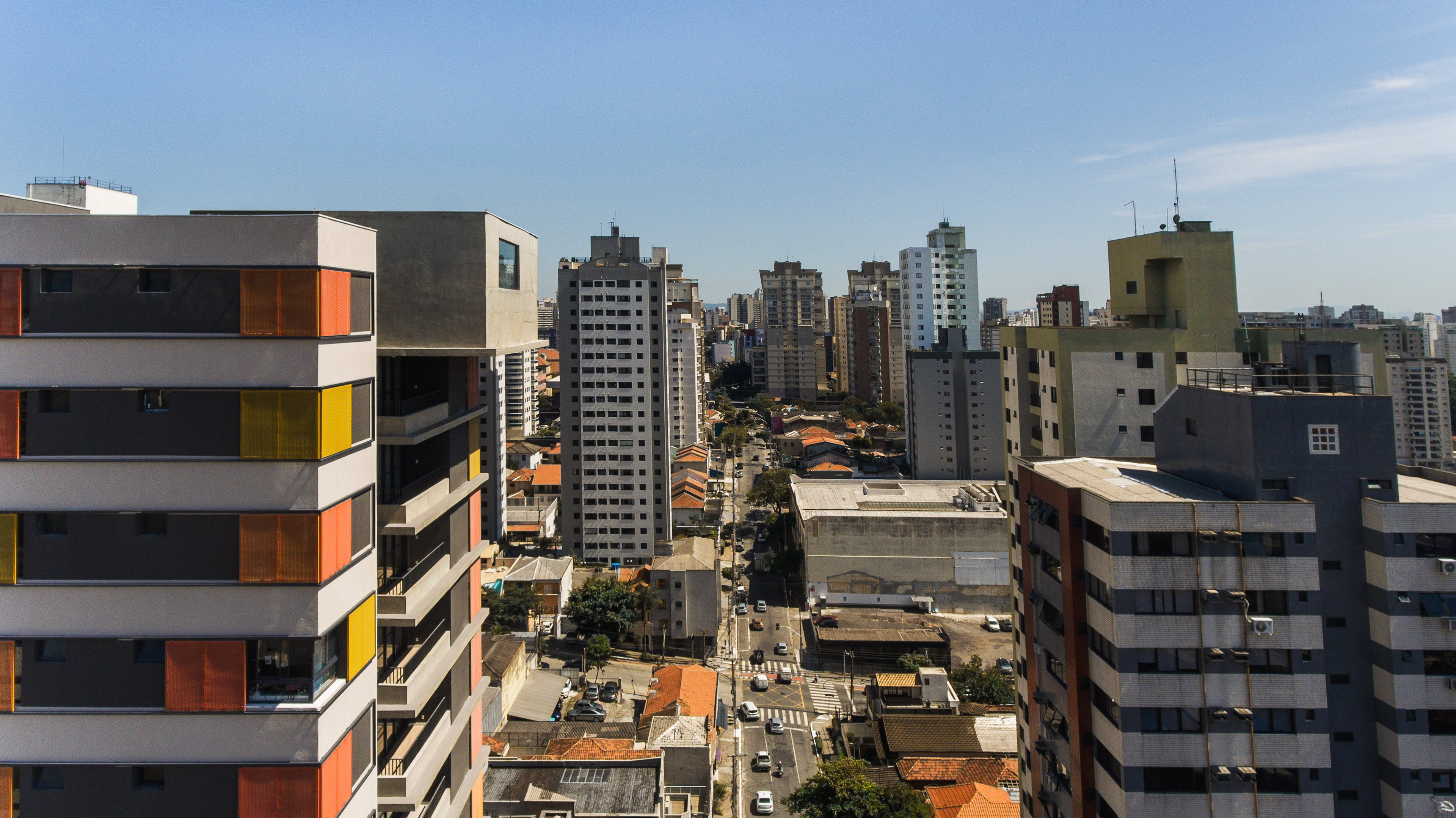
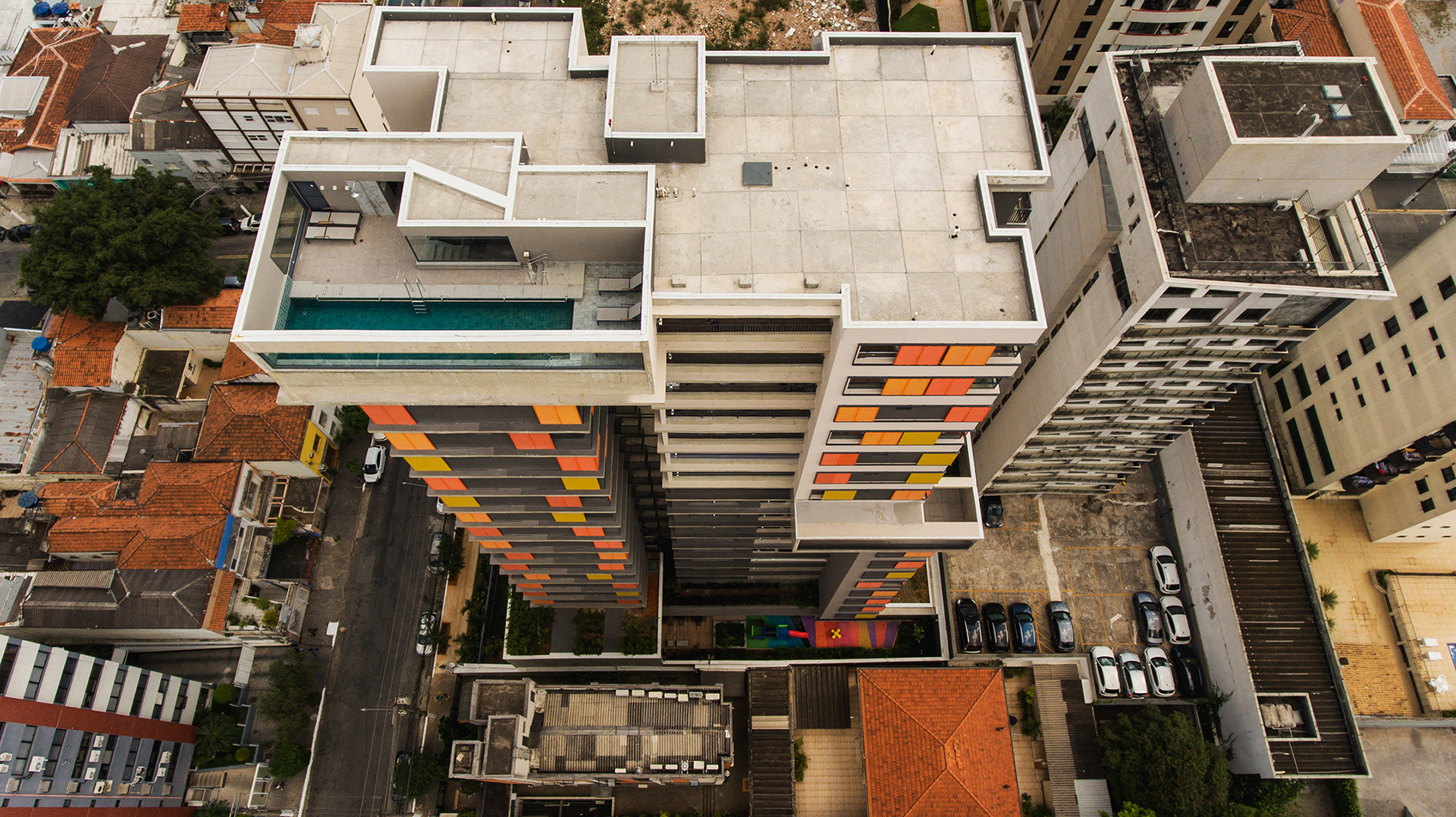
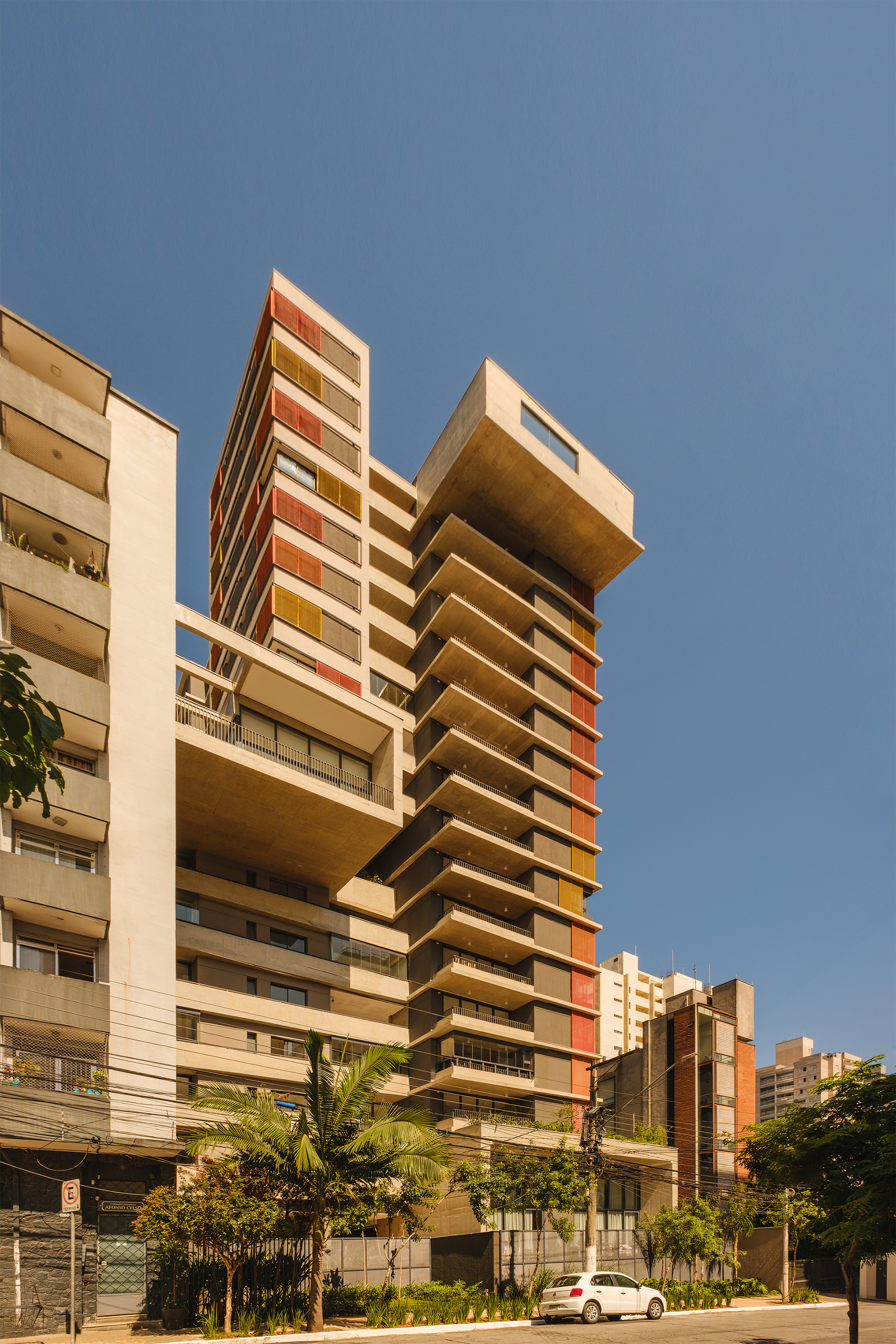
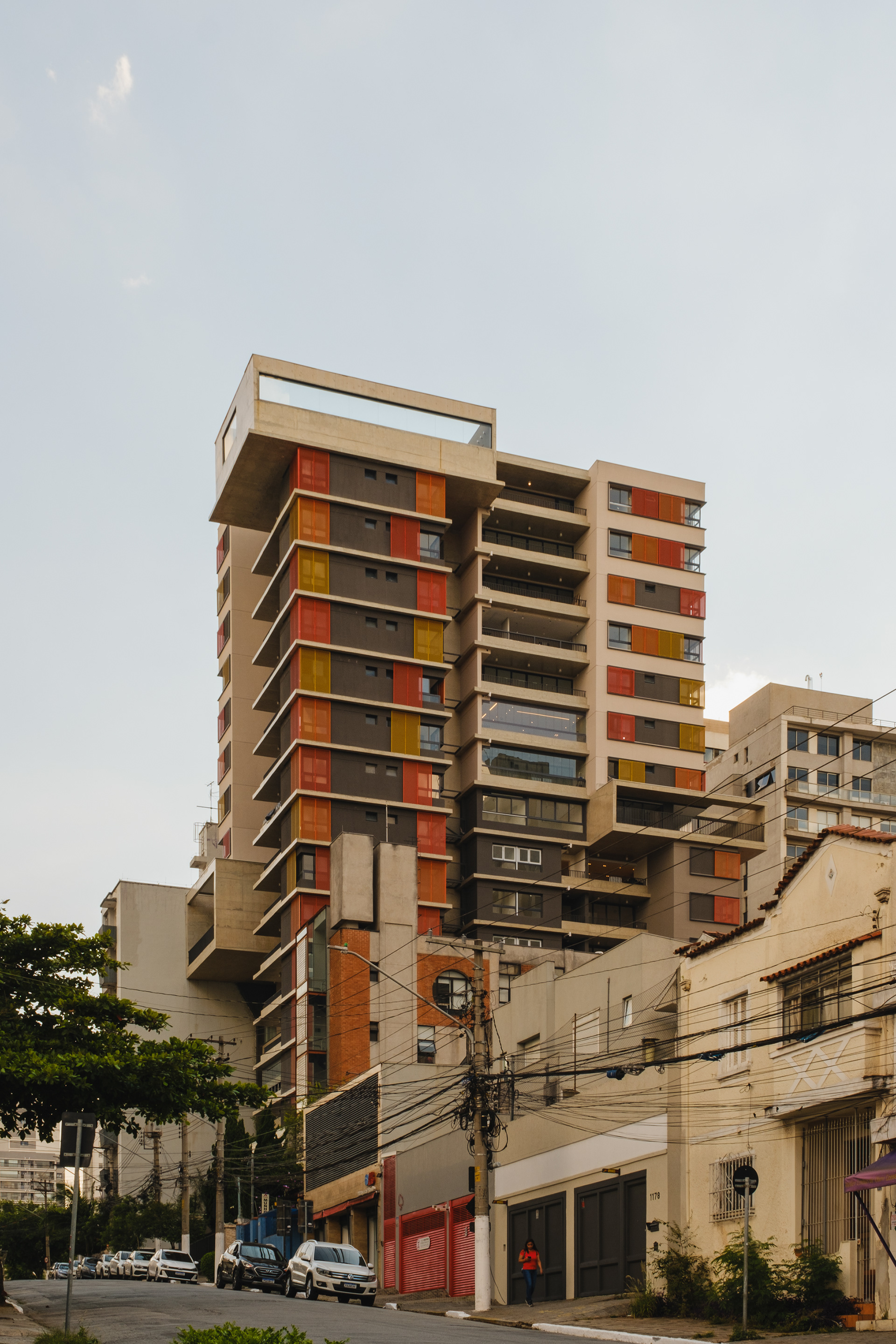
The overlapping and juxtaposition of different uses and typologies guides the design concept of this building in the Pinheiros neighborhood of São Paulo.
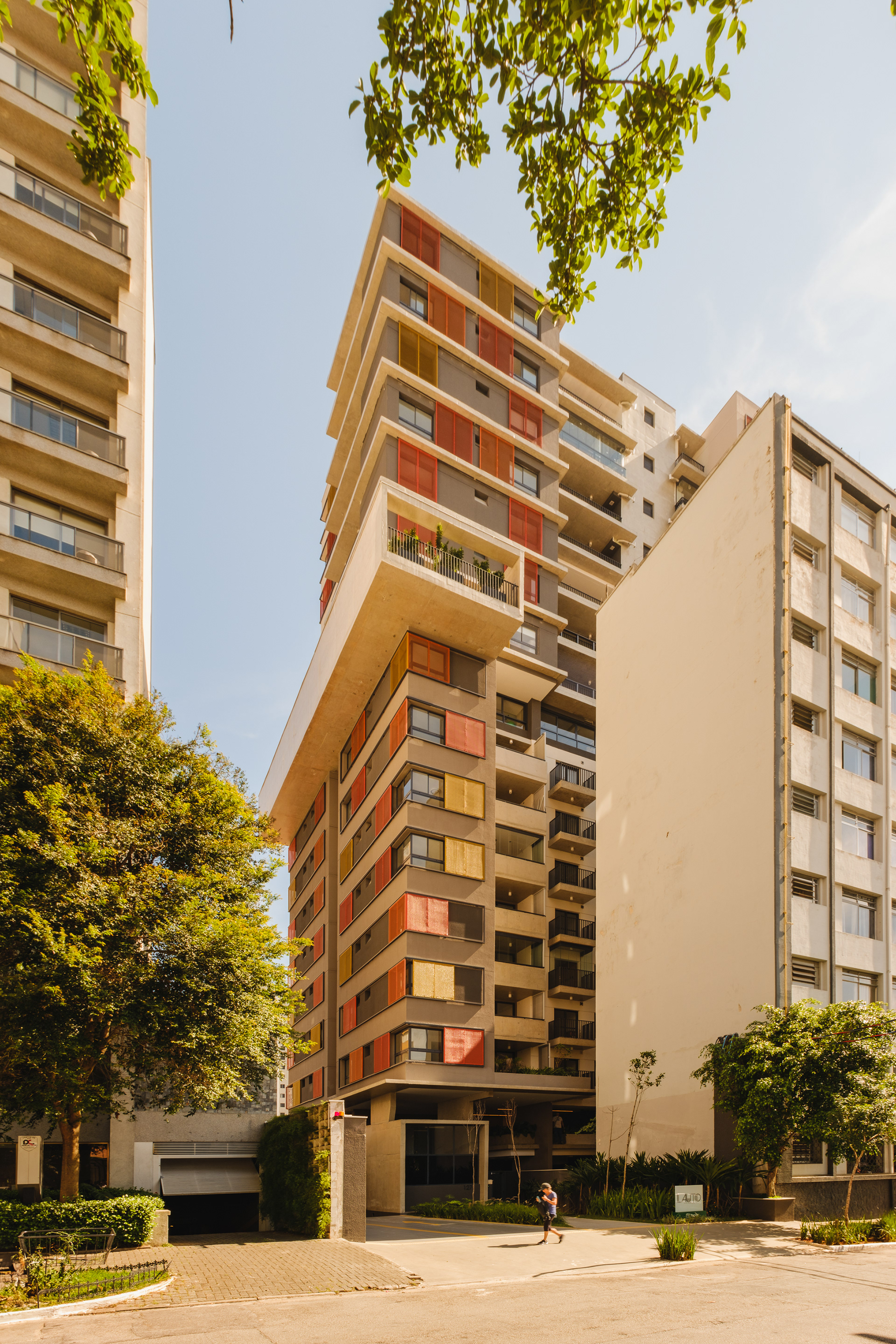
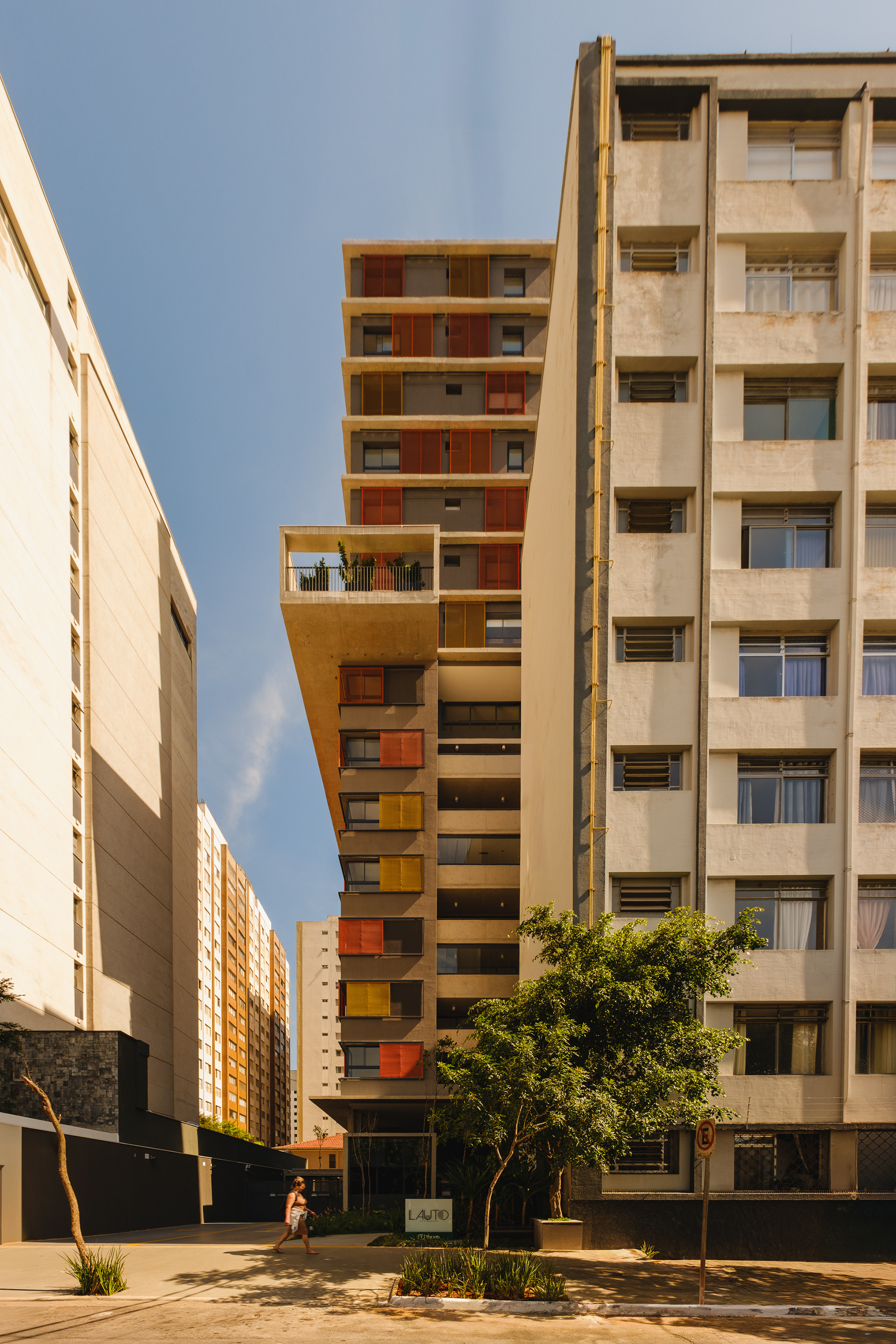
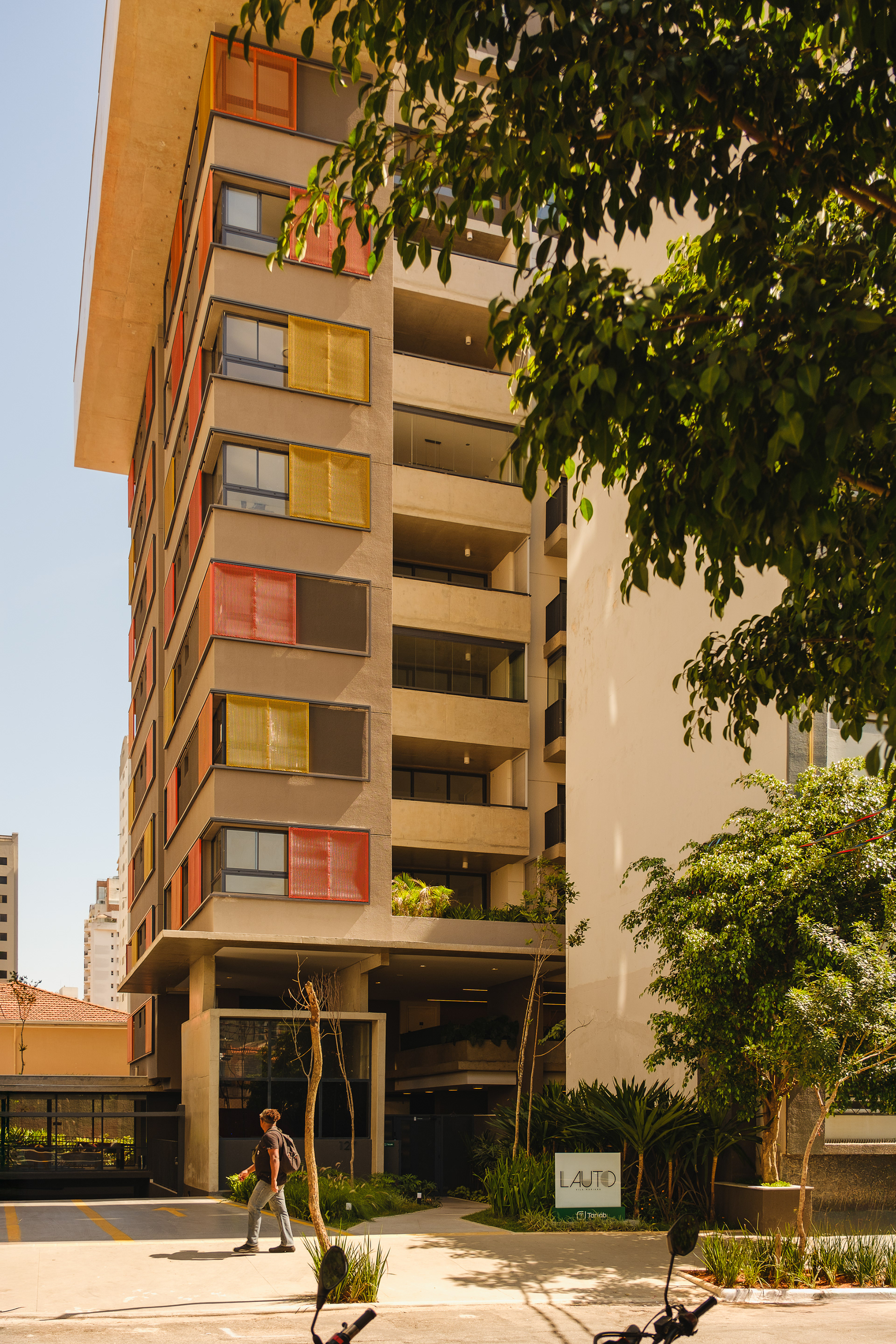
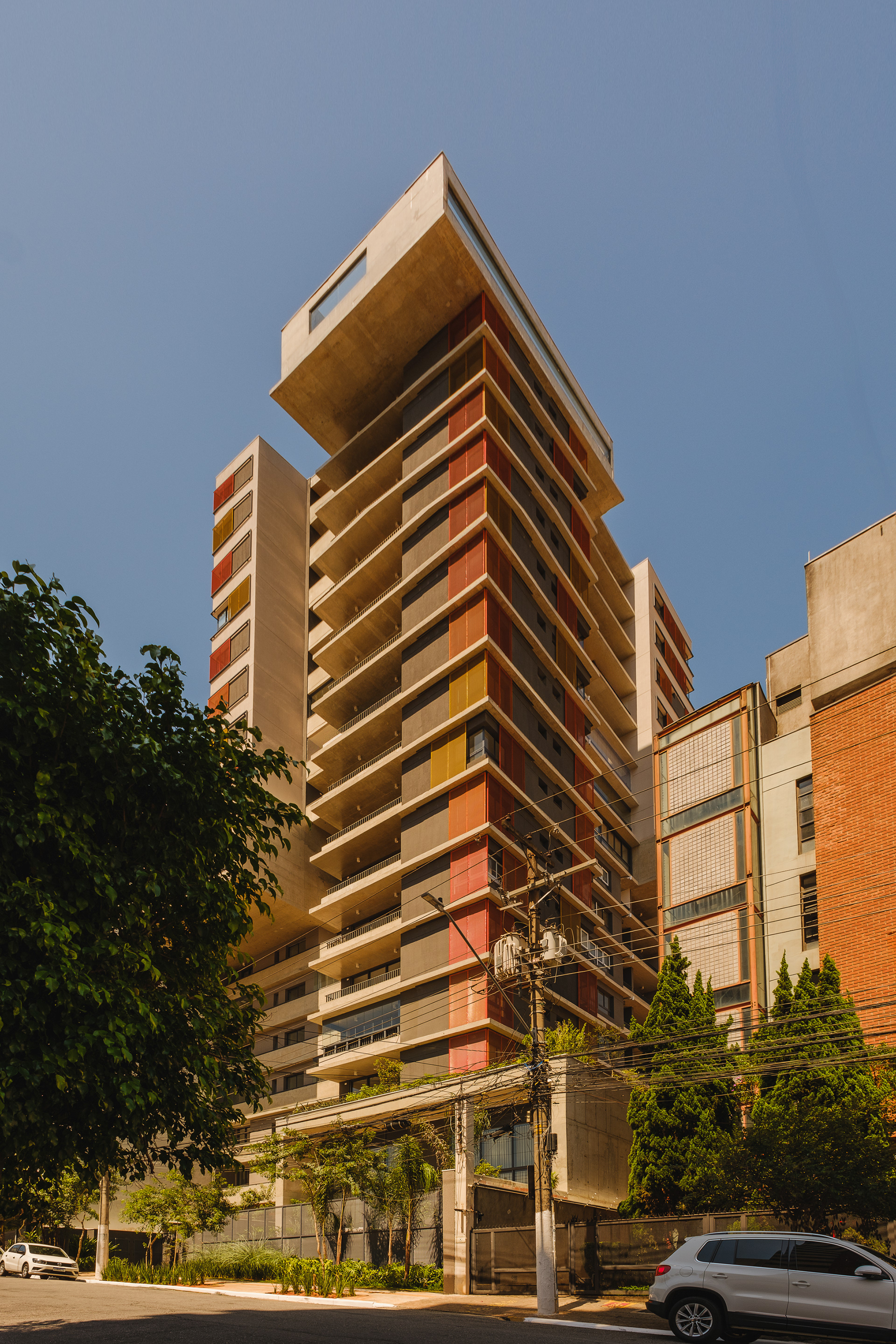
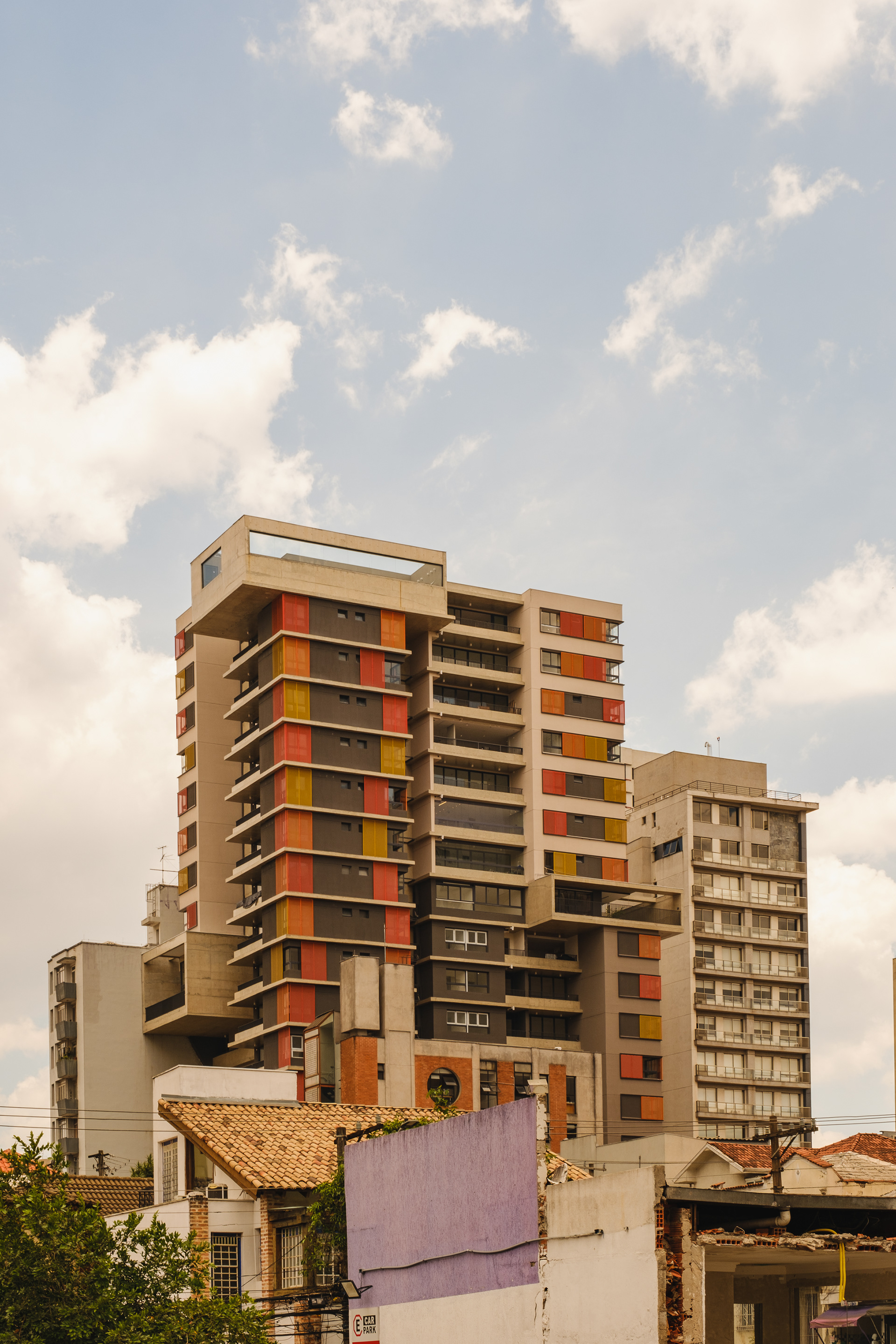
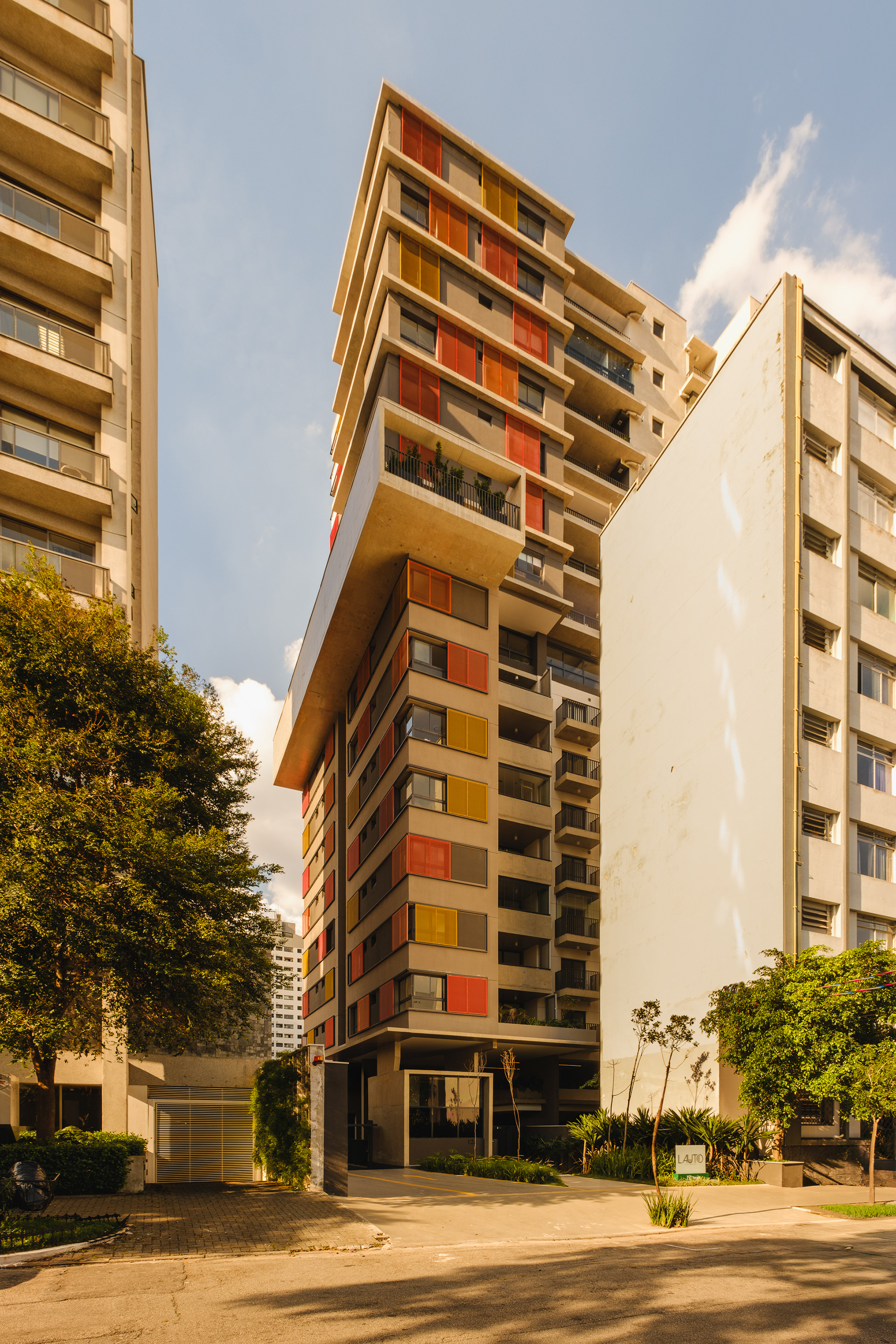
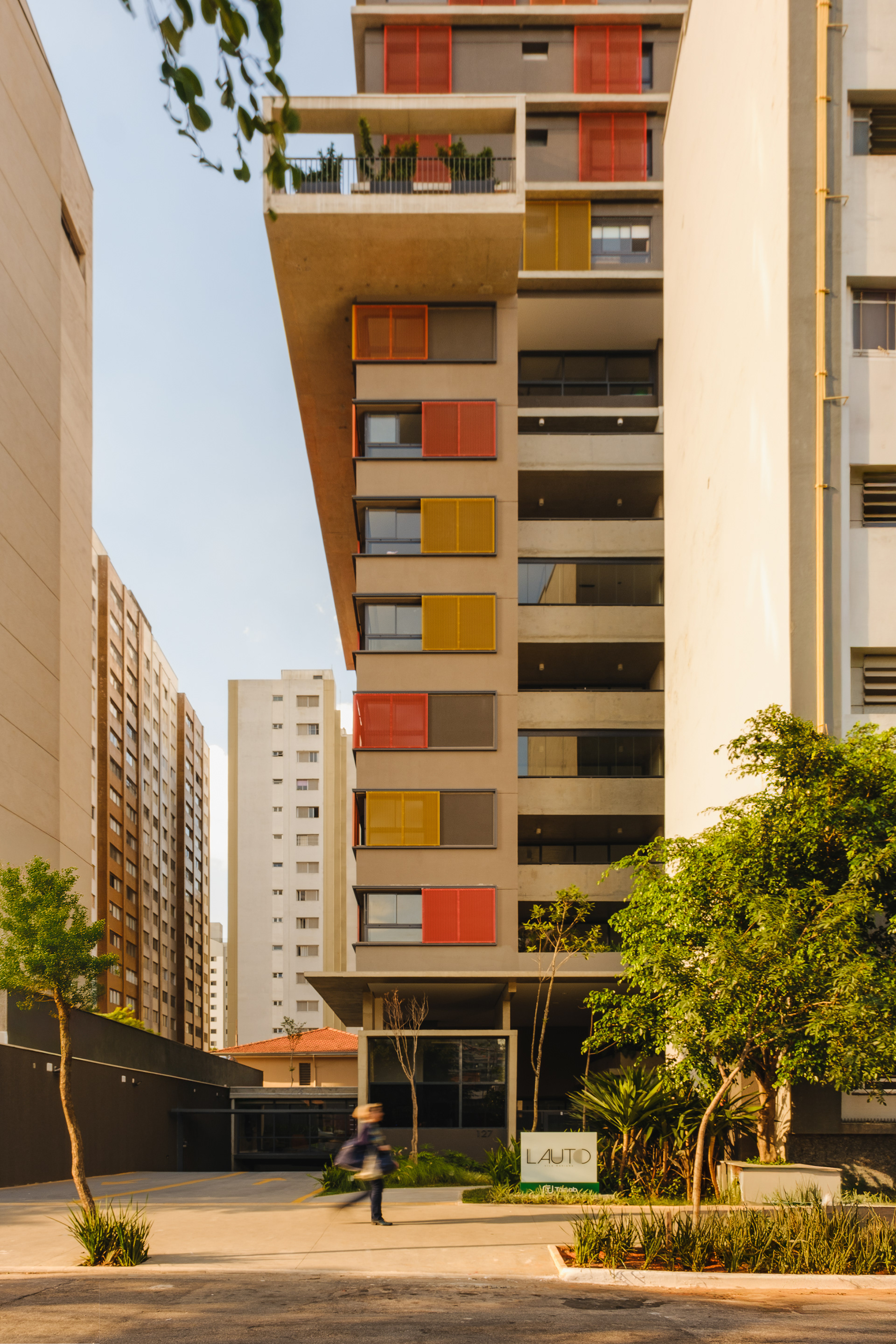
The front façade undertakes the challenging task of accommodating a retail store, access to rental apartments, access to residential units, and the garage ramp. Like the other entrances, the store is sheltered by the volume of the smaller units, forming a small covered plaza that expands the public realm and creates space for the building to adapt to the street’s slope. This first block above the ground floor is composed of studios—approximately 30 m² apartments intended for short- and long-term stays. Its geometry, independent from the other volumes, highlights the separation of typologies, as occurs throughout the rest of the tower.
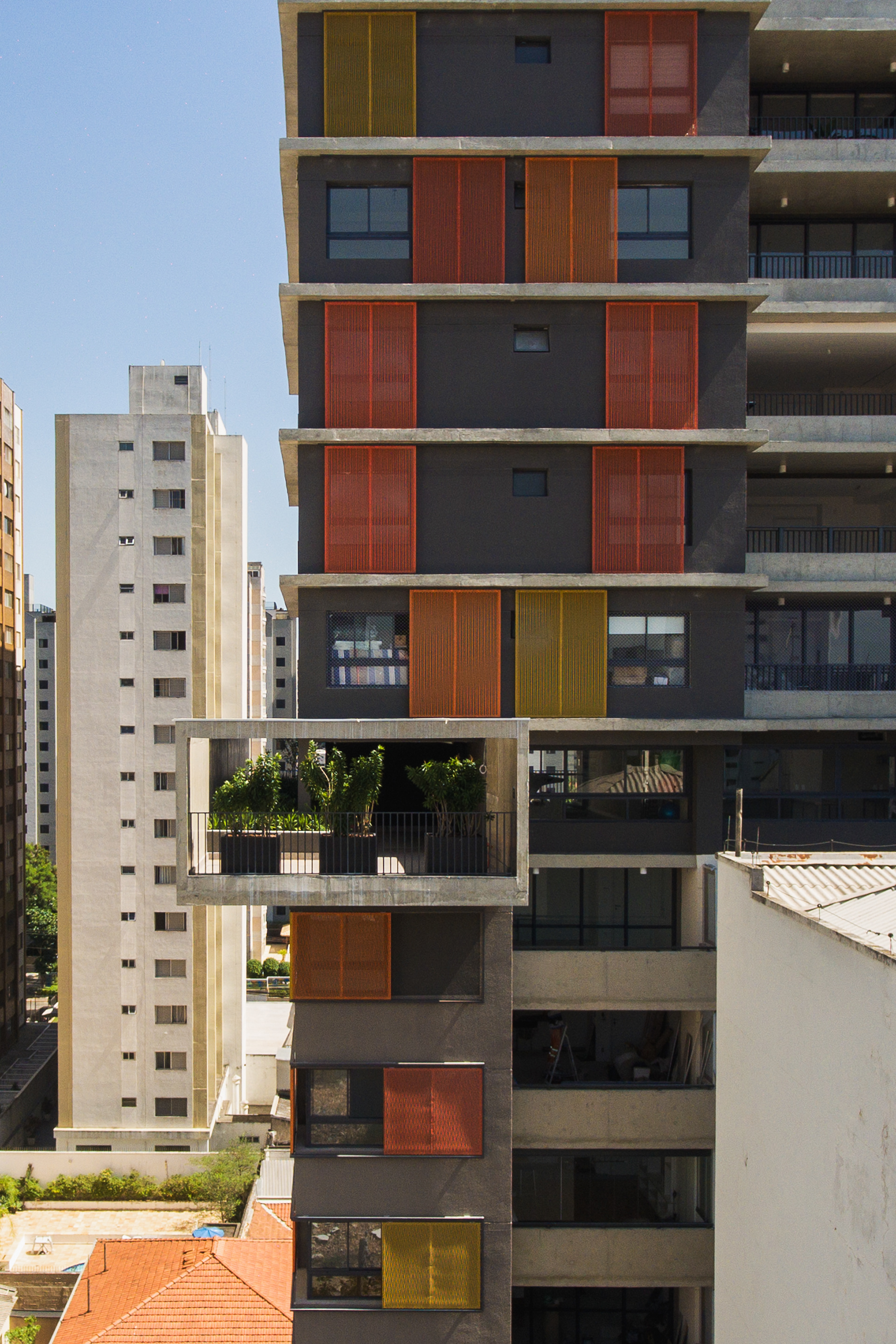
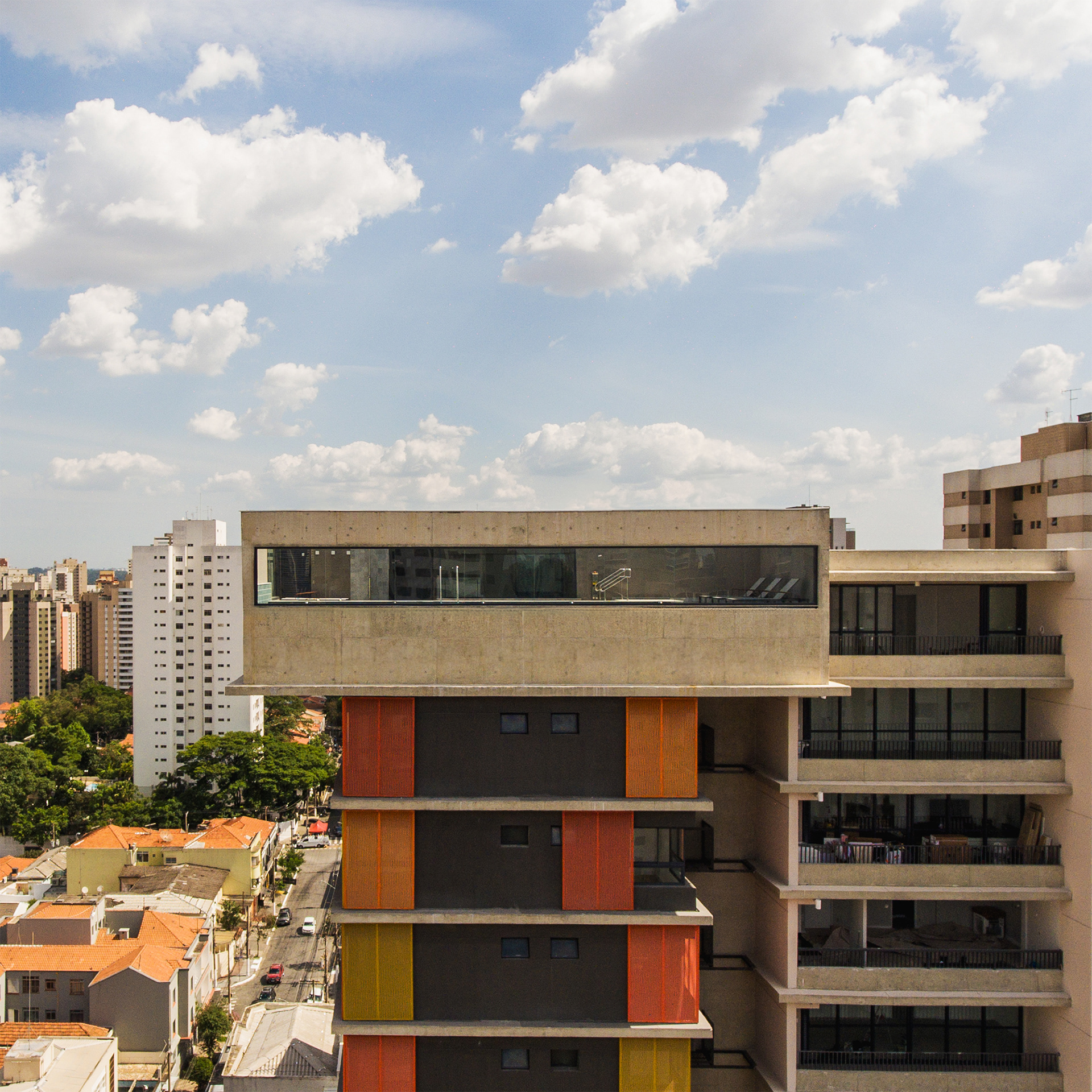
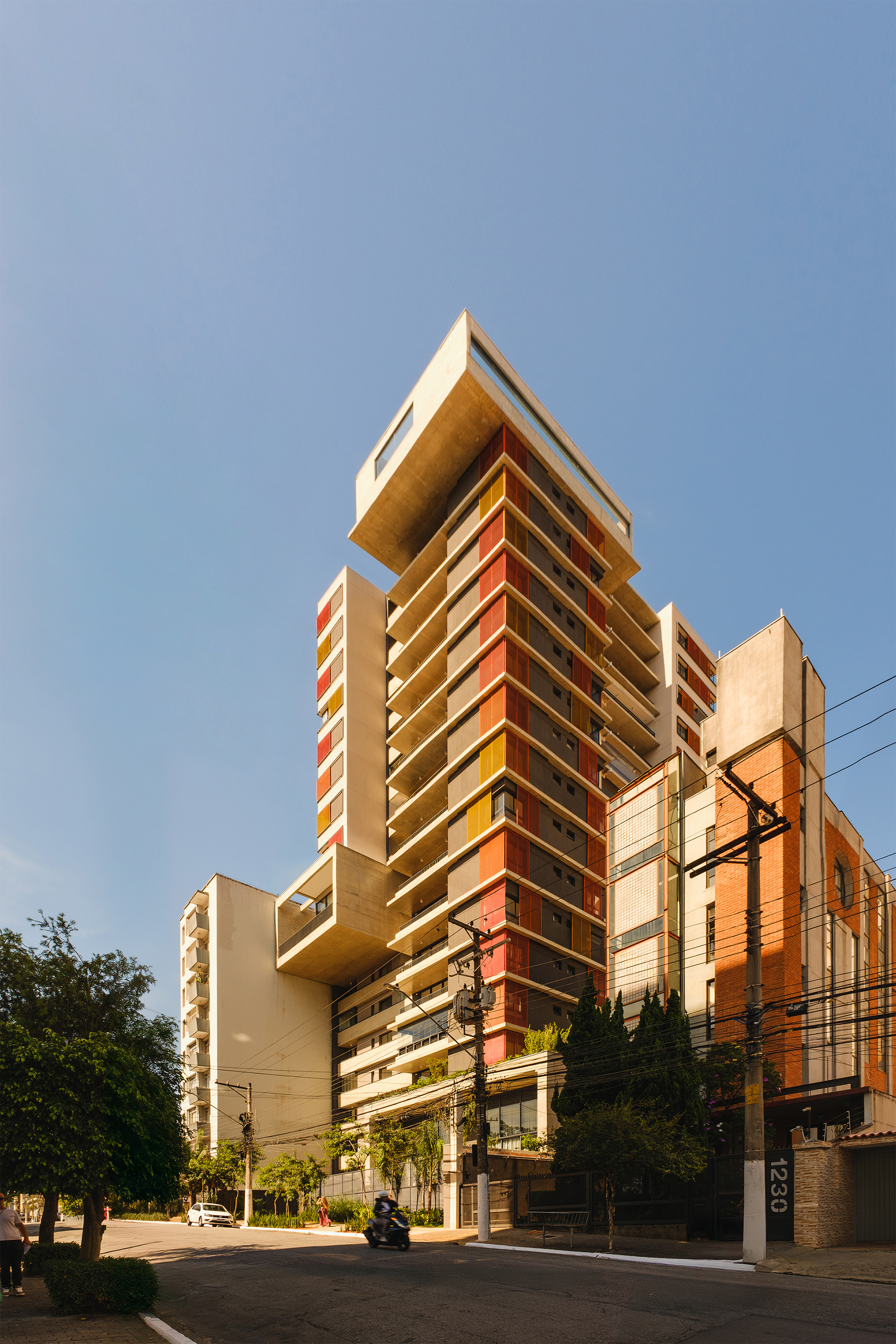
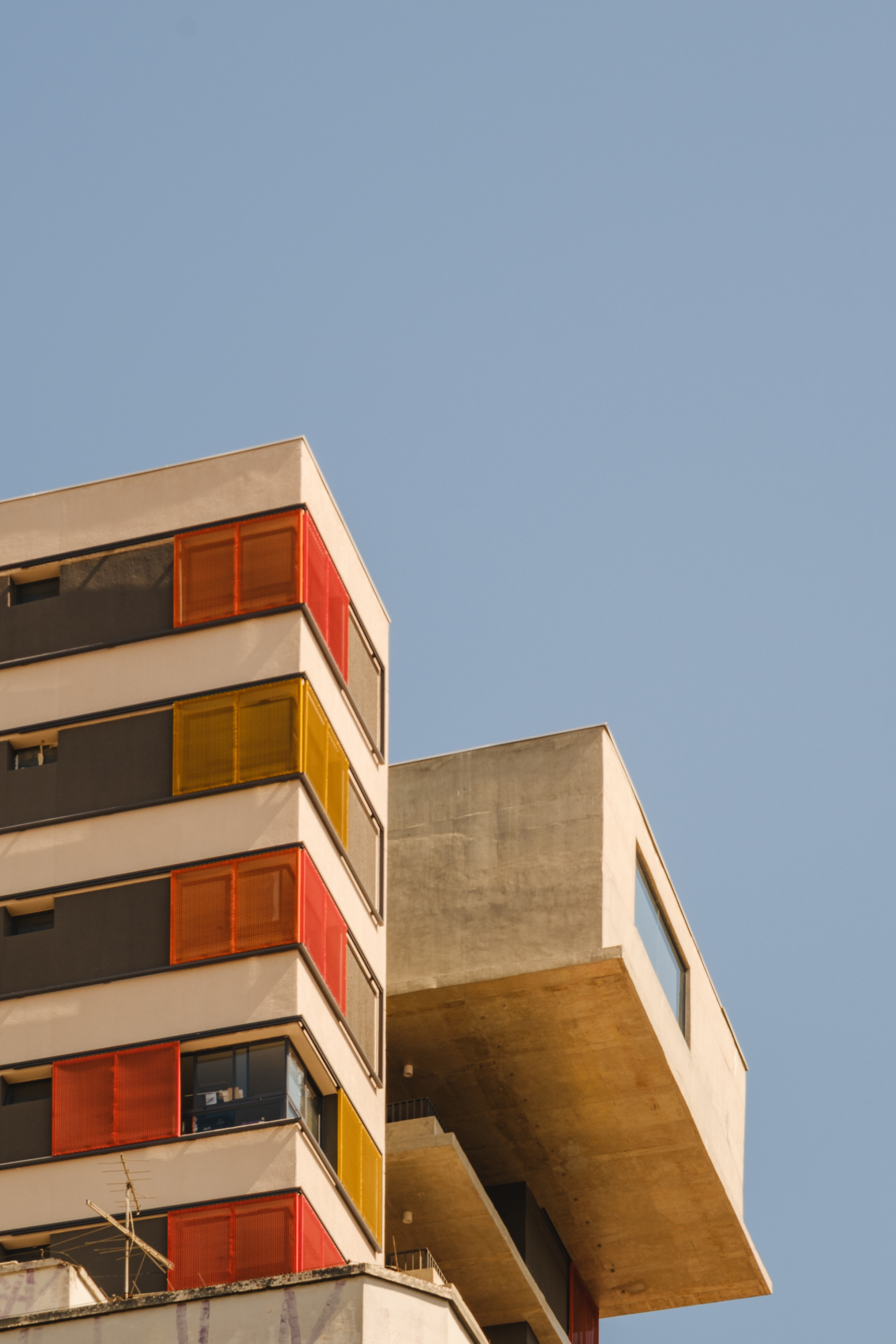
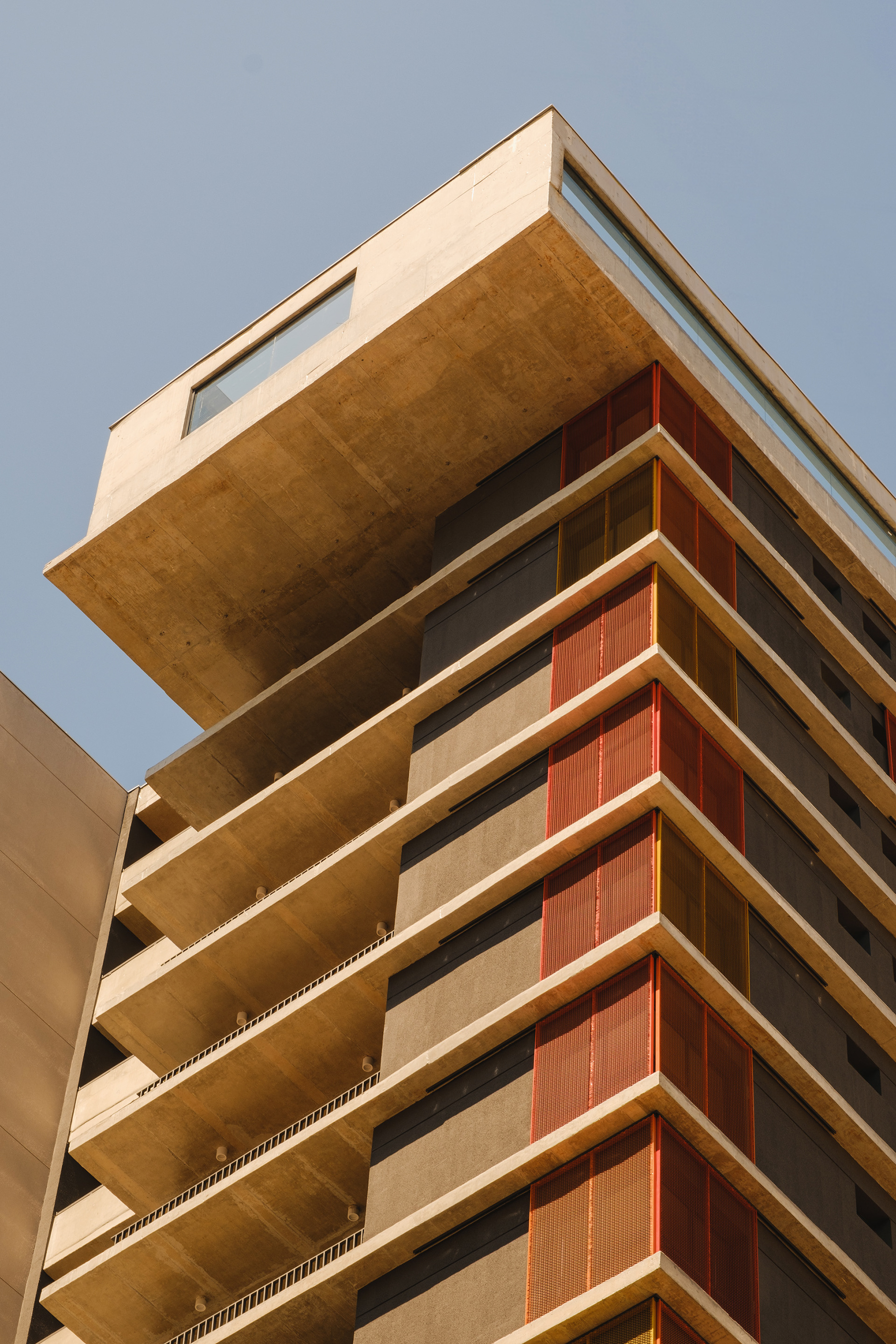
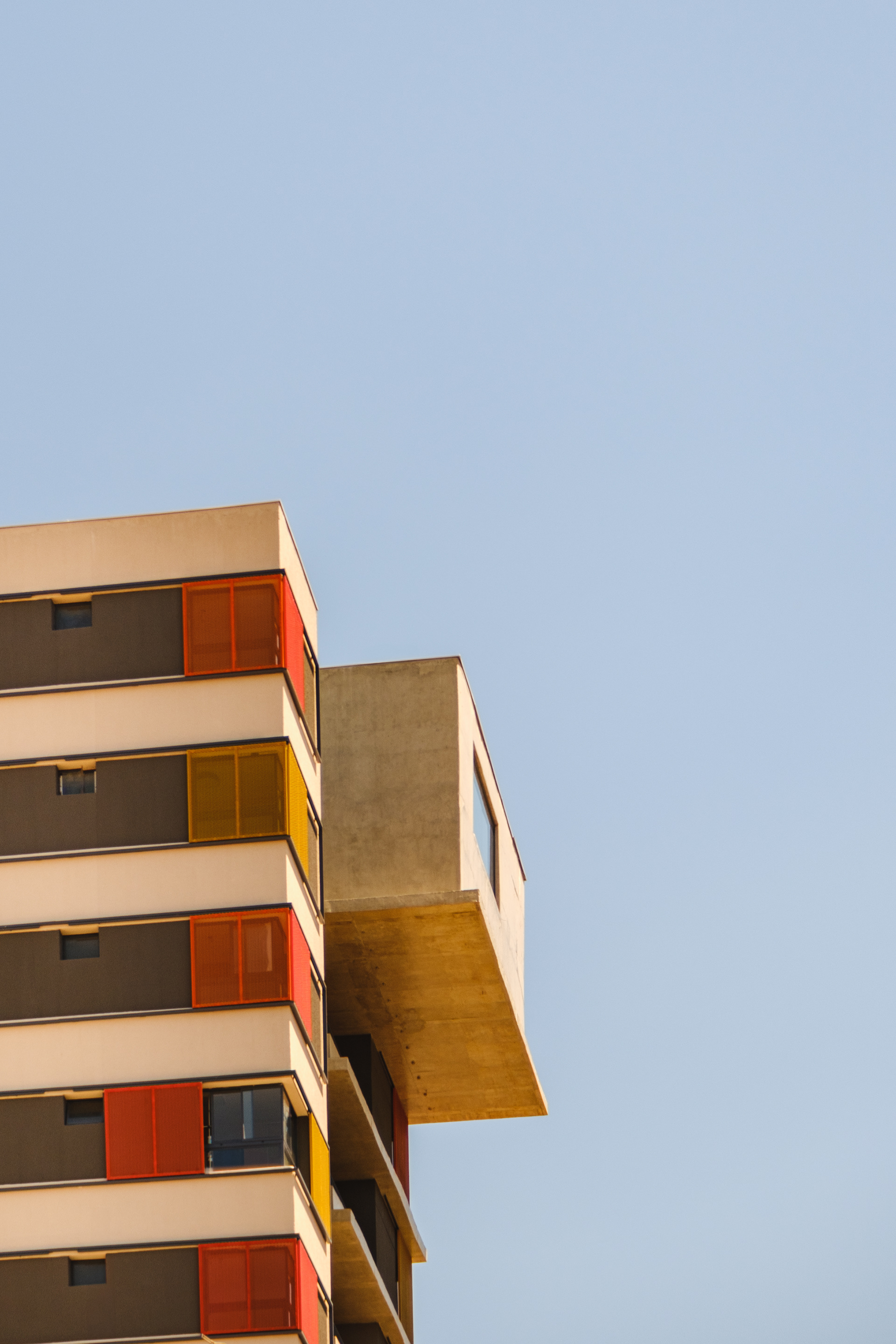
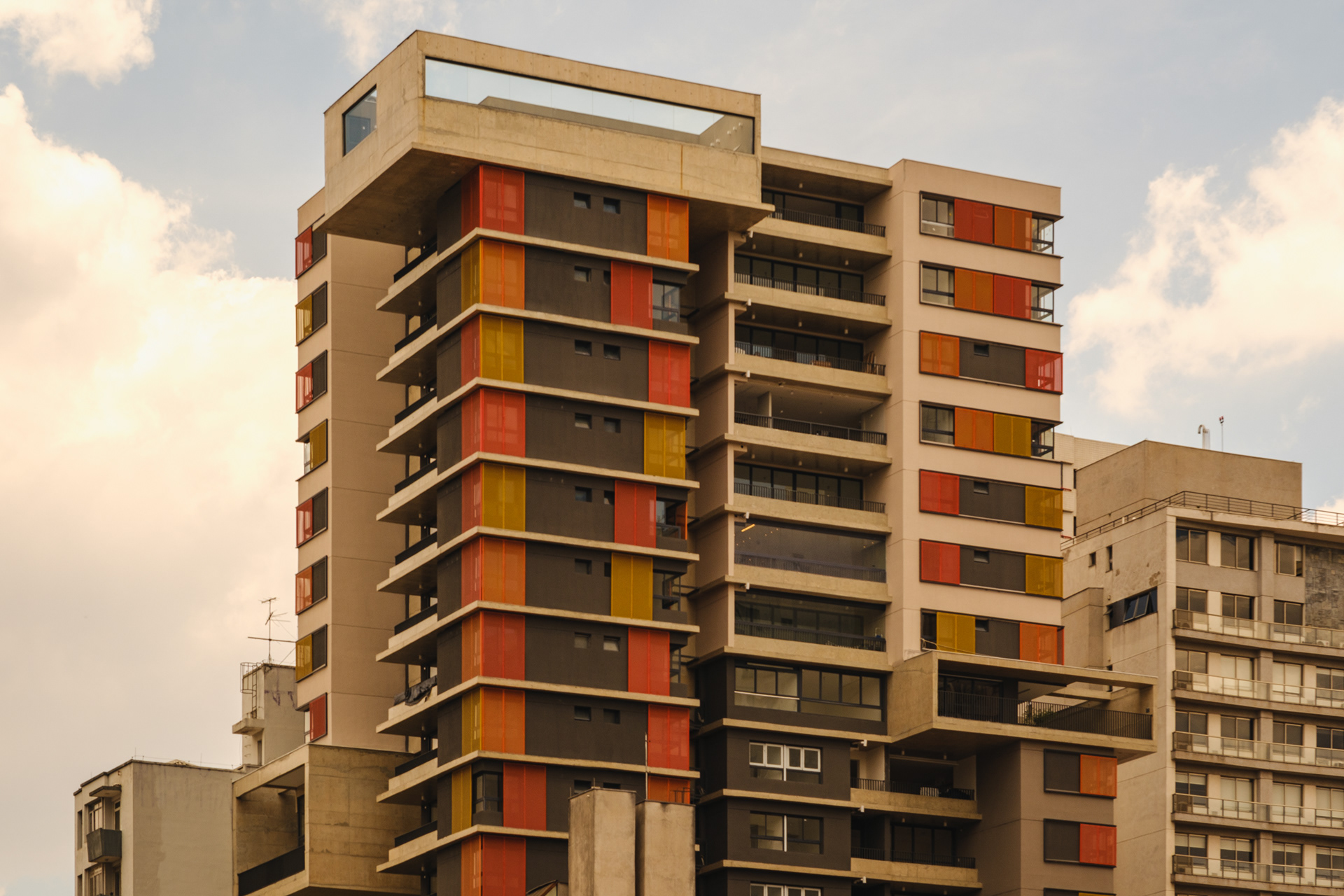
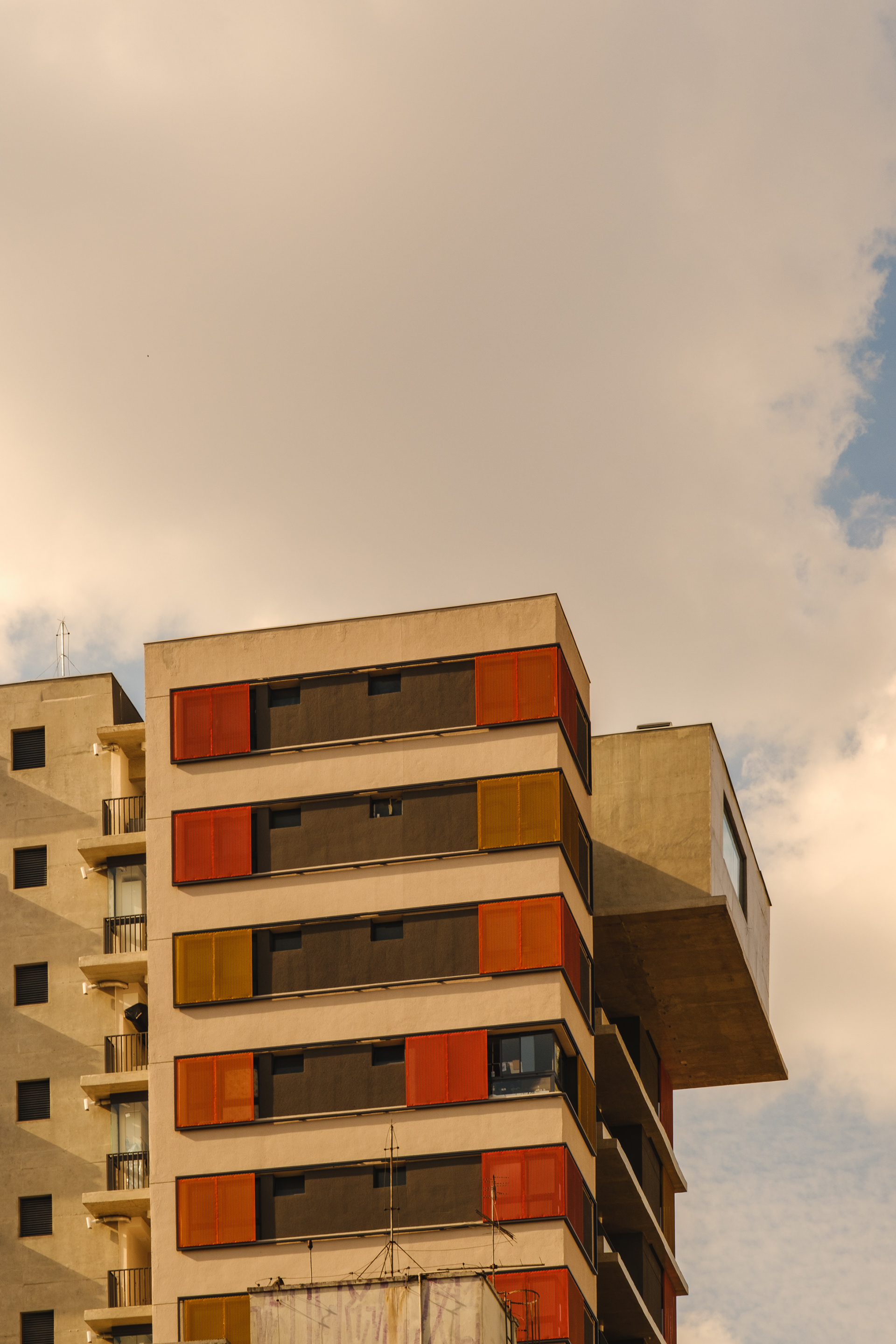
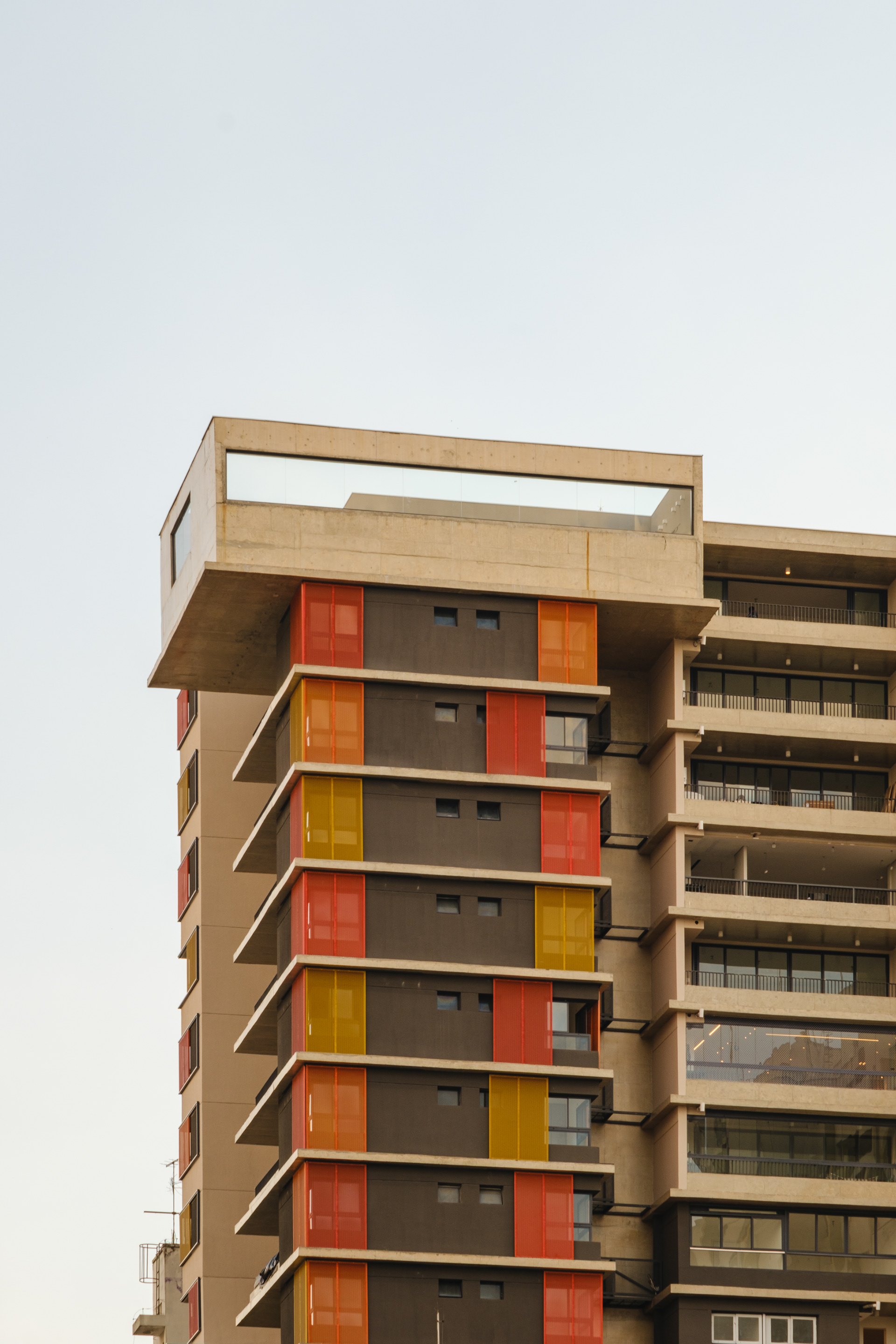
On the upper floors, a large volume houses two-bedroom apartments, flanked by another containing three-bedroom units. Above these, a limited number of special units—some with larger terraces, others with more generous layouts—form an additional block.
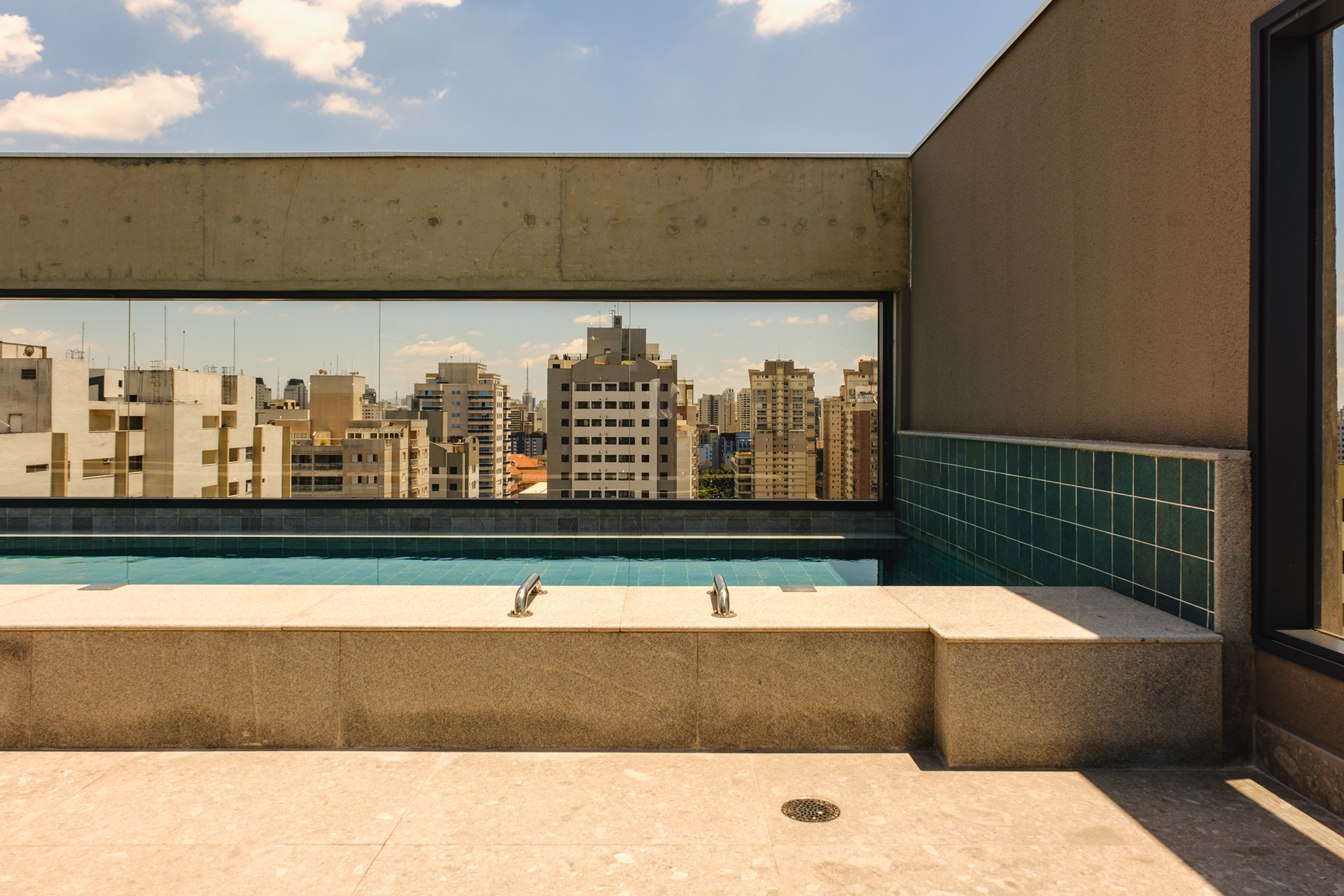
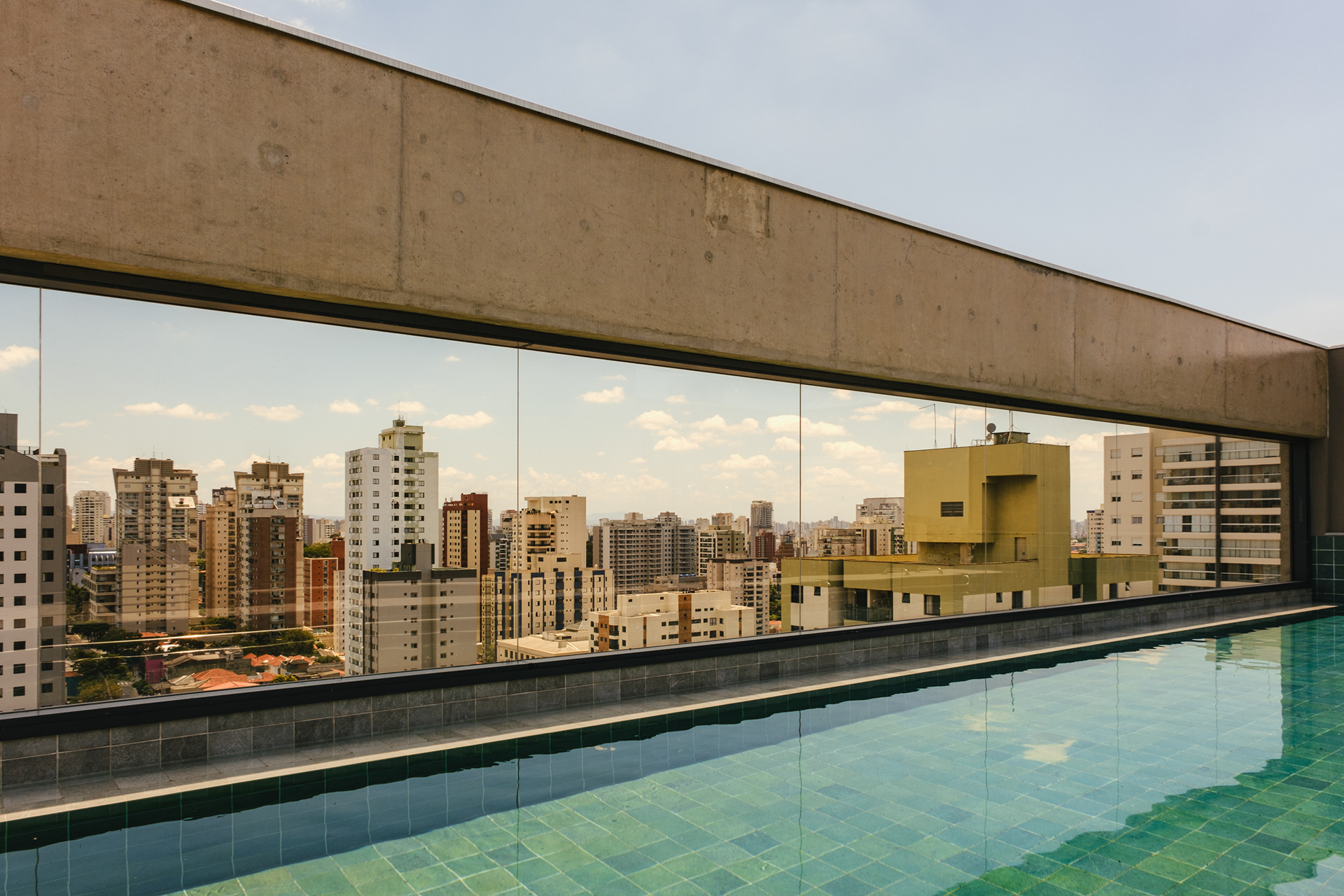
At the rear, set apart within the ground-floor garden, another volume contains some of the building’s leisure amenities, such as a playroom, party room, and swimming pool. These shared spaces are complemented by an intermediate level positioned between the blocks of different typologies, which includes a spa and fitness center.
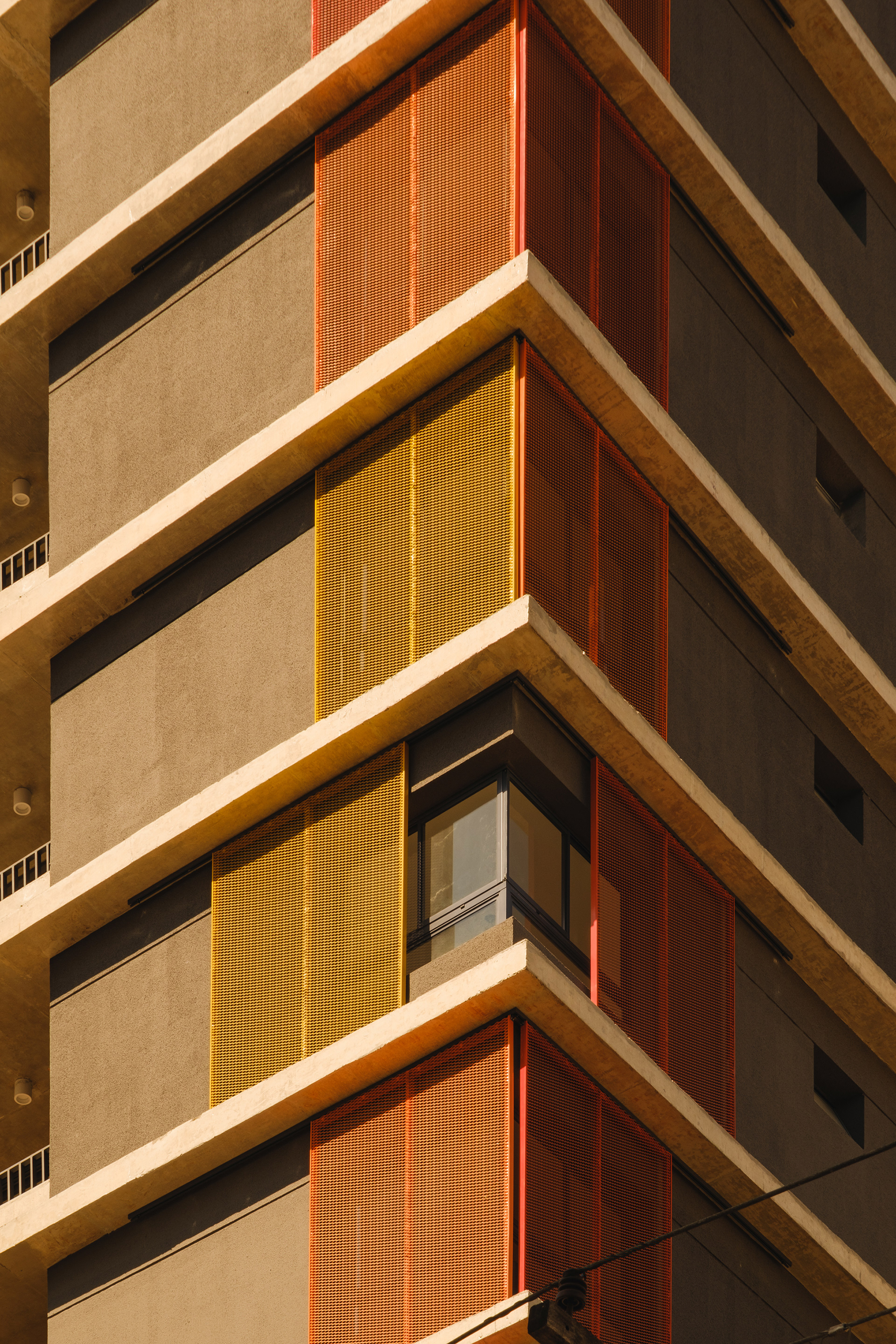
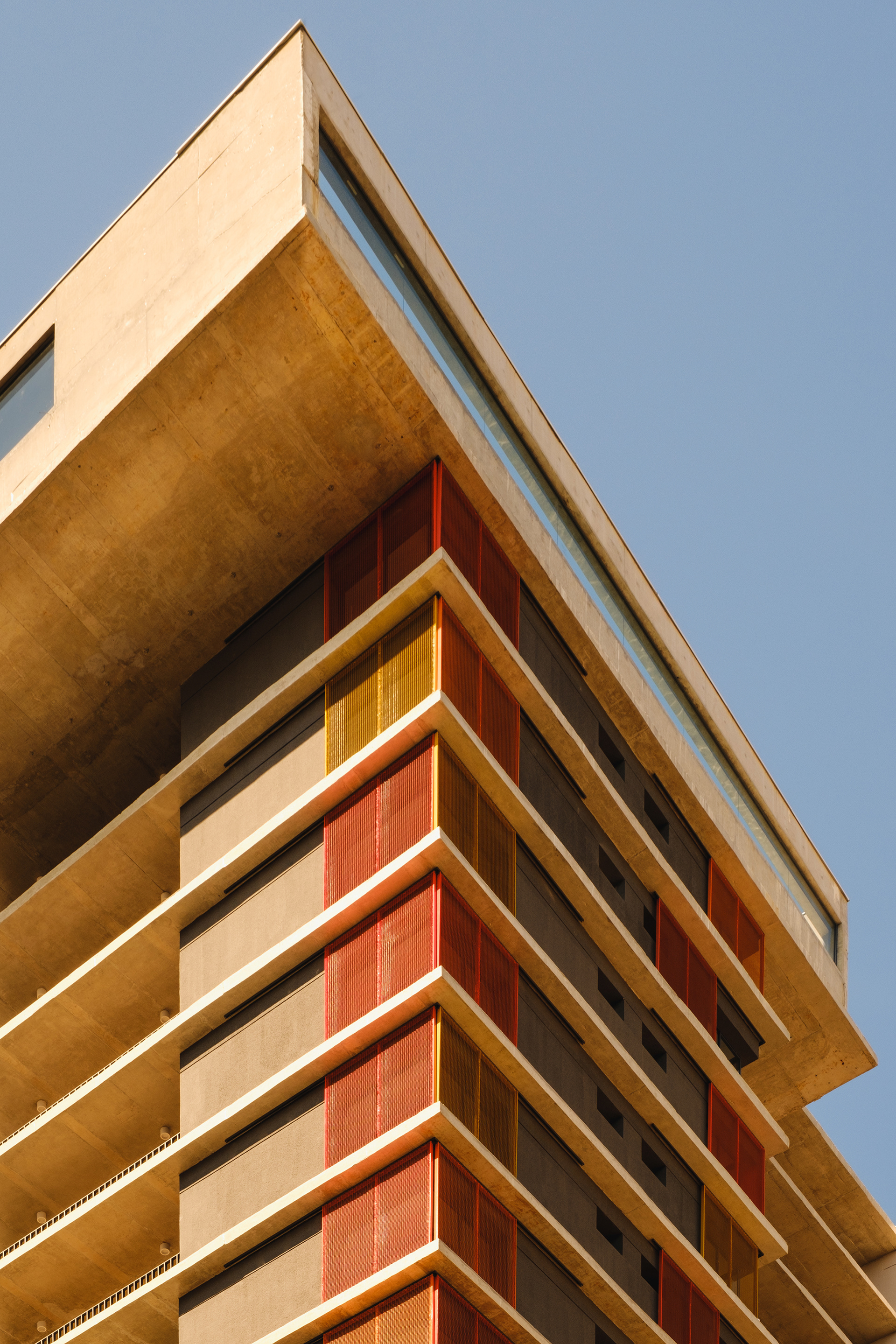
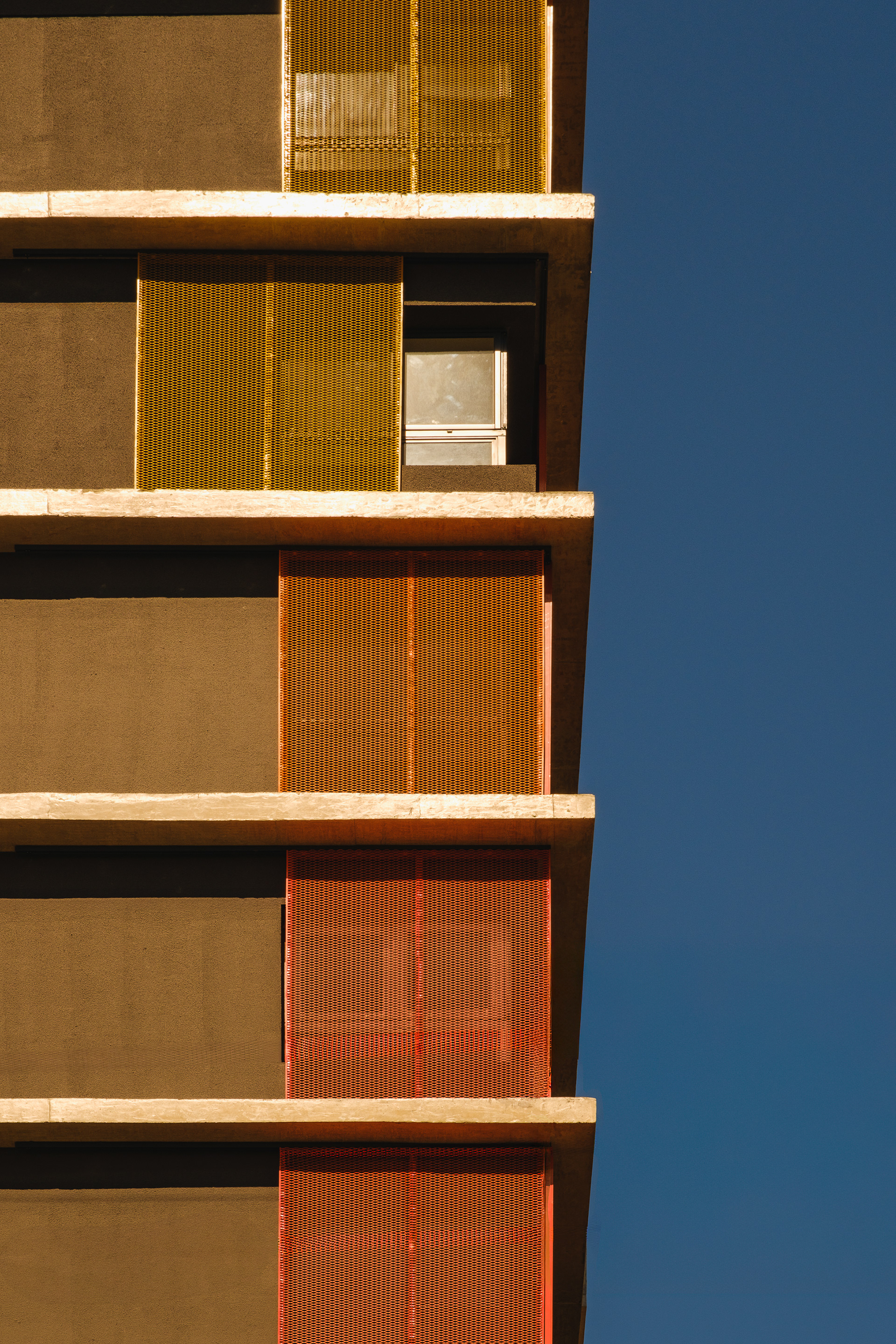
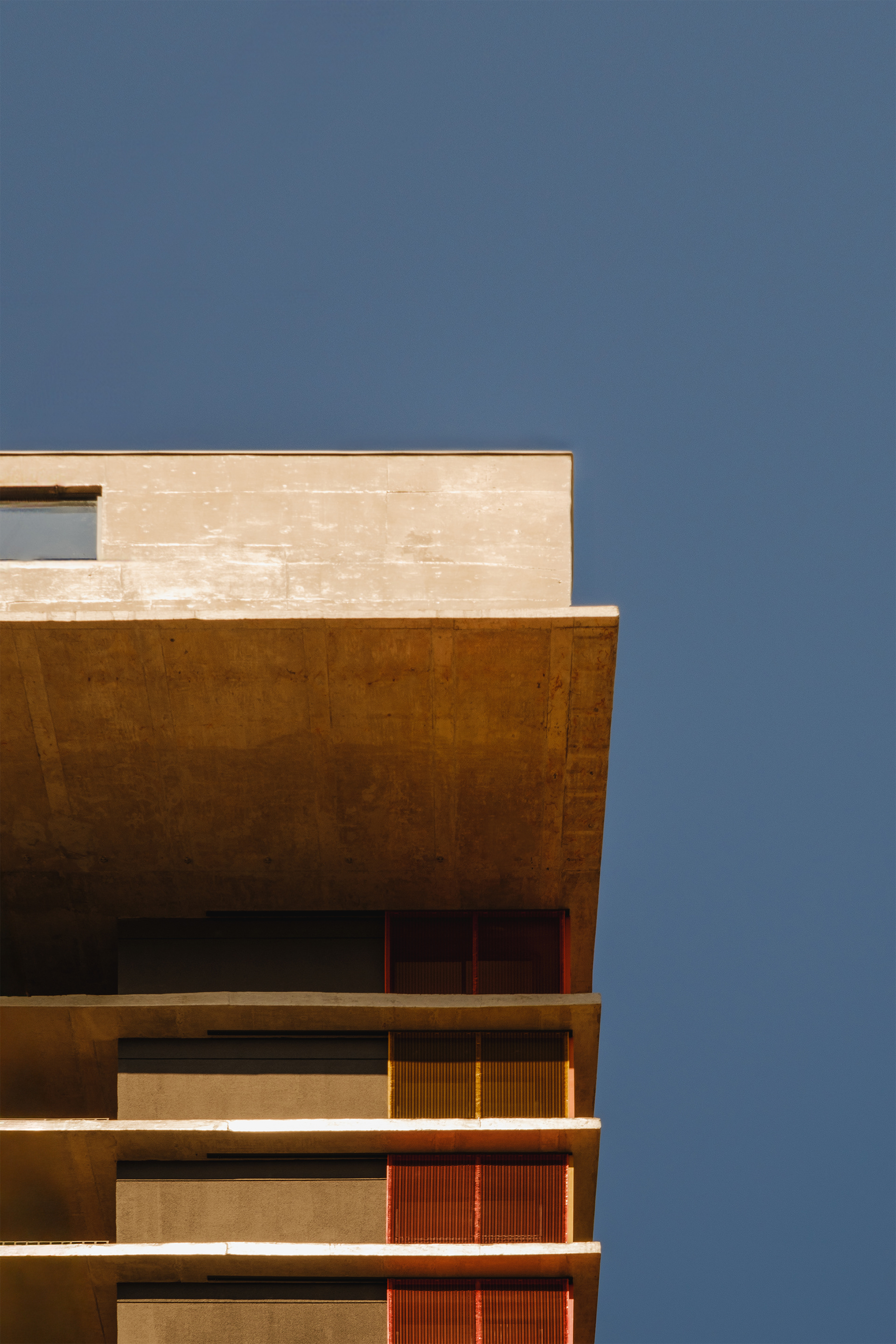
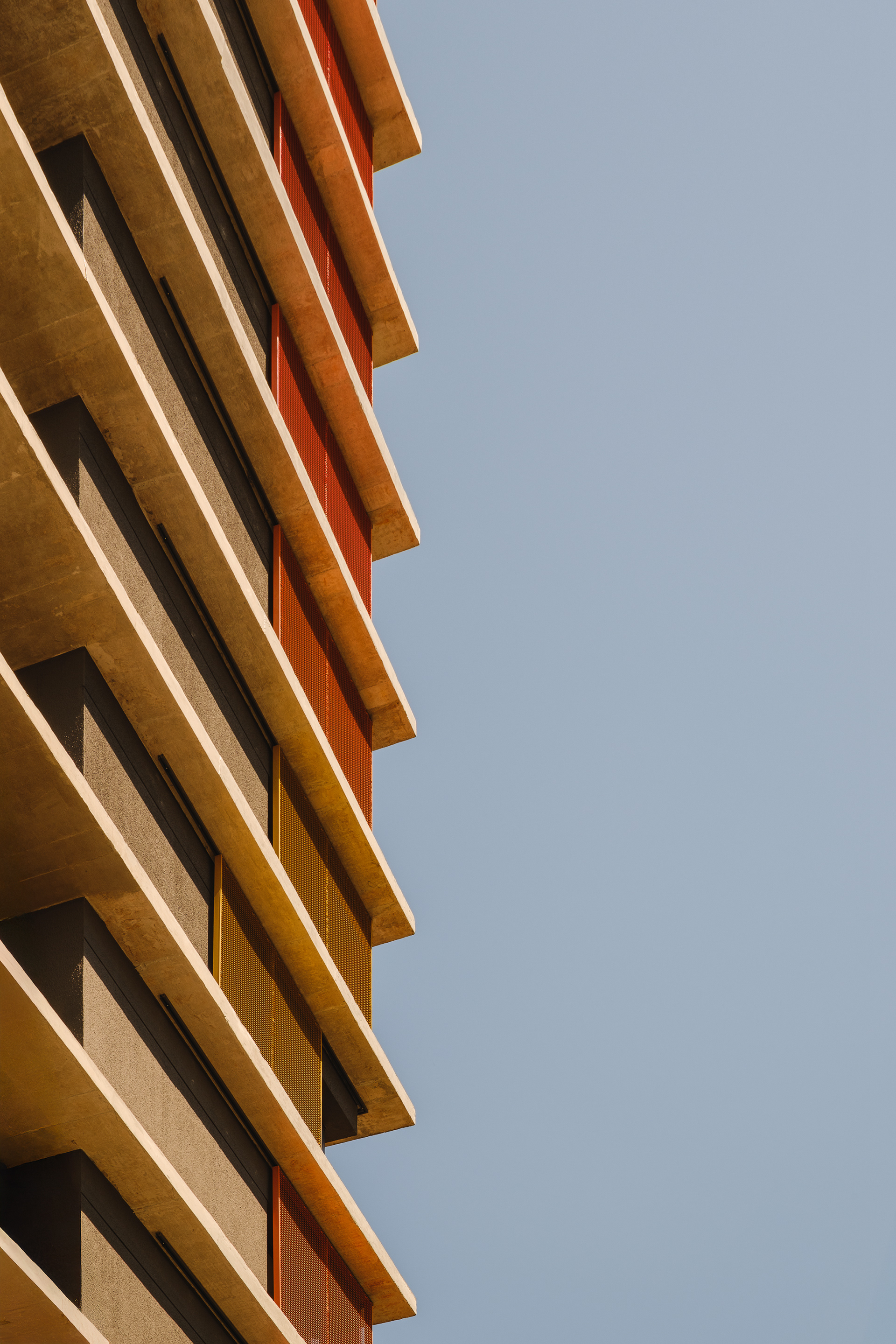
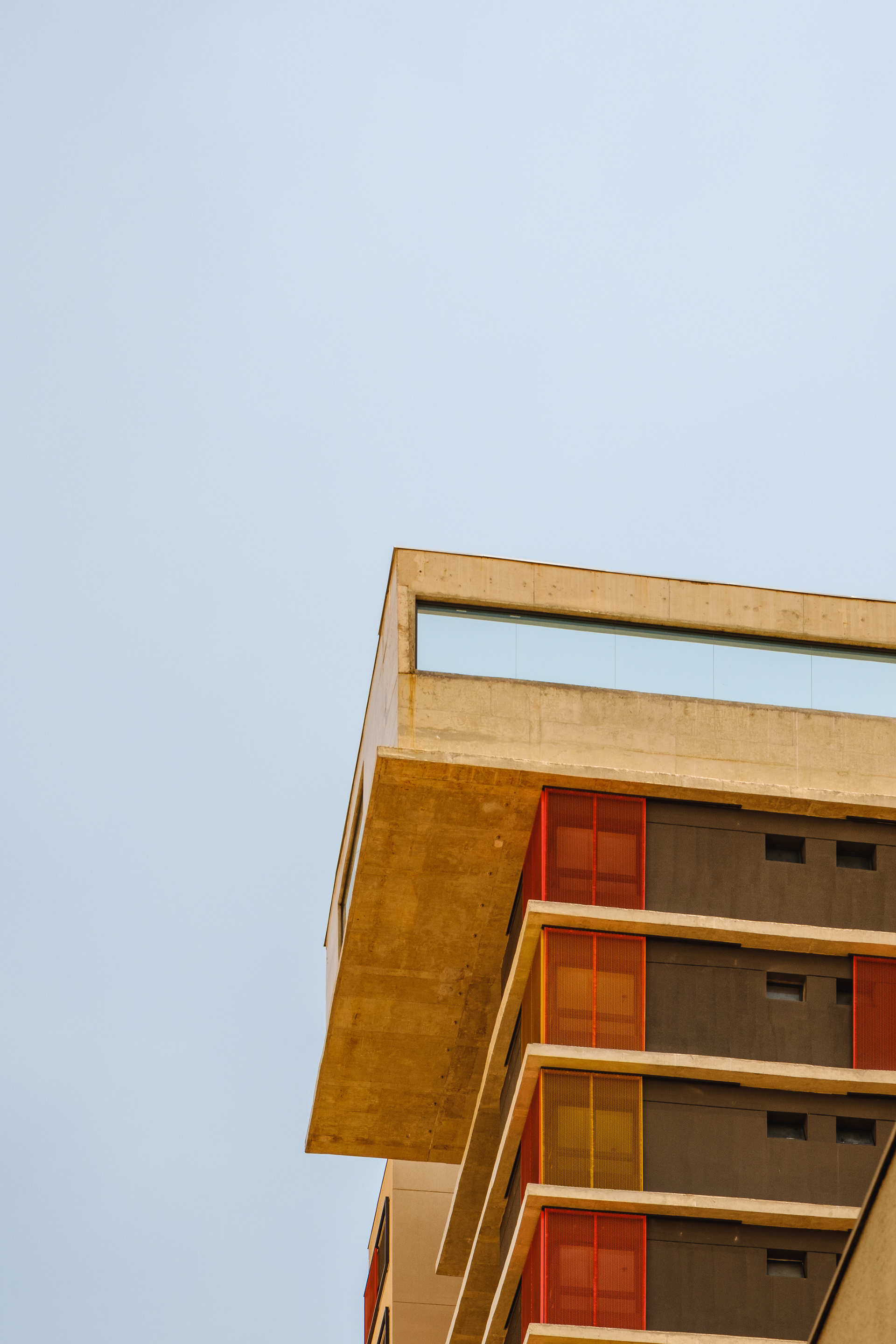
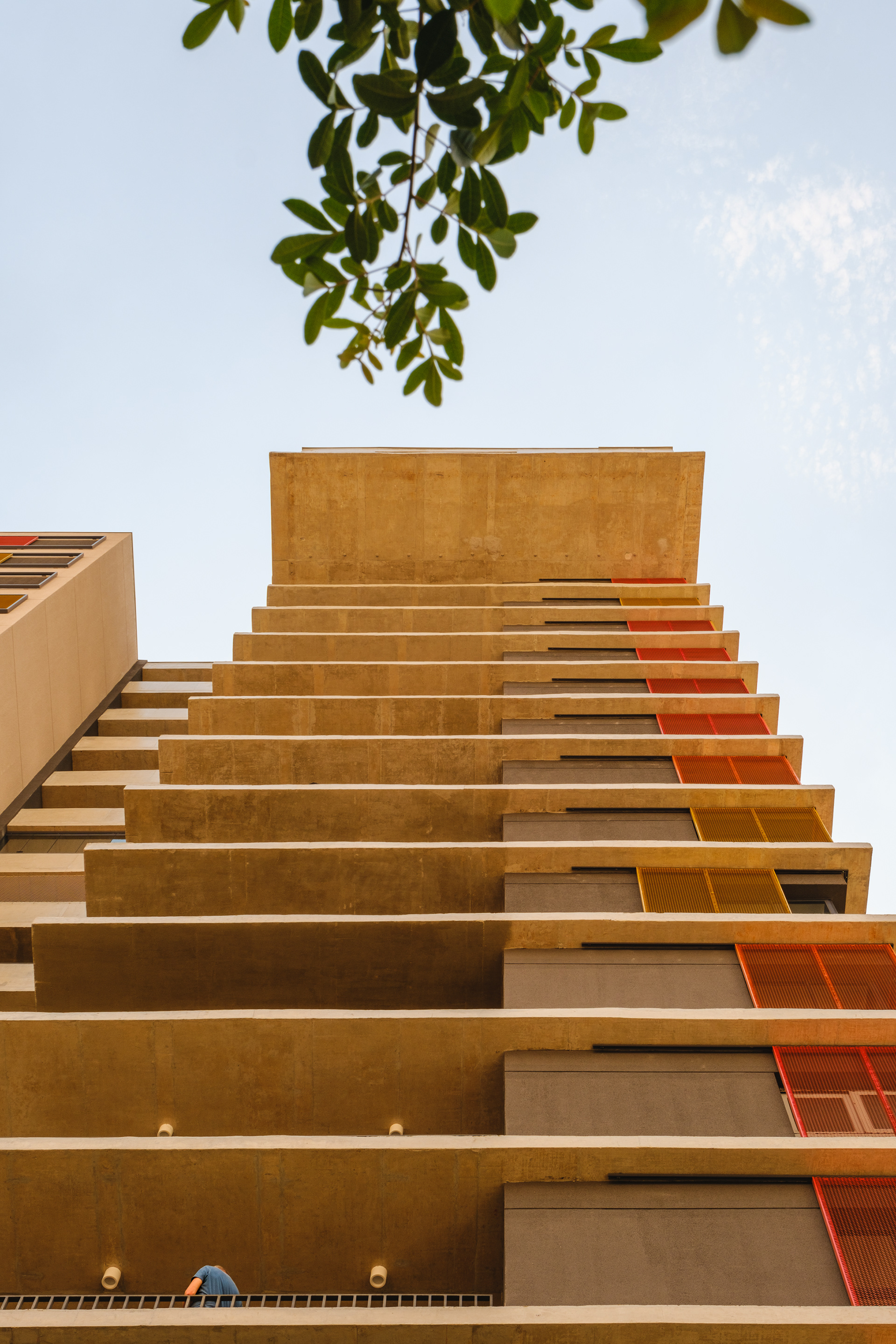
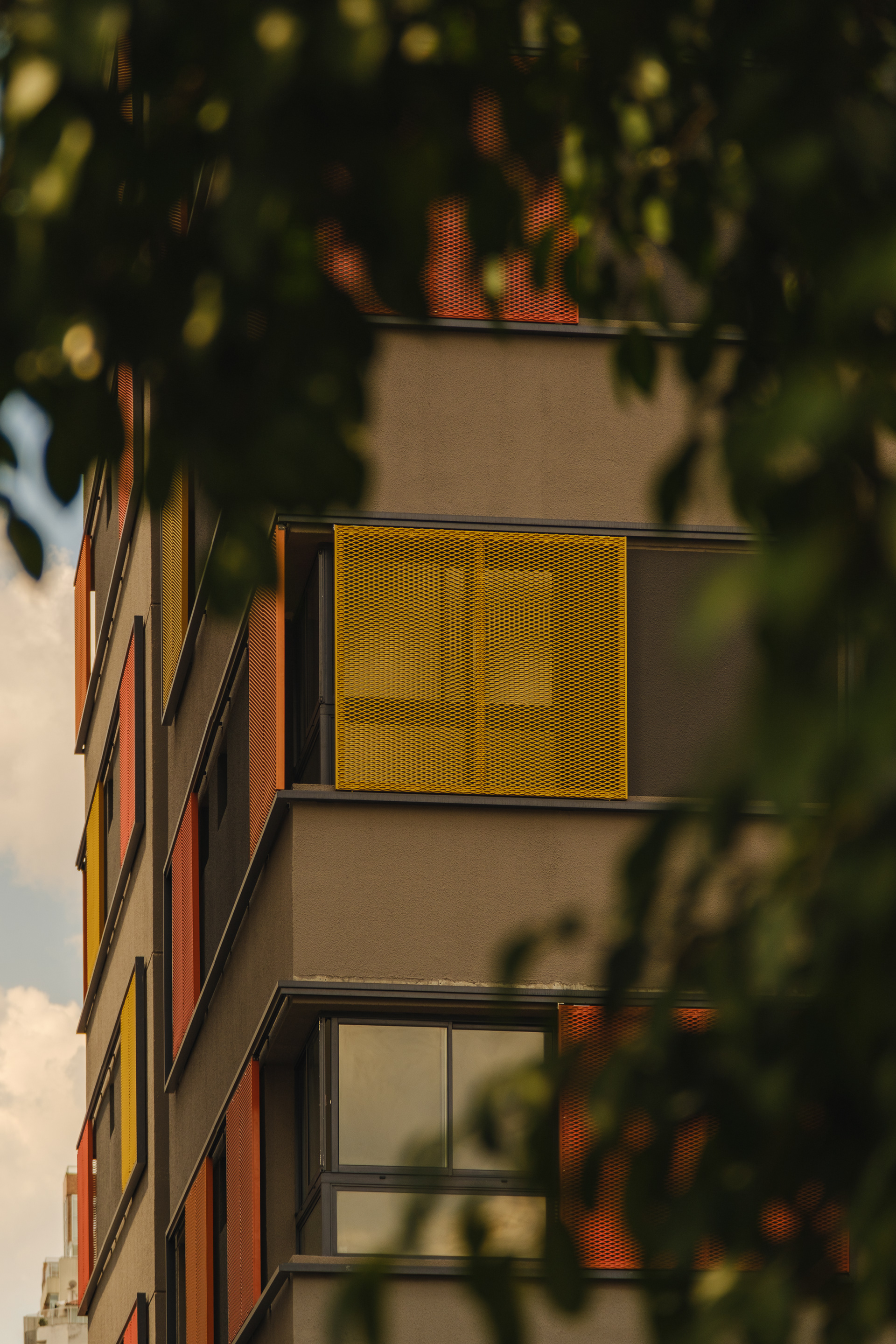
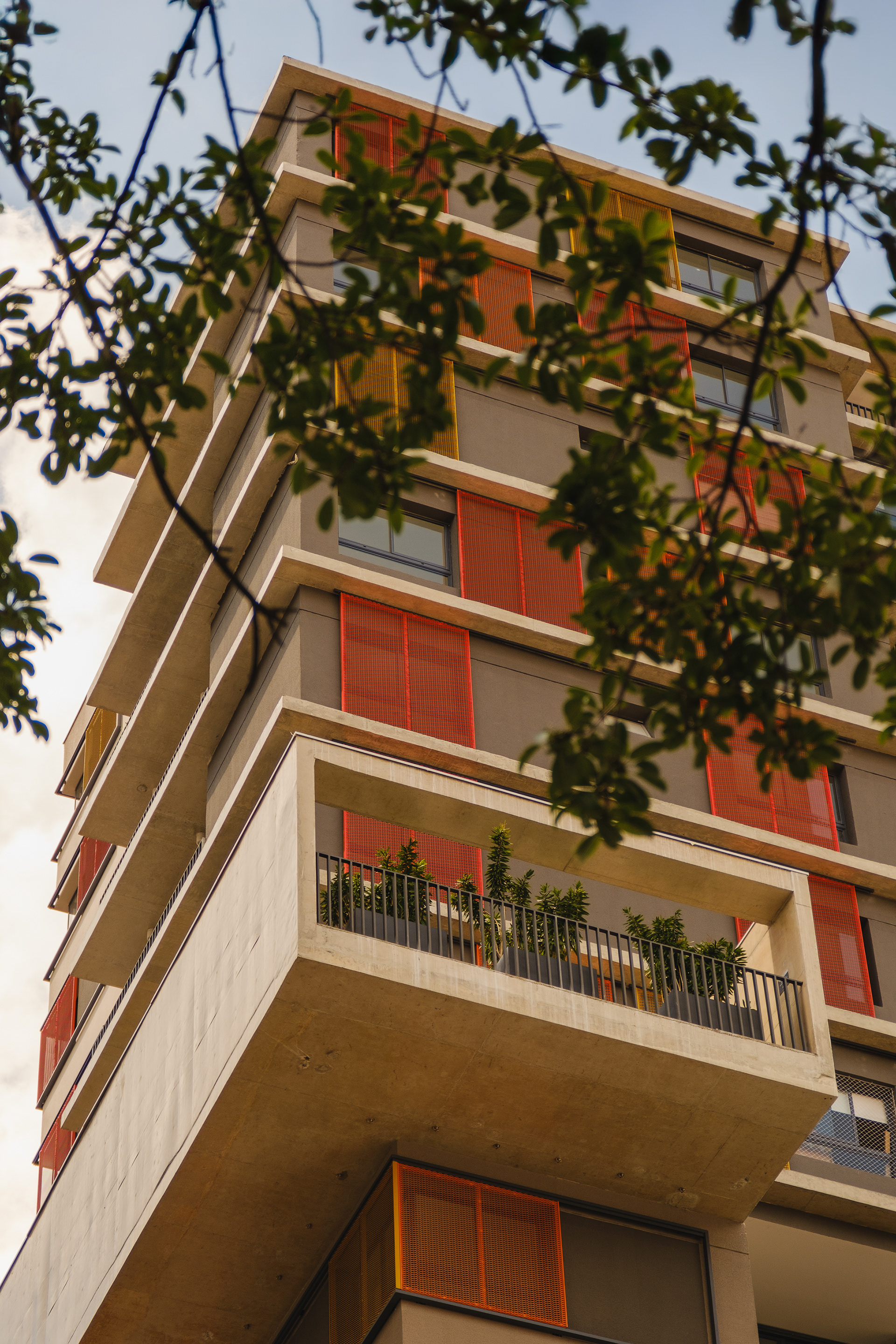
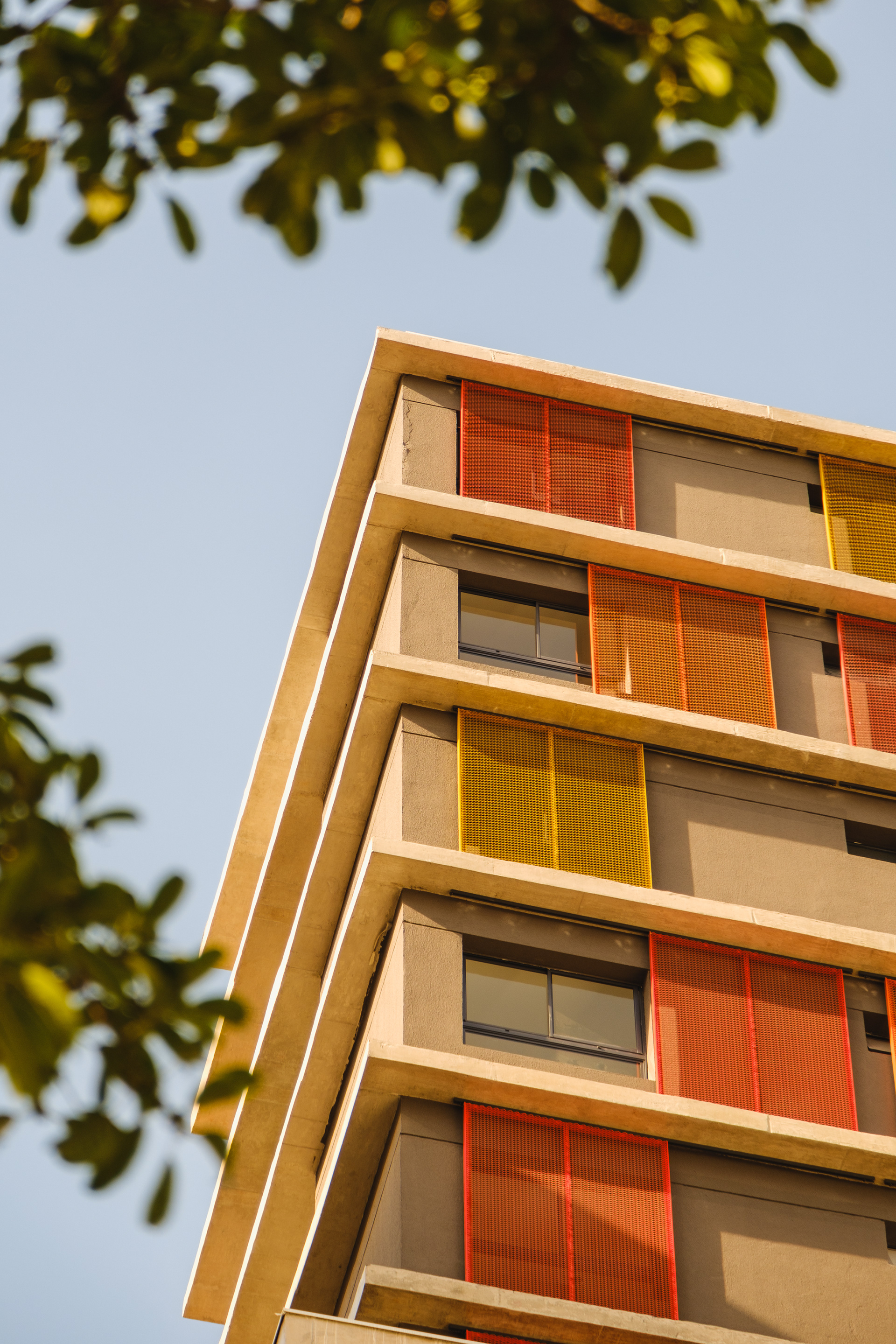
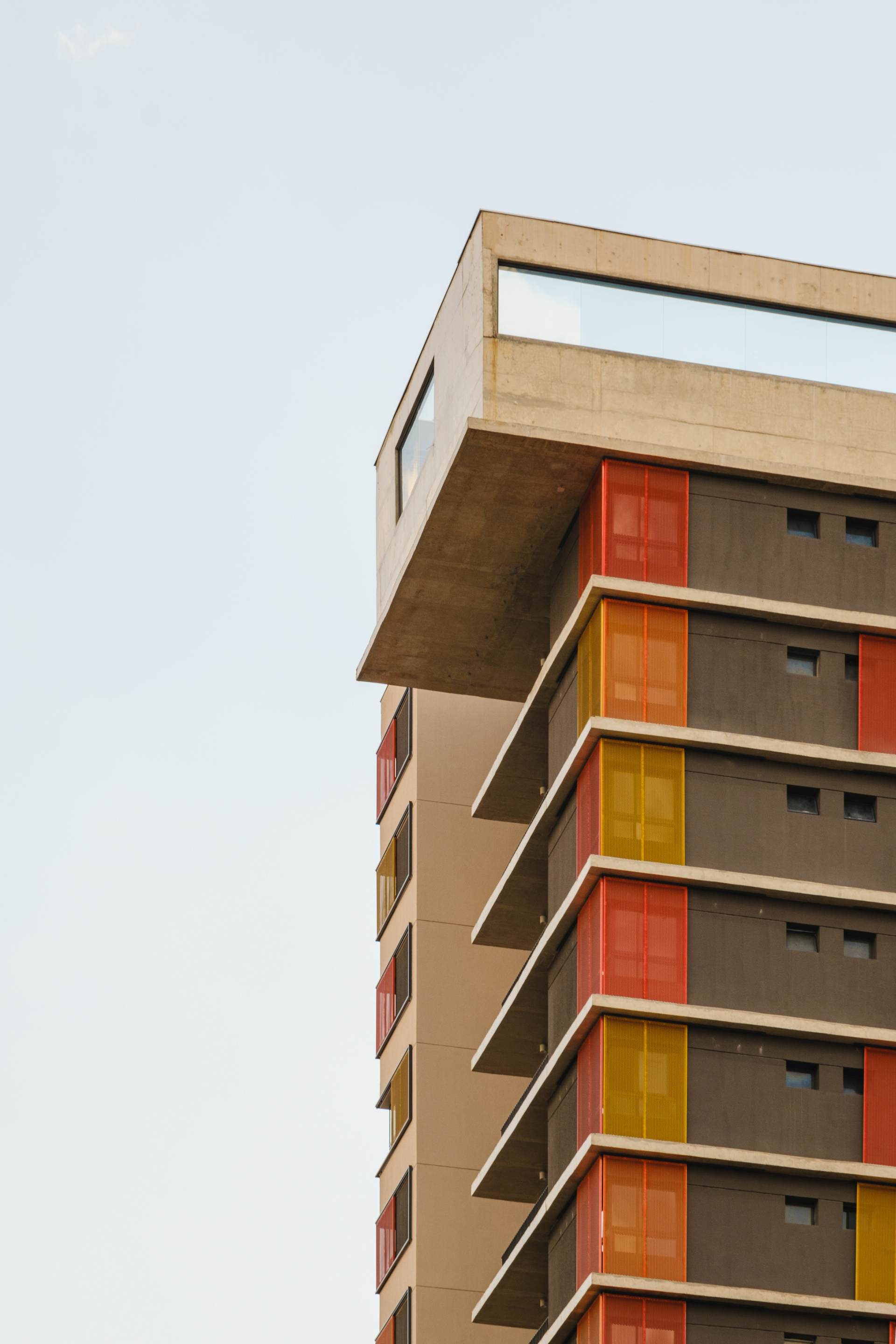
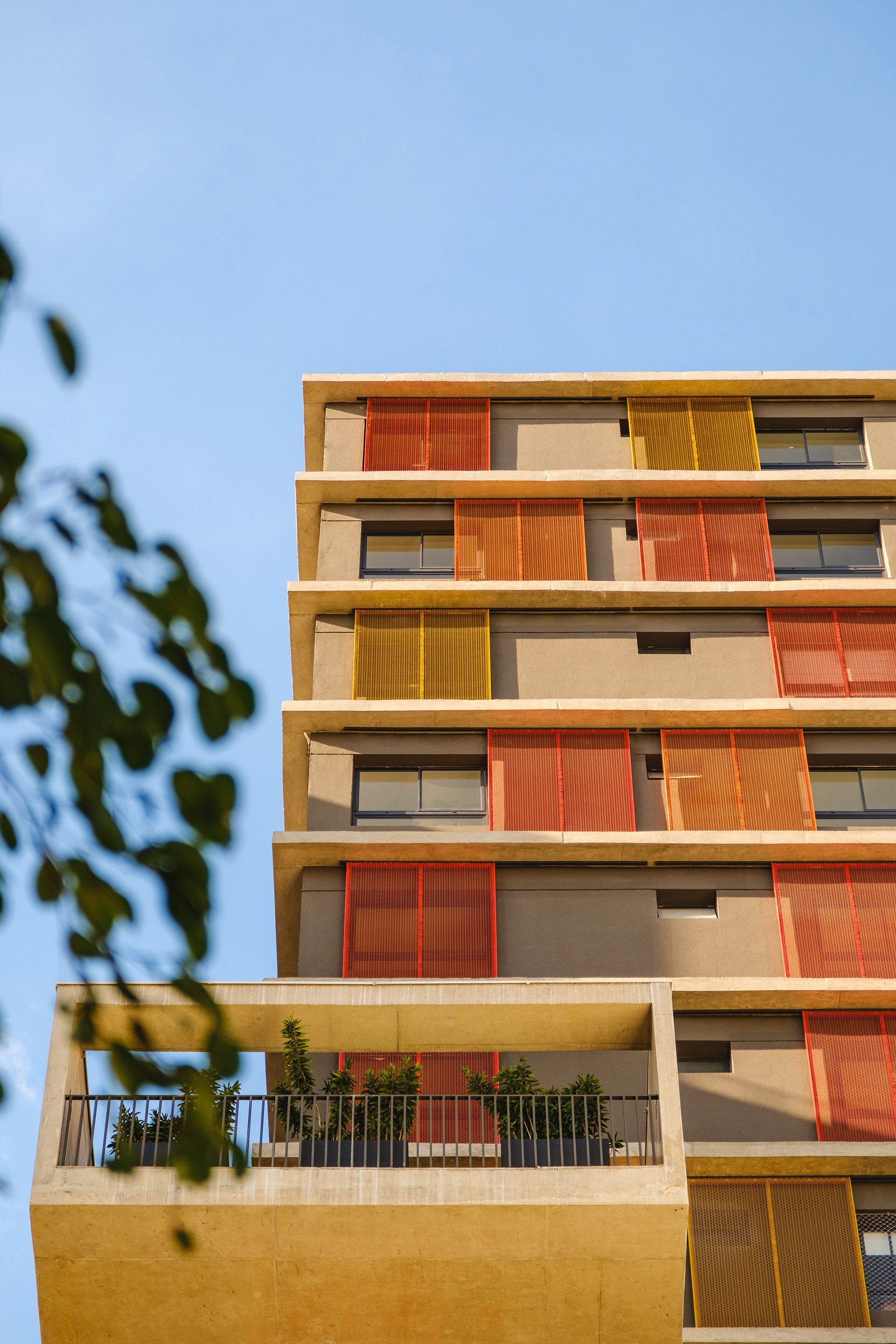
The idea of emphasizing uses and identifying them as simple, individual volumes generated a diversity of forms that are ultimately unified by a single constructive and formal solution: a structural grid envelops them all, giving them a uniform appearance while at the same time subtly highlighting their differences. This network of beams and columns also allows the internal limits of the units to extend outward, creating terraces, planters, and voids whose lightness contrasts with the rigidity of the overall form. Small misalignments, cantilevers, and terraces that transgress the perimeter of the grid complete the subtle separation between volumes that seem almost casually stacked upon one another, like a game.
The choice of light, neutral colors—such as white and gray—reinforces the role of light and shadow in articulating the grid and the volumes. These tones also emphasize the presence of vegetation wherever possible, especially where the grid creates transitional outdoor spaces, with planters that are simultaneously within the structure and exposed to the elements. The purity of white, combined with the rigor of the structure, results in a direct, synthetic, and clear urban object, free of excess. In an urban landscape as complex as São Paulo’s, it is sometimes important to speak softly—to whisper.