ITAQUI
DISTRICT
ITAPEVI - SP, BRAZIL
Project specifications
Building area - 115.000 m²
Project beginnning - 2025
Construction completion - Under construction
Project beginnning - 2025
Construction completion - Under construction
Team
Authors - Fernando Forte, Lourenço Gimenes, Rodrigo Marcondes Ferraz
Managers - Sonia Gouveia, Talita Broering
Coordinators - Geronimo Palarino, Iacy Gottschalk, Tatiane Corsi
Contributors - Aldo Oliveira, Bruno Lopes, Caiã Rocha, Cecilia Knaesel, Érika Azevedo, Gabriel Baptista, Juan Rarez, Maíra De Benedetto, Mariana Sarto, Mariana Ventorini, Naisson Neumann, Philippe Metropolo, Victor Lucena
interns - Anna Giulia Sucena
3D Imamges: Projeviz
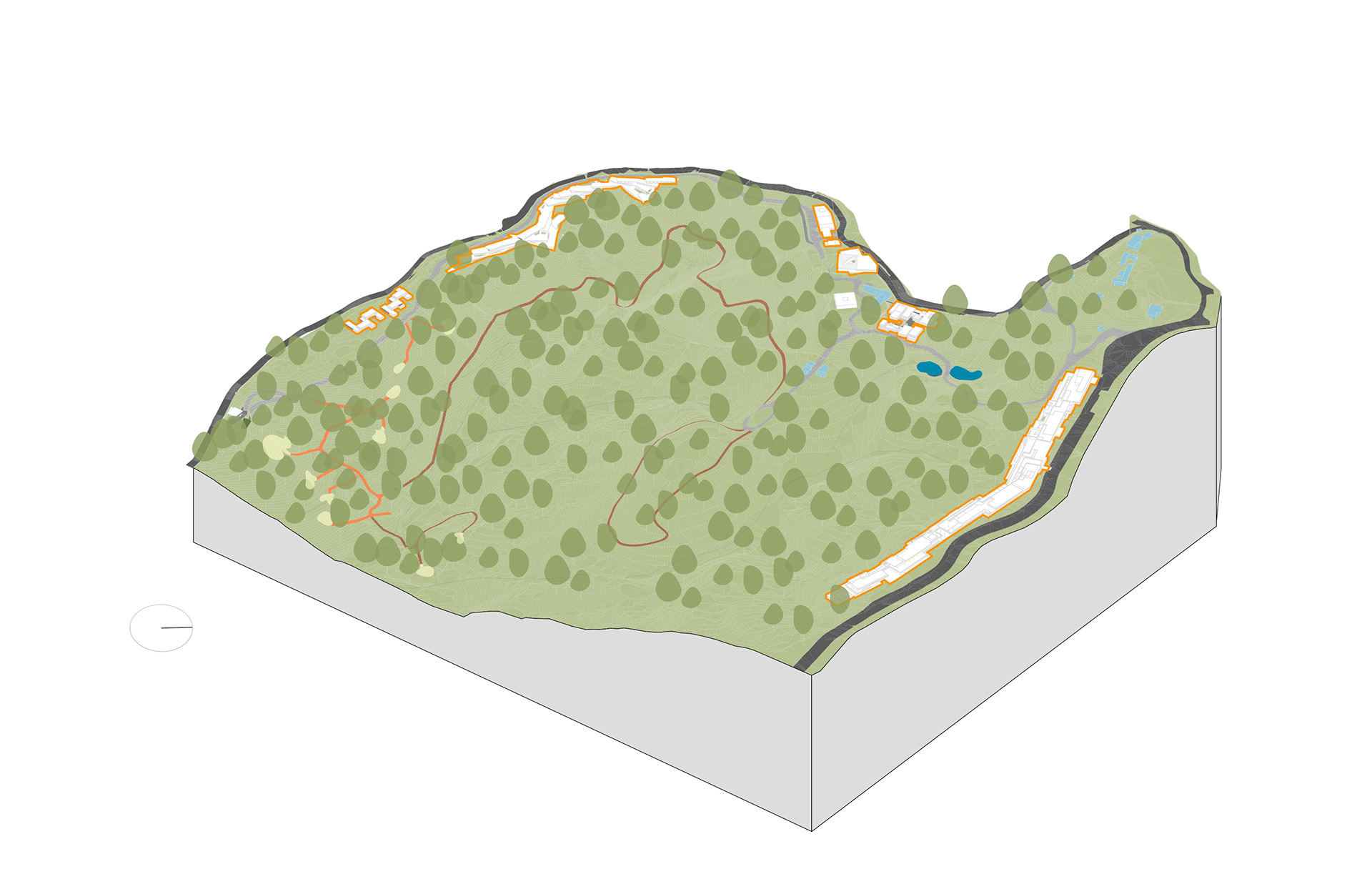
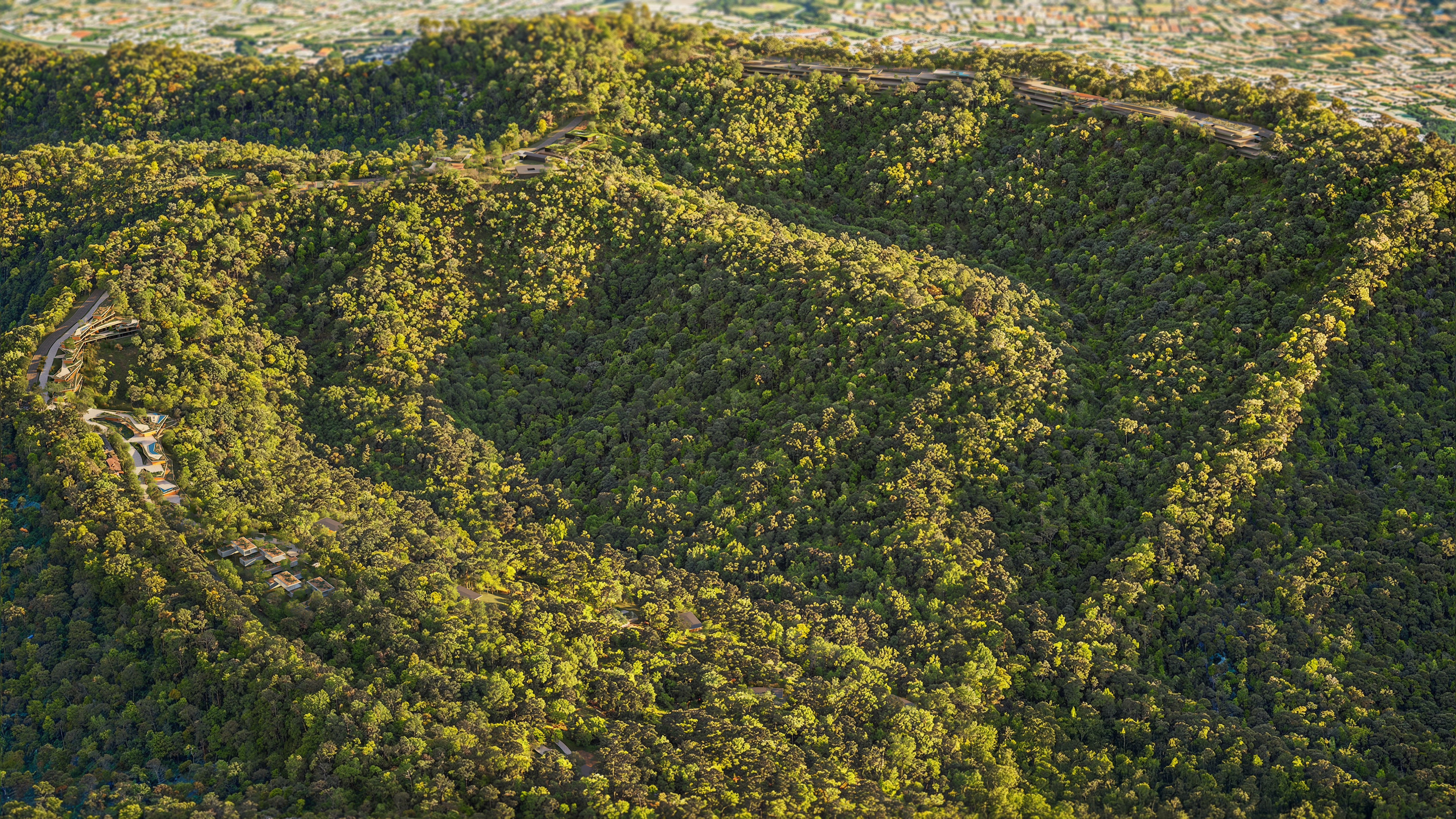
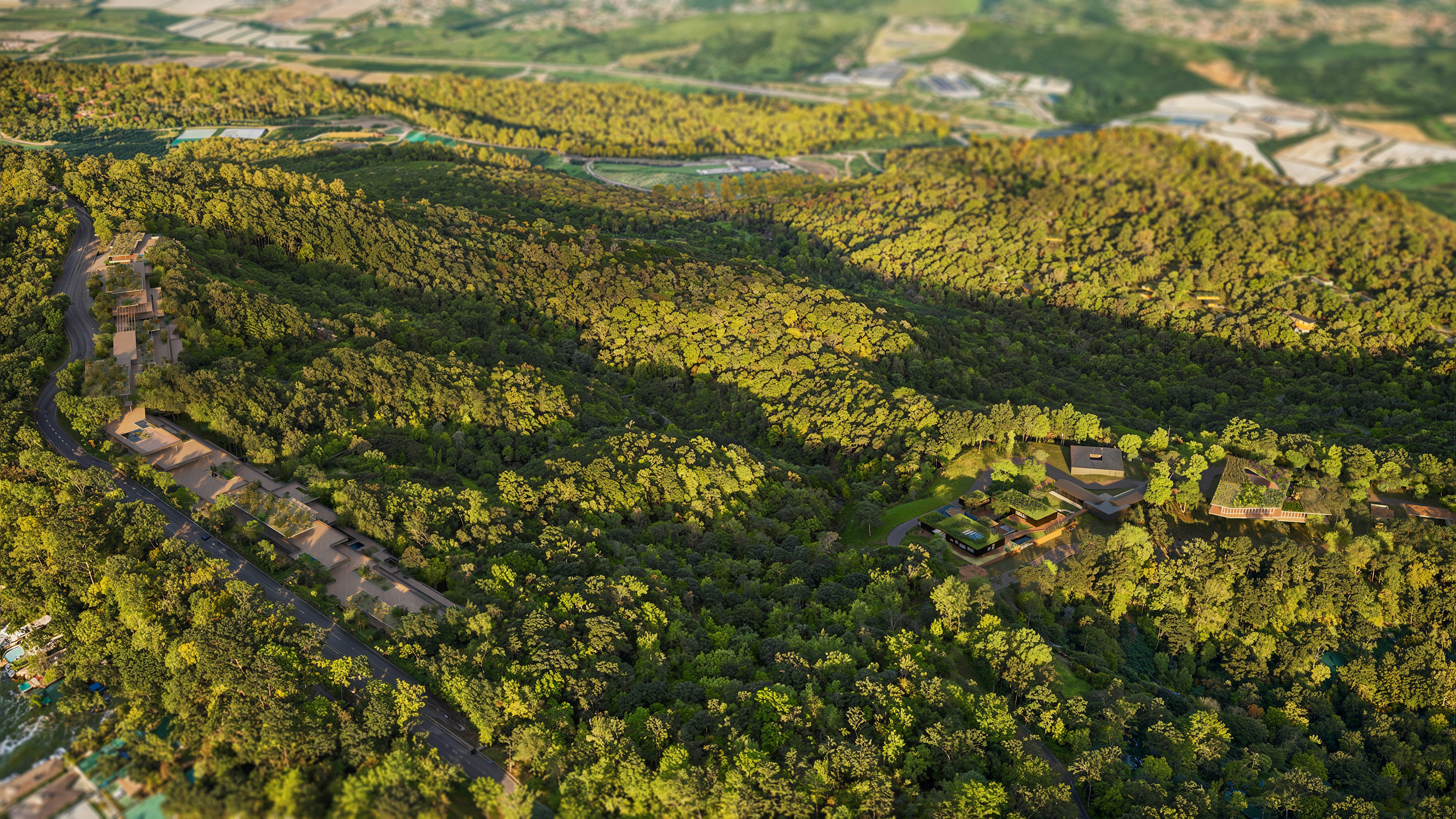
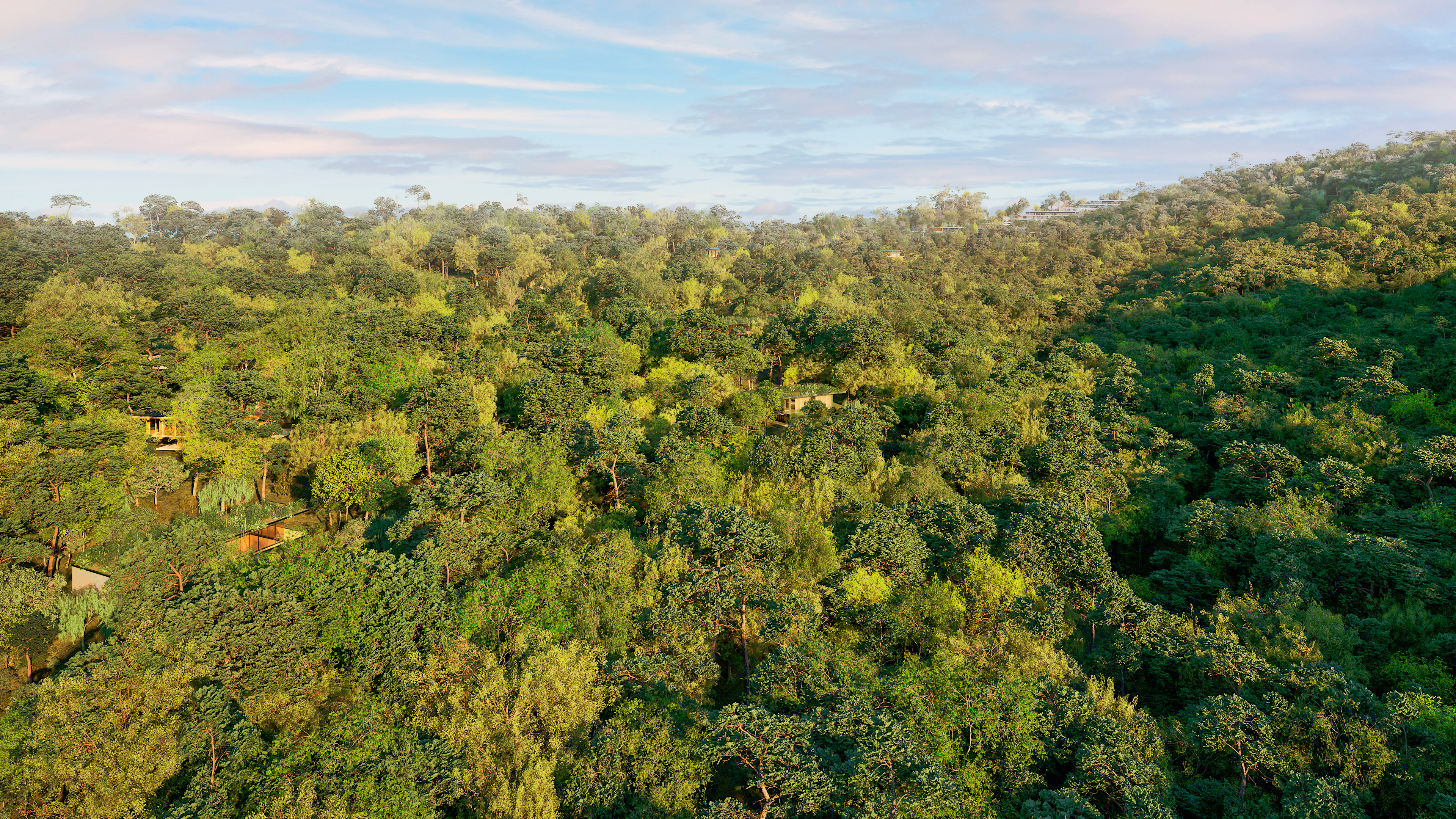
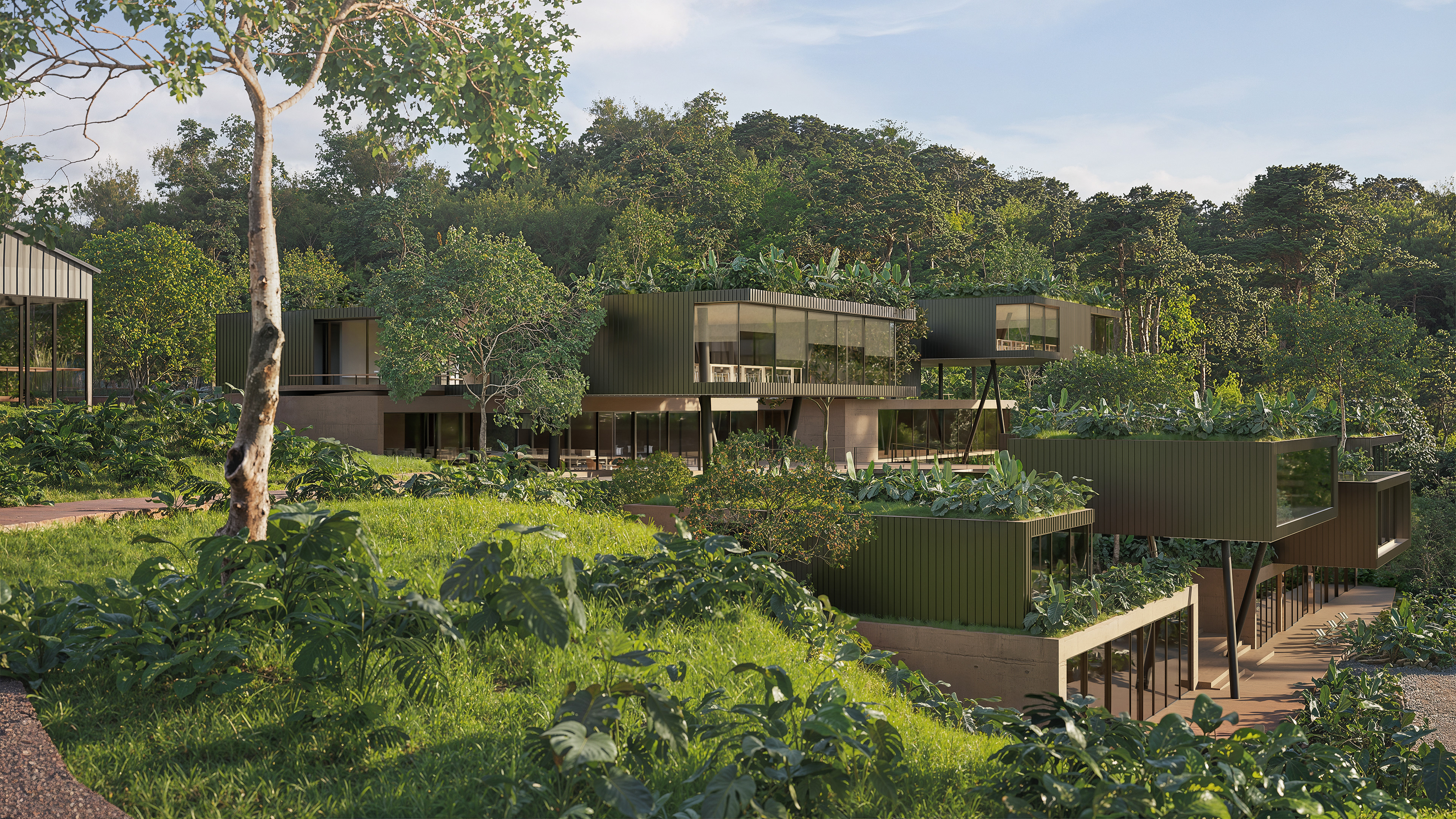
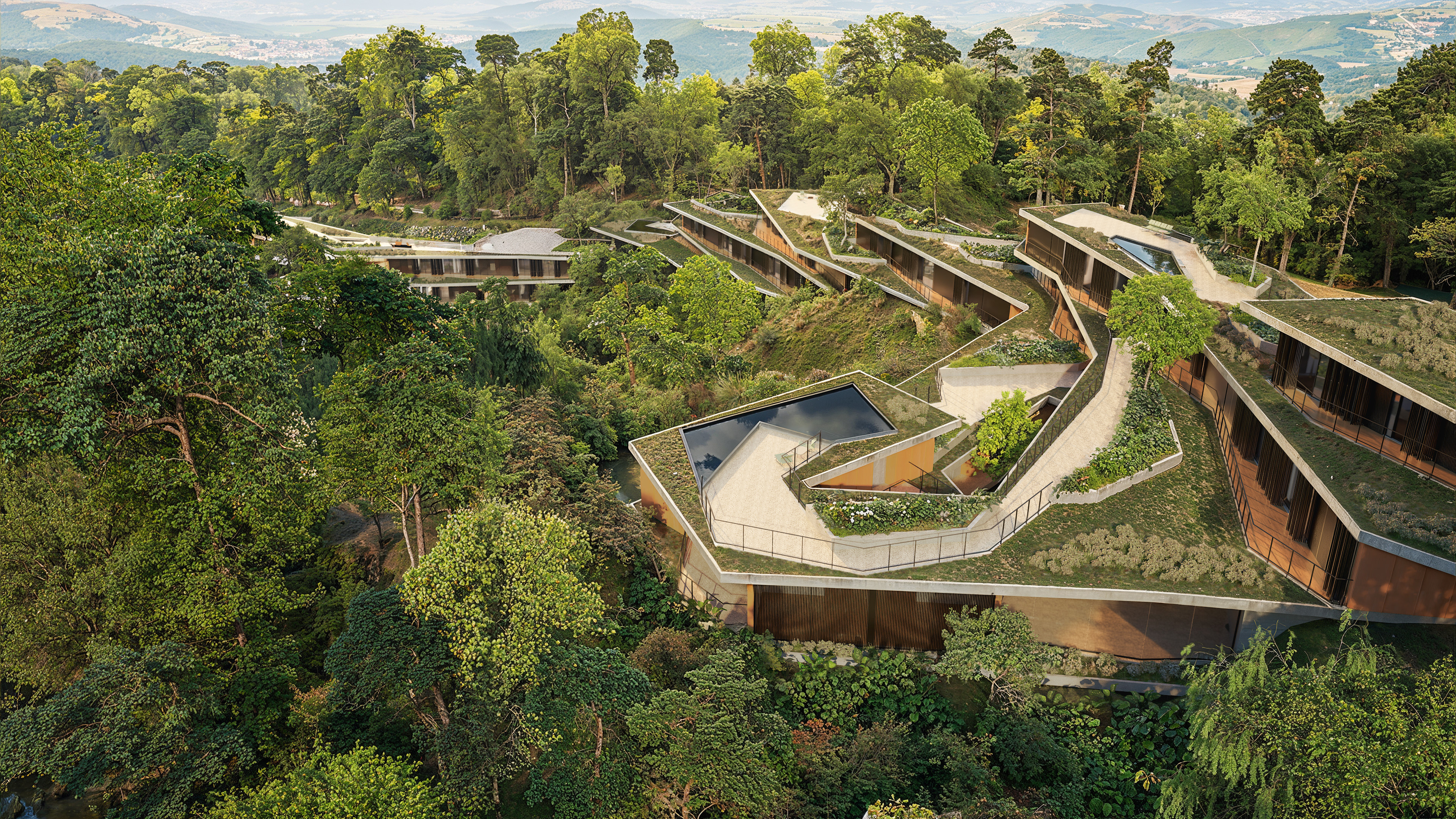
The Itaqui Innovation District is a development that brings together innovation, education, and entrepreneurship with environmental preservation. Unlike a traditional urban district, the project is rooted in the region’s exuberant natural landscape: rivers, forests, and wildlife take center stage, acting as protagonists rather than mere backdrop. Approximately 90% of the total area will be preserved, creating a setting in which the natural environment not only shapes the space but also underpins the ethics of education, research, and business.
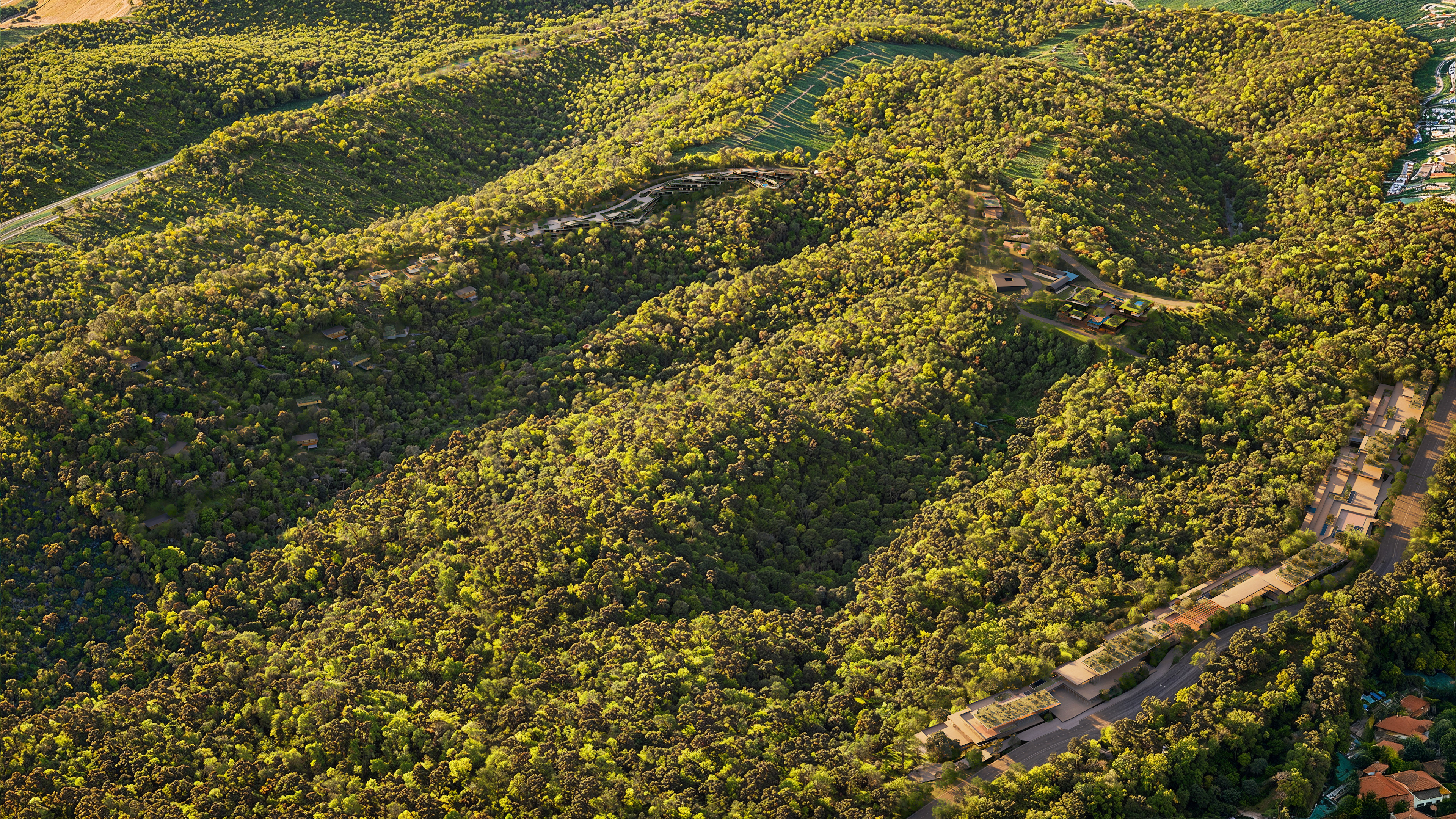
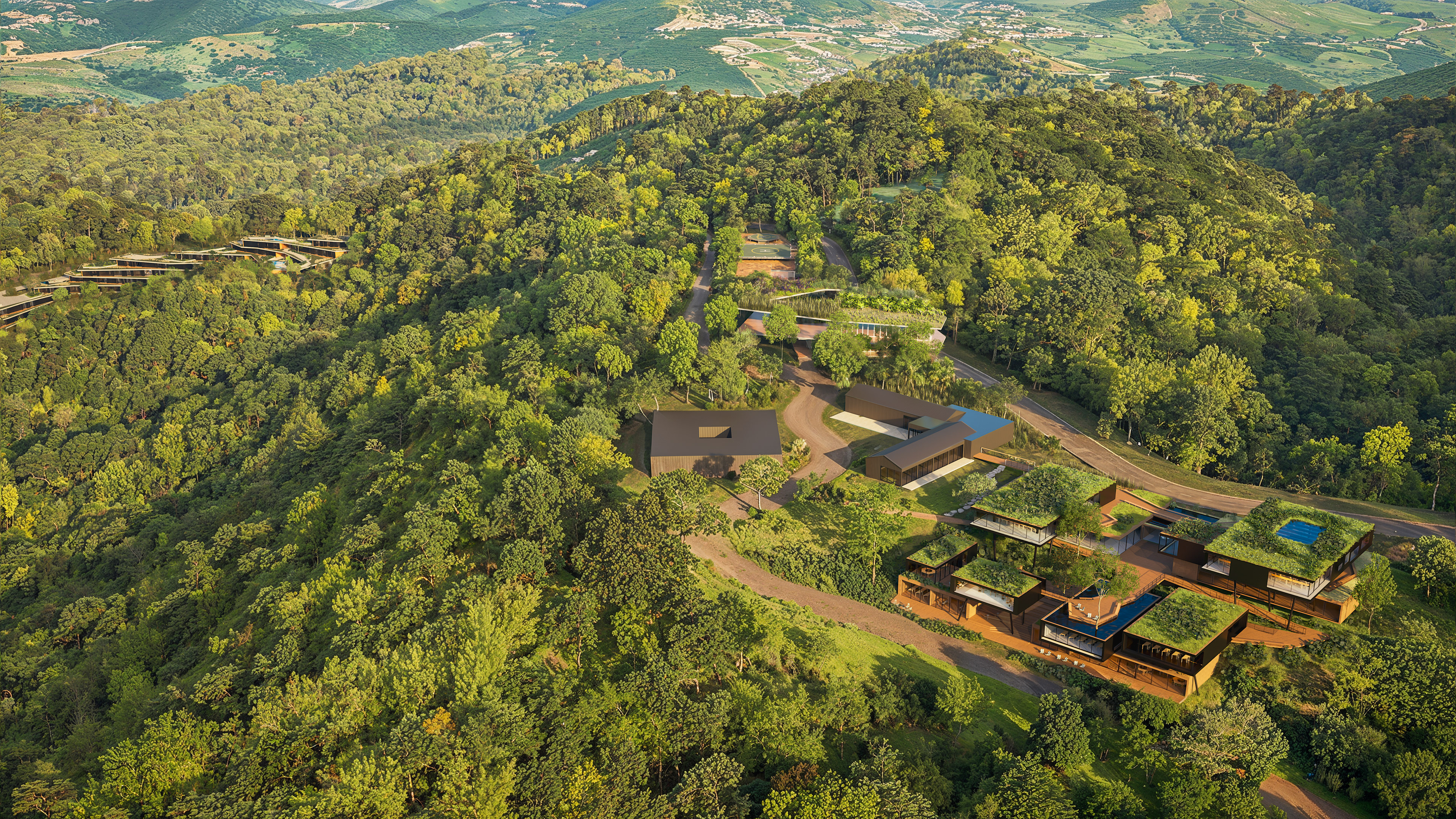
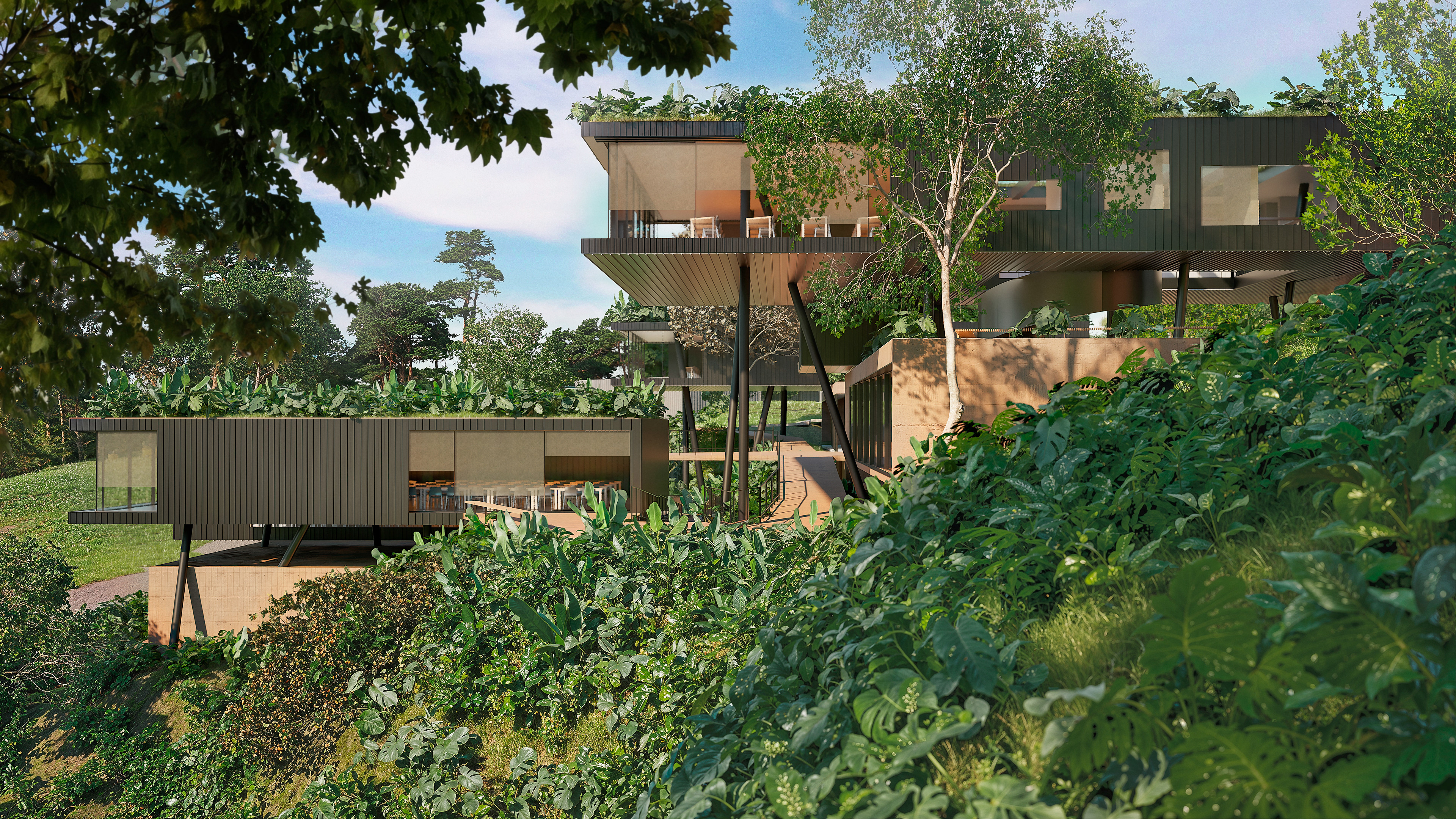
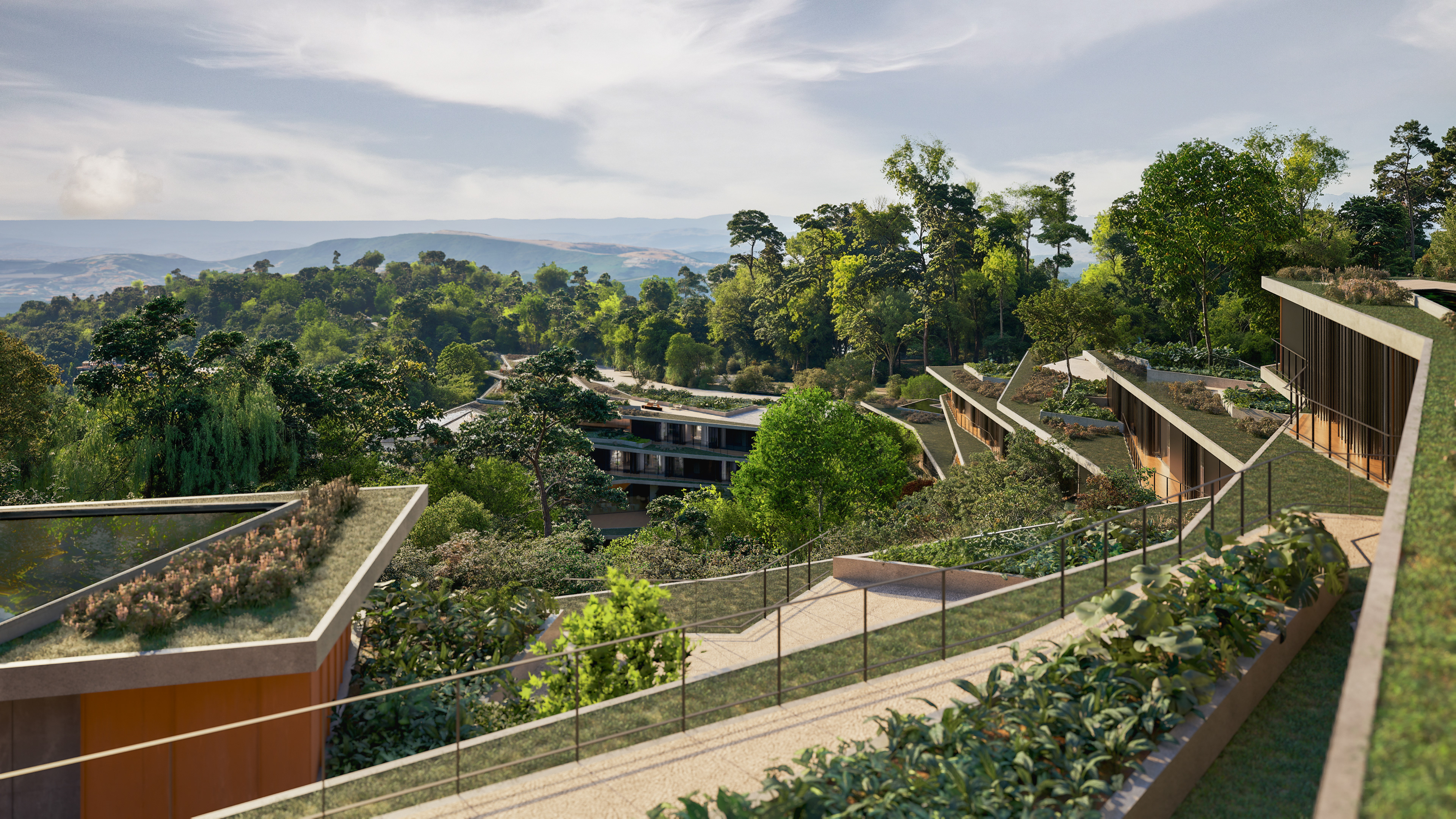
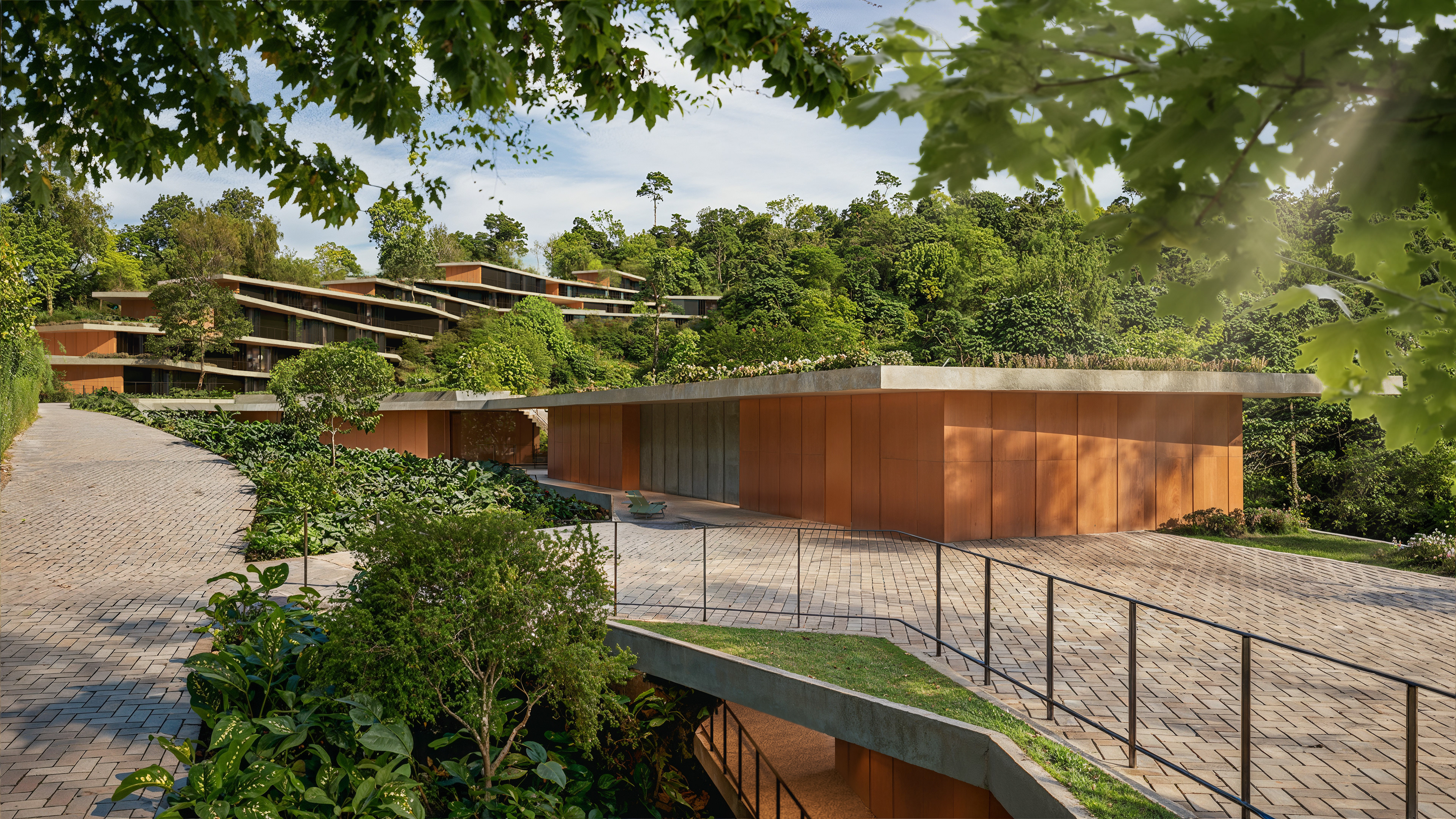
Located along the edges of the site, the architectural ensemble was designed to minimize environmental impact and allow for the regeneration of native vegetation. This strategy ensures integration with the surrounding urban context and functional access to neighboring cities, without compromising the preservation area. Circulation between buildings occurs along external pathways, reducing pressure on internal ecosystems.
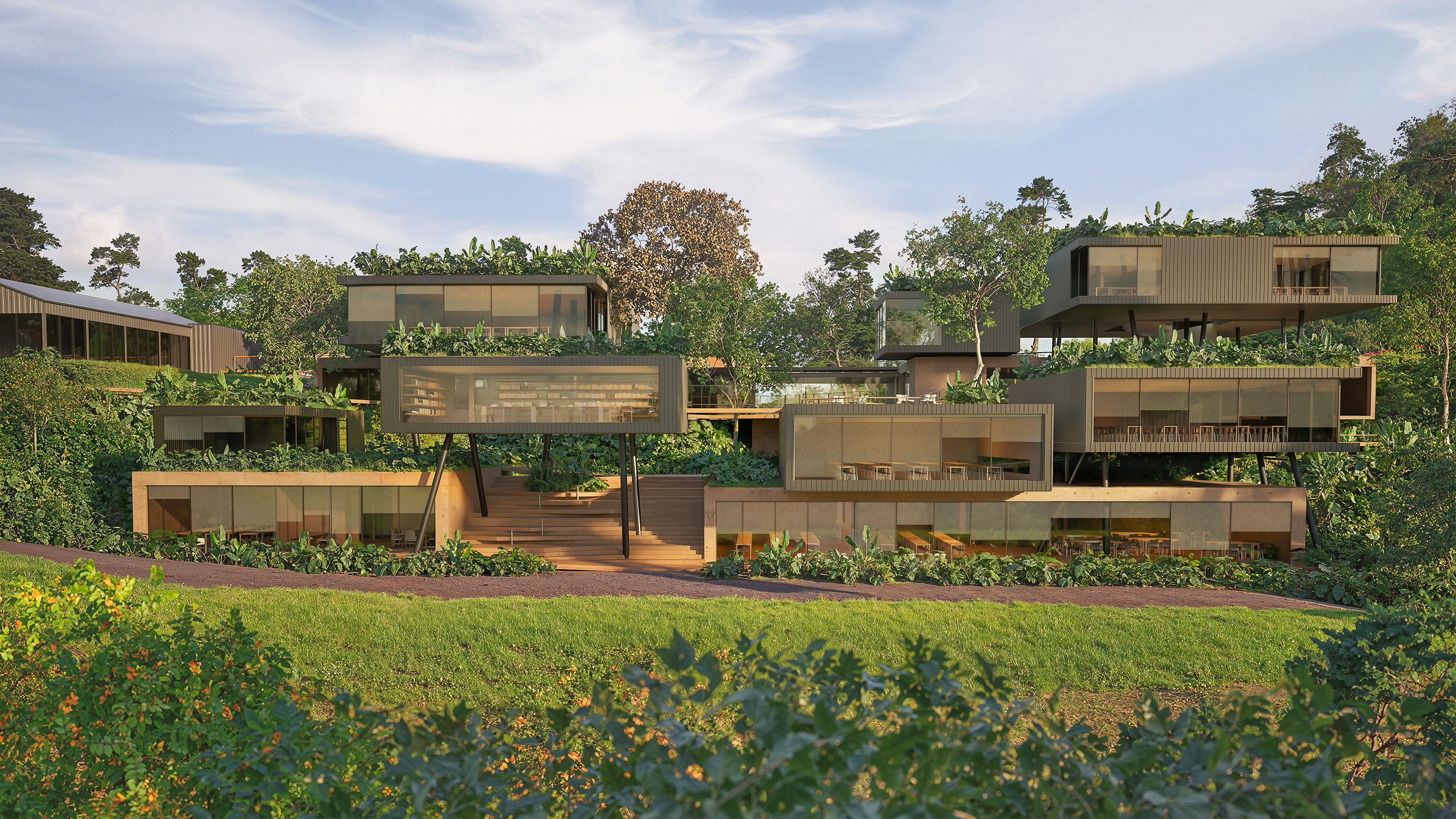
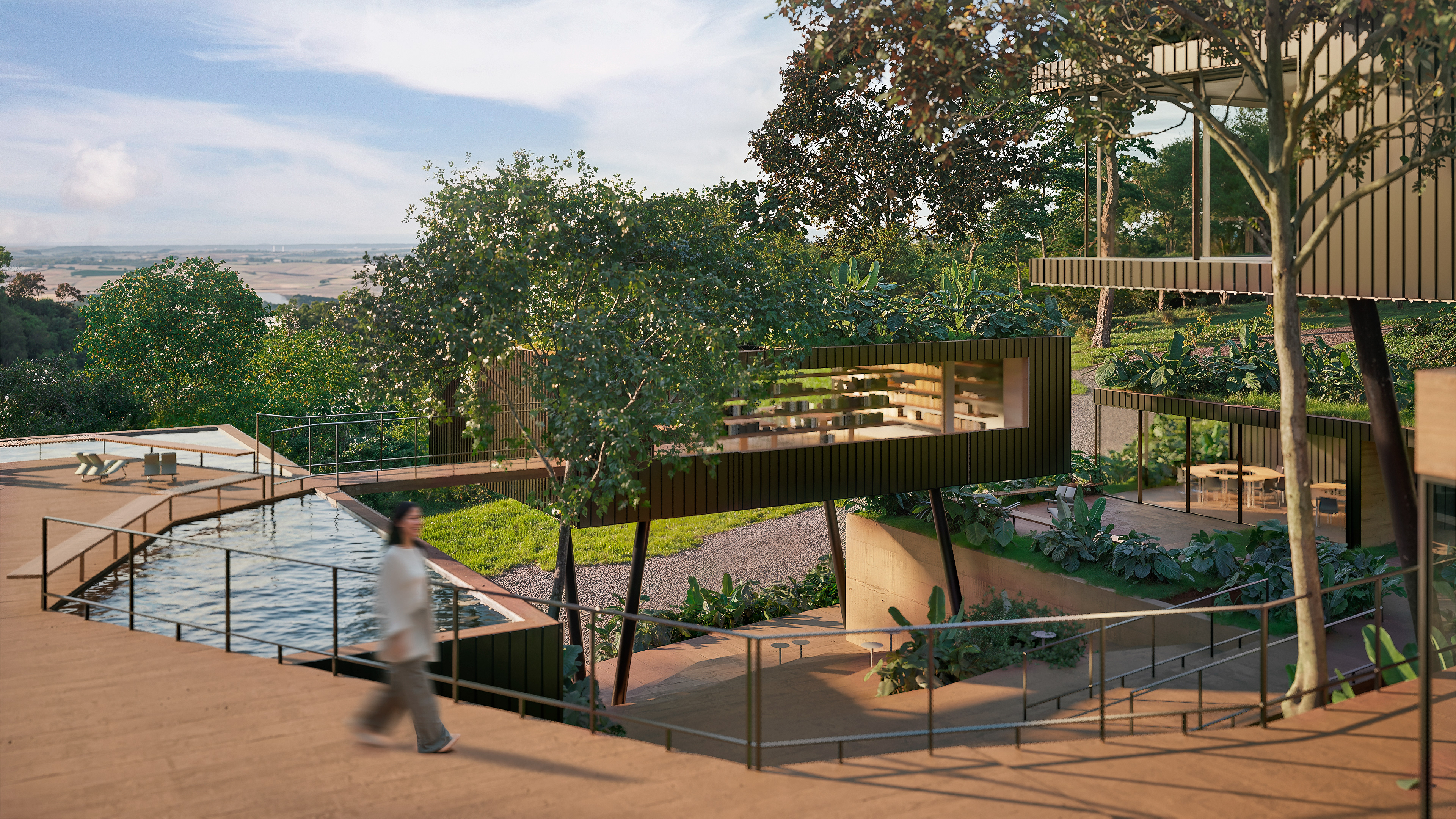
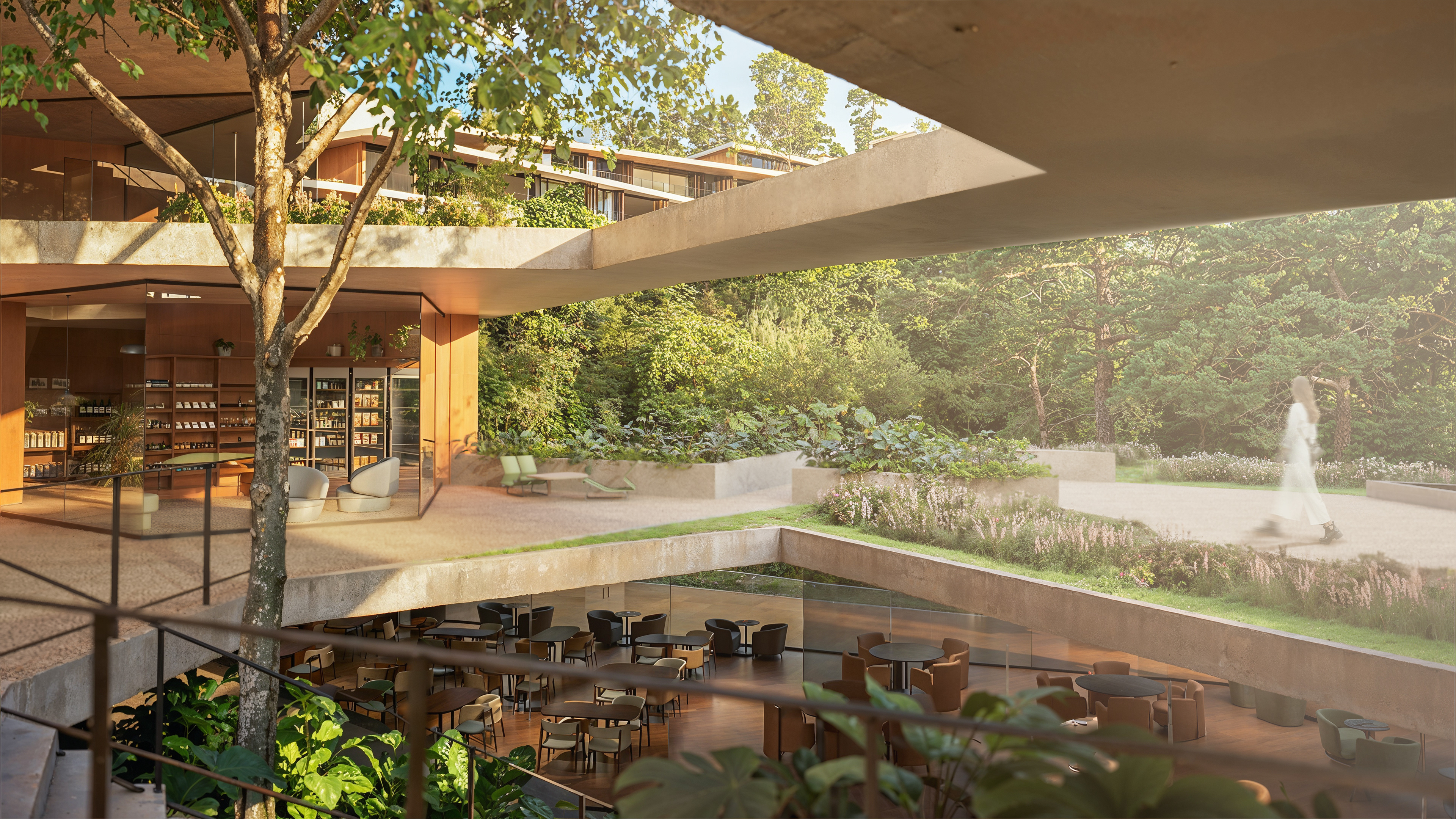
The district’s program is structured around three main hubs: the Academic and Business Hub, focused on higher education, research, and student housing; the Hospitality Hub, featuring spaces for training, accommodation, and social interaction; and the Leadership and Business Hub, dedicated to entrepreneurship, technological innovation, and the incubation of new companies. In addition to these hubs, the project includes shared support facilities such as a library, laboratories, restaurants, and social spaces.
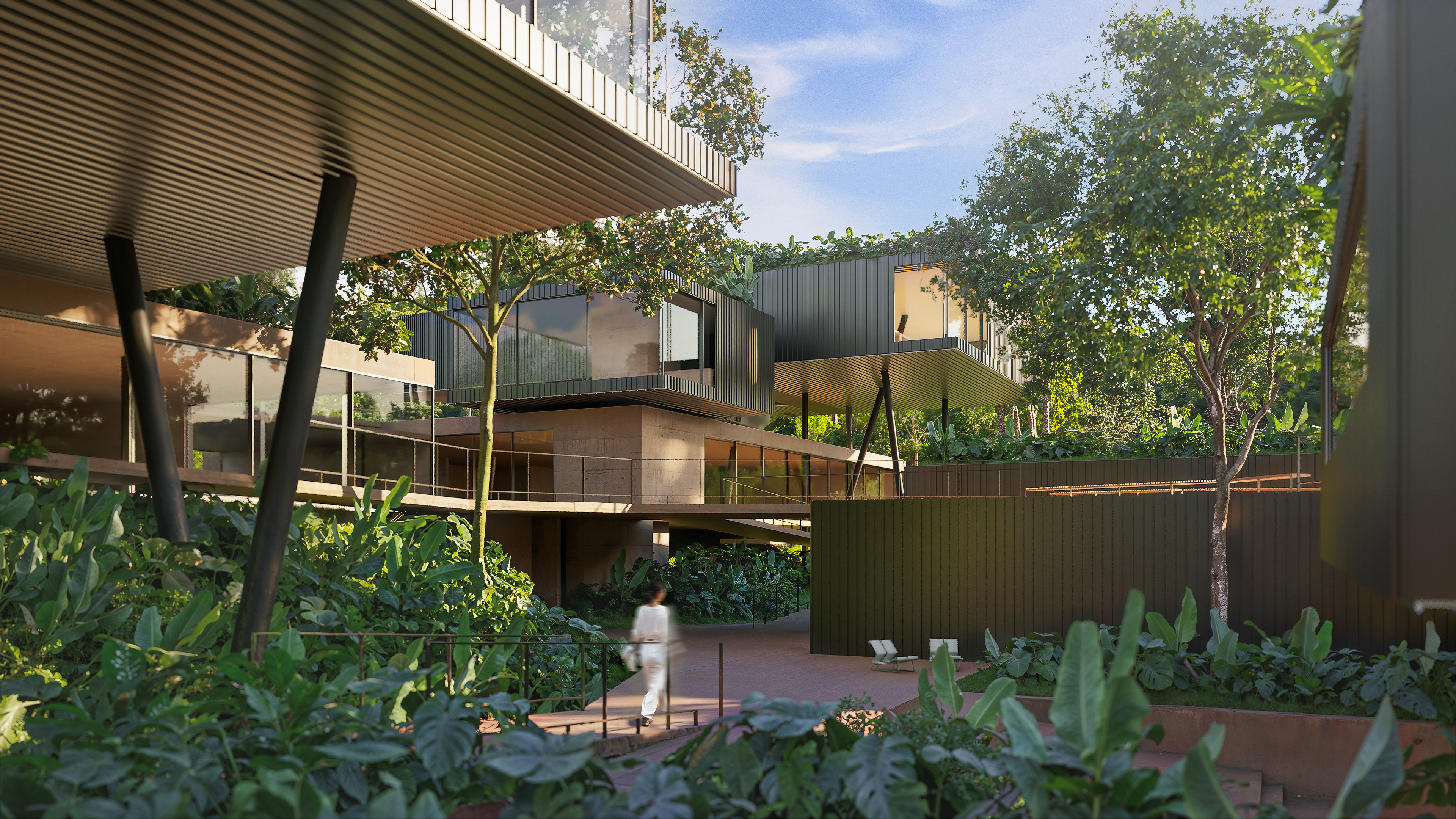
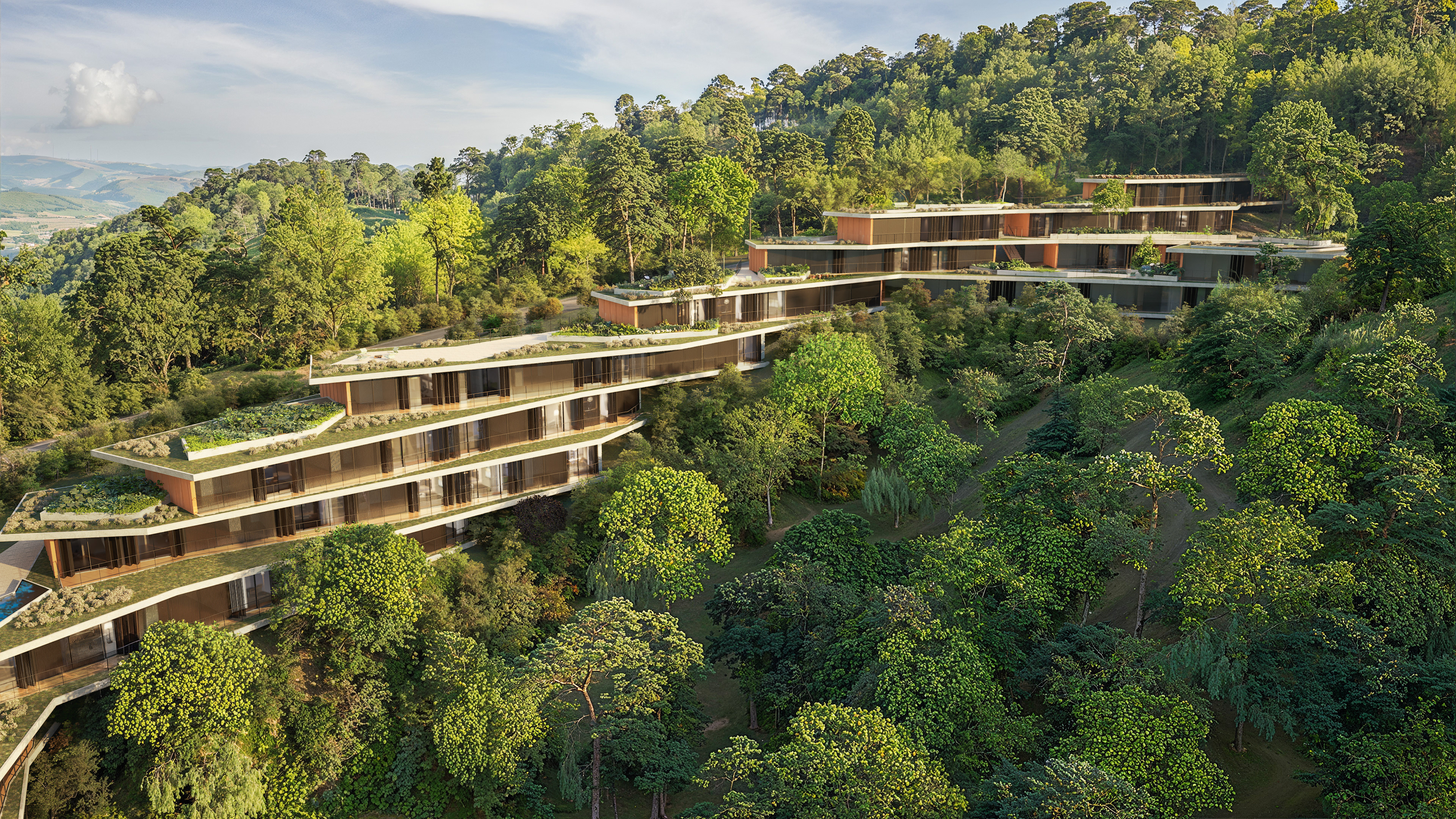
The buildings were designed in harmony with the site’s topography, adopting sustainable solutions throughout. The volumes are arranged horizontally, making use of existing clearings and avoiding complex vertical constructions. Terraces, overhangs, and open areas ensure thermal comfort, strong integration with the landscape, and spaces for social interaction. The residential units, strategically distributed, maintain a close relationship with the surrounding forest, creating an immersive experience for students, researchers, and entrepreneurs.
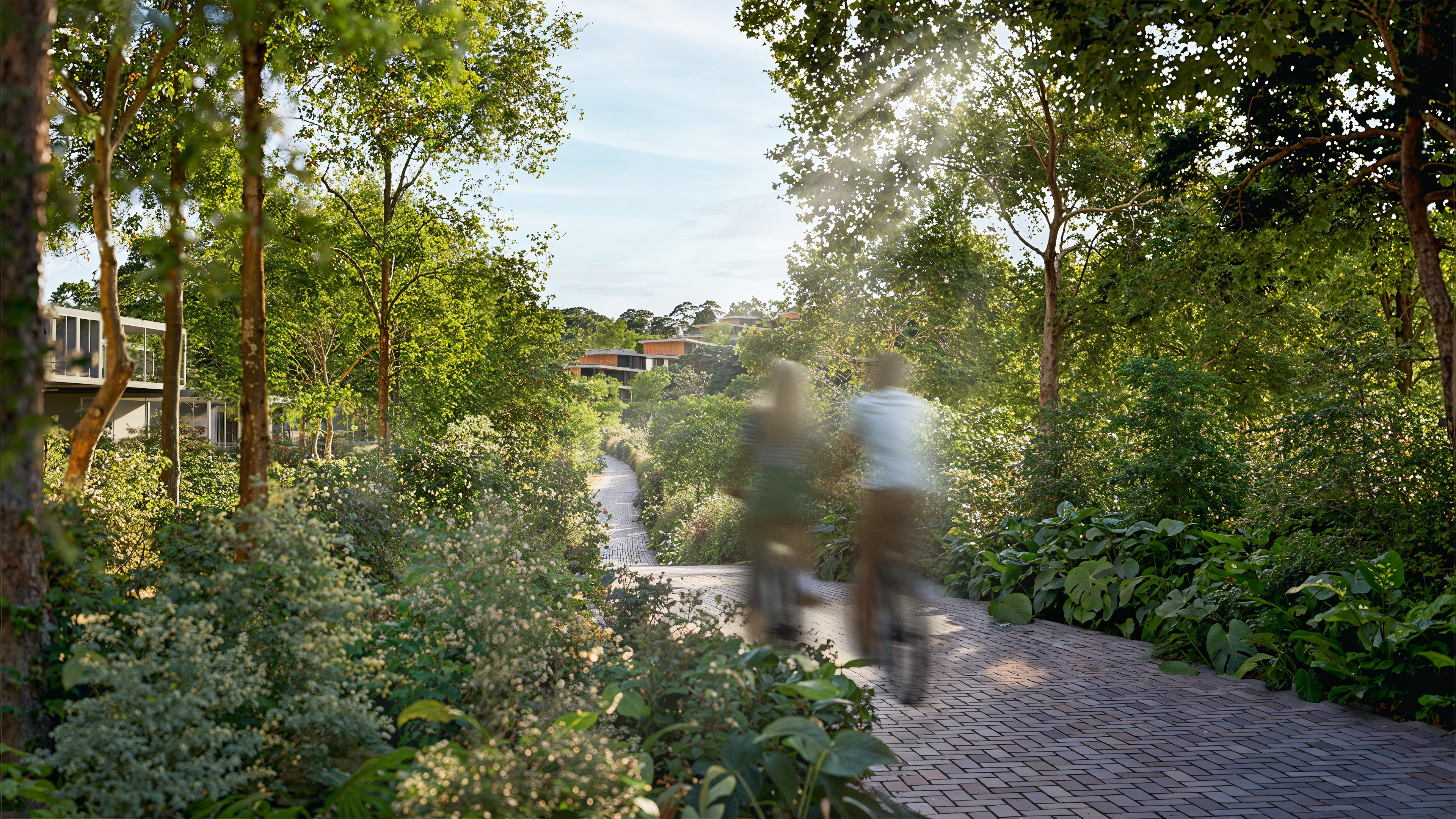
Mobility between buildings prioritizes sustainable, low-impact modes of transport, including bicycle paths, shaded walkways, and routes adapted to the natural slopes of the terrain. This infrastructure ensures accessibility, safety, and efficiency in daily movement, while reducing reliance on private vehicles.
More than a physical space, Itaqui is envisioned as a model for the future. The masterplan reflects an ethical commitment to social inclusion and environmental responsibility, fostering an environment where innovation, education, and sustainability move forward together. The district emerges as a hub capable of generating knowledge, leadership, and solutions to contemporary challenges, planting the seeds for a more integrated world between nature, society, and technology.