
aroeira
HOUSE
ITUPEVA - SP, BRAZIL
Project specifications
Site area - 3.300m²
Building area - 1.025m²
Project beginning - 2020
Construction completion - 2024
Building area - 1.025m²
Project beginning - 2020
Construction completion - 2024
Team
Authors - Fernando Forte, Lourenço Gimenes, Rodrigo Marcondes Ferraz
Managers - Desyree Niedo, Gabriel Mota, Juliana Cadó, Sonia Gouveia
Coordinators - Geronimo Palarino, Iacy Gottschalk, João Baptistella
Contributors - Bárbara Dolabella, Bruna Comin, Bruno Suman, Gabriel Baptista, Giulia Petiti, José Carlos Navarro, Julia Jobim, Karina Nakaura, Lais Xavier, Leandro Leão, Victor Lucena
Interns - Ana Paula Sapia, Mariana Sarto, Michelle Vasques
Photographer - Fran Parente
Constructor - Yellowbrick
Constructor - Yellowbrick
Landscape designer - Rodrigo Oliveira
Lighting designer - Foco LD
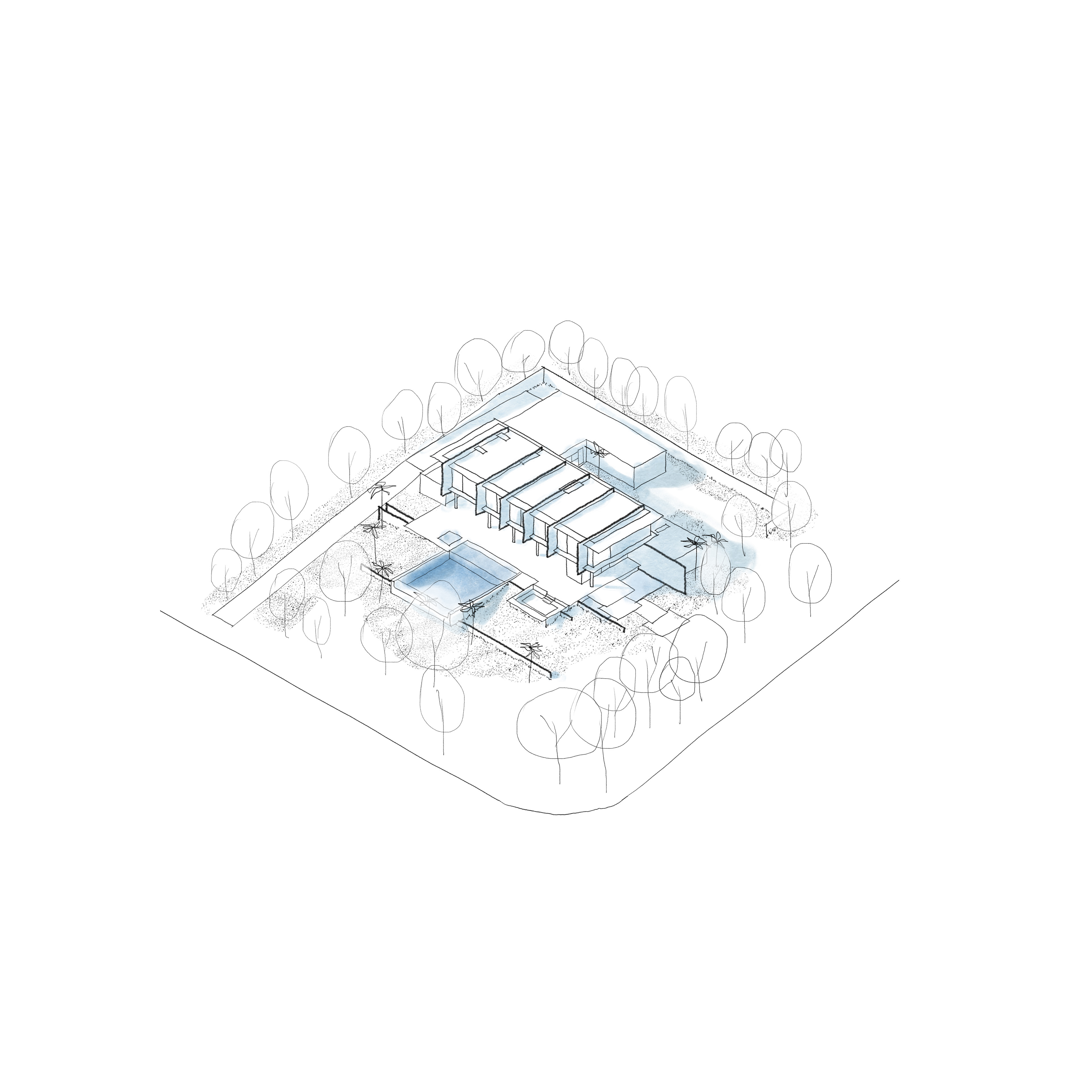
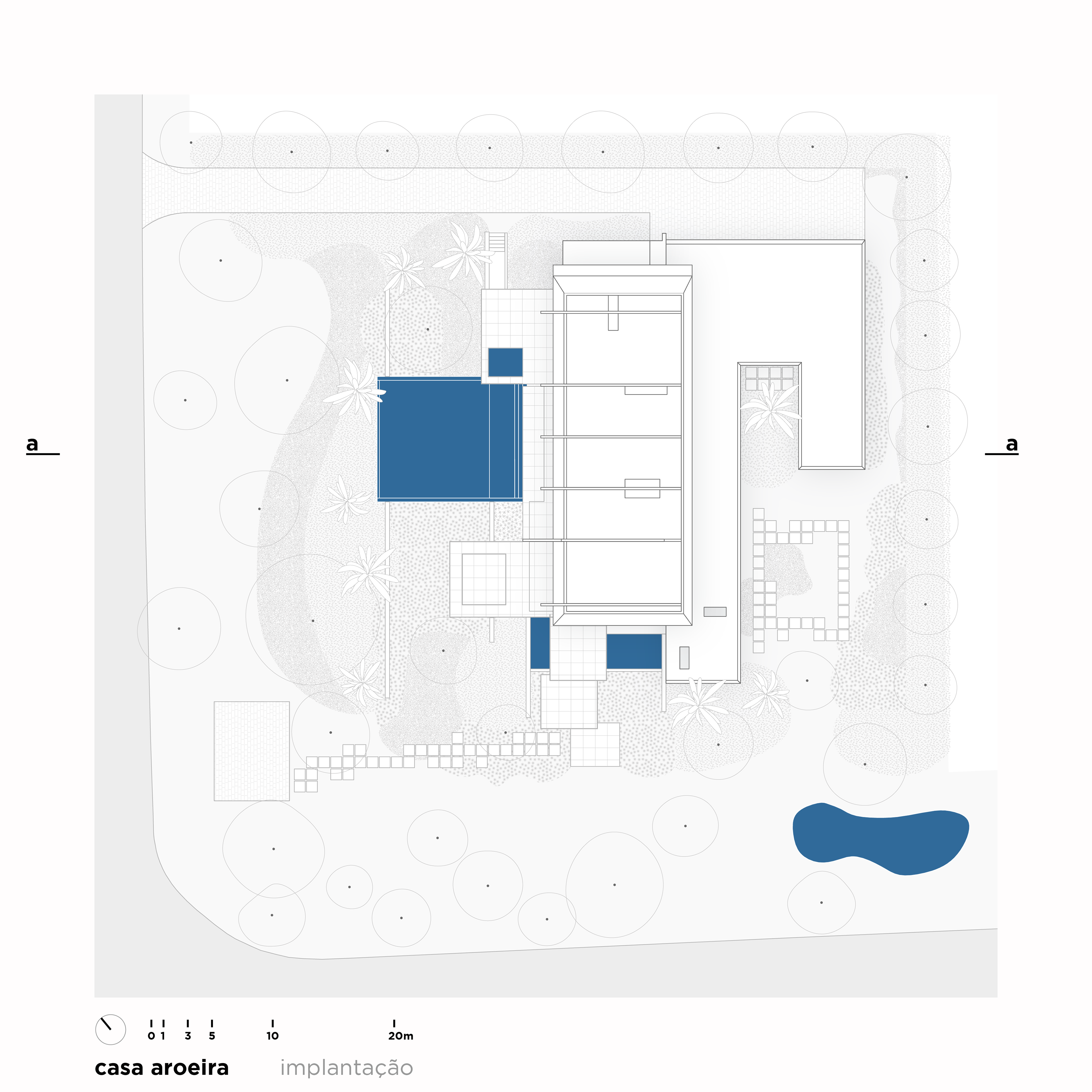
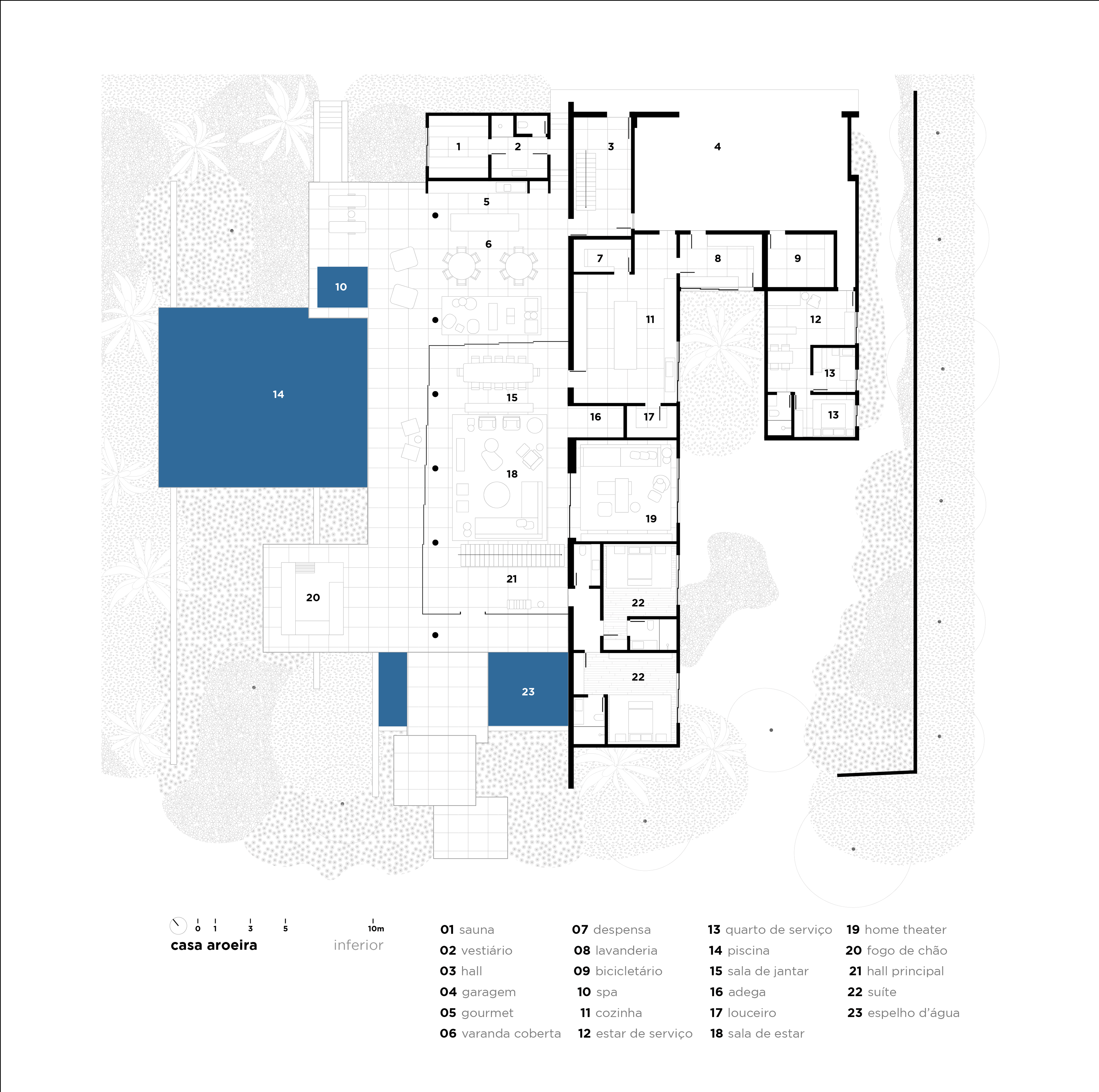
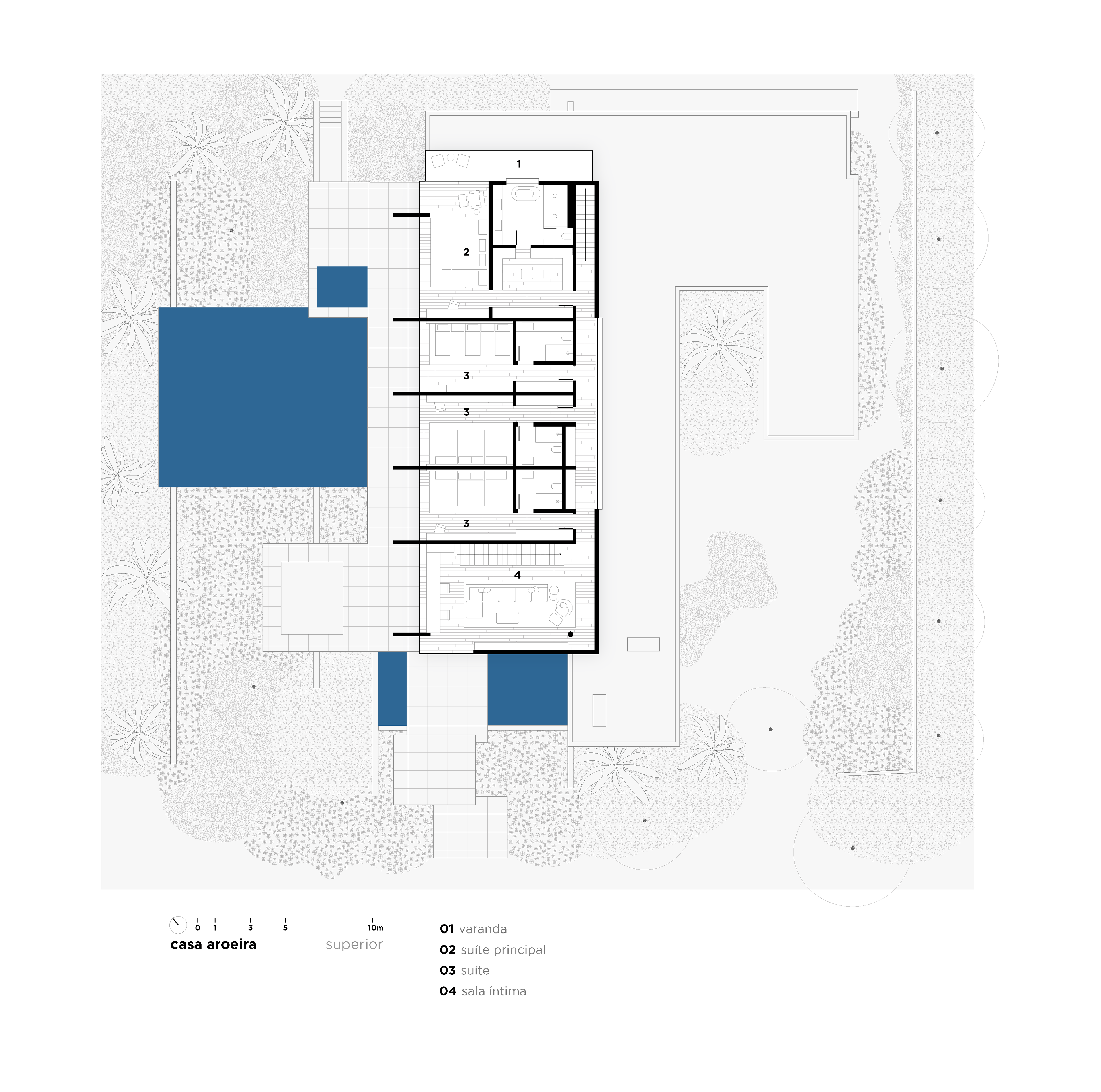
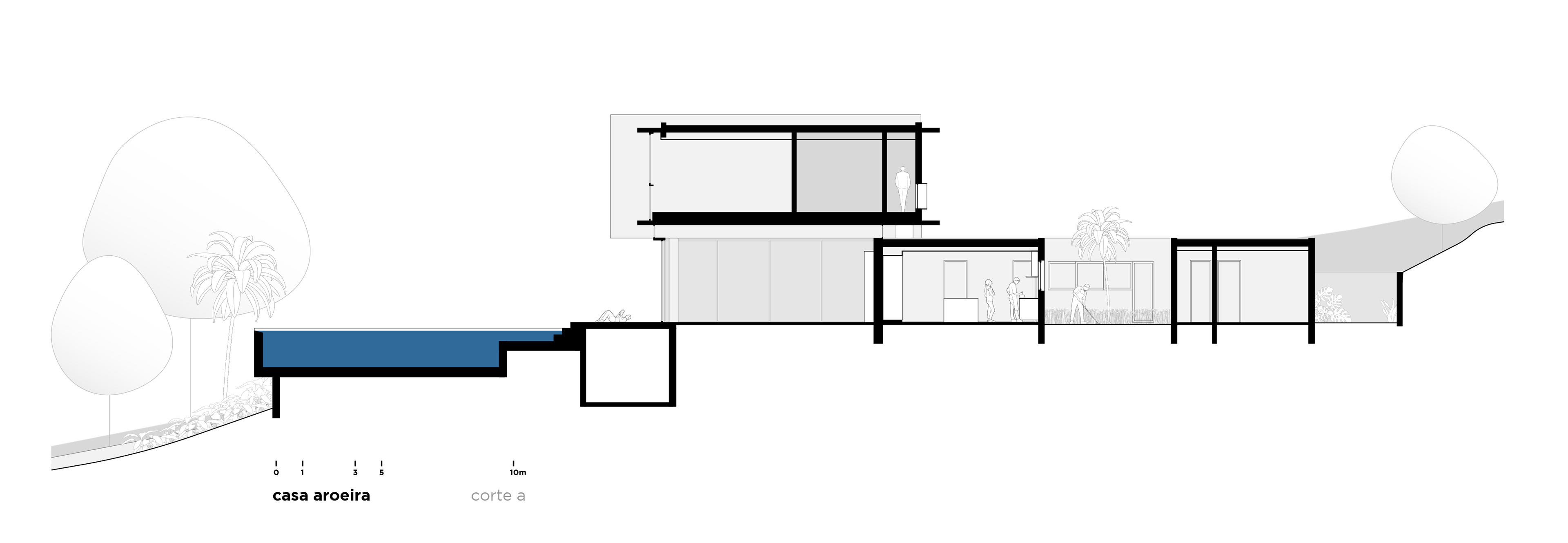
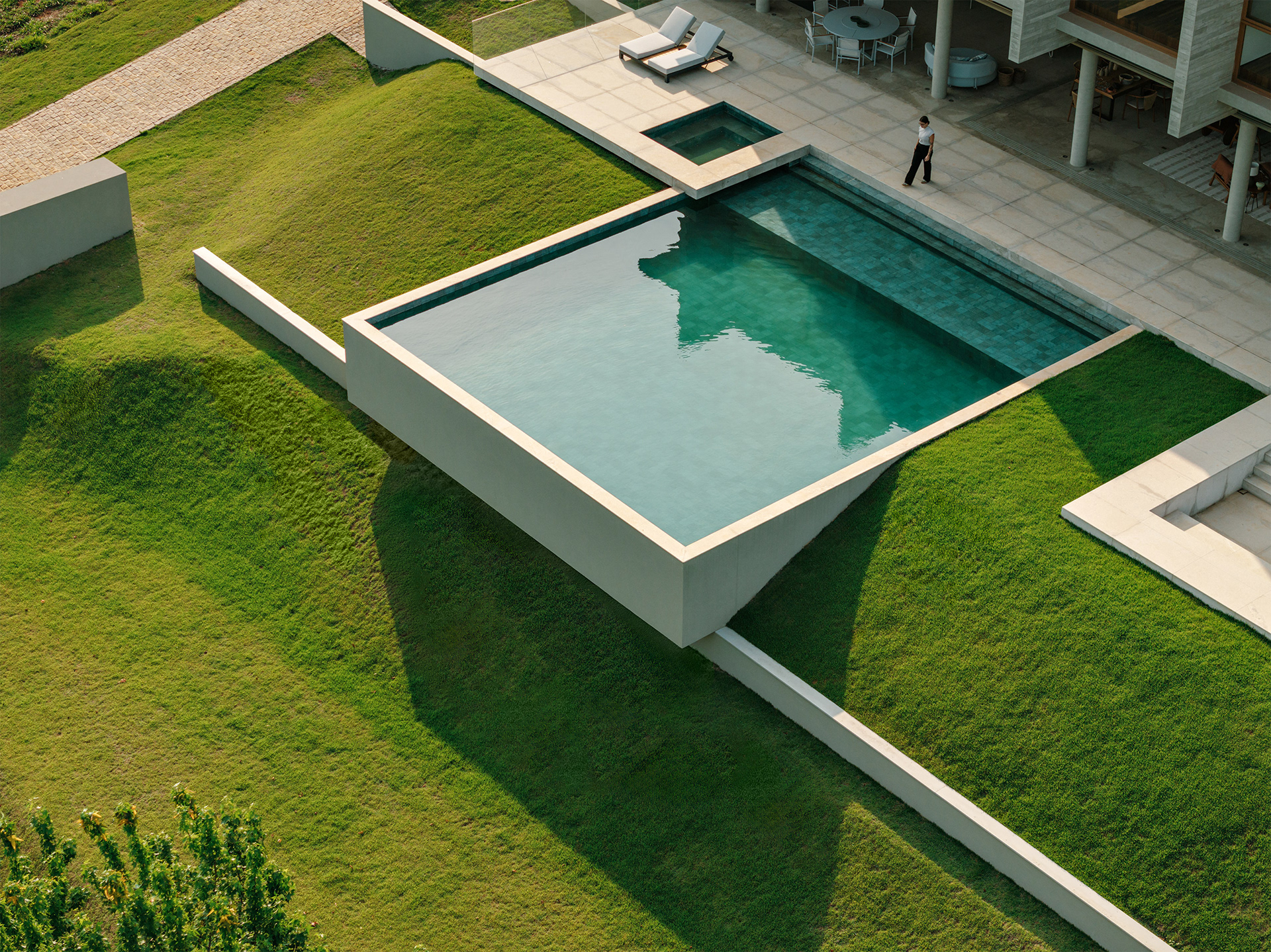
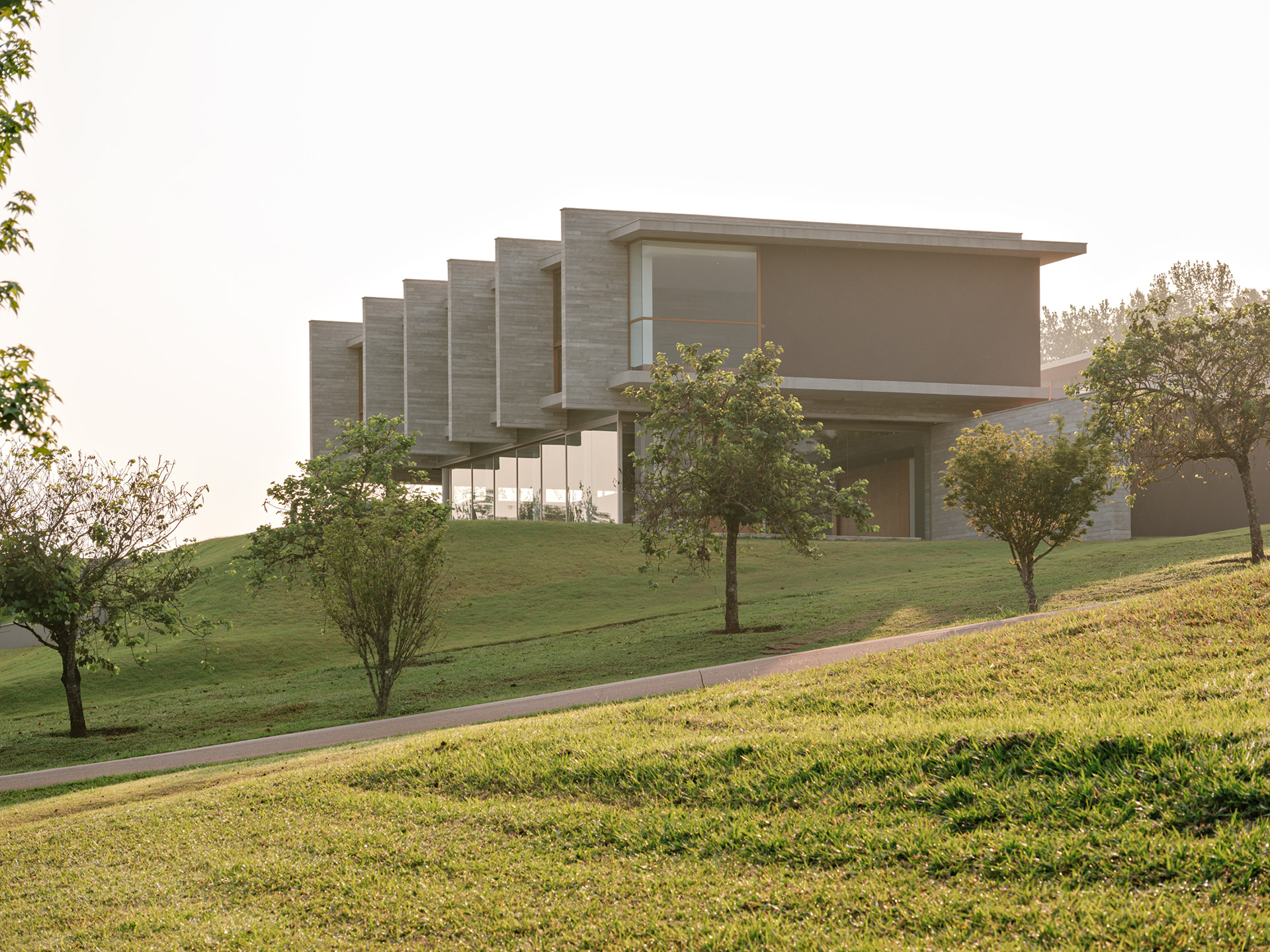
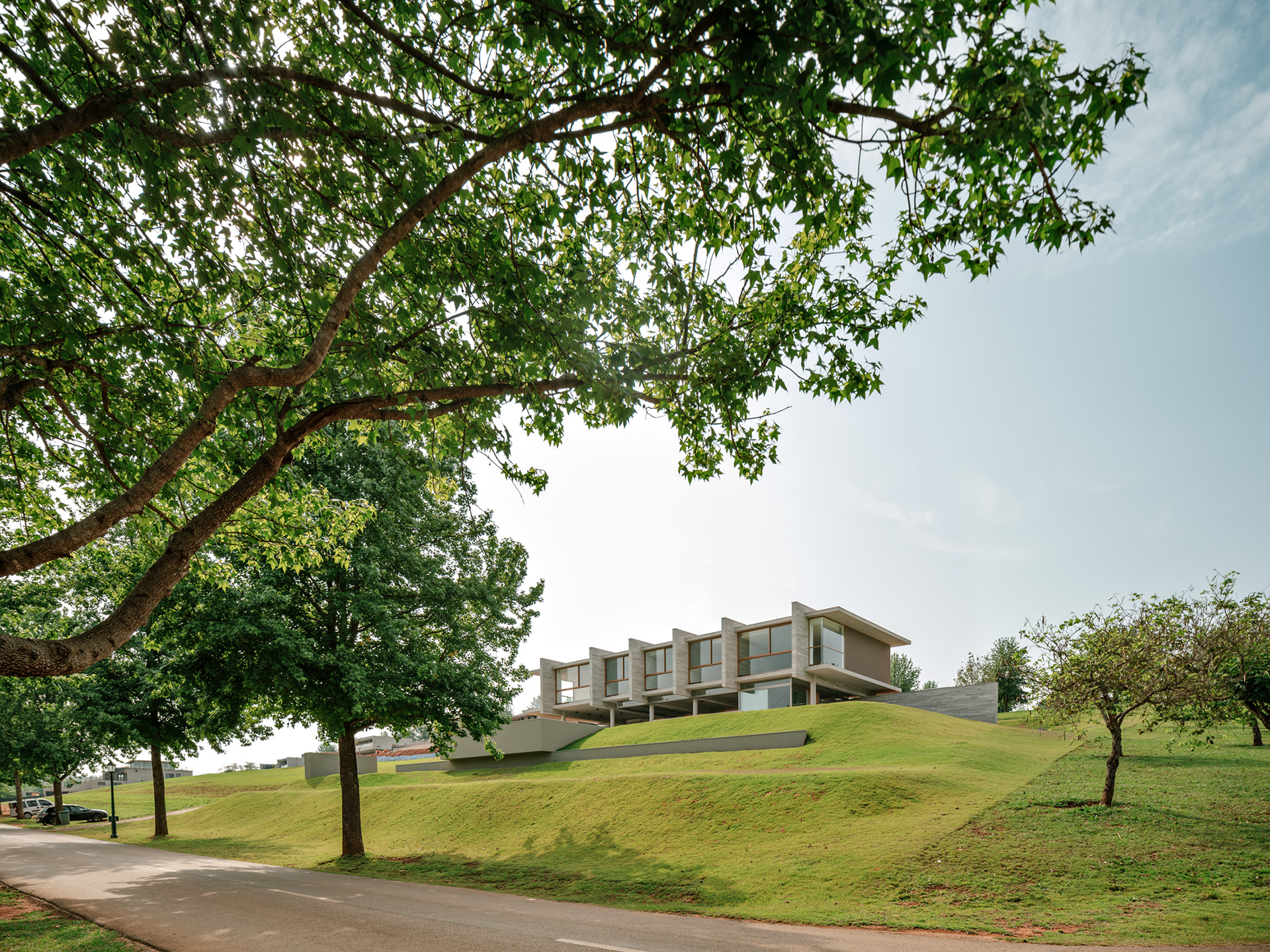
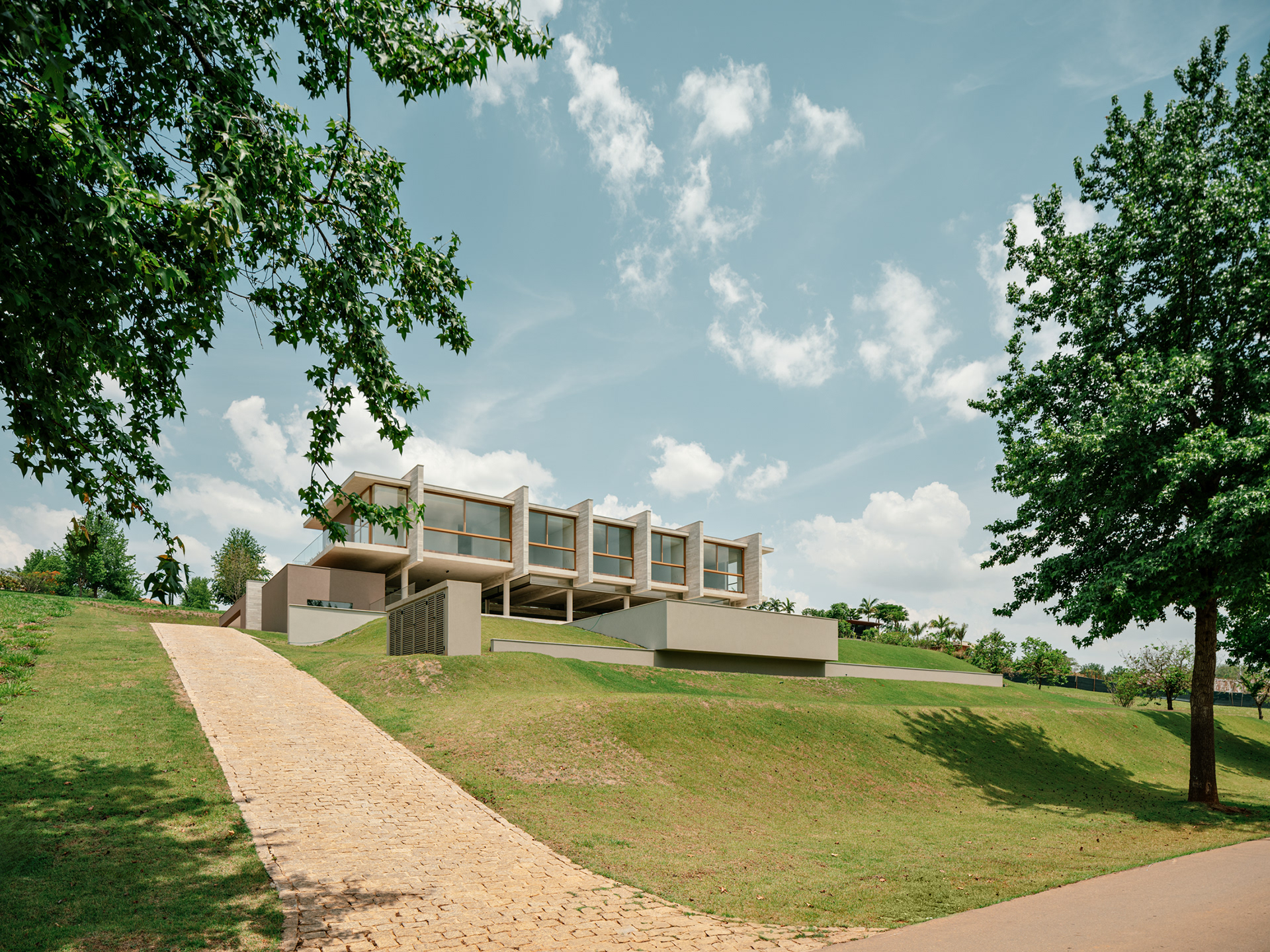
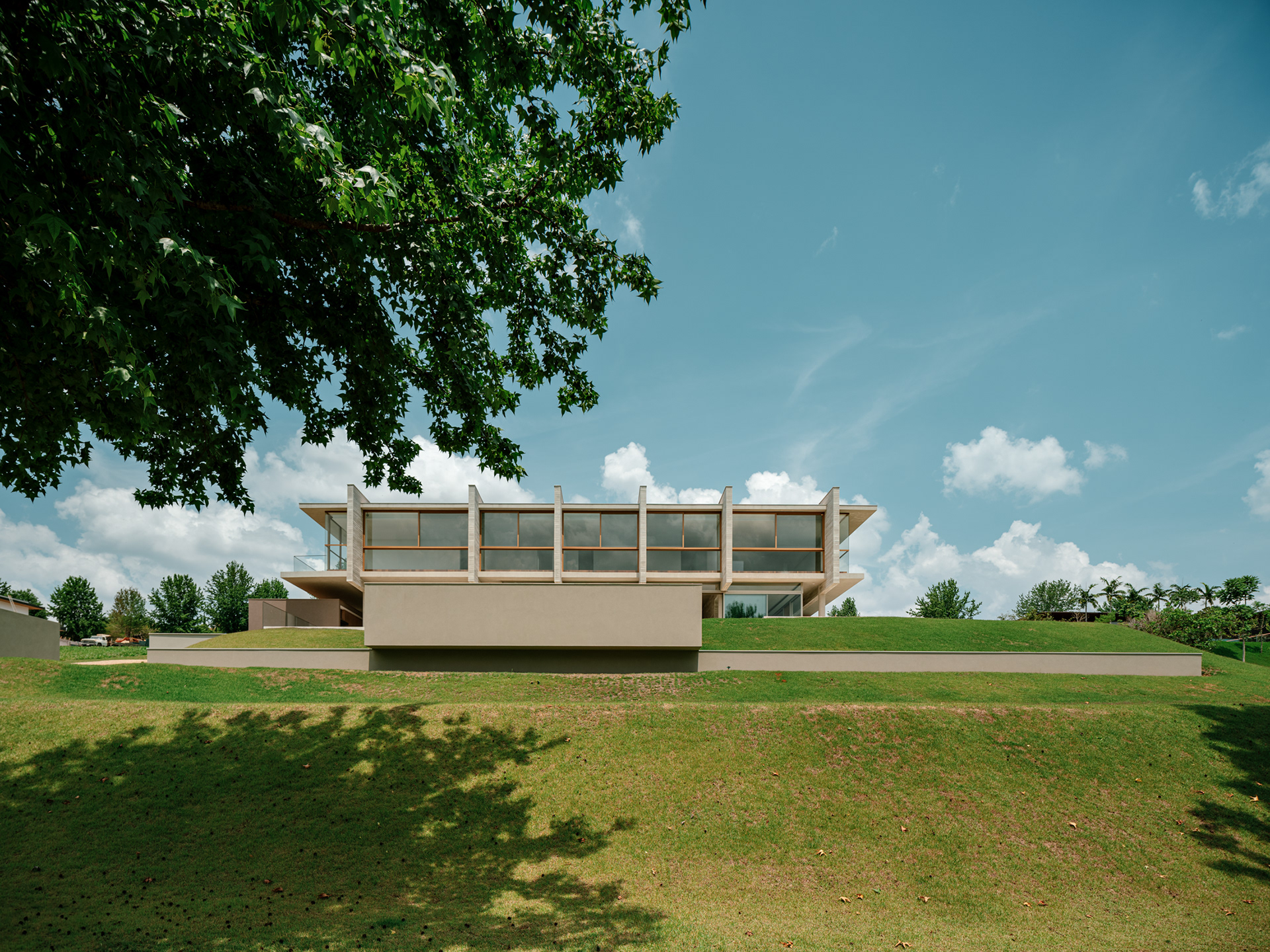
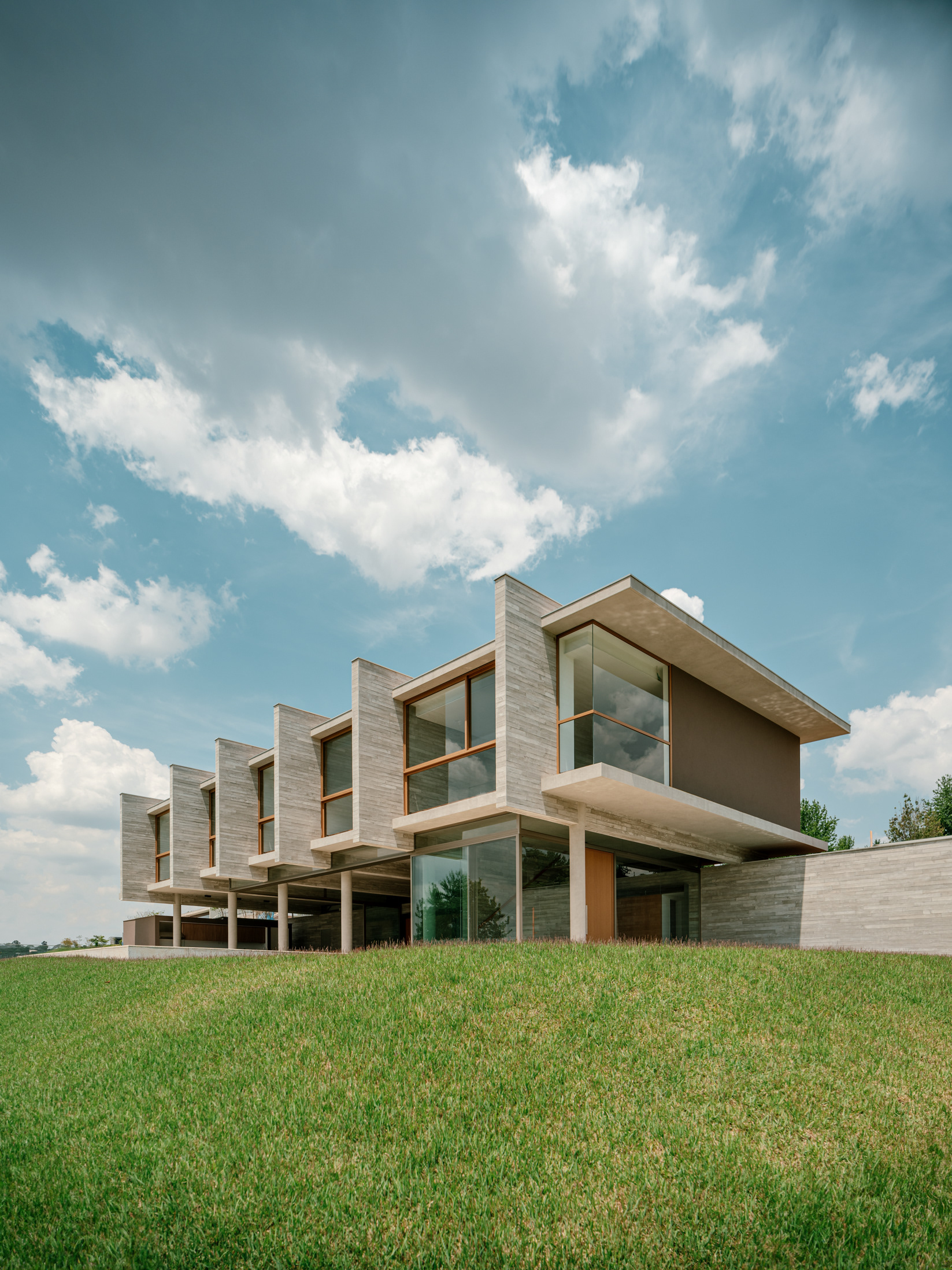
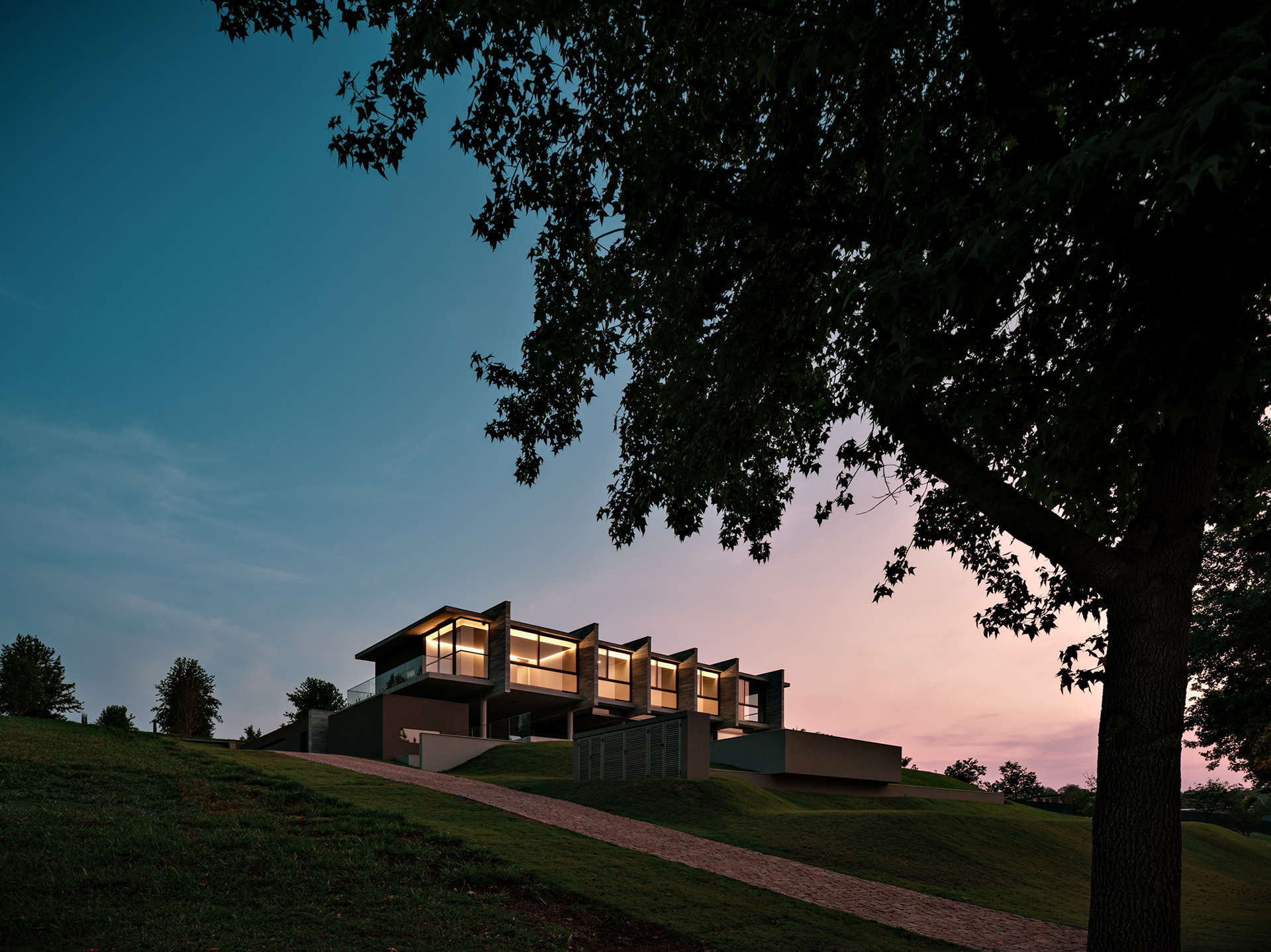
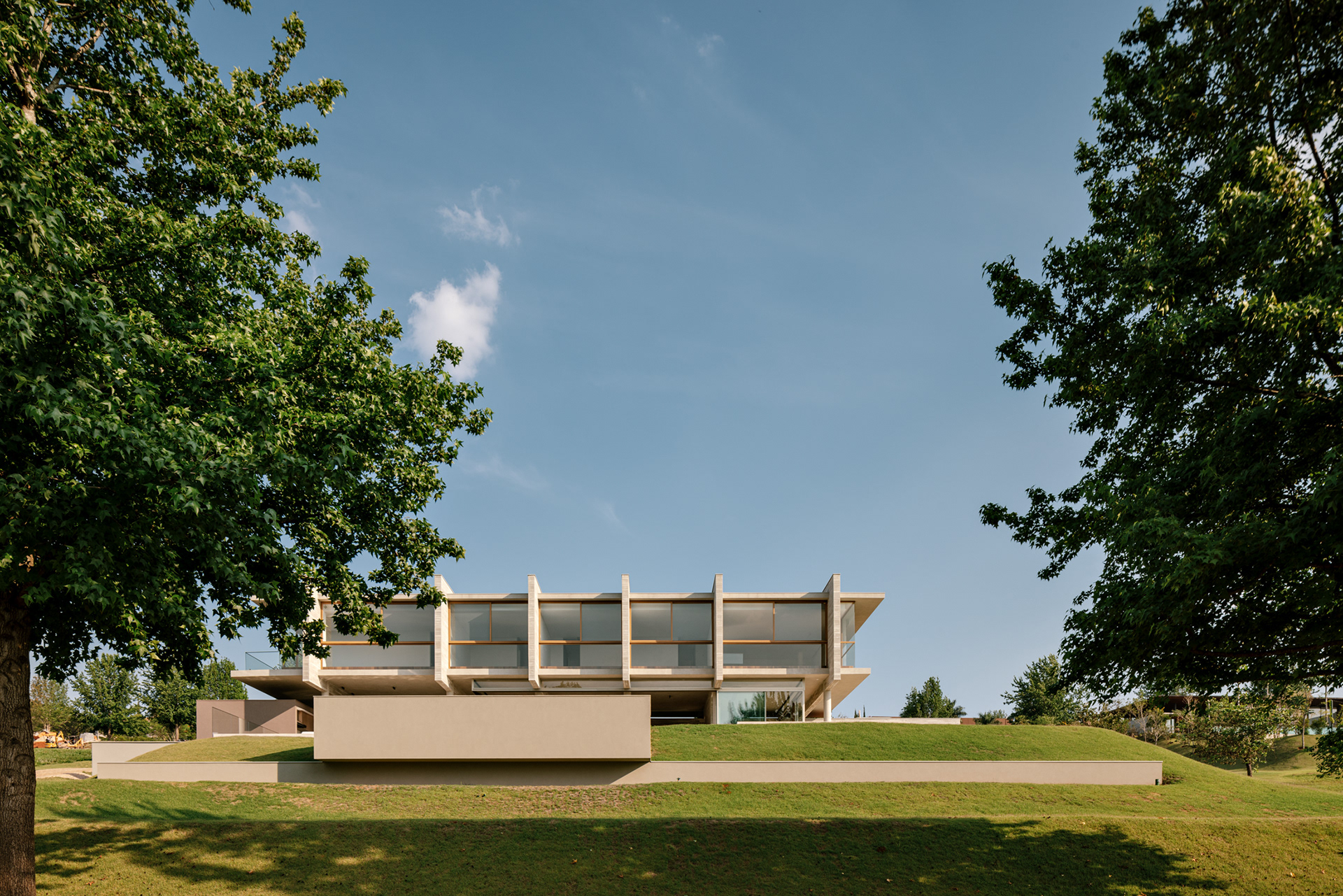
The design for the Aroeira House stems from an observation of the characteristics of the sloped plot, located on the corner of a block within a gated community in the interior of São Paulo. The house is positioned to take full advantage of the stunning views and to ensure the best placement of the residence on the site. Due to the steep slope of the land, the house sits at the upper portion of the lot, offering the best views and using the corner location to provide level pedestrian access via the side street, while vehicles access the garage from the lower street.
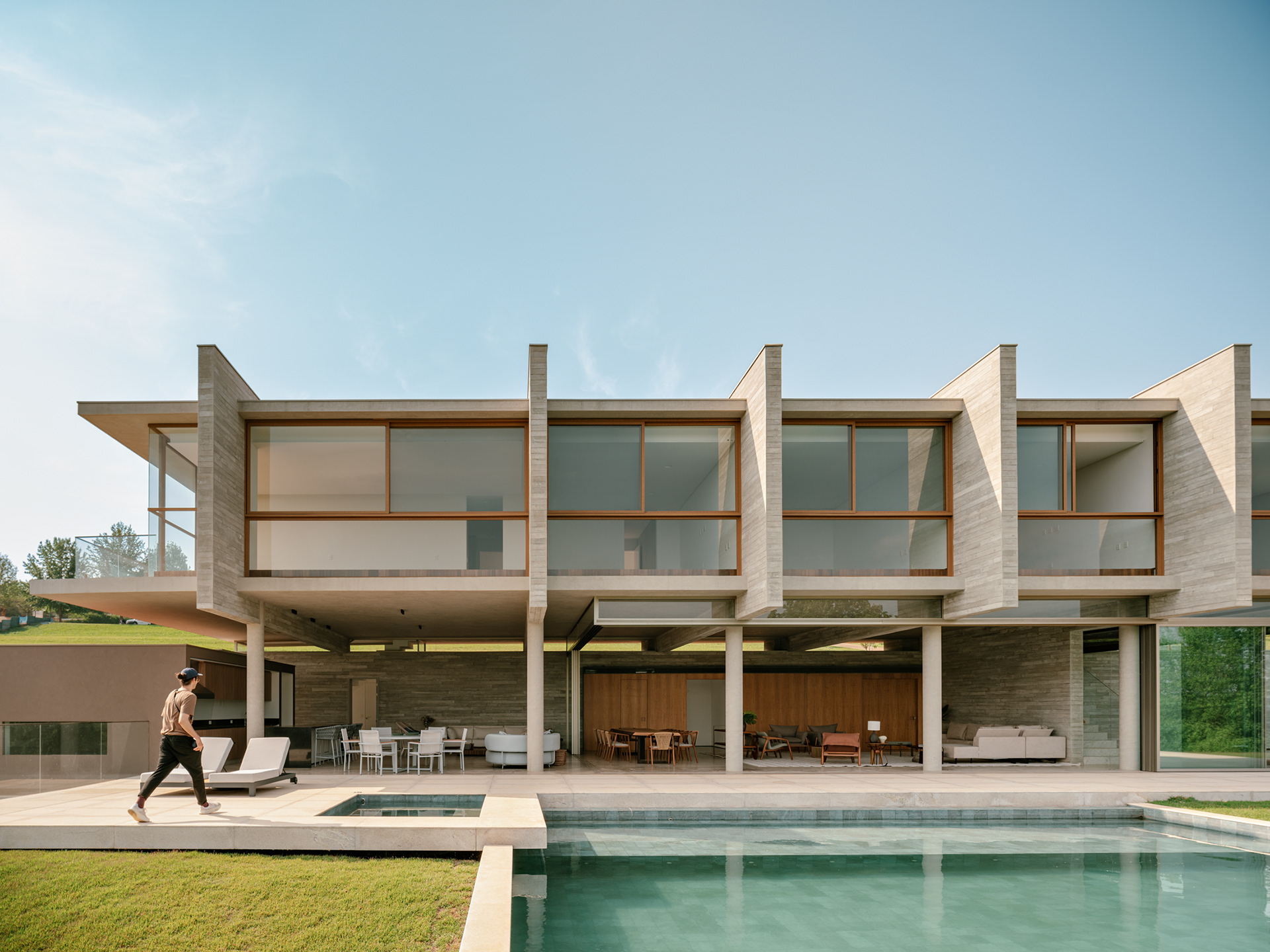
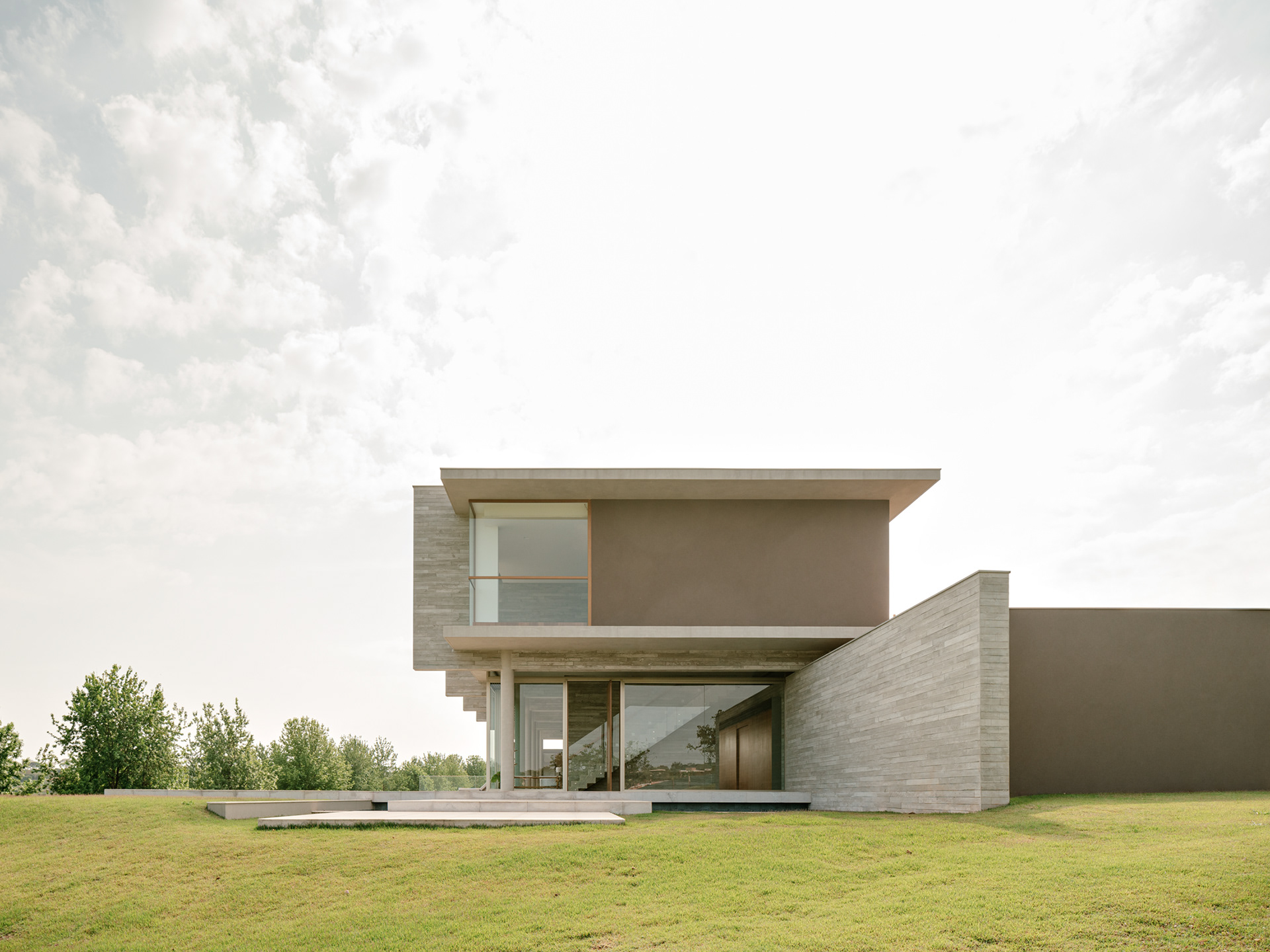
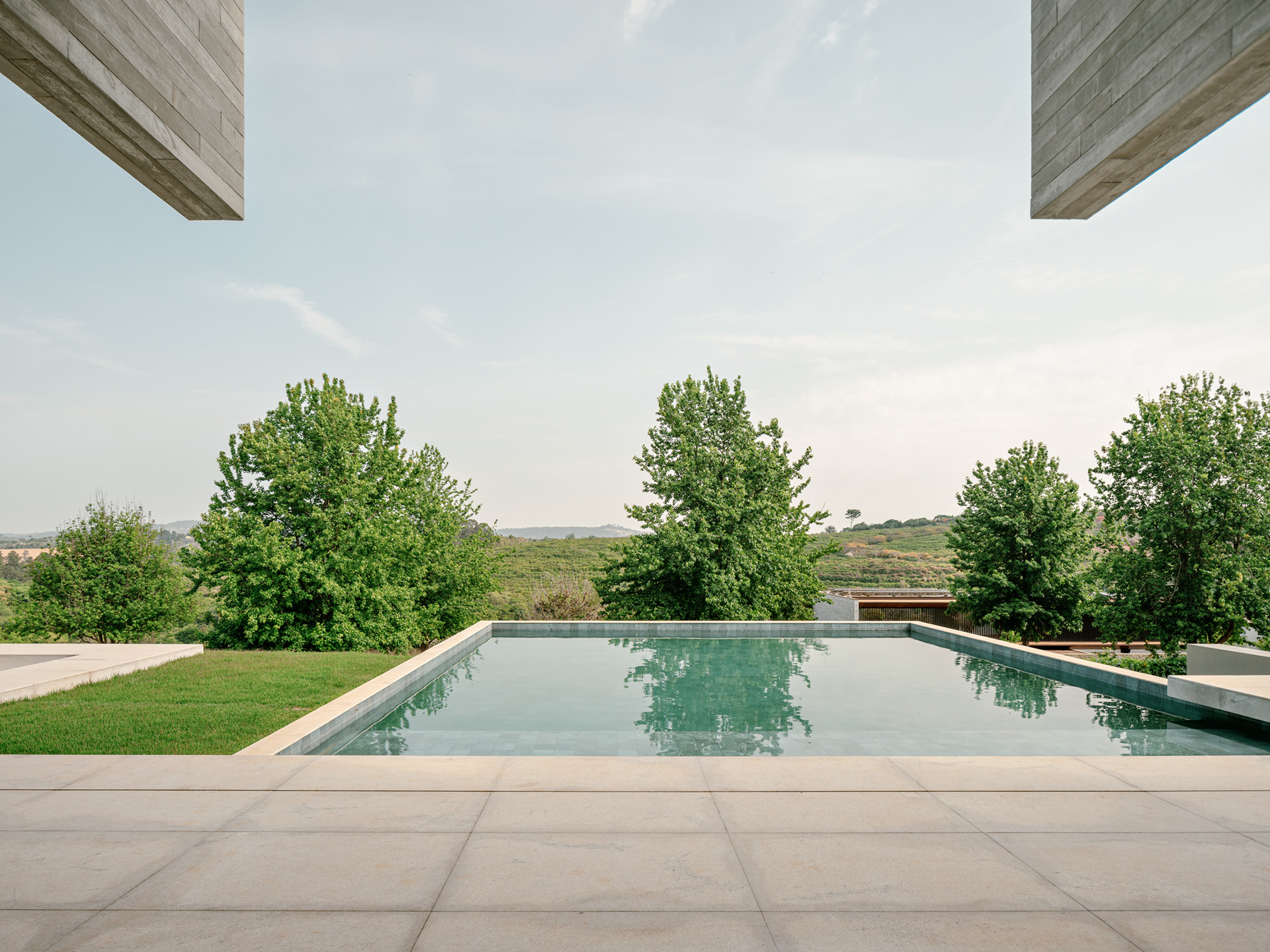
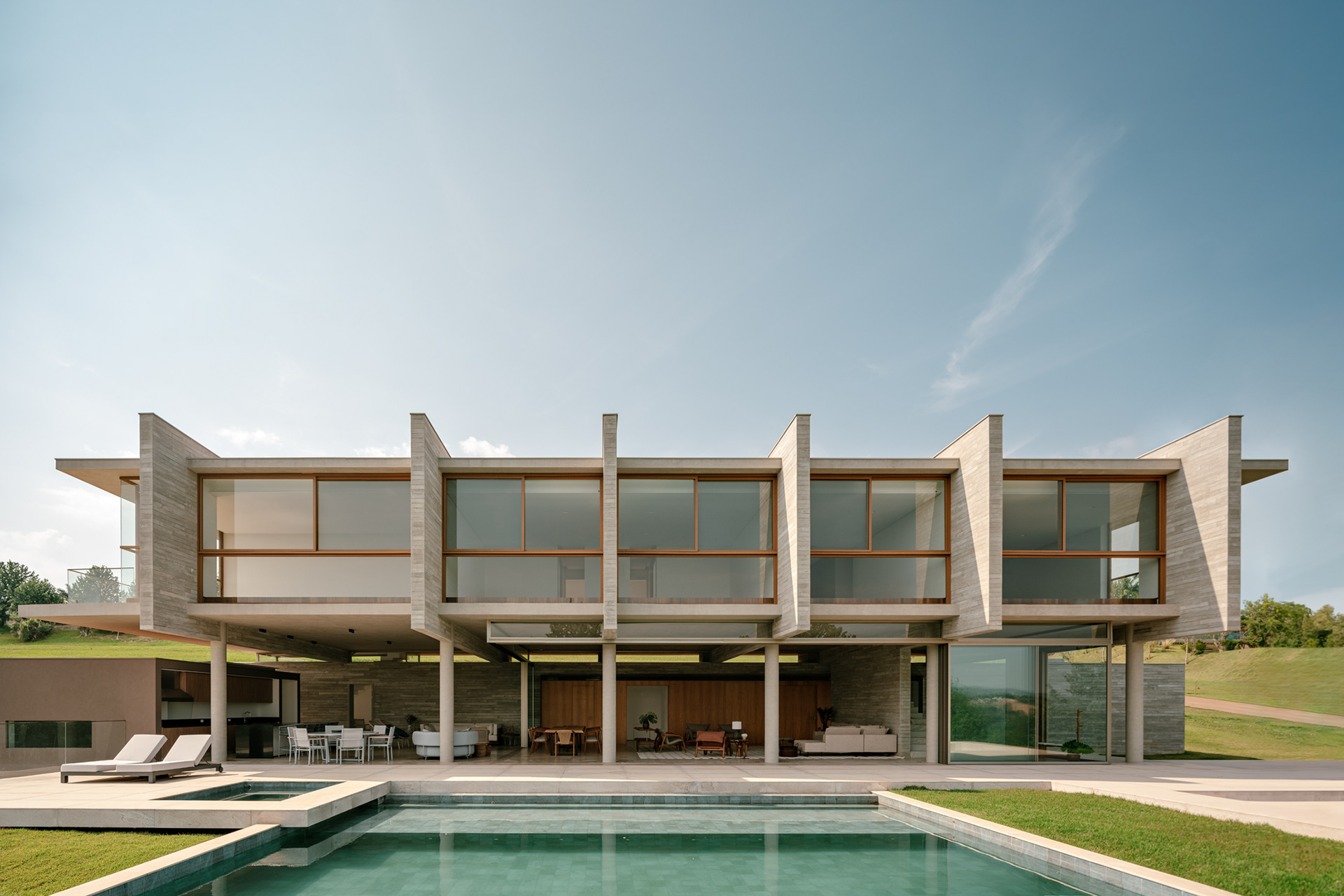
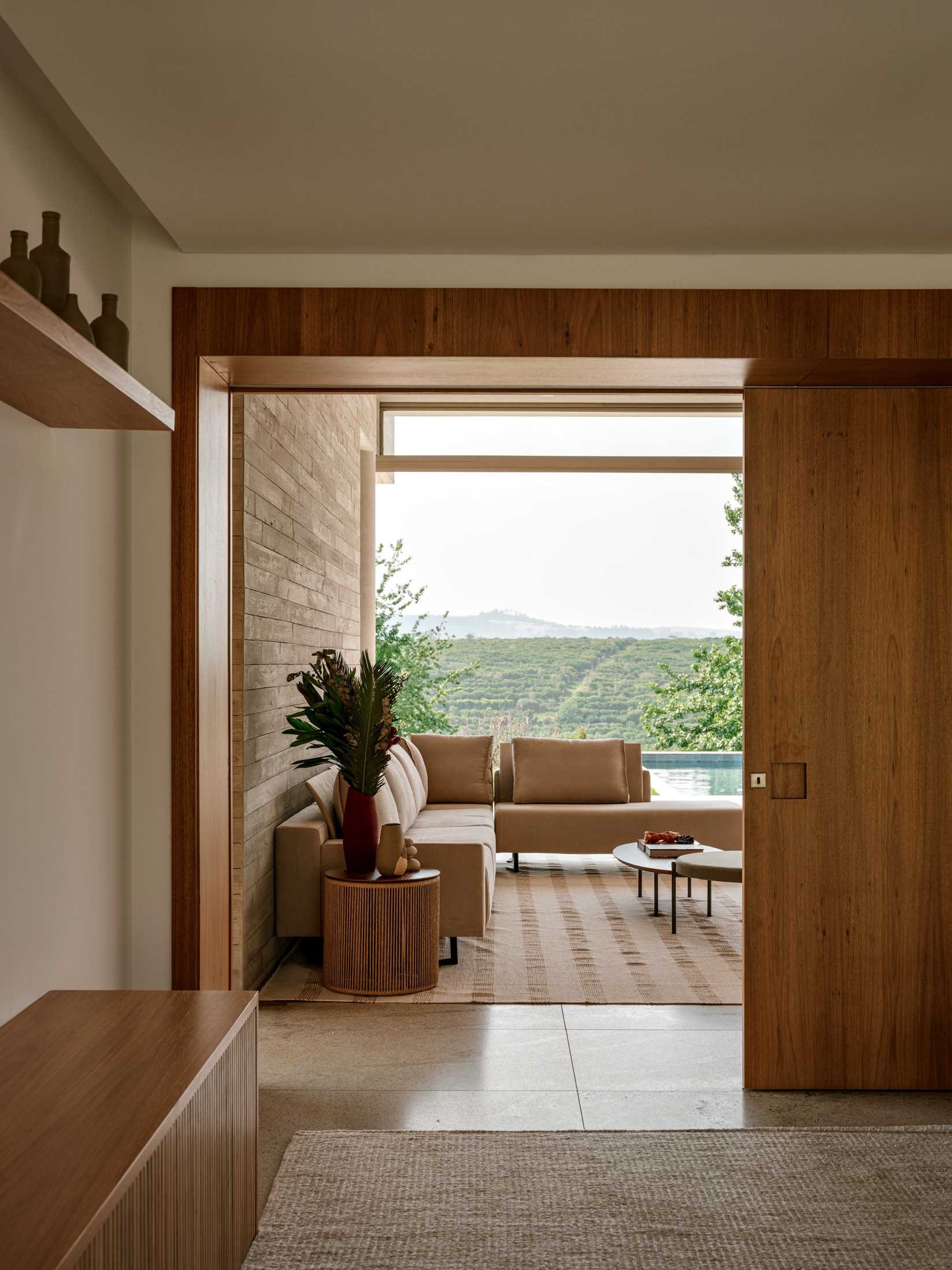
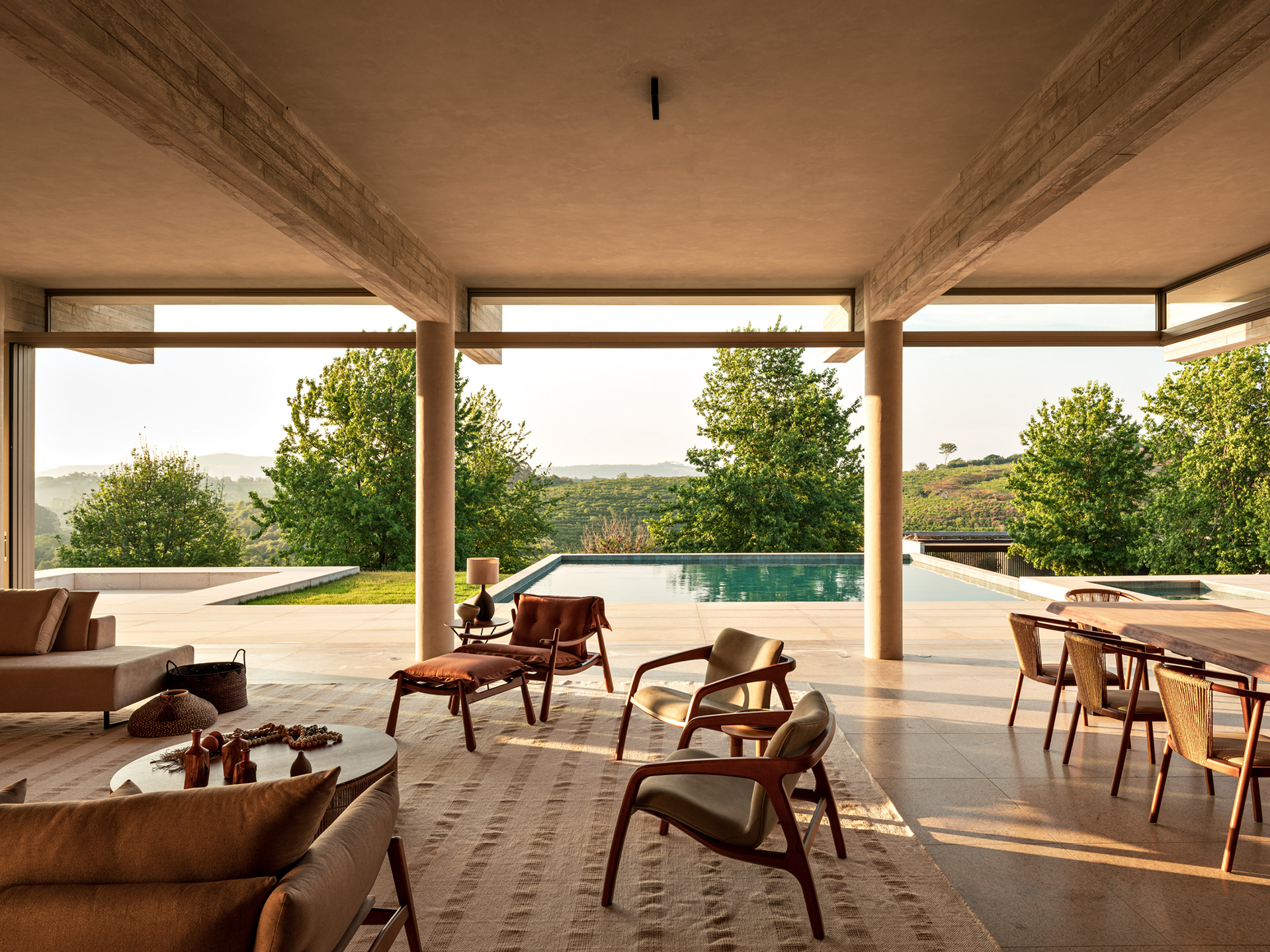
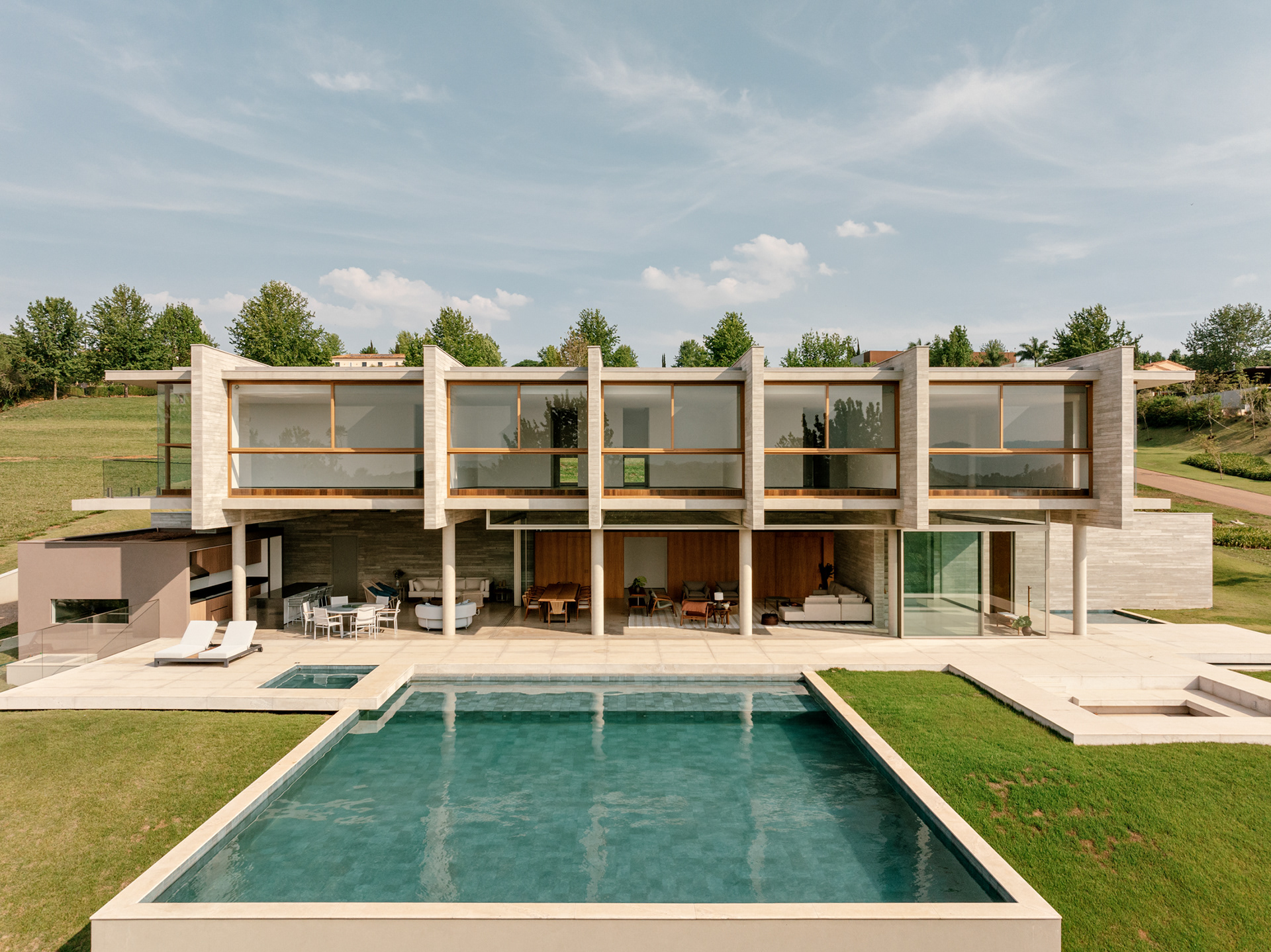
The extensive program of over 1000 m² is laid out across two linear floors. The ground floor is primarily dedicated to social and service areas — including two guest bedrooms — while the upper floor is reserved for the private quarters of the residence. All the main rooms face the lot’s main view, the pool, and the neighboring farmland.
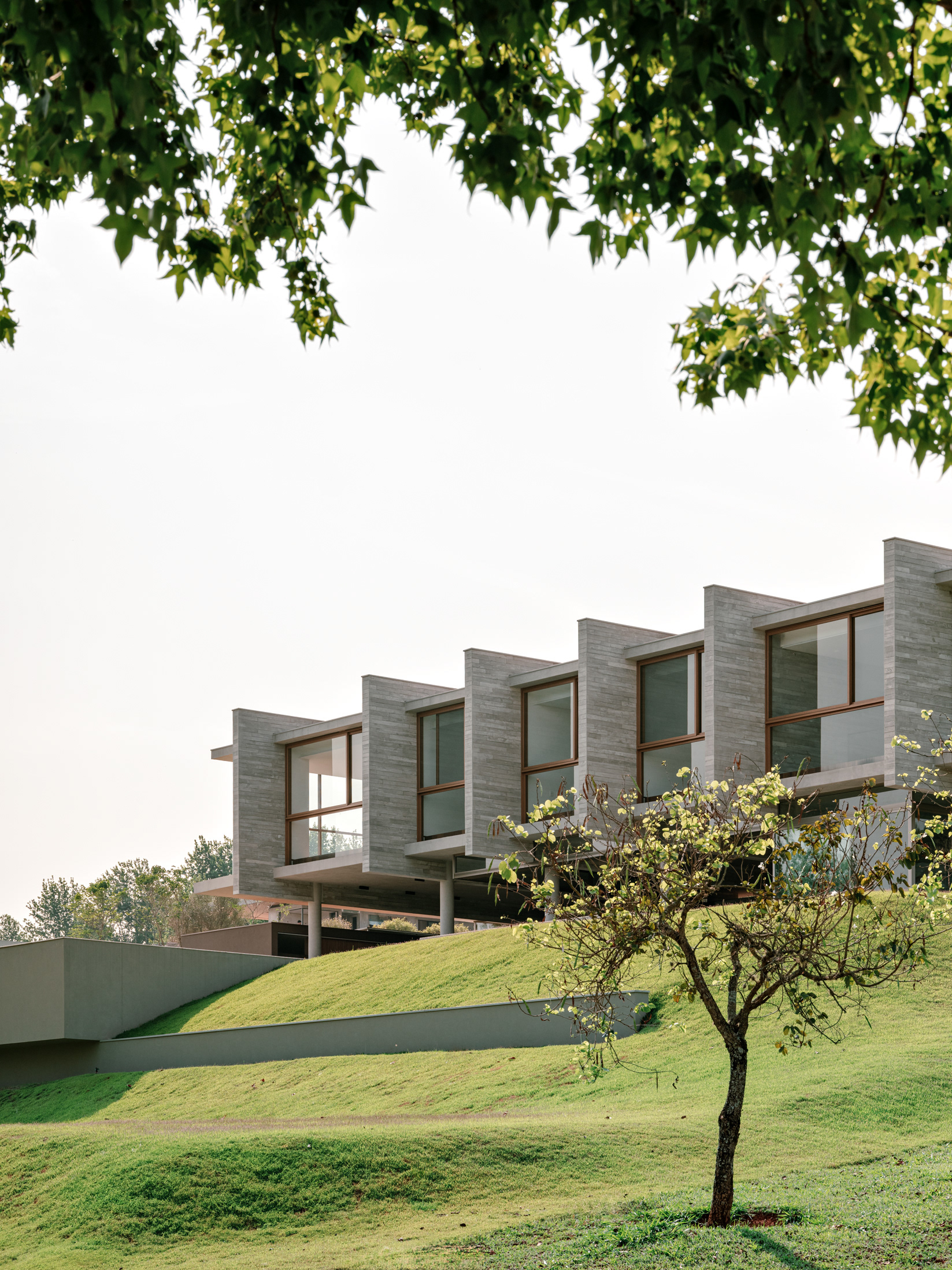
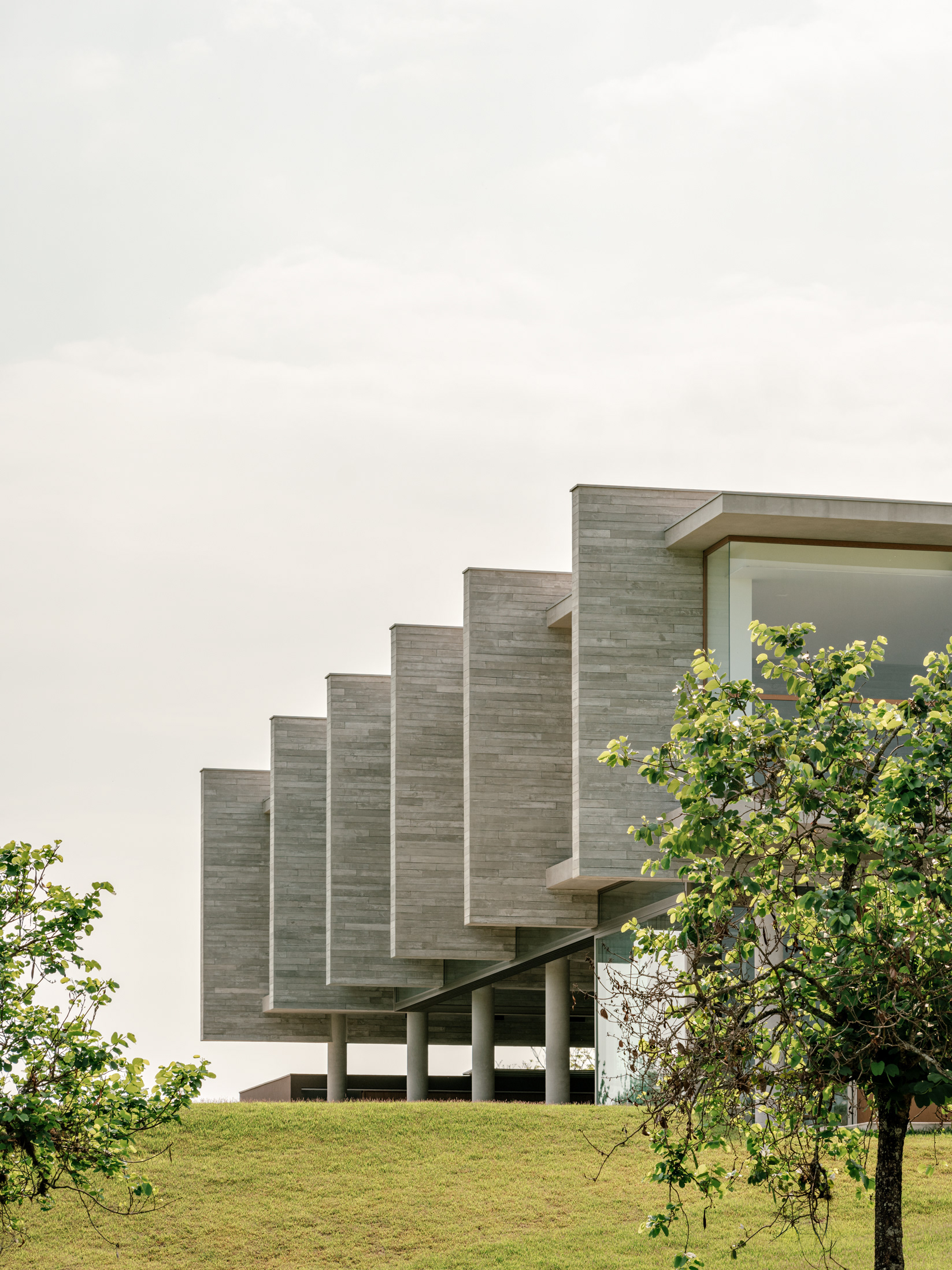
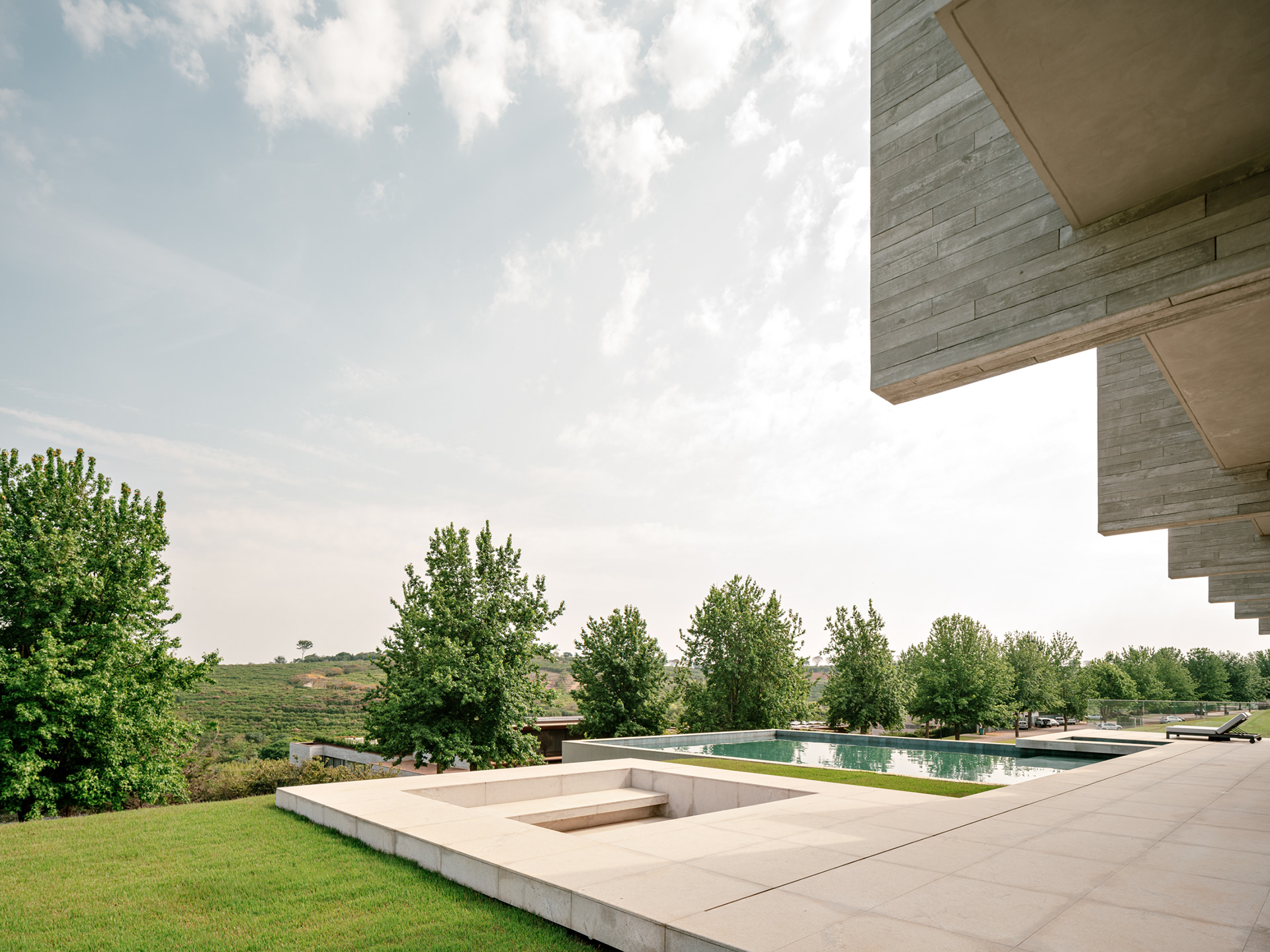
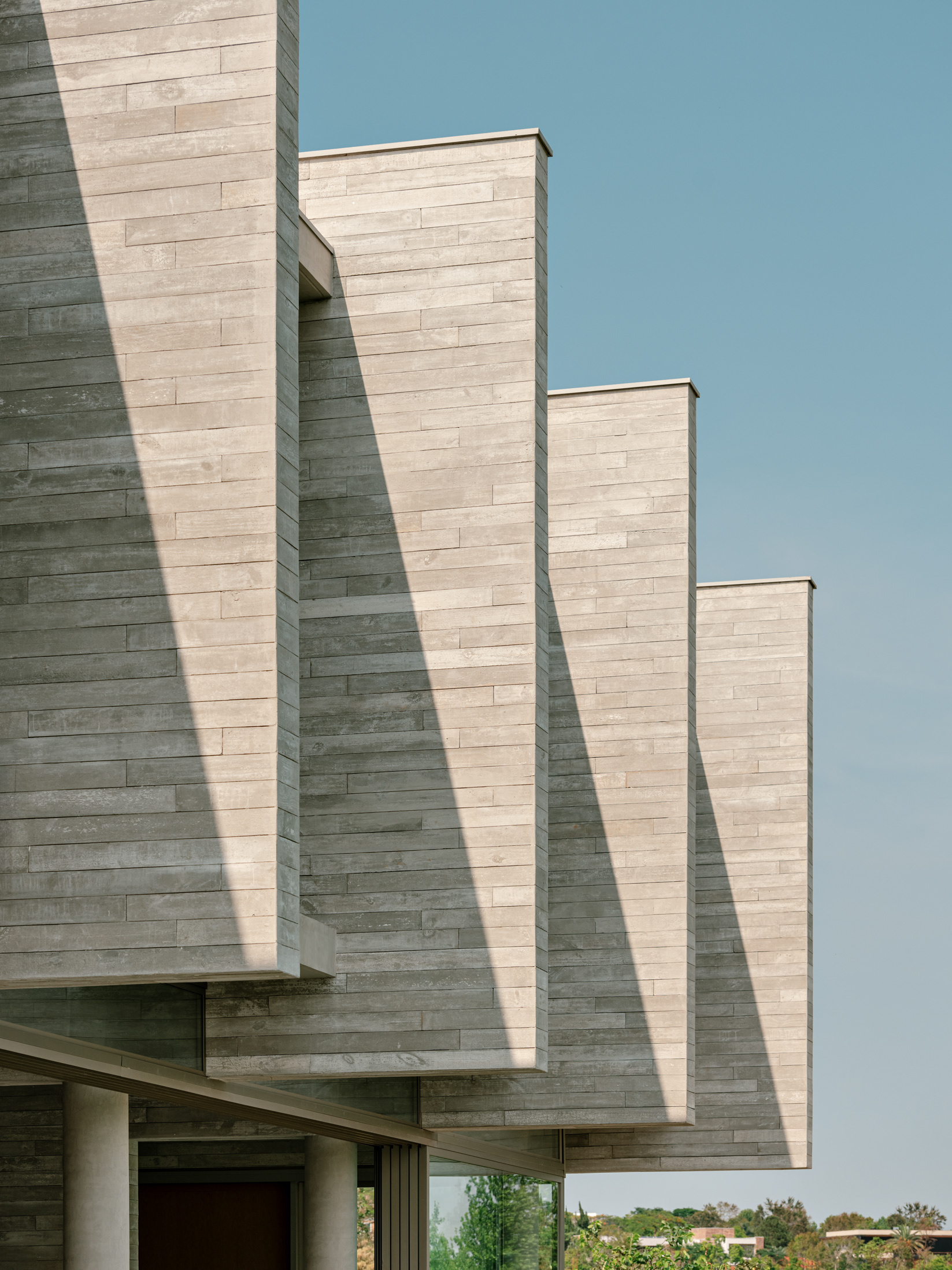
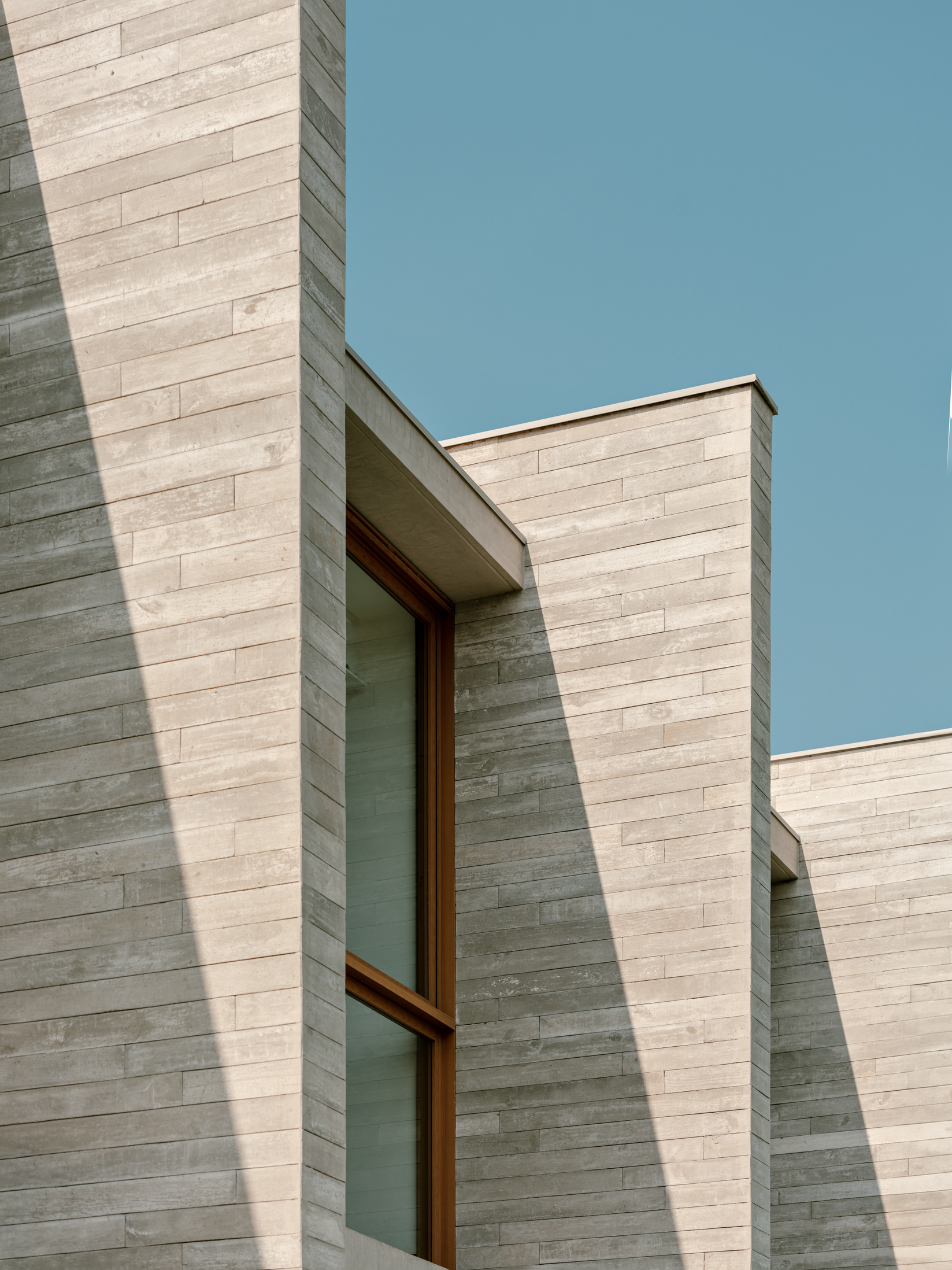
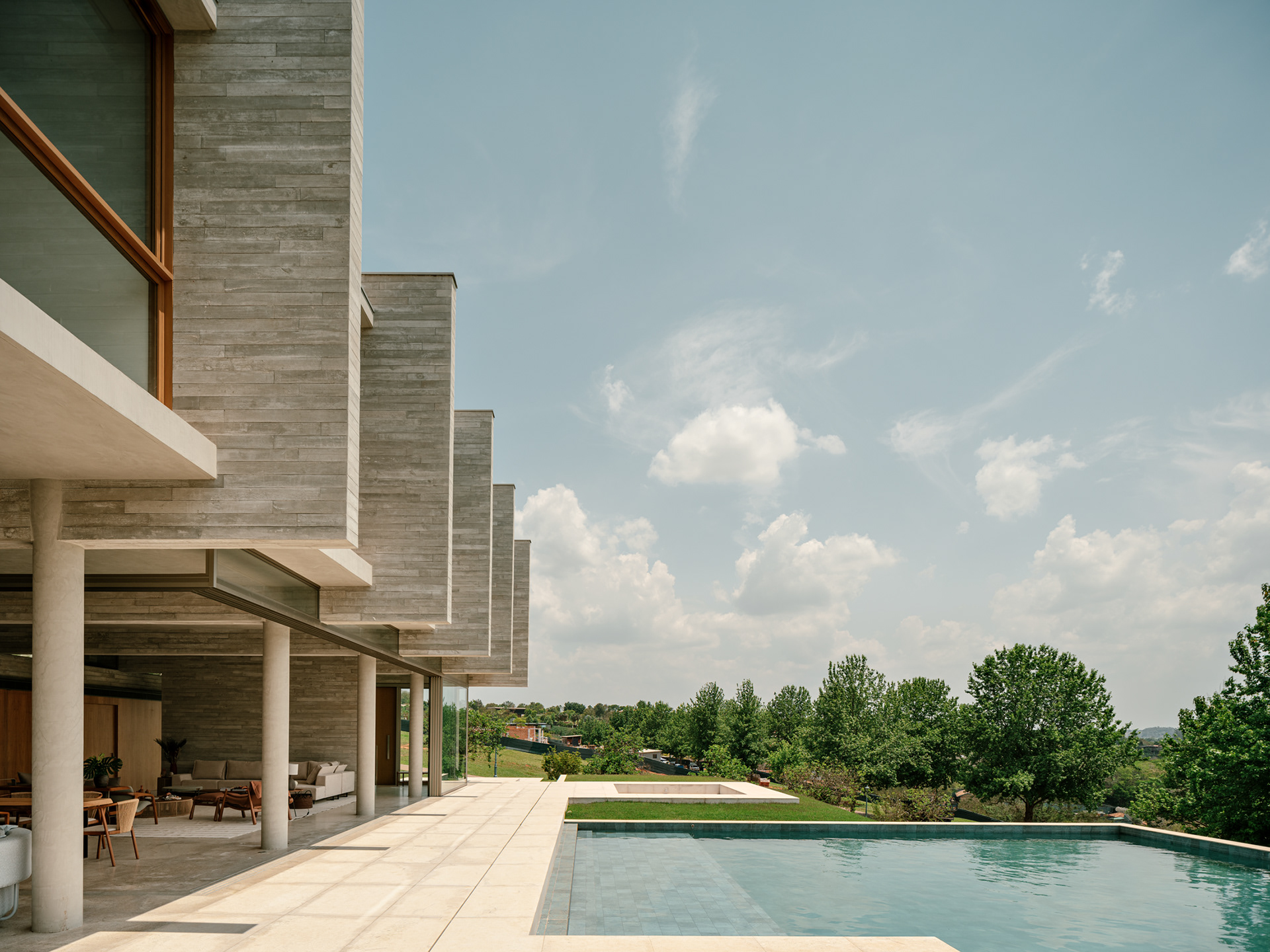
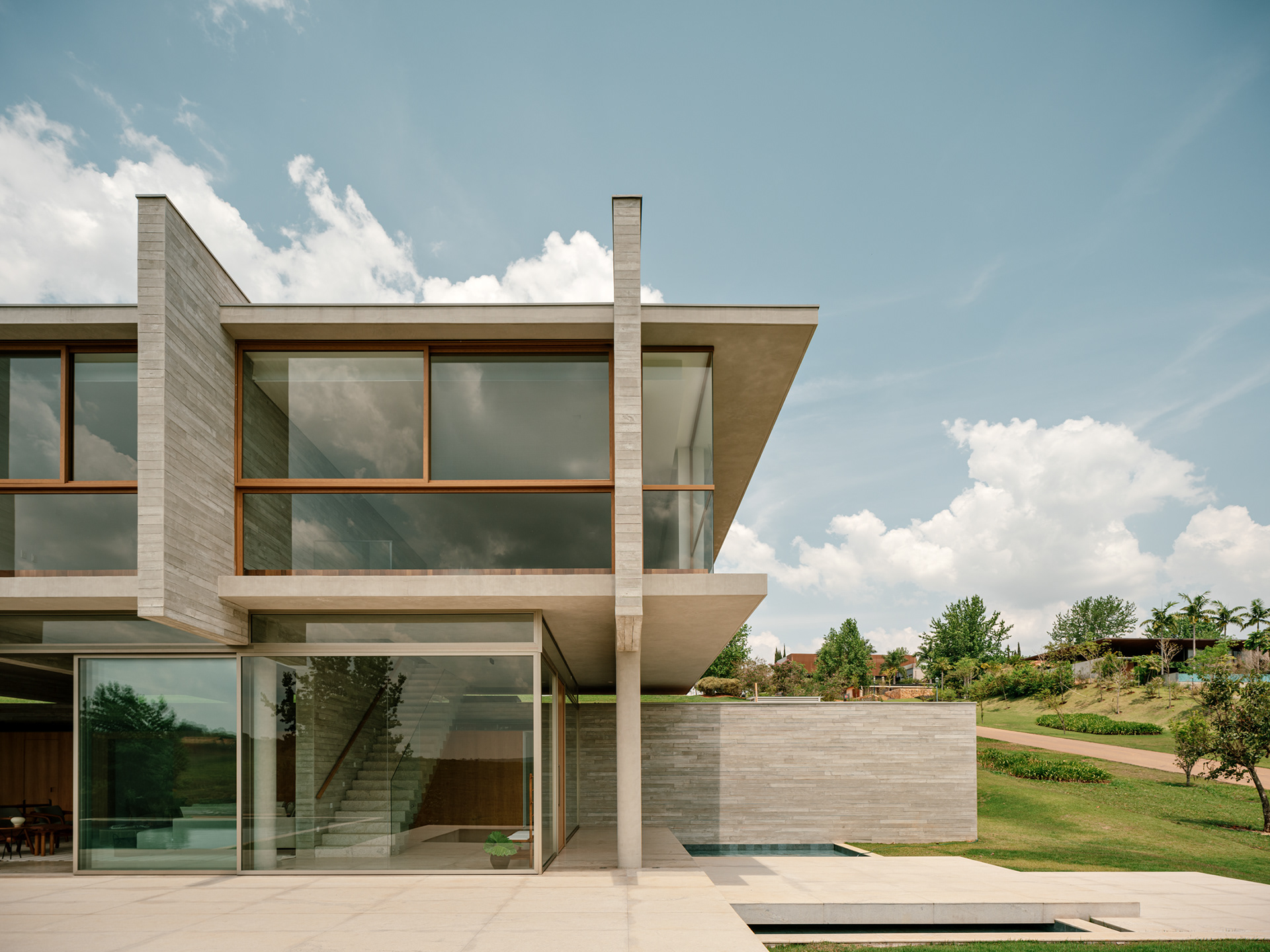
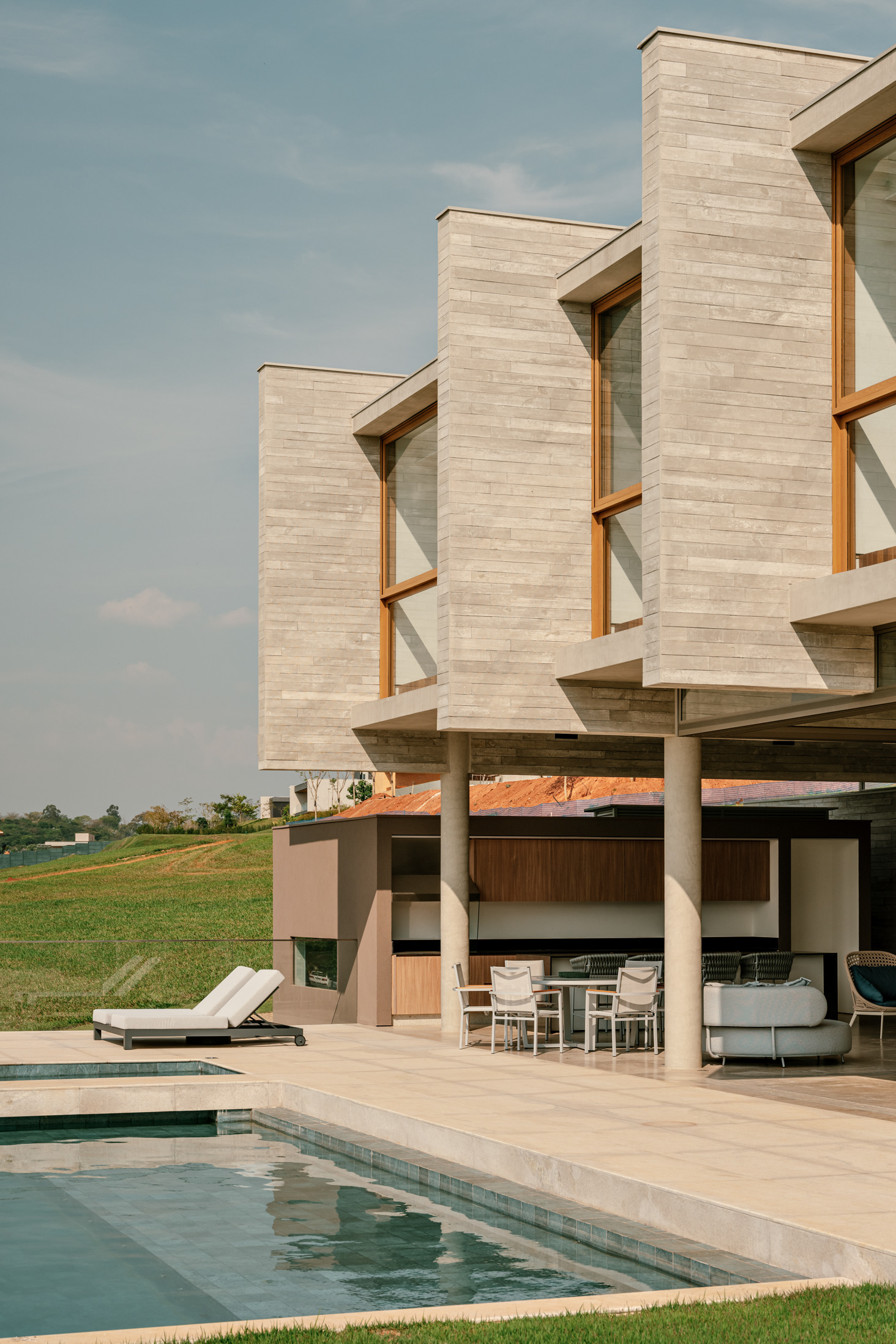
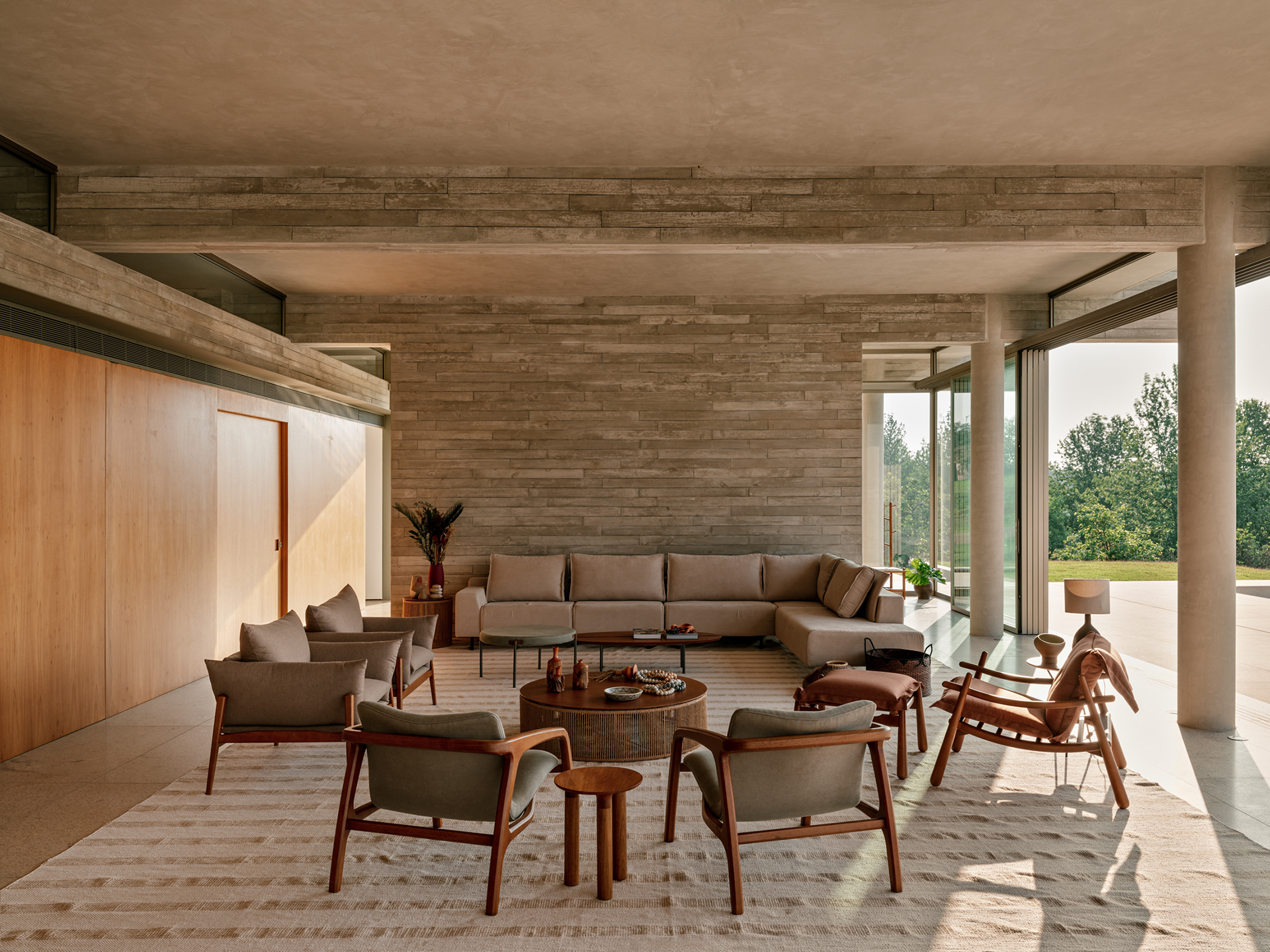
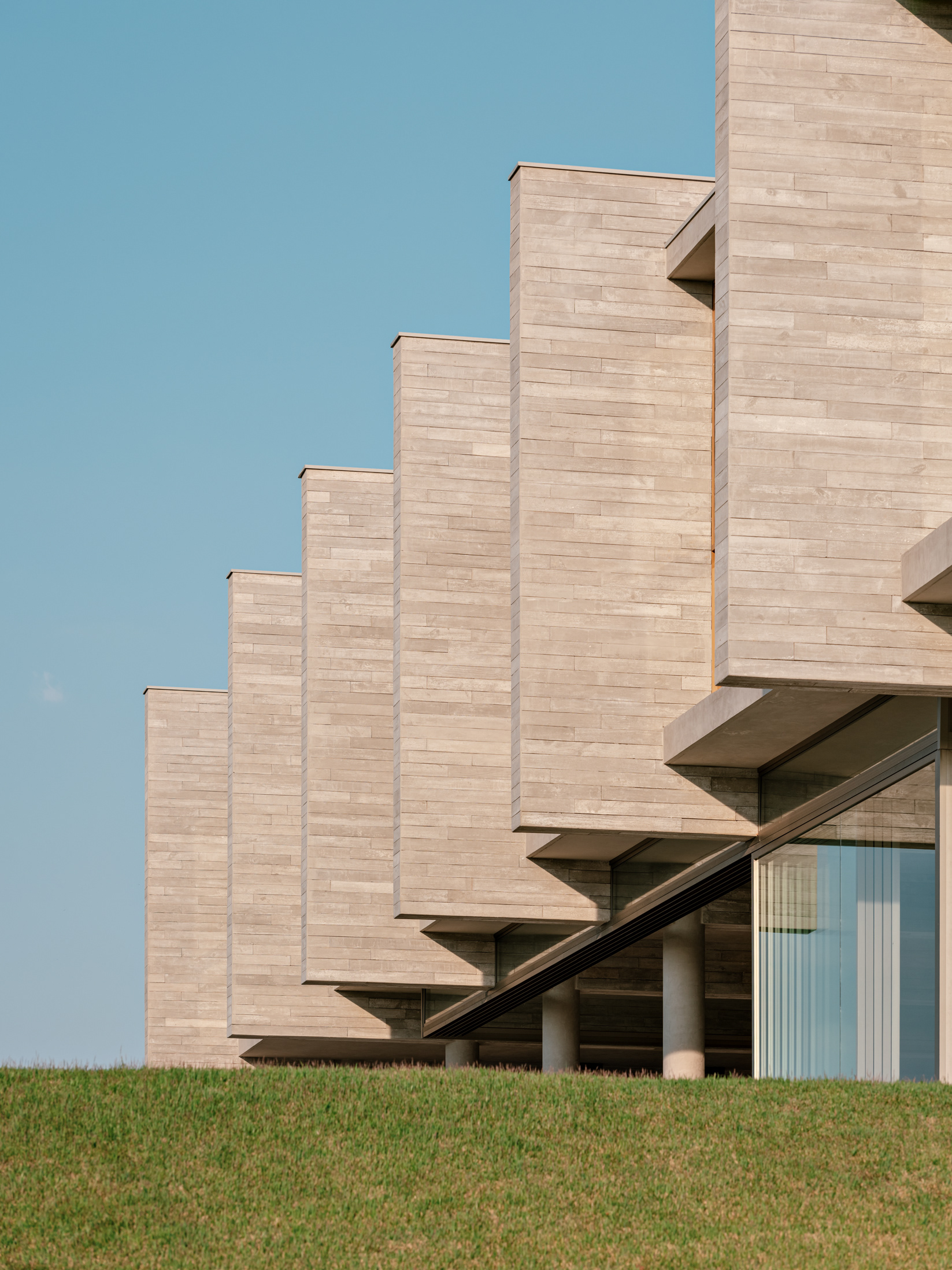
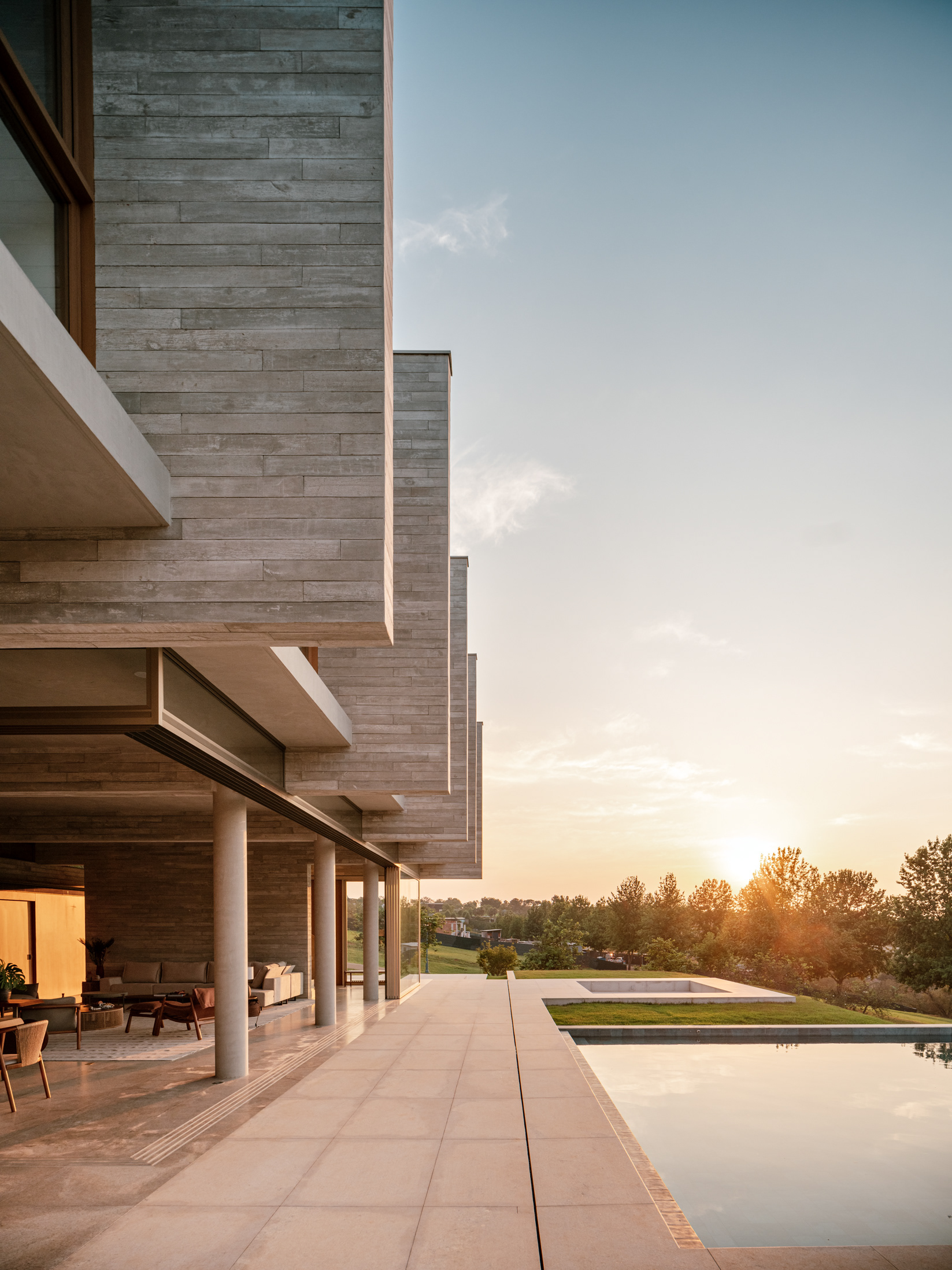
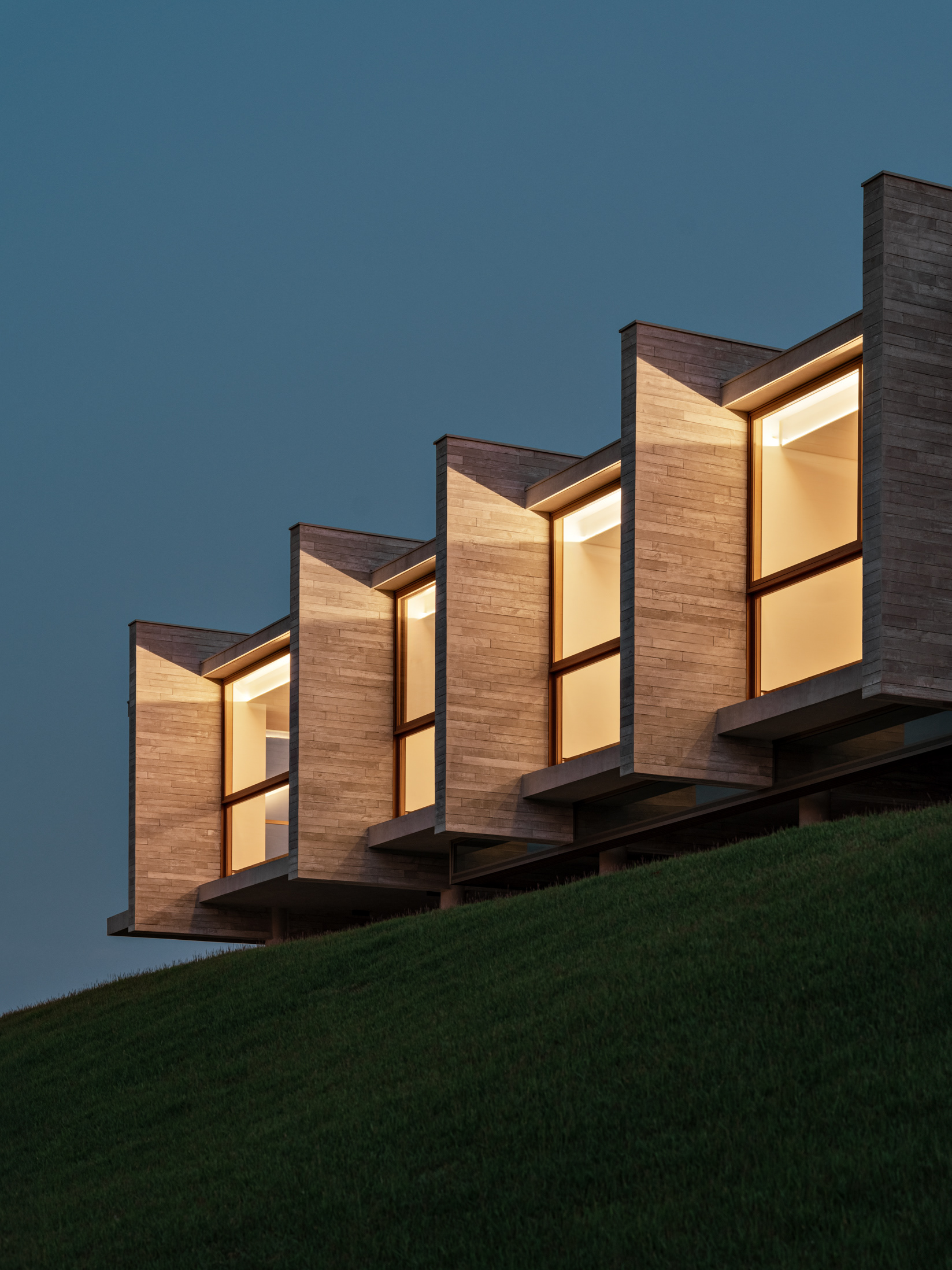
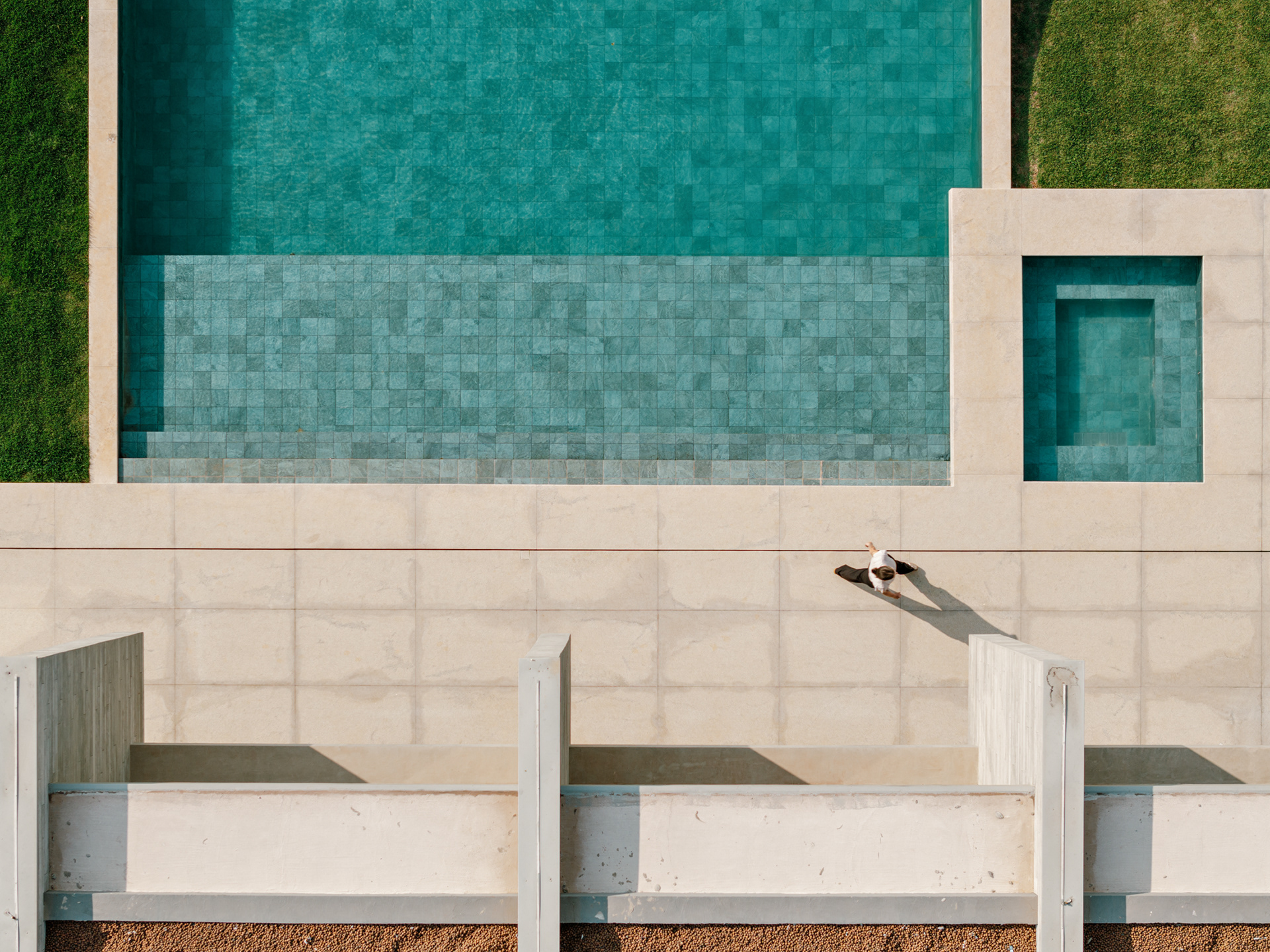
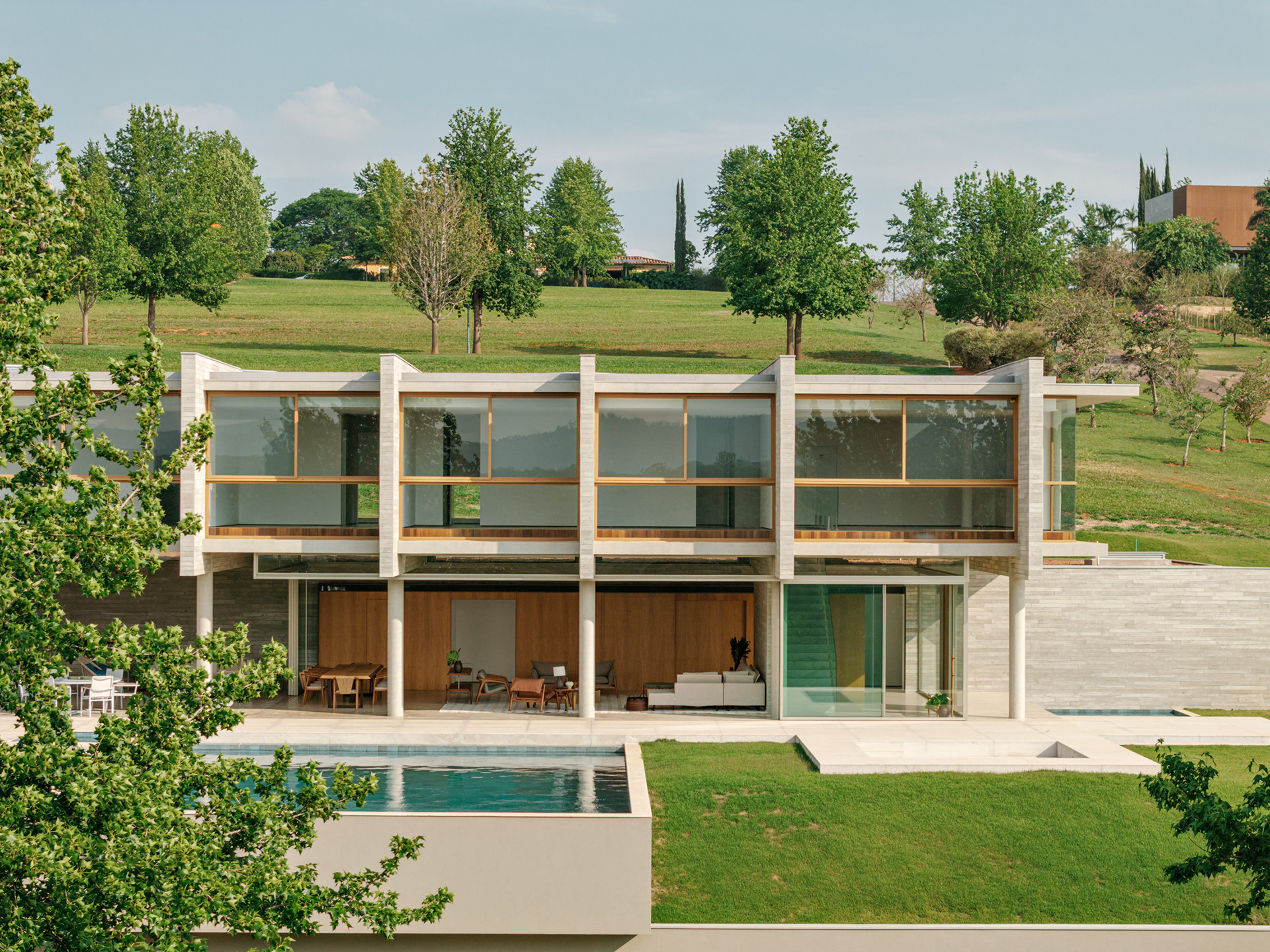
The design concept is quite straightforward and begins with the structural conception. In this project, the structure is the house, composed almost entirely of a layering of columns, beams, and slabs. A sequence of exposed round concrete columns forms porticos with a concrete wall and a series of 4-meter-tall concrete gables that support the upper floor, suspend the floor slab of this level, and separate the home’s main suites. This set of columns and gables is the project’s most prominent element, visible both up close and from afar. It covers the house’s social level, which is enclosed only by sliding glass panels that separate the living room from the verandas. Standing out from the sloped terrain, the external floors are composed of staggered horizontal planes that define the entrance, reflecting pool, verandas, and terraces, while also integrating with the semi-suspended volume of the house’s large pool.
The service areas are located at the rear of the house, away from the views and ensuring proper privacy.
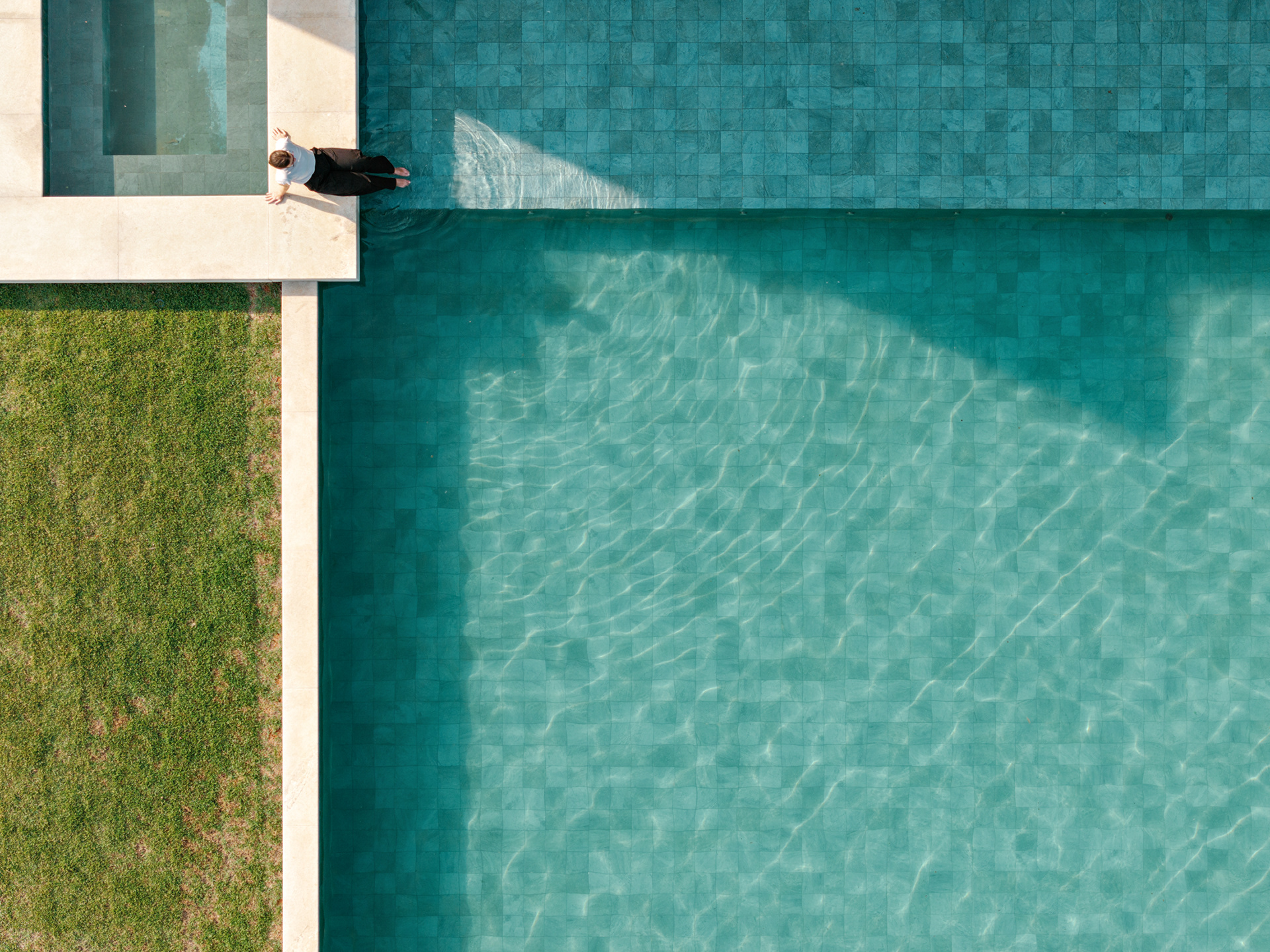
From a construction and finishing standpoint, the intention was to work with materials in their natural state — extensive use of glass for enclosures, exposed concrete for the structure, stone and wood for the indoor and outdoor flooring, and for the pool — creating a design that is both visually striking and chromatically neutral, allowing the surrounding natural landscape to take center stage.
The extensive program of over 1000 m² is laid out across two linear floors. The ground floor is primarily dedicated to social and service areas — including two guest bedrooms — while the upper floor is reserved for the private quarters of the residence. All the main rooms face the lot’s main view, the pool, and the neighboring farmland.
The design concept is quite straightforward and begins with the structural conception. In this project, the structure is the house, composed almost entirely of a layering of columns, beams, and slabs. A sequence of exposed round concrete columns forms porticos with a concrete wall and a series of 4-meter-tall concrete gables that support the upper floor, suspend the floor slab of this level, and separate the home’s main suites. This set of columns and gables is the project’s most prominent element, visible both up close and from afar. It covers the house’s social level, which is enclosed only by sliding glass panels that separate the living room from the verandas. Standing out from the sloped terrain, the external floors are composed of staggered horizontal planes that define the entrance, reflecting pool, verandas, and terraces, while also integrating with the semi-suspended volume of the house’s large pool.
The service areas are located at the rear of the house, away from the views and ensuring proper privacy.
From a construction and finishing standpoint, the intention was to work with materials in their natural state — extensive use of glass for enclosures, exposed concrete for the structure, stone and wood for the indoor and outdoor flooring, and for the pool — creating a design that is both visually striking and chromatically neutral, allowing the surrounding natural landscape to take center stage.